
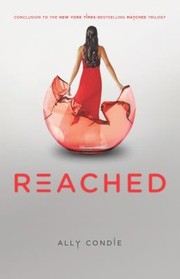
Reached
2,690-word summary 12 min read 512 pages in the book
- First published
- 2012
- Publisher
- Dutton Juvenile
- Pages
- 512
- ISBN
- 9780525423669
- Series
- Matched (#3)
Reading options
What's inside (8 sections)
I picked up Reached because Crossed left me annoyed in a specific way. Cassia had walked through canyons and thirst for a whole book and still had not gotten answers about the Rising. I wanted the rebellion to finally do something. The funny thing is that Condie gives you the takeover almost right away, then spends the rest of the book asking whether a new set of rulers fixes anything when people are still dying in hospital beds.
This is the third book in the Matched trilogy, after Matched and Crossed. It follows Cassia Reyes, Ky Markham, and Xander Carrow after they separate to work undercover for the Rising against the Society. The Society picks matches and jobs and meals and even the date of death for citizens. The Rising claims it will return choice to people. Reached tests that promise during a plague, a cure that stops working, and a scramble in villages outside Society control.
The takeover happens early
The opening surprised me with how quiet it is. Xander starts at a welcome ceremony for a new baby in the Society. He works now as a medical official alongside a coworker named Lei. He looks like a loyal Society medic on the surface. Underneath he swaps the tablets given to newborns so they carry protection against the red tablet memory loss and against the virus that is starting to spread.
Cassia works in Central as a sorter. Sorting was always her skill, finding patterns in data the Society feeds her. The Rising uses her there because she can see errors and move information without drawing attention. Ky trains in Camas Province to fly airships. He rooms with other boys learning flight paths and delivery runs. He keeps his head down and remembers every map because maps once meant survival in the Outer Provinces.
Indie, who survived the canyons with Ky, ends up on flight duty with him. Their run to Grandia City with medical supplies turns into something else. A voice they know as the Pilot speaks to them mid mission. He tells them this delivery is the start. The Rising will step forward while the Society stumbles.
And it does. The Society, which seemed so fixed and calm in Matched, folds faster than I expected. Officials stop giving orders. Broadcasts change tone. Rising workers take posts in hospitals and sorting centers and flight hangars. People cheer in streets I pictured as gray and ordered. Cassia describes the strange feeling of winning without a big battle. One day you sort for the Society. The next day you sort for the Rising at the same desk.
I liked this choice. A lot of final books save the revolution for page three hundred. Condie puts it near the front so she can write about the harder part. Running clinics. Moving drugs. Deciding who gets care first. The Rising has a cure in tablet form for the first version of the plague. For a few weeks that looks enough to prove they are better rulers.
Then patients keep arriving.
Three voices instead of one
Matched stayed close to Cassia. Crossed split between Cassia and Ky. Reached adds Xander as a third narrator, with chapters rotating among the three.
Cassia sounds like herself. She notices paper and words and small acts of making. In Central she starts something called the Gallery with other workers. They meet to share poems and drawings and songs they were never allowed to keep under the Society. It reminded me of the secret poetry thread from the first two books, only now it happens in a room with other people instead of inside her coat pocket. Her chapters carry the romance weight too. She loves Ky and she knows Xander loves her and she hates causing pain by simply existing between them.
Ky sounds tired in a different way. He spent Crossed running and remembering his father and the ruined villages. Here he tries to be useful in the air. He learns lift and fuel and radio codes. He trusts Indie because they survived together, though he never fully relaxes around her. His chapters hold the most grief. He thinks about his parents and about Vick and Eli from the canyons. He wants a life where he can stay in one place with Cassia and plant something that stays alive.
Xander was the surprise for me. In Matched he felt like the kind face, the safe Match. In Crossed he showed up late as a medic with secrets. Here he gets equal time and he earns it. He works long shifts giving out cure. He watches who lives and who does not. He likes Lei and tries not to like her too fast because attachments in medical wards hurt when patients crash. His chapters are the most practical. Dosages. Rashes. Breathing rates. He prays sometimes and he feels guilty about what the Rising asks him to hide.
The rotation has a cost. You lose the ache of not knowing what the boys think, which powered a lot of Matched. When Cassia wonders if Ky still trusts her, you just read Ky and find out. Some readers will love the clarity. I missed the tension a little. A few chapters also sound alike when everyone is exhausted. I had to check the name at the top more than once in hospital scenes. Still, Xander needed this space. Without his view the ending would feel like Cassia picking one boy over the other. With his view it feels more like three people finding separate paths.
The plague changes the rules
The illness starts with fever and confusion. Then a red flush spreads. Nurses look for marks on backs to track who had the first strain and lived. Those survivors carry a red mark and seem protected when the sickness returns in a worse form.
That second wave is where the book turns grim. The Rising cure works on the first version. It fails on the mutated version. Wards fill in Central and Camas. Medics reuse beds. Sorters get reassigned to carry stretchers. Cassia watches officials argue about counts while families wait outside glass doors.
Lei gets sick. That hit me because Xander had started to trust her steady hands on the ward. He gives her the standard cure and waits. She does not improve. He starts to understand before he can say it out loud. The virus moved and the stockpile did not move with it.
Condie adds a sharp detail here that reframes the whole trilogy. Oker, an older scientist living outside Society control, tells Xander that the blue tablet was never a simple poison. It acted as a trigger for the virus inside people the Society had already infected. The Society built dependence into bodies, then offered order as treatment. The Rising knew parts of this and kept moving anyway because they thought they had enough cure to cover the gap.
I found those hospital chapters heavy but honest. People argue about triage. Parents beg for extra doses for kids. A medic pockets tablets for his own Borough and claims it was a counting error. Cassia keeps sorting data about infections and sees the curve bend the wrong way no matter how she groups the numbers. Ky flies medicine that everyone knows may not work and still flies because staying still feels worse.
If you came for battles with airships over cities, this stretch may feel slow. I came for that too at first. After a while the slow dread worked on me. The enemy is not a soldier on a wall. It is a fever chart.
Endstone and the search for a real cure
Halfway through, Indie flies Cassia and Xander out to meet the Pilot. Ky is already sick by then, which raises the stakes for every delay. They land near Endstone, a village outside the Society where people live without Matching and without tablets. Anna lives there. She is Hunter mother in law, tied to the farmers who once left the Carving to live free. She knows the paths and the plants and who to trust when strangers arrive with clean boots.
Oker works in Endstone too. He has a reputation as difficult and brilliant. He kept notes through years when both the Society and the Rising called him inconvenient. Xander joins him in a makeshift lab. No clean white coats. Just jars and blood samples and borrowed equipment. Cassia works with the head sorter to track who got sick and who stayed well and what those well people ate or touched or breathed.
Ky spends much of this section in bed, burning and confused. That was hard to read after two books of him running and carving and surviving. He drifts. He remembers his father teaching him to write on his own skin so the Society could not take the words. He remembers Eli laughing in the canyons. Cassia sits with him when she can and sorts in her head to stay calm, matching symptoms the way she once matched workers to jobs.
The cure thread comes together through patient observation rather than a sudden breakthrough scene. Oker dies before he can finish the work. That choice angered me at first. It felt like losing the one mind that could fix things. Then Cassia realizes what his notes point toward. A flower called Mariposa Lily, growing near the villages, lines up with immunity in people who spent time around it. Oker had circled the connection without naming it plainly.
Xander ends up making the first usable batch while locked up. The Rising detains him because they fear he will give the cure to the wrong faction or talk about what he knows. He measures and mixes with what he has. He writes the steps clearly so others can repeat them. They give the dose to Ky. Waiting those hours felt longer to me than any canyon hike in Crossed. Ky breathes. His fever breaks. He opens his eyes and does not know right away where he is.
Indie does not make it. She catches the virus and tries to fly out alone when she feels it take hold. Her airship runs out of fuel and crashes. I had mixed feelings about Indie from Crossed. She could be selfish and brave in the same hour. Her end fits that pattern. She tries to protect others by leaving, and the sky does not forgive the miscalculation.
The Pilot and the question of who rules
The Pilot meets them in person after Ky stabilizes. I had built him up in my head as a wise rebel commander. He is smaller than that idea. Tired. Angry at losing control of his own movement.
He admits two things that undo a lot of heroic talk. First, the Rising was real at the start. People risked their lives to swap tablets and move messages and hide Anomalies. Second, the Society infiltrated it so deeply that by the takeover there was little difference left in methods. Same lists. Same detentions. Same willingness to let some Boroughs wait for medicine while favored areas got full supply.
He wants the cure fast because a faction inside the Rising plans to push him out. He rushes Cassia and Xander and a still weak Ky toward Camas. The flight feels rushed and wrong. No one thanks the villagers properly. Anna watches them go with an expression Cassia cannot read.
Back in Society cities, the cure starts to reach trial groups. Xander helps run dosing in Camas. Cassia goes to Keya Province to try to save her parents because her mother may know where more Mariposa Lily grows. She arrives to find her father already dead. Her mother is sick but alive. The scene with her mother recovering slowly, asking about her father in broken pieces, stayed with me more than the big political scenes. Plague numbers are abstract. A daughter spooning broth is not.
There is also a quiet reveal about Matching that I liked. Cassia learns she once added Ky to the Matching Pool herself, then forgot because of the red tablet. The Society took even her act of choice and filed it away. It explains why Ky once appeared on her screen in Matched. It was not a glitch in the way she thought. It was her own earlier decision surfacing through a system built to erase such decisions.
The book ends with practical steps rather than crowns. The cure gets made on a larger scale. Camas holds an election to pick new leadership. Ky and Cassia ask Anna to leave Endstone and stand for office, not for the Society and not for the Rising, but for the villagers and city people who need someone unowned. Xander stays in Endstone with Lei. Lei turns out to be Laney, once matched to Vick from the canyons. That link gives Xander a way to grieve Vick and to love someone who understands loss without needing long speeches.
Cassia chooses Ky. Xander lets go with grace that feels earned because we lived inside his head. No one claims the future is fixed. They claim a chance to vote and to heal and to write things down.
What works and what drags
The best parts for me were tactile. Sorting rooms with humming machines. The Gallery where a baker shares a tune and a clerk shows a sketch of his sister. Flight checks with cold metal and fuel smell. A jail cell turned into a lab with careful handwriting on scrap paper. Condie writes work well. She shows people doing jobs under pressure instead of giving speeches about freedom.
The romance also lands better here than in Crossed. Because Xander narrates, his love for Cassia stops being an obstacle and becomes a person with limits. He wants her to be well even if she does not pick him. He finds a separate bond with Lei built on shifts and shared patients rather than fate. Ky and Cassia feel steadier too. Less staring across rivers. More sitting beside beds and reading names off lists so no one dies unnamed.
The middle sags when the hospital routine repeats. Fever. Dose. Wait. Meeting. Flight. Fever again. I understand why it repeats. Epidemics repeat. But two hundred pages of it tested my patience. The three voices blur in those stretches. Everyone sounds exhausted and kind, which is realistic and a little flat on the page.
The Mariposa Lily answer may frustrate readers who wanted a clever science puzzle. A flower cure can feel too neat after so much talk of tablets and triggers and mutations. I accepted it because the book frames it as local knowledge the Society ignored. Villagers noticed who stayed well. Oker listened. Still, the final mixing happens fast. One chapter of doubt, then a working dose.
I also wished the election got more room. After three books about who decides, Camas votes and Anna considers standing and then the book closes before we see what kind of leader she would be. I see why Condie stops there. The point is that people get to choose, not that the author picks correctly for them. As a reader who tracked every Borough feud, I wanted five more chapters of messy democracy.
Read Reached if you liked the questions in Matched more than the chases in Crossed. This finale cares about medicine and memory and administration. It argues that rebellion is not a single night of broken gates. It is inventory and nursing shifts and seed packets and ballots. That view will feel slow to some. It felt grown up to me, even when I wanted more airships.
I closed the book thinking about the Gallery. Ordinary people in a controlled city, trading a song for a drawing, learning each other names. The Society tried to erase that impulse with tablets. The Rising tried to direct it with orders. The Gallery just lets it happen. For a series that started with a girl staring at a screen showing the wrong boy, ending with people sharing art in a plain room seems right. No fireworks needed.
FAQ
When was Reached published?
Dutton Juvenile published Reached on November 13, 2012. The first hardcover runs 512 pages with ISBN 9780525423669. It closes the Matched trilogy after Matched and Crossed.
Is Reached part of a series?
Yes. Reached is Matched book three. Cassia, Ky, and Xander narrate in rotation as the Rising takes power and a mutated plague forces a search for a new cure.
How does the trilogy end?
Cassia chooses Ky, and Xander stays with Lei in Endstone. The cure gets made and distributed, Camas holds an election, and Anna is asked to stand for the people.
Similar books
More from Matched first, then related titles.
Matched
Cassia matched to Xander sees Ky's face flash and starts to doubt.
1,916-word summary · 9 min read
Crossed
Cassia crosses the Outer Provinces canyons seeking Ky after labor camp, while Xander returns as medic with Rising secrets to shift her search.
2,322-word summary · 10 min read

Requiem
Lena fights in the Wilds while cured Hana marries into Portland power.
2,232-word summary · 10 min read

Pandemonium
Lena survives the Wilds and spies in New York after losing Alex at the fence.
2,314-word summary · 10 min read

King's Cage
Chained by Maven with Silent Stone, Mare endures while Cal and the Guard gamble on rescue and alliance.
2,001-word summary · 9 min read
Delirium
In a America where love is treated as disease, Lena Haloway counts down to her Cure until she meets Alex in Portland.
2,425-word summary · 11 min read

Reveal Me
A Shatter Me novella told by Kenji, set between Defy Me and Imagine Me, as the rebels learn Anderson has taken hostages and Juliette faces Emmaline.
2,098-word summary · 9 min read

Wither
In a future where women die at twenty, sixteen-year-old Rhine is sold as a bride to a wealthy stranger and plots an escape from a beautiful prison.
2,395-word summary · 11 min read
A Reaper at the Gates
The Martial capital falls to an army of ghosts, Elias becomes the Soul Catcher, and Laia and Helene pay brutal prices as the Nightbringer moves to free the…
1,991-word summary · 9 min read
World After
Penryn wakes from near-death to find her altered sister Paige hunted as a monster, and follows her into the angels' scorpion factory and Uriel's coup.
2,213-word summary · 10 min read
Under the Never Sky
Exiled from her Pod, Aria crosses a storm-scarred wilderness with Outsider Perry to find family and the fabled Still Blue.
2,572-word summary · 11 min read
Shadow Me
Kenji Kishimoto narrates for the first time as he joins Nazeera on a quiet mission after Restore Me, carrying painful secrets into Defy Me.
2,512-word summary · 11 min read
Believe Me
Warner narrates life after Imagine Me as he and Juliette try to marry amid Sanctuary repairs.
2,217-word summary · 10 min read
The Young Elites
Adelina survives fever and execution to join a secret group of gifted malfettos plotting against the queen of Kenettra.
3,310-word summary · 15 min read
Fracture Me
Adam Kent narrates this short bridge story after Omega Point falls, hiding with his little brother James while facing his fading place beside Juliette. Best…
3,004-word summary · 13 min read


Angelfall
After angels destroy the world, Penryn trades help with a wingless angel to rescue her sister from their stronghold.
2,420-word summary · 11 min read
Reckless
Paedyn and Kai flee the scorched city into trials where every ally charges a price in blood.
2,007-word summary · 9 min read
Imagine Me
Juliette remembers who she was and storms the capital to end the Reestablishment for good.
2,090-word summary · 9 min read




The Crown
Eadlyn Schreave must rule Illea and finish her Selection, torn between Kile, Henri, and translator Erik.
3,015-word summary · 13 min read
Restore Me
Juliette, now Supreme Commander, faces rule, the truth about Ella and Emmaline, and a summit that ends in blood.
2,963-word summary · 13 min read
Destroy Me
Shot by Juliette, Warner holds his base together while his father arrives with harsher plans for her.
2,556-word summary · 11 min read

Defy Me
Kidnapped to Oceania, Ella faces her cruel parents and dying sister while Warner and Kenji fight to reach her.
2,833-word summary · 13 min read
An Ember in the Ashes
Laia spies inside Blackcliff to save her brother while Elias, its finest soldier, plots desertion, until the Trials force them together.
2,828-word summary · 13 min read

The Heir
Princess Eadlyn holds her own Selection with 35 suitors while Illea rebels.
2,305-word summary · 10 min read
Powerless
Ordinary Paedyn hides in Ilya, saves Kai, and enters the Purging Trials while pretending an ability.
3,079-word summary · 14 min read