
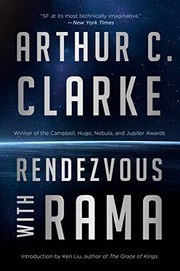
Rendezvous with Rama
3,108-word summary 14 min read 304 pages in the book
- First published
- 1973
- Publisher
- Mariner Books
- Pages
- 304
- ISBN
- 9780358380221
- Series
- Rama (#1)
Reading options
What's inside (8 sections)
I picked up this book because a friend kept insisting it was the one science fiction novel that made him feel small in a good way. He had pressed a worn copy into my hands twice and I had dodged it twice, mostly because the cover looked plain and the title sounded like homework. When I finally started it, I was reading the Mariner Books edition from 2020, the one that runs 304 pages and carries the original 1973 story in full. I expected something dusty. What I got instead was a book I finished in four sittings, staying up later than I planned on the last night because I needed to know what the cylinder would do next.
Here is the setup, and it is one of the best setups the genre ever had. In the year 2131, the sky watch program called Spaceguard spots a new object falling in from beyond the solar system. At first it looks like another rock. Then the numbers come back wrong. The orbit is too clean. The shape is too smooth. It is a cylinder, tens of kilometers long, spinning on its long axis, and it is heading for a close pass around the sun. Someone on Earth gives it the name Rama, after the old stories, and the name sticks. The ship Endeavour, under Commander William Norton, is the only vessel close enough with fuel enough to meet it. So Norton and his crew go to knock on the door of something nobody built and nobody invited.
What I love about Clarke is how calm he stays while describing impossible things. He writes like an engineer telling you about a bridge, except the bridge is a world. I found myself trusting him, page after page, even when the things he described made no sense at all. That trust is the engine of this book.
A rock that should not be there
The opening moves at a brisk clip. Spaceguard, the asteroid watch set up after an old meteor strike on Earth, logs the intruder and flags its strange path. It is coming fast, it is not from around here, and it will swing near the sun and leave again, which means there is only a narrow window to reach it. On Earth, a committee of scientists and politicians argues about what to do. Some want to send greetings. Some want to keep quiet. A few worry it could be a weapon, and the colonists out on Mercury make their unhappiness known in sharper terms as the story goes on.
Norton gets the assignment because Endeavour happens to be in the right part of the sky with enough reserve to make the burn. Clarke takes his time introducing him, and I liked that. Norton is not a hotshot. He is a working captain, married, with children he thinks about when the nights run long, the kind of man who checks the math twice and listens to his crew. His second in command and the rest of the officers feel like professionals rather than heroes. There is a doctor on board, a couple of pilots, engineers, scientists borrowed for the trip. Nobody gives speeches. They run drills and argue about airlocks, which is exactly what real people would do.
The approach gave me a genuine chill. Rama is dark out there, a long gray tube with no lights and no signal, turning end over end around its own length. Endeavour matches course and parks alongside, and the crew sends probes that find a way in: hatches at one end cap, three of them set in a symmetric pattern, with one that can be opened. I liked the patience of these chapters. Clarke lets the crew test the air, test the spin, test every hatch twice. When the first team steps through the lock and into the hub at the axis of the cylinder, they find themselves staring down the inside of a bottle the size of a county, with weight fading toward zero at the center and a long ladder dropping away beneath their feet toward lights they cannot explain.
Climbing down into a bottle world
The first entry into Rama is the part of the book I will remember longest. The crew comes through the hub and climbs down one of the long stairways that run from the pole toward the inner surface, which is the ground if you live on the inside of a spinning tube. Because the spin gives the feeling of gravity out at the walls and almost none at the axis, the climb is strange. Near the hub a strong person can push off and float. Farther down, weight returns step by step, until by the bottom the explorers are walking under a full pull with the whole sky curving up and over their heads.
What they find at the bottom stopped me cold when I first read it. The interior is laid out in a long belt around the middle of the cylinder. There is a dark band that turns out to be a frozen sea, running all the way around. There are two land masses with shapes that look worked, fields divided into rectangles, cones and domes that might be buildings, and one dense cluster of towers and blocks near one shore that the crew starts calling New York. Over everything there are long strips that glow when the interior lights up, three bright bands alternating with three dark ones along the length of the tube, like the bars of some vast lamp.
The scale is what gets you. The crew can walk for hours and barely cross one district. Sound carries oddly. The air is still and cold at first, and their breath fogs while the floodlights pick out frost on railings and steps. Norton sets rules right away about buddy teams and check in times, because one wrong turn in a place that big could lose a person for days. I kept thinking about how quiet it must have been, boots on metal stairs, radio crackle, and beyond that a silence nobody on the crew had ever heard, the silence of a machine the size of a city that has been asleep for longer than human history.
One of my favorite small details is how ordinary the explorers act inside a miracle. They take samples. They photograph everything. They argue about whether a ramp is a road or a drain. A pilot tests how far he can glide in the low weight near the axis. Someone brews coffee back on the ship and everyone crowds around the pictures. Clarke keeps cutting between wonder and routine, and the routine makes the wonder land harder.
The sea, the lights, and the things that move
Nothing in Rama stays asleep for long. As the cylinder falls closer to the sun, it warms, and warming wakes it. The frozen band at the middle begins to melt, and the crew watches from the shore as cracks run across the ice and water starts to move. Clarke writes the thaw with the care of a man who has watched ice go out on a lake. First the groans and sharp reports echoing off the far wall of the world. Then open leads of black water. Then a wind that was not there before, because a sealed world heating up has to move its air somewhere. The sea the crew names the Cylindrical Sea becomes a real sea, gray and choppy, and crossing it turns from a stroll into an expedition.
Then the lights come on. The long strips blaze, day arrives inside Rama on a six hour cycle of light and dark, and the temperature climbs toward something close to a warm afternoon. Frost melts off the towers of the New York cluster. Mists rise off the fields. And movement starts in corners of the eye: small machines going about unknown errands. The crew calls them biots, short for biological robots, though nothing about them is clearly alive. There are crablike sweepers that pick up litter nobody dropped. Spidery watchers that perch on walls and seem to track the humans with lenses. A larger thing like a shark that cruises the sea. None of them attack. Most of them ignore people entirely, which I found creepier than hostility. The humans are dirt on the floor of a house whose owner is still waking up.
I want to pause on the New York cluster, because Clarke clearly wants you to walk around in it. It is a knot of towers and narrow gaps on an island in the sea, packed tight, with no doors or windows the crew can find at first. Search parties go in with lights and ropes and come out puzzled. The structures might be factories. They might be warehouses. They might be something with no human use at all, built by minds that never needed doors because their machines never needed to walk through them. A second city farther along the tube turns out to hold stranger shapes still, including cones that ring when tapped and pits that drop farther than lamps can reach. Every answer the crew finds opens two new rooms behind it.
There is a lovely stretch where a young officer takes a small flyer across the interior, riding the light gravity near the axis to cross the sea in one long glide. I held my breath through those pages. Below him the water glittered, the far wall of the world hung overhead like a ceiling made of land, and the lights beat down in their steady rhythm. It is the most joyful scene in a book that is mostly careful and grave, and it ends with a scare that reminds everyone how thin the margin is. Rama does not punish. It also does not catch you when you fall.
Norton keeps the crew steady while Rama wakes
If this book has a hero in the human sense, it is procedure. Norton runs Endeavour the way a good captain runs any hard posting: short briefings, clear jobs, rest enforced, nobody showing off. When the interior warms and the biots appear, he pulls the search teams back and makes them work in pairs with lifelines. When the Mercury colonists send warnings that Rama might be dangerous and demand action, he reads the messages twice and answers with calm reports of what his people have actually seen, which is nothing hostile and much that is strange. When one of his officers wants to poke at a biot to see what it does, Norton says no, and you can feel the whole crew exhale.
That steadiness matters because the pressure builds from two sides at once. Inside Rama, the mysteries pile up faster than the scientists can log them. A wall that was solid turns out to hide a hollow. A plain that looked empty starts to grow structures overnight, or what look like structures, pale and straight, rising where flat ground had been. The crew debates what it all means over dinner, and Clarke gives each theory a fair hearing. It could be a generation ship with its crew long dead. It could be an automated probe that repairs itself between stars. It could be a seed, meant to arrive somewhere and unfold. Nobody knows, and Clarke refuses to let anyone on the page pretend they do.
Outside, the politics turn sharper. Word comes that the Mercurians, who live close to the sun and have the most to lose if a giant machine does something wild near it, want Rama destroyed or driven off. A courier craft is sent with orders that Norton cannot ignore forever. There are tense chapters where Endeavour must keep exploring while a clock runs on decisions made by people millions of kilometers away. I found these passages gripping in a quiet way. There are no battles. There is a captain reading a message, looking at his tired crew, and choosing to keep gathering facts while he still can.
Clarke also gives Norton a private life in small touches, messages home, thoughts about his family arrangement, brief shore leave habits. I will be honest: these parts feel thin now. The people in this book are drawn with a few clean lines and left at that. You will not find anyone here as vivid as the ship itself. Norton is decent and smart and brave in an unshowy way, but he never surprised me the way Rama surprised me on nearly every page. Some readers will mind that more than I did. I came for the cylinder, and Clarke knew his readers would.
What the crew finds, and what finds them
The middle of the book is a long survey, and your patience for it will decide how much you love this novel. Team by team, the crew maps the land masses, samples the water, drills into the plain, and tries to get inside the sealed buildings without breaking anything they cannot fix. They learn that the water is close to drinkable but not quite, full of minerals and odd organics. They learn that the soil is thin and strange, more like ground up machinery than farm earth. They find halls full of still machines, looms of piping, vats that hum when the lights are high. Everything is built to a scale that fits nothing human, with stairs too steep or too shallow and handholds in the wrong places, as if the builders had different bodies or no bodies at all.
Two discoveries stand out, and Clarke spaces them well. The first is that Rama seems to remake itself as it wakes. New growths appear on the plain. Old paths clear themselves. A damaged biot is found being stripped and recycled by smaller machines, which tells the crew that the ship maintains itself and has done so for a very long time. The second is the sense, growing chapter by chapter, that the whole interior is only one part of a larger plan. The far end of the cylinder, the end opposite the hatches, holds a region of spikes and horns that the crew can barely approach, a place where the geometry of the world seems to come to a point. Whatever Rama is for, Clarke suggests, the answer is down there, behind walls the humans will never open in the time they have.
There is also the matter of threes, which becomes a quiet joke among the crew. Hatches come in threes. Light strips come in threes. Cities and land masses repeat in threes. One of the scientists points out the pattern and everyone starts seeing it everywhere, the way you do once someone names it. Clarke never turns this into a code the humans crack. It stays a hint of a mind that counts differently, and I liked him for leaving it there. A lesser book would have made it a key to a door. This book lets it stay a habit of strangers.
I should say what the book does not do, because some readers will feel the lack. Nobody meets a Raman. Nobody finds a plaque that says greetings. The biots never speak, and the few that notice the humans treat them the way a street cleaner treats pigeons, as things to work around. If you need first contact to mean conversation, this novel will frustrate you. What Clarke offers instead is contact with the work of hands you never see, which to me felt truer and stranger than another meeting scene. The absence is the point. Someone built this, aimed it at the stars, and moved on or died or changed into something that no longer needs doors.
It leaves the way it came
Endings are hard for wonder stories, and Clarke chooses the boldest one available: he lets the wonder walk away. As Rama swings around the sun and drinks in the heat, the activity inside peaks and then, with little warning, begins to shut down. The lights dim on their cycle and stay dim. The sea starts to skin over with ice again. The biots finish their tasks and go still or vanish into openings that close behind them. The crew, back aboard Endeavour and watching from a safe distance, realizes the window is closing. Norton orders a last round of samples and photos, counts heads twice, and gets everyone out before the hatches seal themselves.
What follows is one of the coldest and most beautiful farewells I have read. Rama adjusts its course with a precision no human engine could match, using the sun itself as part of the maneuver, and picks up speed for deep space. Messages fly between Endeavour, Earth, and Mercury. The order to destroy the visitor arrives too late or is called off, depending on how you read the silences between officials, and in truth there was never much the humans could have done to a thing that size. The cylinder shrinks in the telescopes, its course bent toward another star, carrying its frozen sea and its empty cities and its patient machines back into the dark.
The last pages pull back to the committee rooms and observatories, where people who never set foot inside Rama argue about what it was. A probe? A Noah style ark with its passengers gone? A factory that makes more of itself? Clarke gives the debate room to breathe and refuses to crown a winner. One scientist notes that the visitors never tried to talk, and another answers that a highway crew does not stop to chat with ants. I thought about that line for days. It reframes the whole book. The humans were never the point of Rama. They were weather it passed through.
My honest criticism is this. The characters are thin, the middle sags when the survey repeats itself, and the ending lands with a shrug if you wanted answers. I felt those lacks, especially on the nights when one mapping chapter ran into another and I had to push myself to keep going. But the central image never loosened its grip on me: a world inside a can, lit like a stage, waking for a few weeks after ages of sleep, doing its unknown errands while tiny visitors walked its fields with lamps. I closed the Mariner edition feeling that I had been somewhere. Few books give me that. This one earned its place with the sheer nerve of its idea and the care of its telling, and I am glad my friend would not let me dodge it a third time.
FAQ
When was Rendezvous with Rama published?
It was first published in 1973. This summary cites the Mariner Books edition from 2020, which runs 304 pages.
Is Rendezvous with Rama the first book in a series?
Yes, it is book 1 of the Rama series, and later sequels continue the story with new characters.
Do the explorers ever meet the Ramans?
No. The crew finds cities, a sea, and working machines, but no living builders, and Rama departs with its purpose unexplained.
Similar books
More from Rama first, then related titles.
Childhood's End
Silver ships end war and want while Overlords midwife humanity's children into something beyond human.
2,054-word summary · 9 min read
Out of the Silent Planet
A Cambridge philologist is kidnapped and taken to Mars, where the natives are civilized and the humans are the dangerous invaders.
2,612-word summary · 12 min read
The Illustrated Man
A tattooed drifter's moving pictures retell eighteen Bradbury stories of children, rockets, Mars and the last night of the world.
2,791-word summary · 12 min read
Solaris
Kelvin reaches a silent station above Solaris and finds grief made solid when the ocean returns his dead wife Rheya, testing memory, science, and the limits of…
2,548-word summary · 11 min read
Contact
A radio astronomer catches prime numbers from Vega, helps build a strange machine, and returns with no proof but static.
2,763-word summary · 12 min read
Journey to the Center of the Earth
A professor, his nephew, and a guide climb into an Icelandic volcano to reach the center of the earth.
1,902-word summary · 8 min read
Life, the Universe and Everything
Arthur in slippers must stop cricket robots from rebuilding the Wikkit Gate.
2,216-word summary · 10 min read
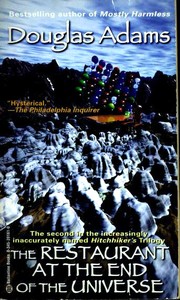
The Restaurant at the End of the Universe
Arthur Dent flees Vogons, dines at Milliways at the end of time, and strands on prehistoric Earth in Adams' sharp 1980 sequel.
2,749-word summary · 12 min read

Project Hail Mary
A teacher wakes alone on a ship with dead crewmates and must solve why the sun is dimming to save Earth.
2,293-word summary · 10 min read
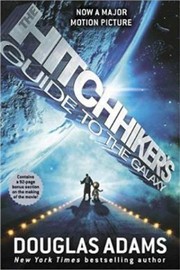
The Hitchhiker's Guide to the Galaxy
Douglas Adams' Hitchhiker's Guide retold: Earth's end, Ford, Zaphod, Marvin, and the answer 42.
2,253-word summary · 10 min read
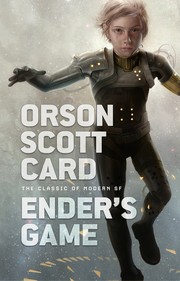
Ender's Game
Ender Wiggin trains at Battle School to fight the Formics, winning games that turn out to be real.
2,039-word summary · 9 min read
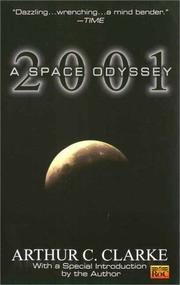
2001: A Space Odyssey
A black slab nudges apes to tools, calls Floyd to the Moon, and pulls Bowman past HAL toward Saturn and a strange rebirth.
2,982-word summary · 13 min read
Prelude to Foundation
A young Hari Seldon arrives on Trantor with a theory he cannot yet prove, and a hunt through the planet-city forces him to turn psychohistory into a real…
2,013-word summary · 9 min read

Starsight
Spensa Nightshade goes undercover aboard the Superiority space station Starsight to steal a hyperdrive, and finds a frightened bureaucracy where she expected…
2,568-word summary · 11 min read
Network Effect
Murderbot's contract job turns into a rescue mission when a hijacked research ship and a colony of corrupted colonists appear.
2,256-word summary · 10 min read
We Are Legion (We Are Bob)
A dead software engineer wakes up as a self-replicating space probe, clones himself into a squabbling fleet of Bobs, and tries to keep a ruined Earth alive.
2,357-word summary · 10 min read
We
In a city of glass ruled by the Benefactor, a state engineer building a spaceship falls for a woman who wants to tear the One State down.
2,247-word summary · 10 min read
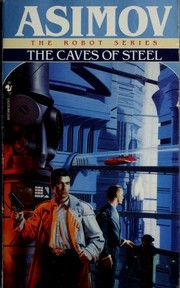
The Caves of Steel
Detective Elijah Baley must solve a Spacer's murder in a domed New York, partnered with R. Daneel Olivaw, a humaniform robot built in the victim's image.
2,445-word summary · 11 min read
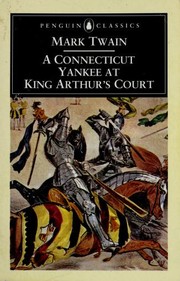
A Connecticut Yankee in King Arthur's Court
Hank Morgan, a Connecticut factory man, wakes in King Arthur's England, rises to chief adviser, and rebuilds the kingdom until his own inventions turn on him.
2,193-word summary · 10 min read
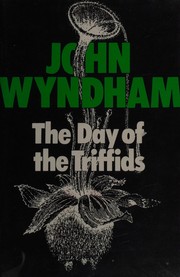
The Day of the Triffids
Blinded survivors flee carnivorous plants after a meteor shower.
2,171-word summary · 10 min read

Redshirts
Ensigns realize they die to serve a bad TV show's narrative.
2,152-word summary · 10 min read
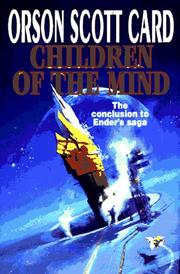
Children of the Mind
Ender's children split across worlds as Jane faces shutdown and Lusitania flees.
2,532-word summary · 11 min read

Ancillary Justice
A ship mind trapped in one human body hunts the emperor who betrayed her across frozen worlds.
2,595-word summary · 12 min read

A Canticle for Leibowitz
After nuclear war, monks save books across centuries while the world rebuilds and falls again.
2,381-word summary · 11 min read
Saga, Volume 2
Alana and Marko flee with baby Hazel while exes, princes, and ghosts close the net.
2,028-word summary · 9 min read
Iron Gold
Ten years after victory, Darrow and new rebels face peace that feels like another war.
2,158-word summary · 10 min read
Exit Strategy
Murderbot returns to help its humans as corporate hunters close in and old friends risk all.
2,088-word summary · 9 min read
Cibola Burn
Settlers and a company fight over a new world while Holden tries to stop a war.
2,011-word summary · 9 min read
Seveneves
Stephenson 880-page William Morrow epic, May 2015: the Moon shatters, the Cloud Ark fails, seven women restart humanity, and heirs meet survivors on Earth.
2,389-word summary · 11 min read

An Absolutely Remarkable Thing
Hank Green's An Absolutely Remarkable Thing follows artist April May after she and Andy film a giant Carl robot in New York that appears in cities worldwide…
2,699-word summary · 12 min read