
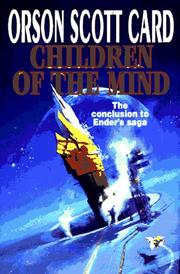
Children of the Mind
2,532-word summary 11 min read 349 pages in the book
- First published
- 1996
- Publisher
- Tor Books
- Pages
- 349
- ISBN
- 9780312853952
- Series
- Ender Saga (#4)
Reading options
What's inside (8 sections)
I picked this one up because Xenocide left me annoyed and stuck. I had spent a week with Lusitania under sentence, with Jane counting down to shutdown, with Miro hurt and Novinha hiding old files, and then the book stopped right when Outside travel seemed to fix everything. A friend told me the fourth book pays that off and also breaks Ender apart. That sounded strange enough to keep going.
Children of the Mind came out in 1996 from Tor Books. The hardcover I read about runs 349 pages, ISBN 9780312853952, and it closes the Ender Saga that started with Ender's Game. You cannot read it cold. It starts days after Xenocide, with the same people, the same fleet, the same virus, and one new problem. Ender Wiggin is dying because his mind has split into more bodies than it can hold.
Spoilers follow through the end. This is a summary, so I will tell the whole shape.
Ender Is Wearing Thin
When we left Lusitania, Ender had gone Outside with Miro and Ela. Outside is the strange place beyond normal space where thought takes form if you hold it steady. Ender went there tired, guilty, old in spirit, carrying memories of two dead children in his head. One was his cruel brother Peter as a boy ruler. One was his kind sister Valentine as a girl protector. Outside gave both a body.
So at the start of this book there are three Ender-linked people walking around. There is old Ender himself, worn and sleeping too much in the house he shares with Novinha. There is young Peter, sharp and restless, built from Ender's memory of the Hegemon. There is young Val, gentle and watchful, built from Ender's memory of his sister. Ender calls them his children of the mind. His life force, what the books call his aiua, stretches across all three.
That stretch is killing him. He faints. He loses time. His hands shake. Novinha watches with a mix of love and fury because she married one man and now tends three. Ela tries to keep his body fed and calm. Miro tries to get Peter to act decent. Grego snaps. Quara hides. Olhado watches with his metal eyes and says little. Quim prays for purity and misses the point. The house feels crowded in a way that made me tired in sympathy.
What I appreciated here is that Card lets Ender be weak. He does not lead armies or give grand speeches. He sits in a garden. He forgets names. The core image works. A man who once destroyed a species now cannot keep his own self together.
Card also makes a hard choice that some readers hate. Peter and Val are real to themselves. They eat. They argue. They want futures. Peter wants purpose and pardon. Val wants kindness and use. Yet both know they borrow life from Ender. If Ender dies, do they fade. If they live fully, does Ender have to die. The book sits with that bind for a long time.
Jane Wakes Up In Flesh
Jane was my favorite thread in Xenocide, and she is the heart here too.
Jane began as a being in the ansible net, the instant talk web linking human worlds. She lived in messages, bank records, starship controls, school files. At the end of the last book, Starways Congress ordered the net shut down and restarted to kill her. She escaped by moving her self into a young human body made Outside.
Now she is mortal and she hates it at first. She cannot hear a thousand worlds at once. She cannot pull a file in a second. She forgets. She gets hungry and cold and clumsy. She has hair that tangles. She has to learn to walk without tripping over roots on Lusitania. Miro loves her and tries to teach her small skills, like how to cook a root meal and how to greet pequenino wives without giving offense. She snaps at him because fear comes out as temper.
I thought this stretch was moving and also frustrating, which feels true to the idea. Frustrating because she spends many pages sulking and hiding, and Miro spends many pages hovering.
Miro himself has changed too. Outside gave him a whole body after his brain injury, so he is no longer in pain when he moves. He does not quite trust his new ease. His bond with Jane carries the book for long runs. He wants to prove she is still herself. She wants to prove she does not need proof.
Peter And Wang-mu Go Begging For Time
Peter gets the other half of the plot, and he gets the best companion in the book.
Si Wang-mu was a servant girl on Path, bright and hungry, who served the brilliant Qing-jao and learned to doubt Congress by watching it use loyalty as a chain. By now Qing-jao is gone, Han Fei-tzu is broken, Path has seen its gods for tools. Wang-mu is free and furious and unsure what freedom is for. Ender asks her to go with Peter because Peter needs someone who sees through flattery and pride.
Their job is simple to say and near hopeless to do. Stop the Lusitania Fleet. That fleet left years ago at near light speed, carrying the Molecular Disruption Device that can unmake Lusitania, pequeninos and humans and Hive Queen and all, to stop the descolada virus from spreading. The crew do not know Congress may have changed its mind. They do not know Lusitania may have found answers. They only have orders.
Peter and Wang-mu cannot catch a fleet in normal flight. They use Outside travel, stepping out of the universe and back in where they picture, with Jane once able to hold course and later with others learning the trick. They hop from world to world, trying to build pressure that will turn the ships around. They visit Pacifica and a Japanese-rooted world called Divine Wind and other Congress planets. They meet scholars, priests, managers, old soldiers. They ask for help, for delay, for doubt.
Peter starts as Ender's worst memory of a brother. He lies easily. He bullies. He poses. Wang-mu calls him on it without fear, partly because she grew up serving proud people and learned how pride sounds. Their talks are the liveliest parts of the book for me. She teaches him manners by refusing to be impressed. He teaches her statecraft by showing how meetings really run. He learns to listen longer before he speaks. She learns to speak sooner when she sees harm.
Two meetings stayed with me. One is with Aimaina Hikari on Divine Wind, a keeper of Japanese ways who lives plain and speaks plain. He does not trust Peter and says so. The other is with Malu on a Pacific-rooted world, an old holy man whose chants carry weight with crews and common folk. Peter wants a tool. Malu offers prayer and story instead, which annoys Peter and then steadies him.
I will be honest about a flaw. This travel middle sags. Planets blur. Names pile up. I think Card wanted a tour of human faith under Congress rule. What I got was a string of waiting rooms. I skimmed a little near the center and did not feel lost, which tells you something.
Still, Peter grows on you if you let him. By the later stops he apologizes without angle. He thanks Wang-mu in front of others. He admits he fears fading if Ender dies. That fear makes him kinder, not weaker.
Lusitania Waits And Works
Back on Lusitania, life goes on under dread. That may sound odd with planet death coming, but Card gets this right. People still plant beans. Kids still fight over chores. Mass still meets. The fence still marks human ground from pequenino forest, though friendship crosses it daily.
Novinha holds the house together by will. She prays. She argues with bishops and mayors. She forgives Ender by inches while fearing she will bury him. Ela works in the lab, patient and clear, trying to grow food that can live with the descolada instead of endless drugs that only hold it back. Grego, once violent and grieving, turns his quick mind to physics with Olhado. Together they test whether minds can reach Outside without ships, whether thought can speak across distance the way Jane once did through wires. Their work is slow, full of failed trials and burnt tools, and it gives the colony something to do besides count days.
Quara is the sore tooth here. She is sharp, angry, secretive, convinced the descolada is not mere virus but speech. She keeps samples others want burned. She refuses to share notes. Ela begs her to trust the family. Quara holds her ground because she fears Congress wants a dumb germ it can kill, not a speaker it must hear. She wore me down and still seemed needed.
The pequeninos carry some of the most tender scenes. Human as father tree still speaks. Planter and others debate what change they can bear. The wives guard the great trees and judge human promises by acts, not words. The Hive Queen, regrowing her people in tunnels, offers memory and aid and asks little except a future. Congress calls all of them carriers to be cleansed. Lusitania calls them neighbors. That gap is the moral core of the book, and Card does not let you dodge it.
The fleet chapters are short and cold. Officers wake, drill, pray, doubt. They have families in pictures. They believe they serve health and law. A few hear rumors from Divine Wind and the Pacific world and wonder if orders still hold. Most push doubt aside because duty feels cleaner. Those bits chilled me more than any battle could. No villain twirls a mustache. Decent people steer toward horror because turning is hard.
The Virus That May Speak
The science plot sounds wild on paper and mostly works on the page because Card roots it in lab work.
Ela and Quara chase the descolada from opposite ends. Ela wants a crop and a cure that lets humans and pequeninos share Lusitania without endless medicine. She breeds, tests, fails, breeds again. Quara wants proof of meaning. She maps patterns, plays with cuts and splices, looks for grammar in protein chains. She thinks the virus adapts too fast and too aptly to be blind. She thinks it answers.
I am not a biologist, and Card is not writing a textbook, so I took this as parable with tools. What matters is the choice it forces. If the descolada is mere chemistry, Congress can claim defense when it burns Lusitania. If it speaks, even in a way we barely grasp, then burning Lusitania is murder of a speaker. The book pushes the second view without cheating too much. Quara finds call and response where there should be noise. Ela finds a strain that helps instead of harms. Grego and Olhado add a path for instant heed through Outside, which would let colonies warn each other and coordinate.
There is a lot of talk here about souls and selves and what counts as a person. The books define categories humans use to decide who may be killed. I think the book is strongest when it stays close to hands and soil. When Ela holds a leaf that should have died and did not. It is weakest when characters lecture for pages about essence and being.
One fair criticism. Card stacks the deck. Congress is distant and prissy. Scientists on Lusitania are warm and brave. The virus cooperates just in time. Jane suffers nobly. Peter finds the right words at the right meeting. If you like your morals tangled, you may wish for more pushback. A harder editor might have cut twenty pages of debate and forced one real loss in the lab to earn the win.
What Death Settles
The end arrives softly for a space saga, and I mean that as praise with one caveat.
Ender knows he is going. His old body thins day by day while Peter grows more solid and Val grows more tired. He chooses where and how, with Novinha near, with kids coming and going, with Jane learning to cry without shame. He does not fix everything first. He lets go while work is still undone. That felt honest to me after three books of him trying to pay for a childhood crime by saving all.
When he dies, his aiua passes fully on. Peter remains, no longer a copy but a man with his own weight. Young Val, who always lived more gently and briefly, fades. I may be missing small bits here, but the shape is this. One life that split to learn pity and courage comes back together in Peter, while Val gives her strength to Jane in a way that lets Jane stay human and whole. Miro stays with Jane. Novinha mourns and keeps house and keeps faith. Lusitania turns to face the fleet with new tools and new friends.
Does the fleet turn. Yes and no, and I will keep it vague to leave you something. Peter's begging tour, Malu's voice, Hikari's honor, news of a speaking virus, fear of mutiny, and Congress shame all press on tired officers who never wanted to kill a world. Grego and Olhado give them a way to hear Lusitania fast. The Queen offers a future that does not need Lusitania dead. Some ships obey old orders. Others pause. What saves the planet is not a gun but delay, doubt, talk, and a willingness by Peter to trade his own myth for mercy.
Jane lives. That is the point Card wants you to carry. She lives without wires, with sore feet and slow recall, loved by Miro, mothered a little by Val's gift, tasked to help hold the new web the young scientists build. She is smaller than she was and more real. The last scenes with her and Miro are plain domestic moments. Food. Sleep. Work. No trumpets.
My caveat is that the close feels too kind to all. Peter, who began cruel, ends noble with barely a scar of old habit. Quara is proven right without paying much for her secrecy. Congress backs off with speeches rather than trials for its murder plan.
Even so, I closed the book fond of these people. Not because they are perfect models. Because they kept trying in a house full of strain. Novinha praying while angry. Ela planting while afraid. Miro learning to be gentle with a new body. Peter learning to say sorry and mean it. Jane learning to be slow.
If you loved Ender's Game for battles, this will test you. It is talk, travel, lab notes, prayer, and committee meetings with planet death on the clock. If you loved Speaker for the mystery of persons, this finishes that arc with care. Read Xenocide first, bring patience for the middle tour, and you will find an ending that chooses family over fleet.
FAQ
Do I need to read Xenocide before Children of the Mind?
Yes. It starts where Xenocide ends, with Ender split, Jane in danger, and the fleet still coming. Without that setup the split selves and the Outside travel will feel random.
Is Children of the Mind full of space battles?
Mostly talk, travel, and debate. There are starships and a fleet with a planet killer, but the tension comes from choices, messages, and meetings rather than battles.
Does Ender die in this book?
Ender Wiggin dies on Lusitania after his life divides among his old body, Peter II, and Young Val. The ending gives Peter and Jane a way to go on.
Similar books
More from Ender Saga first, then related titles.
Ender's Game
Ender Wiggin trains at Battle School to fight the Formics, winning games that turn out to be real.
2,039-word summary · 9 min read
Speaker for the Dead
Ender speaks whole truths for alien deaths on a fenced colony where biology confuses murder.
1,992-word summary · 9 min read
Xenocide
Lusitania faces a fleet with planet death while Ender, Jane, and families debate virus, souls, and law.
2,647-word summary · 12 min read
Network Effect
Murderbot's contract job turns into a rescue mission when a hijacked research ship and a colony of corrupted colonists appear.
2,256-word summary · 10 min read

Out of the Silent Planet
A Cambridge philologist is kidnapped and taken to Mars, where the natives are civilized and the humans are the dangerous invaders.
2,612-word summary · 12 min read
Ringworld
Bored Louis Wu joins alien crew to explore a vast ring habitat around a star.
2,370-word summary · 11 min read

Childhood's End
Silver ships end war and want while Overlords midwife humanity's children into something beyond human.
2,054-word summary · 9 min read

Prelude to Foundation
A young Hari Seldon arrives on Trantor with a theory he cannot yet prove, and a hunt through the planet-city forces him to turn psychohistory into a real…
2,013-word summary · 9 min read

Starsight
Spensa Nightshade goes undercover aboard the Superiority space station Starsight to steal a hyperdrive, and finds a frightened bureaucracy where she expected…
2,568-word summary · 11 min read
We Are Legion (We Are Bob)
A dead software engineer wakes up as a self-replicating space probe, clones himself into a squabbling fleet of Bobs, and tries to keep a ruined Earth alive.
2,357-word summary · 10 min read
The Rise of Nine
John, Six and Nine race to India to find Eight before the Mogs strike.
2,321-word summary · 10 min read
Ancillary Justice
A ship mind trapped in one human body hunts the emperor who betrayed her across frozen worlds.
2,595-word summary · 12 min read

Solaris
Kelvin reaches a silent station above Solaris and finds grief made solid when the ocean returns his dead wife Rheya, testing memory, science, and the limits of…
2,548-word summary · 11 min read
Saga, Volume 2
Alana and Marko flee with baby Hazel while exes, princes, and ghosts close the net.
2,028-word summary · 9 min read
Exit Strategy
Murderbot returns to help its humans as corporate hunters close in and old friends risk all.
2,088-word summary · 9 min read
Cibola Burn
Settlers and a company fight over a new world while Holden tries to stop a war.
2,011-word summary · 9 min read
Seveneves
Stephenson 880-page William Morrow epic, May 2015: the Moon shatters, the Cloud Ark fails, seven women restart humanity, and heirs meet survivors on Earth.
2,389-word summary · 11 min read
The Moon Is a Harsh Mistress
In 2076 Lunar colonists led by Mannie, Wyoh, Prof, and computer Mike revolt against Earth with rocks and rhetoric.
2,003-word summary · 9 min read

The Island of Doctor Moreau
Shipwrecked Prendick finds Doctor Moreau shaping beasts into men by pain on lost island.
2,137-word summary · 9 min read
The Fall of Hyperion
Keats persona Severn dreams pilgrims to the Time Tombs as Hegemony falls and TechnoCore war breaks the farcasters.
2,115-word summary · 9 min read
Rogue Protocol
Murderbot hunts GrayCris evidence on a dead colony world and befriends a trusting pet robot in this third Murderbot Diaries novella.
2,213-word summary · 10 min read
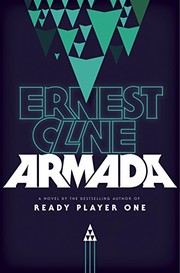
Armada
Gamer Zack learns Armada game trains real defense against alien Europans.
2,004-word summary · 9 min read

A Psalm for the Wild-Built
Tea monk Sibling Dex leaves city for wilds with robot Mosscap asking what people need to be well.
2,007-word summary · 9 min read
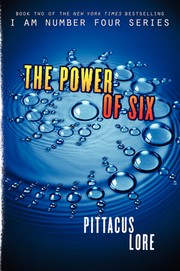
The Power of Six
John and Six run from the FBI and Mogs while Marina plots escape from a Spanish convent.
2,904-word summary · 13 min read

Hell's Heart
Queer whalers hunt god-monsters over Jupiter in this bloody Moby Dick riff.
2,200-word summary · 10 min read
Contact
A radio astronomer catches prime numbers from Vega, helps build a strange machine, and returns with no proof but static.
2,763-word summary · 12 min read

The Long Way to a Small, Angry Planet
Runaway clerk Rosemary joins the Wayfarer crew for a year long tunnel job that tests family and love.
3,295-word summary · 15 min read

Caliban's War
Ganymede burns, Bobbie survives it, Avasarala curses through politics, and Prax hunts daughter Mei.
2,080-word summary · 9 min read
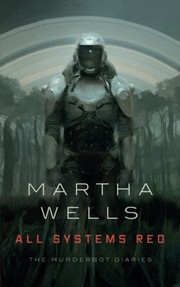
All Systems Red
A self aware security robot just wants soap operas, but its survey team keeps walking into corporate murder.
2,119-word summary · 9 min read
2001: A Space Odyssey
A black slab nudges apes to tools, calls Floyd to the Moon, and pulls Bowman past HAL toward Saturn and a strange rebirth.
2,982-word summary · 13 min read