
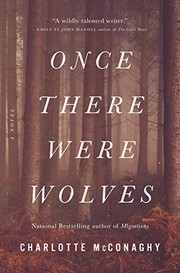
Once There Were Wolves
2,682-word summary 12 min read 272 pages in the book
- First published
- 2021
- Publisher
- Flatiron Books
- Pages
- 272
- ISBN
- 9781250244147
Reading options
What's inside (9 sections)
The first scene of Once There Were Wolves is a public meeting in a cold school auditorium in the Scottish Highlands, and it tells you almost everything about the book. A woman in the audience holds a sign that reads CIGARETTES AND WOLVES, KILLERS THAT COME IN PACKS. A child waves another asking whether there will be any deer left when he grows up. On stage, the biologists try to explain trophic cascades to farmers who see their sheep as a lifetime of work. Inti Flynn, the narrator, sits in the back row with numb fingers and rising contempt. When she finally stands, she says the quiet part out loud: the wolves are not the monsters in the room. People are.
Charlotte McConaghy published the novel with Flatiron Books in 2021. In the present, Inti is leading the Cairngorms Wolf Project, an experimental release of fourteen grey wolves into a national park. In the past, she is a girl in British Columbia and Alaska, learning what violence does to a family. The two strands meet in a dead man in the snow, and the novel spends the rest of its length asking what Inti will do about him.
Fourteen wolves and a town that does not want them
The project is real enough in its details to feel researched. Fourteen wolves sit in three pens inside Cairngorms National Park, scheduled for release at the end of winter. The team is small. Evan Long is the Scottish spokesperson, chosen because he can talk to farmers without sounding like a grant application. Niels is a Norwegian biologist, Zoe an American data analyst. Anne Barrie runs the Wolf Trust and got the project through Parliament. Inti is the field lead, an Australian with a temper and a gift for tracking.
The argument at the meeting is the argument the book keeps having. Evan explains that Scotland's ecosystem is in crisis, that deer eat the young trees, that wolves would keep the deer moving and let woodland return, that richer woodland would hold carbon and reduce flooding. The farmers answer with sheep, jobs, and the memory of sea eagles taking lambs. One of them asks how he is supposed to be compensated for watching something he spent a lifetime breeding get torn apart. It is a fair question, and the novel does not let Inti dismiss it for long.
The law matters. A farmer who catches a wolf attacking livestock may shoot it. A farmer who reports a kill can require the project to hunt and destroy the responsible wolf. Killing a wolf for sport or on sight is a crime. That loophole drives the plot: it gives the locals a legal way to take a wolf, and the biologists a reason to hide anything that looks like predation.
Red McRae is the loudest voice against the project. He is a farmer with a long memory and a short fuse, and he threatens Inti after the meeting. Stuart Burns is quieter and more dangerous. He owns a farm and has a wife named Lainey who moves carefully around him. Inti notices the bruises. She notices the way Lainey explains them away. She buys a lame horse from Stuart for far more than the animal is worth, mostly to get it out of his hands, and names it Gall.
Inti's skin, Aggie's silence
Inti has mirror-touch synesthesia. She feels what she sees other people feel, and sometimes what she sees animals feel. The condition is not a superpower in this book. It is a nervous system that will not close. When she was eight, living in the woods of British Columbia, her father, Alexander, dressed a freshly killed rabbit, and Inti collapsed convinced that she had been cut open. Her father was a logger turned naturalist who taught his daughters to track and hunt and revere the wild. Her mother was a detective in Sydney, pragmatic and armored. The family moved between countries, and the marriage came apart.
Alexander's mind deteriorated. He went into the forest one last time and did not come back. That absence sits under everything, because Inti and Aggie learned early that the wilderness can be a home and a place that swallows people. Inti became the intense, difficult twin. Aggie became the outgoing one, the language teacher, the sister who protected Inti when they were young. Then Alaska happened, and the roles reversed.
Aggie was seeing Gus Holloway, a young surgeon who liked loud parties and had a cruel streak. At a party in Alaska, Gus and his cousin James dragged Aggie into a room. Inti was upstairs, locked in her bedroom. She called the police, then pounded on the door. She felt the rape as it happened. She could not stop it, and she could not look away. Aggie survived. She stopped speaking. Gus was charged, then released until trial. Inti followed him home one night with a knife and told him that if she ever saw him again she would kill him.
Inti brings Aggie to Scotland because someone has to care for her. Aggie lives in the cottage, communicates in a private sign language, and slowly begins to emerge. She cares for Gall. She watches the wolves. She is still inside the worst night of her life. The sisters love each other in a way that is also a debt. Inti feels guilty for not being able to help, and Aggie is trapped inside what happened to her. Neither of them says it directly.
Duncan, Lainey, and the body in the snow
Duncan MacTavish is the local police chief. He has a dog named Fingal, a long memory for the town's secrets, and a talent for standing between angry people. He was once involved with Lainey, before she married Stuart. He knows what Stuart is. He also knows that a small town protects its own, and that Lainey will not press charges. When Inti confronts Stuart in public, Duncan pulls her away and tells her to wait for him in the pub. He arrives later with a cut on his face. He does not pretend the system works.
Inti and Duncan begin an affair. It is tentative and physical and not entirely trusting. She does not tell him she is pregnant. Part of that is fear, because he has said he does not want children. Part of it is habit, because Inti has spent her life keeping people at a distance so she can take care of Aggie. The pregnancy is a fact she carries alone for too long, and the novel uses it to tighten the screws.
One morning, leaving Duncan's house before dawn, Inti finds Stuart's body in the snow. He has been disemboweled. Her first thought is a wolf. Her second thought is what the town will do if a wolf is blamed. The project will be shut down. The wolves will be shot. Red will get his way. So Inti, who has spent her career reading tracks, buries Stuart in the forest and tells no one. She does it with the same competence she brings to everything else, and that is what makes it frightening.
Stuart is reported missing. Duncan, as police chief, interviews Inti about the last time she saw him. Bonnie, a local officer, asks her questions that are sharper than they first appear. Inti lies. Lainey keeps her own counsel. The body stays hidden. Inti keeps working, keeps tracking wolves, keeps pretending she is the same person she was before she put a man in the ground.
The attack, the wolf, and the birth
Inti finds Duncan and Fingal in the snow with their throats and stomachs slashed. Fingal is dead. Duncan is barely alive. Inti, thirty-six weeks pregnant, drags him to the car and loads Fingal into the front seat because Duncan's eyes beg her to. At the hospital, Duncan goes into surgery. Inti is examined and told she has been neglecting her own body. She sits in the waiting room convinced that Number Ten, the aggressive female wolf, did this.
She takes Gall into the mountains in a blizzard to kill Ten before the farmers can. She finds the wolf in a clearing and shoots her. The bullet goes through Ten's neck, and the wolf drops. Inti loads the body onto the horse, and then her contractions start. She gives birth alone in the snow, in the dark, with a dead wolf on the horse beside her. That night, wolves come. She thinks they will attack. Instead they lie down around her and the baby and keep them warm. In the morning, she cannot tell whether it was real or a fever dream.
Aggie finds her. For the first time since the rape, Aggie speaks. She takes the baby and promises to come back. Before she can, Red McRae finds Inti and carries her to the hospital. The man who threatened her at the meeting is the one who saves her life. That is the kind of turn the novel likes: no one is only one thing.
The confession
In the hospital, Aggie confesses. She killed Stuart. She attacked Duncan. She thought both men were abusers. She had decided Stuart was hurting Lainey and that the law would not stop him. She had decided her sister was in danger too, and she was wrong about Duncan. She was not wrong about Stuart, but that does not make her a detective or a judge. Inti listens to this with her newborn in her arms and understands that she killed Ten for nothing. The wolf was innocent of both attacks.
Duncan survives, but his throat is damaged and he cannot speak. He writes on a pad. He tells Inti that Aggie needs to be in a facility. Inti refuses. She has spent her life protecting her sister, and she is not going to stop now, even though Aggie has killed a man and nearly killed the man Inti loves. The novel does not resolve that loyalty. It just lets it stand.
Then the cover-up begins. Duncan gives a statement saying he was attacked by a wolf. The case closes. Number Ten is blamed for Stuart as well. Lainey, who is glad her husband is dead, lies to the police. Red admits that he shot Number Nine, the male wolf who had paired with Number Six, and says he was wrong to do it. He and Inti reach an uneasy understanding. The wolves are safe, the project survives, and the truth is buried deeper than Stuart was.
The novel spends most of its length building a case about violence against women and the failure of the law, and then it resolves that case through a confession, a lie, and a death that everyone agrees to accept. There is no trial. There is no punishment for Aggie. There is no consequence for Duncan's false statement. The book seems to argue that in a place this small, with this much history, justice is whatever the people involved can live with. That is a defensible idea. It is also very convenient for the plot.
The ending in the forest
Aggie takes Gall one night and disappears. She leaves a note that says, "Gone home. xx." Inti knows what that means. Their father went into the forest and did not come back, and Aggie has chosen the same exit. She is not well enough to live with what she has done, and she will not submit to a facility. Inti lets her go. The loss is quiet and absolute.
A year later, in spring, Inti removes the wolves' radio collars. The team stops monitoring them. Number Six has died, but her daughter leads the pack now, and the wolves are thriving. The land is coming back. Inti takes her daughter into the forest to teach her tracking, and she thinks about whether they will stay in Scotland. The Highlands have become part of her, even though the place is full of graves.
The title works on two levels. Once there were wolves in Scotland, and then people killed them all. Now there are wolves again, and the book wants you to feel both the loss and the return. The people are predators and prey too. Aggie kills a man and then disappears into the woods. Inti buries a body to save a species. Duncan lies to protect the woman he loves. The wolves are not a metaphor for any one of them. They are animals with collars and numbers, and the humans are the ones who keep inventing reasons to kill.
What works and what strains
The best writing in the novel is the physical writing. The snow, the cold, the tracking, the smell of wet wool, the weight of a wolf's body on a horse. The birth scene is the standout. It is grotesque and tender, and it convinces completely. It earns the book's central image of the wolves lying around a woman in labor. McConaghy is also good at the small negotiations of a town where everyone knows everyone. The pub, the school hall, the farm kitchen, the police station.
Inti is a difficult narrator, which is the point. Her mirror-touch condition could have been a gimmick, but it gives her a specific way of moving through the world. She flinches when others are hurt. She cannot watch a slaughter without feeling it. That makes her devotion to wolves understandable and her decision to bury Stuart almost inevitable. She has spent her life trying to prevent pain, and she makes one terrible choice to prevent more of it.
The weaknesses are real. The central crime depends on Inti making a decision that most people would not make, and the book has to work hard to sell it. It mostly does, but not completely. The police investigation is thin, and Duncan investigating his own girlfriend is a conflict the novel never really examines. The romance is rushed, and Duncan remains a decent outline more than a person. The team members are underused. Niels and Zoe exist to explain things. The wolf science occasionally sounds like a lecture, especially in the town meeting chapters.
The prose can also strain. McConaghy likes short sentences and sentence fragments, and when they work they are beautiful. When they do not, they feel like a style being applied. The flashbacks to Alaska are harrowing and necessary, but they are also graphic, and some readers will find the rape scene too much. It is a book about sexual violence and grief, and it does not soften either.
The ending is the most contested part. Aggie's departure is the right kind of unresolved. It fits her history, her father's history, and the novel's belief that some people cannot be saved by love alone. The epilogue is more of a problem. It is serene in a way the rest of the book has not earned. The wolves thrive, the land recovers, Inti has a daughter and a partner, and the violence is behind her. After so much moral mess, the calm feels a little too clean. I wanted one more complication, one more sign that the lies had cost something beyond the price Inti already paid.
None of that stopped me from reading the last hundred pages in one sitting. The book is best when it trusts its own images and stops explaining. The wolf with the bullet through her neck. The horse standing in the snow. The sister speaking for the first time in years. The note on the kitchen table. Those moments stay. The plot mechanics fade faster.
If you liked Migrations, this is a colder book with more violence and a stronger mystery. If you want a straightforward thriller about wolf reintroduction, you will get a good one for about a hundred pages, and then you will get a study of trauma that refuses to stay in its lane.
The image I keep is Aggie on Gall at the tree line, riding home to a place that no longer exists.
FAQ
What is mirror-touch synesthesia?
It is a neurological condition in which a person feels sensations they observe in others. Inti experiences it strongly, including during her sister's assault.
Where is Once There Were Wolves set?
Mostly in Cairngorms National Park in the Scottish Highlands, with flashbacks to British Columbia and Alaska.
Who killed Stuart Burns?
Aggie Flynn killed him. She believed he was an abuser, and she also attacked Duncan MacTavish after misreading his relationship with Inti.
Similar books

Drive Your Plow Over the Bones of the Dead
An old woman in Poland blames animal revenge for murdered hunters.
2,597-word summary · 12 min read
Prodigal Summer
Three lives in one Virginia mountain valley summer: a ranger watching coyotes, a widow learning moths and goats, and feuding elders guarding chestnuts, retold…
2,308-word summary · 10 min read

The Overstory
Nine strangers shaped by trees collide in the Pacific Northwest timber wars in Powers's 2018 Pulitzer winner.
3,289-word summary · 15 min read
The Truth About the Harry Quebert Affair
A blocked writer tries to clear his mentor Harry Quebert after a girl missing since 1975 is found buried with his famous manuscript.
2,192-word summary · 10 min read

Where the Crawdads Sing
Delia Owens's Where the Crawdads Sing: Kya the Marsh Girl, Tate and Chase, the 1969 murder in Barkley Cove, and what the trial misses.
2,568-word summary · 11 min read

The Crying of Lot 49
A California woman named executor of her ex-lover's estate follows a muted post horn into a possible centuries-old postal conspiracy, and Pynchon refuses to…
2,003-word summary · 9 min read
How the Light Gets In
Gamache investigates the murder of the last Ouellet quintuplet while the Sûreté he served is dismantled from inside by the man who took his protégé.
2,279-word summary · 10 min read
Bury Your Dead
Recovering from a failed raid that killed his officers, Gamache investigates a murder in a Quebec City library while Beauvoir reopens a case in Three Pines.
2,022-word summary · 9 min read
The Unmaking of June Farrow
A woman in a North Carolina flower-farming family walks through a red door into 1951, where she must solve her mother's disappearance and decide whether to…
2,701-word summary · 12 min read

The Bookshop on the Corner
A Birmingham librarian loses her job, buys a van, and moves to the Scottish Highlands to run a mobile bookshop. Warm and bookish, with uneven pacing.
2,557-word summary · 11 min read

Stones from the River
Trudi Montag is born a dwarf in a small German river town in 1915 and grows up to keep the town's library and its secrets, from the First World War to the…
2,818-word summary · 13 min read

Indigo Ridge
A new police chief in a Montana town meets the founding family's eldest son in a bar, and one night later a body turns up under their cliff.
2,763-word summary · 12 min read
Big Lies in a Small Town
A 22-year-old woman leaves prison to restore a 1940 mural, and Edenton, North Carolina, starts talking.
2,187-word summary · 10 min read

Worth Dying For
Reacher stops for one night in rural Nebraska and finds a family that runs the county, a missing girl and a shipment worth killing for.
2,021-word summary · 9 min read
True Believer
Jeremy Marsh, a science journalist who debunks paranormal claims, comes to a small North Carolina town and falls for a librarian who believes in things he…
2,125-word summary · 9 min read

The Pilot's Wife
Kathryn Lyons's husband dies in a plane crash, and the investigation reveals a secret life that forces her to rethink their marriage.
2,006-word summary · 9 min read

Say You're Sorry
A widowed prosecutor defends the teenager accused of killing her babysitter, uncovering a small town's secrets and a killer hiding in plain sight.
2,116-word summary · 9 min read
Flight Behavior
Dellarobia Turnbow is stuck in a Tennessee farm marriage until a valley full of monarch butterflies, and the scientist who comes to study them, force her to…
2,051-word summary · 9 min read
A Rule Against Murder
Gamache's anniversary at a remote lodge turns into a closed-circle murder when the family statue kills Julia, and everyone at the Manoir had a reason.
2,201-word summary · 10 min read

The Survivors
Kieran Elliott returns to Evelyn Bay twelve years after a storm killed his brother, and a young woman's murder forces the town to face what it has concealed.
2,571-word summary · 11 min read

Olive, Again
Elizabeth Strout returns to Crosby, Maine, as Olive Kitteridge marries Jack Kennison, confronts her son, and faces old age, grief, and small-town judgment.
2,333-word summary · 10 min read

The Affair
In 1997, Reacher goes undercover in a Mississippi town where a murder near an army base collides with a senator's power. The case that ends his military career.
2,039-word summary · 9 min read

The Prisoner of Heaven
Fermin Christmas past returns with a stranger and a prison debt.
2,388-word summary · 11 min read

Notes on an Execution
Ansel waits on death row while three women carry what he broke.
2,527-word summary · 11 min read
Case Histories
A Cambridge PI takes three cold cases that tangle with his own loss.
2,465-word summary · 11 min read
Blindsighted
Sara and Jeffrey hunt a killer staging women in small-town Georgia.
2,400-word summary · 11 min read

Bleak House
Jarndyce and Jarndyce grinds through Chancery while Esther finds her family.
2,480-word summary · 11 min read

Animal, Vegetable, Miracle: A Year of Food Life
A family eats only local for a year from their Virginia farm.
2,270-word summary · 10 min read

The Round House
At thirteen, Joe Coutts hunts for his mother's attacker when the law stalls, in Louise Erdrich's National Book Award novel of family, jurisdiction, and revenge…
2,391-word summary · 11 min read

We Are All Completely Beside Ourselves
Rosemary tells of twin sister Fern, a chimp raised as family, and research fallout.
2,058-word summary · 9 min read