
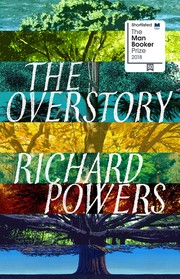
The Overstory
3,289-word summary 15 min read 512 pages in the book
- First published
- 2018
- Publisher
- W. W. Norton & Company
- Pages
- 512
- ISBN
- 9780393635522
Reading options
What's inside (7 sections)
I put off reading this book for years because every description made it sound like homework. A 512-page novel about trees that won the Pulitzer. Published in 2018 by W. W. Norton and Company. Structured in four parts with names like Roots and Crown. It sounded like the kind of book people praise and nobody finishes.
Then a friend whose taste I trust told me the first hundred pages read like nine short stories, and that sold me. Short stories I can do. So I started it on a train ride, expecting to bounce off, and instead I missed my transfer because I was still reading about a chestnut tree in Iowa.
That is the strange trick of this novel. It is about trees, yes, but it hooks you the way a good ensemble drama does. You meet people, you learn the one tree that bent each of their lives out of shape, and then you watch them crash into each other in the old growth forests of the Pacific Northwest. Some of it is slow. Some of it frustrated me enough to complain out loud. But I finished it changed in a small, real way. I look at street trees differently now, and I am a little embarrassed about how long that took.
Roots: nine people and the trees that marked them
The opening section is called Roots, and it works exactly the way roots do. Nine separate lives, spread across decades and states, each one touching wood in some way that matters.
The longest root belongs to the Hoel family. In the mid-1800s a man named Jorgen Hoel settles in Iowa and plants six chestnuts. Only one survives. That single tree becomes a family ritual: every month, for generations, a Hoel photographs it. You see the trunk thicken, the children grow, the farmhouse paint change color. The photos pile up in drawers. Nobody in the family thinks of it as art. It is just what Hoels do.
Nicholas Hoel is the last of that line, an art student who drifts through college making sculptures nobody understands. He comes home one winter to find his parents and siblings dead from a gas leak, the house full of silence, the chestnut still standing outside in the snow. There is a scene where he keeps taking the monthly photo out of habit, pointing the camera at branches with nobody left to pose under them, and it hit me harder than anything else in the first third of the book. Powers never tells you how to feel about it. He just shows you a young man keeping a ritual alive because stopping would mean admitting everyone is gone.
Olivia Vandergriff gets the most dramatic entrance. She is a college student, restless and a little lost, who gets electrocuted in her apartment and flatlines for over a minute. When she comes back, she is convinced that voices, presences, beings made of light, told her something was coming and that she had to go west. I will be honest: this is the part of the book I believed the least. Powers writes it with total sincerity, and I kept waiting for a wink that never arrived. But it functions as an engine. Olivia drops out, drives toward California, and picks up Nicholas Hoel hitchhiking along the way. Their meeting feels fated in a way the book earns, because both of them have already lost the lives they were supposed to live.
Mimi Ma is a San Francisco engineer, the daughter of a Chinese immigrant who planted a mulberry tree in their yard and taught her to listen to it. Her father killed himself after a business failure, and Mimi carries his scrolls, his silences, and a complicated guilt about the American life she built on top of his grief. When her office window looks out over a beloved street tree scheduled for removal, something in her snaps. Of all nine characters, Mimi felt the most alive to me. She is prickly, funny about bureaucrats, bad at asking for help, and her slow turn from rule follower to lawbreaker is the most convincing conversion in the novel.
Adam Appich is a psychology student obsessed with why groups do what they do. As a boy he and his four siblings each got a tree planted at their birth, a maple and an oak and others, and Adam grew up matching each sibling to a species in his head. His sister died young of cerebral palsy, and the grief curdled his curiosity about human behavior into something darker. He writes papers on the psychology of persuasion while slowly realizing he wants to be persuaded by something bigger than a career.
Ray Brinkman and Dorothy Cazaly are counted as one root between them, a married couple in St. Paul who have read together, gardened together, and gently disappointed each other for decades. Ray is a public defender turned playwright manqué. Dorothy wanted children; Ray did not, and the compromise hollowed something out. Their tree is a catalpa in the yard they plant together. Their section is quiet, domestic, almost plotless for a long while, and then Ray suffers a massive stroke that leaves him locked in a failing body. Dorothy, who had been on the verge of leaving him for another man, stays. I found these two the hardest to read quickly and the hardest to forget afterward. Their story asks what care means when the person you love can barely respond, and it answers without speeches.
Douglas Pavlicek is a Vietnam veteran who credits a banyan with breaking his fall when his plane went down. He comes home restless, plants trees for the Forest Service, and watches clear-cuts spread across Oregon. His guilt about surviving transfers itself onto forests, and his bluntness is a relief among all the lyricism.
Neelay Mehta is the son of Indian immigrants, a boy who fell from a tree and ended up in a wheelchair. Confined indoors, he teaches himself to code and grows up to build a gaming empire around a series called Mastery, virtual worlds where players colonize planets. His chapters run on screens and servers, a counterweight when the forest passages get misty.
And then there is Patricia Westerford, the character people argue about most. She is a dendrologist, hearing impaired since childhood, who discovers that trees communicate through underground fungal networks, sharing sugars with sick neighbors and sending chemical warnings about insects. Her colleagues laugh her out of a conference. Her findings get buried for years. Then other researchers confirm them, and she becomes famous with a popular book called The Secret Forest. Powers based her loosely on real forest ecologists, and her chapters carry the actual science of the novel: mycorrhizae, mother trees, the finding that a forest is less a collection of individuals than one linked system. Some readers find her chapters dry. I found them the reason the whole book holds together, because without her the tree worship would feel like mysticism instead of biology.
Nine roots. Nine different wounds involving bark, sap, shade, or timber. The section runs long, more than two hundred pages, and I will not pretend every root gripped me equally. Ray and Dorothy tested my patience at first. Adam's childhood tree matching felt like a clever device wearing thin. But by the end of Roots I understood what Powers was doing. He was planting people the way you plant an orchard, far apart, so that the moment their crowns touch would feel like weather.
Trunk: everyone arrives at the same redwood
Trunk is the shortest section and the most propulsive. The nine lives start converging on one patch of threatened old growth in California, centered on a giant redwood the activists call Mimas.
Olivia and Nicholas get there first. They join a tree sit, climbers living on platforms hundreds of feet up to block logging, and Powers writes the climb in queasy physical detail: the sway, the sap on hands, the owls at night, the loggers' shouts from far below like voices from another century. Olivia takes to it immediately. She has the convert's glow. Nicholas draws it, carving his months in the canopy into sketchbooks, and his art finally finds a subject bigger than himself.
Mimi arrives with money and fury after the city cuts down a tree she tried to save. Douglas arrives with his Forest Service knowledge. Adam arrives claiming he wants to study the group for his dissertation, telling himself he is an observer right up until he is passing up buckets and lying to rangers.
Meanwhile Ray and Dorothy stay home, their connection to the story running through the books they read and the garden they tend. Patricia publishes, lectures, and becomes a kind of distant patron saint to the movement. Neelay watches from his company headquarters, donating money to conservation while building digital forests that players strip-mine for points, a contradiction he notices and does nothing about for a long while.
The timber wars material here is grounded in the real fights of the late twentieth century Pacific Northwest, the injunctions and the counter injunctions, the spotted owl, the mill towns watching jobs vanish while environmentalists chained themselves to gates. Powers does not pretend the loggers are villains. There are mill workers in these pages with mortgages and sick kids, and the book is better for refusing to flatten them. The tension that builds through Trunk is not between good and evil. It is between two honest claims: people need work now, and a thousand-year-old living thing needs to keep standing.
By the end of Trunk the sit has won a temporary victory and lost the larger war. Mimas is spared for the moment. The surrounding forest is not. The group, drunk on closeness and grief, decides that legal protest is not enough. That decision ends the section on a cold note, and I remember closing the book for the night at that point and staring at my kitchen table, annoyed at characters I had come to like for choosing a path I could see would ruin them.
Crown: the fire, the death, and the price
Crown is where the novel turns from protest story into something darker, and where my feelings about it split hardest.
The five, Olivia, Nicholas, Adam, Mimi, and Douglas, begin burning logging equipment and empty vacation cabins built on cut land. They are careful at first. No people, they tell each other. Property only. Powers writes these scenes with procedural patience: the rental cars, the timers, the walkie static, the terror of waiting in the woods for a glow on the horizon. It reads like a heist story drained of glamour, which is the point. Every fire makes them sicker and closer.
Then comes the last one. A fire at a remote site goes wrong, an explosion nobody planned, and Olivia is killed. I will not detail the mechanics beyond that, because the book itself pulls back, showing you mostly Nicholas's shock and the group's frantic agreement to scatter and never speak. But the effect is shattering precisely because Olivia was the believer. She was the one who heard voices telling her the world was ending. Her death reads as both accident and fulfillment, and Powers lets it sit without explaining which.
What follows is the slow unspooling. Douglas drifts, drinks, plants trees, carries the secret like a stone. Adam becomes a respected psychology professor, marries, publishes, and flinches every time a student asks about group loyalty. Mimi builds a careful new life. Nicholas vanishes into the back roads, making strange land art nobody sees.
There is also a fair question the book half asks and never fully answers: whether Olivia's death is treated as tragedy or as sacrifice. The other characters mythologize her. The narrative sometimes joins in. I wanted at least one character to say plainly that getting a young woman killed for burned equipment was a waste, full stop. Douglas comes closest, years later, and his bluntness is a relief when it arrives.
Seeds: twenty years later, what grew
The final section is called Seeds, and it jumps forward roughly two decades to show what each life grew into. This is my favorite part of the book, stranger and sadder than anything before it.
Adam, now a tenured professor with a family, is living a comfortable life built on silence when Douglas walks into an FBI office and confesses. Douglas has decided the secret is poisoning everyone, or maybe he has decided Mimi in particular deserves to be free of it, and he names Adam as his accomplice. Adam is arrested, tried, and sentenced to a crushing stretch in federal prison. His chapters in custody are devastating in a quiet way. He studies his fellow inmates the way he once studied activists, and he realizes his old research question has answered itself: groups do what they do because belonging feels like survival. He writes, he teaches inside, he accepts the punishment without quite accepting the label. I thought about these chapters for weeks.
Mimi, who reinvented herself as a therapist under a new name, watches the case from hiding and has to decide whether to turn herself in or keep living. Her choice, and what it costs her relationship with a kind man who knows nothing about her past, is handled with real restraint. No courtroom speech. Just a woman weighing two kinds of guilt against each other.
Nicholas becomes a ghost artist of the American West, building enormous sculptures from fallen timber and stone on public land, working alone for months, photographing from the air. His final work is the image the whole novel has been walking toward: a word spelled out in living and dead wood across a clear-cut, big enough to be read from orbit. I will not spoil the word here beyond noting that readers quote it constantly, because coming across it cold is one of the genuine jolts the book offers. When I understood what he had built, and how long it took, I sat still for a while. It reframes everything about the Hoel family photos from Roots. A man who lost his family to silence spends twenty years writing one word to the sky.
Neelay's seed is the weirdest. He pours his fortune into building artificial minds trained on Earth's biomes, seeds of code meant to learn what forests know. Written in 2018, it reads now like Powers saw the machine learning wave coming and asked what it would mean to aim it at nature instead of ads. Neelay never touches a real tree again if he can help it. The book does not forgive him for that distance, and neither did I.
Patricia's seed is the most hopeful and the most painful. She spends her late career building a seed bank, a vault of the world's plant heritage against the century to come, and she is invited to address a gathering of the powerful, politicians and billionaires, to tell them what the forests need. Her speech is the book's moral center, plain spoken after hundreds of pages of lyricism, and what she does afterward on the stage is shocking enough that I gasped on the train. I will leave that moment undescribed.
Ray and Dorothy get the gentlest coda. Ray, post stroke, can barely move or speak. Dorothy reads to him, wheels him into the garden, and together they watch their small plot of land turn feral and alive. There is a passage about the two of them counting birds from the porch that I found more moving than any of the courtroom or wilderness drama. After all the fires and manifestos, the book suggests that attention, just paying attention to one small place for years, might be its own form of resistance. It is a modest claim, and because it is modest, I believed it.
What I would argue with, and who should read it
Let me be direct about the problems, because this book gets recommended with a kind of reverence that makes honest criticism feel rude.
The pacing is uneven. Roots flies despite its length because every fifty pages brings a new life. Crown stalls because five people hiding the same secret generate the same scene repeatedly. Powers writes beautiful sentences about bark and light, genuinely beautiful, but there are stretches where three beautiful sentences in a row say the same thing, and I wanted someone to tell him that one perfect image of sun through needles beats five good ones.
The characters sometimes feel like positions in an argument. Patricia is Science. Neelay is Technology. Adam is the Study of Crowds. When the plot needs someone to voice a theme, Powers occasionally has them speak in paragraphs no human would say aloud. The science is accurate as far as I could check, but it arrives in slabs.
Olivia's voices bothered me to the end. A near-death experience that issues marching orders is a lot to accept in an otherwise realistic book, and Powers never gives skeptics like me a foothold, no doctor suggesting oxygen starvation, no friend asking if grief did the talking. You either accept that the beings of light are real or you accept that Olivia is unwell and the book loves her anyway. I chose the second reading and it worked, but I resented having to do the work the novel would not do.
The length is real. At 512 pages in the Norton hardcover, this is a commitment, and Crown could lose weight. Readers who need plot every twenty pages will suffer in Seeds, where years pass in paragraphs and the drama is interior. Readers allergic to earnestness will suffer throughout, because Powers is deeply, unironically earnest about trees. There is no irony in this book. None. That is either refreshing or exhausting depending on your tolerance.
And yet. I recommend it, strongly, to a particular reader. If you liked braided novels with patient accumulation, if you read science writing for pleasure, if you have ever stood in an old forest and felt your own timescale shrink to nothing, this book will find you. Powers keeps pulling the camera back: from a marriage, to a town, to a species, to a continent over centuries, until human history looks like a brief disturbance in a much older project.
Practical notes for going in. Give Roots time; the Hoel chestnut, Mimi's mulberry, and Patricia's first conference talk are the three threads to hold onto. Keep a bookmark in Seeds, because the time jumps reward flipping back. And when you finish, go outside and look at the nearest tree for a full minute. I did, on my street, in the rain, feeling slightly ridiculous. The book had done its work.
Would I call it the best novel ever written about trees, as one famous blurb claims? That is publisher talk. I would call it the most serious attempt I have read to make human readers feel time the way a forest keeps it, slow, linked, patient beyond our patience, and to ask what we owe something that outlives us by millennia. It does not always succeed. It lectures, it repeats, it loves its own sentences too much. But at its best, in the Hoel photographs, in Mimi's fury, in the old couple counting birds, in the word spelled across a clear-cut, it reaches a scale most novels never attempt. I am glad I missed my stop for it. I am gladder that I finished it, argued with it, and kept thinking about it weeks later, which is more than I can say for most books half its size.
FAQ
Did The Overstory win the Pulitzer Prize?
It won the 2019 Pulitzer Prize for Fiction and was shortlisted for the 2018 Booker Prize. Barack Obama also listed it among his favorite books of 2018.
The book is 512 pages. How should I approach it?
Start with the Roots section and let each backstory land on its own. The Trunk brings everyone together, so patience in the first hundred pages pays off.
Is The Overstory based on a true story?
No. The siege, the arson, and the seed bank are invented, but the tree science about communication through fungal networks draws on real research by ecologists like Suzanne Simard.
Similar books
Once There Were Wolves
A biologist reintroduces fourteen wolves to the Scottish Highlands while protecting her traumatized twin sister, then finds a body in the snow that could…
2,682-word summary · 12 min read
Flight Behavior
Dellarobia Turnbow is stuck in a Tennessee farm marriage until a valley full of monarch butterflies, and the scientist who comes to study them, force her to…
2,051-word summary · 9 min read
Animal, Vegetable, Miracle: A Year of Food Life
A family eats only local for a year from their Virginia farm.
2,270-word summary · 10 min read
Prodigal Summer
Three lives in one Virginia mountain valley summer: a ranger watching coyotes, a widow learning moths and goats, and feuding elders guarding chestnuts, retold…
2,308-word summary · 10 min read
Where the Crawdads Sing
Delia Owens's Where the Crawdads Sing: Kya the Marsh Girl, Tate and Chase, the 1969 murder in Barkley Cove, and what the trial misses.
2,568-word summary · 11 min read
Violeta
A woman born in 1920 writes her life story to her grandson, from one pandemic to another, through wealth, ruin, passion, and dictatorship in South America.
2,555-word summary · 11 min read
The Only Good Indians
Four Blackfeet men who killed a pregnant elk are hunted by her spirit a decade later, and the only person who can end the cycle is a teenage girl who was not…
2,010-word summary · 9 min read
The Idiot
A Turkish-American freshman at Harvard falls in love through email with a Hungarian math student and spends a summer in Hungary trying to turn correspondence…
2,019-word summary · 9 min read
The Guest
Cast out of her wealthy boyfriend's Hamptons house, twenty-two-year-old Alex spends five days talking her way through other people's homes and accounts.
2,165-word summary · 10 min read

The Crying of Lot 49
A California woman named executor of her ex-lover's estate follows a muted post horn into a possible centuries-old postal conspiracy, and Pynchon refuses to…
2,003-word summary · 9 min read
Silas Marner
A falsely accused weaver hoards gold in Raveloe until a stolen hoard and an abandoned child remake his narrow life.
2,699-word summary · 12 min read
Revolutionary Road
A Connecticut couple who believe they are too good for the suburbs plan to move to Paris, and the plan slowly exposes everything they cannot say to each other.
2,085-word summary · 9 min read

Lisey's Story
Two years after her novelist husband dies, Lisey Landon follows a trail of clues into his childhood and the other world that made him a writer.
1,998-word summary · 9 min read
Alone With You in the Ether
Two people in Chicago agree to six conversations, and the experiment becomes a love affair that is also a study of bipolar disorder, obsession, and the shape…
2,713-word summary · 12 min read

The Beach
A young backpacker follows a dead man's map to a hidden island community, then discovers what the people there are willing to do to keep it secret.
2,067-word summary · 9 min read

Memories of My Melancholy Whores
A ninety-year-old journalist pays for a night with a teenage girl, cannot go through with it, and discovers love for the first time in García Márquez's late…
2,101-word summary · 9 min read
Less Than Zero
Clay returns to Los Angeles for Christmas and drifts through parties, drugs, and old friends, including one who is selling himself to survive.
1,926-word summary · 9 min read

Howards End
Forster's 1910 novel follows two families, a house in Hertfordshire, and a burned note, asking whether money and feeling can ever be connected.
2,187-word summary · 10 min read

Sophie's Choice
A young Southern writer in 1947 Brooklyn befriends a brilliant, unstable couple and slowly learns the story of the Polish Catholic woman at the center of their…
2,798-word summary · 12 min read
James
Percival Everett retells Huckleberry Finn from Jim's side, giving him a library, a hidden school, and a voice the novel lets loose.
2,211-word summary · 10 min read

Fathers and Sons
Arkady brings the nihilist Bazarov home to his father's estate, and a generational argument turns into love, a duel, and an early death.
2,192-word summary · 10 min read
Dance Dance Dance
A divorced Tokyo writer returns to a Sapporo hotel that has been rebuilt, then follows a woman who may be a ghost and a teenage girl through a mystery about…
2,407-word summary · 11 min read

Unaccustomed Earth
Lahiri’s second story collection follows Bengali families in America and abroad, tracing the quiet distances between parents and children, spouses, and the…
2,333-word summary · 10 min read

The Age of Miracles
A California girl grows up while the Earth's rotation slows, and ordinary adolescence continues alongside slow catastrophe.
2,417-word summary · 11 min read
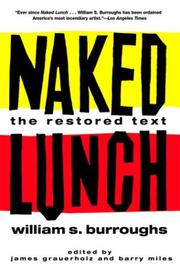
Naked Lunch
Burroughs's banned 1959 collage novel follows Bill Lee through addiction, Tangier, and the nightmare bureaucracy of the Interzone.
2,082-word summary · 9 min read
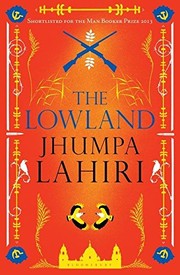
The Lowland
Two brothers grow up beside a marshy lowland in Calcutta, and the choices of the younger one draw the older into a life of duty, distance, and quiet grief that…
2,213-word summary · 10 min read
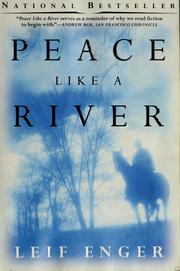
Peace Like a River
An asthmatic boy in the early 1960s narrates his family's search for his older brother, who is accused of two killings and has escaped custody.
1,969-word summary · 9 min read

We Are Okay
Marin fled San Francisco after her grandfather vanished and stopped answering anyone. When Mabel visits her college dorm, she has to say what happened.
2,253-word summary · 10 min read

The Chosen
A shattered pair of glasses in a 1944 Brooklyn softball game starts a friendship between a Hasidic boy and his Orthodox neighbor, and their fathers pull them…
2,443-word summary · 11 min read
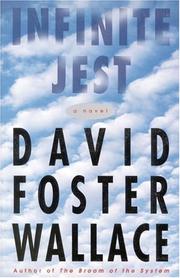
Infinite Jest
A film that kills its viewers, a tennis academy, a halfway house for addicts, and a future America where corporations name the years, all tangled together.
2,084-word summary · 9 min read