
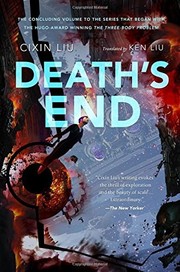
Death's End
2,980-word summary 13 min read 604 pages in the book
- First published
- 2010
- Publisher
- Tor Books
- Pages
- 604
- ISBN
- 9780765377104
- Original title
- 死神永生
- Series
- Remembrance of Earth's Past (#3)
Reading options
What's inside (8 sections)
I came to Death's End with tired eyes and high hopes. I had read the first two books in Remembrance of Earth's Past back to back, and I needed to know how Liu Cixin would close a story that stretched from the Cultural Revolution to the heat death of everything. This is the third book, first published in Chinese in 2010. The edition cited here is the Tor Books English edition from 2016, translated by Ken Liu, 604 pages. It follows The Three-Body Problem and The Dark Forest, and it goes further than both in time, in space, and in strangeness.
Fair warning before we start. This is a summary, so I will talk about plot turns freely, including the big ones. If you want to meet this book cold, read it first and come back later. If you want to know what you are getting into, and whether the ending earns its size, stay with me.
The short version is this. An engineer named Cheng Xin helps send a dying friend's brain toward an alien fleet. She sleeps through centuries, wakes into a fragile peace, and ends up holding the one switch that keeps that peace alive. Every choice after that costs lives. The book ends at the edge of the universe, with almost everyone gone.
The Staircase Project and a brain sent to the fleet
The story starts near our own time, in the early years of the Trisolaran Crisis. Earth knows an alien fleet is coming. The trip will take centuries, which gives people time to plan and also time to despair. One early plan is called the Staircase Project. The idea is rough but bold. Send a small probe after the fleet at high speed, pushed by a chain of nuclear blasts, like climbing stairs made of explosions. The probe cannot carry a person. It can barely carry a human brain, kept cold, with the hope that the Trisolarans will catch it and grow a body around it. That agent could then learn things and, in theory, speak for Earth.
Cheng Xin is the engineer at the center of this. She is young, trained in rocket work, and known for thinking clearly when others posture. Her boss is Thomas Wade, head of a planetary intelligence group. Wade is cold in a way that scares even his own staff. He cares about results and treats people as parts. Cheng Xin works for him because the work matters, not because she enjoys his style. Their pairing drives much of the book. She feels the weight of each life. He counts lives the way other people count fuel.
The brain belongs to Yun Tianming, a college classmate of Cheng Xin. He is dying of cancer. He has loved her quietly for years without telling her. Before his surgery he comes into money by chance, and he spends it on a strange gift. Through a United Nations fundraiser he buys the property rights to a far star called DX3906 and has them put in her name. She does not know at first. She only knows a sick friend has agreed to give his brain to a plan that sounds like a rumor.
The launch goes wrong in the way real launches sometimes do. The probe misses its path and drifts. Everyone assumes Tianming is lost. Cheng Xin, who talked him into going, carries that guilt for a very long time. She agrees to enter hibernation, the cold sleep that lets people skip decades, so she can be there when the project bears fruit, if it ever does.
I liked this opening more than I expected. The physics is wild, but the human part is plain. A sick man gives the only thing he has left. A young woman asks him to do it and then has to live with asking. You learn early what kind of book this will be. Big machines, small hearts, and choices that cannot be undone.
One complaint already, and it stays relevant. Cheng Xin can feel thin here. Tianming gets more color in fewer pages. His shy gift of a star says more about him than several chapters say about her. Keep that in mind, because the trilogy will later turn on whether Cheng Xin is strong enough for the jobs handed to her.
Waking up rich in the Deterrence Era
Cheng Xin sleeps past the worst century and wakes into a different world. This is the Deterrence Era. Luo Ji, the astronomer from the last book, worked out how to hold the Trisolarans off. The logic runs like this. The universe is crowded and fearful. Any world whose position is broadcast may be hit by strangers. So Luo Ji built a trigger. If Earth dies, the location of Trisolaris goes out to the stars. Both sides lose. That standoff is called deterrence, and one person holds the switch. That person is called the Swordholder.
Life under deterrence is strange. Earth has grown soft and rich. Trisolaran knowledge has leaked into human science. A Trisolaran machine mind called Sophon walks around in the shape of a graceful woman and talks with scientists and children. People in this era dress plainly, speak gently, and dislike harsh talk. Men from earlier centuries wake from hibernation and find the new manners hard to read.
Cheng Xin wakes to a shock. That star gift from Tianming turns out to matter. DX3906 has planets, and the rights in her name are worth a fortune. She sells some claims and starts a space company called Halo Group. She meets Ai AA, a young astronomer with a sharp tongue and a warm heart, who becomes her aide and closest friend. AA teases her and tells her when she is fooling herself. Their friendship is one of the few steady comforts in a cold book.
Luo Ji is old now, near a hundred, still holding the switch. People honor him without loving him. The public starts to talk about who should hold the trigger next. Wade would be the strong pick. Everyone knows he would press it. That is exactly why the public fears him. Cheng Xin looks like the opposite. She is decent, famous, and seen as kind. Votes and pressure build until the job lands on Cheng Xin.
This stretch is where the book slows down, and you should know that going in. There are meetings about law and money, tours of space cities, and pages about how deterrence antennas work. I found the world building rich, but the pace sags. If the last book lost you during the lectures on cosmic sociology, you will feel the same drag here. The payoff is real, but Liu makes you earn it.
Fairy tales that hide physics
Before the Swordholder vote, Cheng Xin gets a strange chance. The Trisolarans did catch Tianming's brain. They grew him a body and kept him alive among them. He cannot send her science papers, because his hosts read every word. So he sends stories. With Trisolaran permission, he meets Cheng Xin through Sophon and tells her three fairy tales he wrote for their children and ours.
On the surface the tales are odd and lovely. A princess, a prince who must cross a dark sea, a captain with a magic ship. AA reads them first as children's stuff and then starts marking lines in the margin. He keeps saying they will meet again at the star he gave her, at DX3906, as if that is a promise and also a clue.
Back on Earth, analysts take the tales apart like engineers. One tale keeps talking about soap pushing a paper boat across a tub. That turns out to point at a way to fly near light speed by bending space behind a ship. The book calls it curvature propulsion. Another part points at a way to make a safe zone by slowing light itself around a star system, so no outside hunter bothers to shoot. The book calls that a black domain. I will keep the details loose here, because the fun is watching AA and the teams argue it out, but the shape is clear. Tianming has smuggled his hosts' library past his hosts.
These chapters split readers. A man who cannot speak plainly writes puzzles for the woman he loves, and an entire planet leans in to listen. The tales read flat in places, on purpose, like stories told through frosted glass. Some readers will adore that. Others will skim. I skimmed a little on my first pass and then went back, and the second read was better.
A fair criticism belongs here. The setup strains belief. The Trisolarans can read minds through their tiny machines, yet they let their prize guest publish puzzle books full of military secrets. The book explains this by saying the hosts have grown proud and curious and a bit human, and that stories slip past guards where charts would not. That reads thin to me. It works as fable and wobbles as plot. Accept the fable and you will enjoy these hundred pages. Demand tight tradecraft and you will frown.
The Swordholder who could not press the button
Then comes the turn the whole series has been winding toward. Cheng Xin takes the switch. Luo Ji hands it over and goes to keep a museum of human things at Pluto. People celebrate. The Trisolarans watch. And within minutes of the handover, they move.
I want to be clear about what happens, because it is brutal and fast after so much slow talk. The Trisolaran probes smash Earth's deterrence antennas. The trigger Cheng Xin holds goes dead before she can use it. She freezes. She cannot send the broadcast that would doom both worlds. Later she says she could not trade billions of unknown lives for Earth's safety. Wade would have pressed. Luo Ji would have pressed. She does not. Deterrence dies in an afternoon.
What follows is occupation and shame. Humanity learns how soft it had grown. The Trisolarans demand little and take much. People who praised Cheng Xin now blame her. AA stays by her, which matters more than any speech. Cheng Xin goes back into hibernation carrying the worst kind of fame, the kind where everyone knows your name for the wrong reason.
Readers argue about this more than any other part of the trilogy, and I went back and forth myself. Her choice is human. She will not kill strangers to save her own kind. But she accepted a job whose whole point was to kill strangers if needed. Taking the switch and then refusing to flip it reads as pride dressed as mercy. The book lets both views breathe. Wade says it plainly in his cruel way. Luo Ji says it with sadness. AA defends her friend without pretending the cost was small.
My own take sits in the middle. Cheng Xin is written as a decent person promoted past her strength. But Liu stacks the deck. He makes Wade so harsh that any reader flinches from agreeing with him, even when Wade is right about the math. He makes the new society so gentle that Cheng Xin looks like its natural child. Then he punishes gentleness with ruin. Many readers find the book's view of softness and sex unfair. The story ties kindness to a woman, ruthlessness to men, and then blames kindness for the end of the world. That choice left a sour taste for me even as the plot gripped me.
Bunkers, light speed, and the price Wade pays
Cheng Xin wakes again into the Bunker Era. After the fall of deterrence, planners settle on three paths. The Bunker Project builds huge space cities in the shadows of the giant planets. The black domain plan would seal the solar system behind slow light. Light speed flight would teach ships to bend space and run. Each costs more than Earth has.
Light speed carries a moral ban. Leaders fear that if ships can run, the strong will flee and leave the rest behind. They call flight defeatism and outlaw the research. Wade does not care. He has kept Halo Group alive through proxies and pushed curvature work forward in secret. When Cheng Xin wakes, he asks her to sign off and take the blame with him. She says no, then yes with limits, then no again when the state closes in.
The end of Wade is one of the strongest scenes in the book, and I will keep it spare. Cornered by the fleet and blamed for treason, he asks Cheng Xin for one last call. She refuses him. He accepts her answer without begging. He dies because she chose law and mercy over his war math. I sat quiet for a while after those pages. Wade is a monster in method and often right in forecast, and the book knows it. Killing him feels both just and wasteful, which is why the scene works.
There is good science talk around this plot. Engineers debate how a curvature trail marks space and tells hunters where you live, which means running can paint a target on your back. The bunker cities get fine, concrete pages. Farms under ice. Schools with fake windows. Kids who have never felt real wind. A cook stretching soup for a hundred workers says more than ten speeches about survival.
The drag returns too. Meetings stack on meetings. Cheng Xin repeats her error pattern. Warned, loved, and funded, she again picks the kind path that risks the many. You may want to shake her. I did. That repeated beat is either the point, a study of how good people fail large tests, or a flaw, a writer reusing one lever. I lean toward point, but barely, because the book gives Cheng Xin little growth between falls.
A sheet of paper and a small universe at the end
Then the sky ends the argument. A hunter species, never named and never seen, throws a scrap of weapon toward the sun. In plain terms it is a tiny piece of space with two dimensions that pulls the third one flat wherever it spreads. People call it a dual vector foil. Where it passes, planets and ships and people press into a flat picture. The solar system becomes a painting that keeps growing flatter.
Cheng Xin and AA are off planet when it hits, near Pluto with Luo Ji and his museum. Luo Ji stays with the archive while the walls thin into light. He has held his line from first contact to the last day. Cheng Xin and AA run for the one working curvature ship, the newest Halo craft, and ride its bent wake out of the falling system.
The trip to DX3906 takes years of ship time and ages of outside time. When they arrive, the star has planets and one tired survivor. Guan Yifan is a scientist from a lost warship called Gravity. He tells them what the long war looks like from the far side. Worlds hide. Hunters sweep. Space itself has scars from old fights that dropped dimensions down, step by step, from many to three. It is the dark forest grown to the size of creation, and hearing it laid out in a small cabin is chilling.
Tianming is not there in the flesh. Before vanishing down his own path, he leaves Cheng Xin a gift built from Trisolaran craft. It is a pocket universe, about a cubic kilometer of folded space, with its own sun and farm and house. The book names it Universe 647. Cheng Xin, Guan Yifan, and Sophon the android step inside. For a while they live a quiet life at the end of things. They grow beans. They read. Time outside runs fast while their kettle boils slow.
I found these late pages moving in a way the middle was not. After so much steel and math, Liu gives us dishes and laundry and small talk. The effect sneaks up. You feel what all the plans were for, which was mornings like this, and you feel how few mornings are left.
The close is strange and gentle. The women and Guan Yifan learn that tiny worlds like theirs owe mass back to the larger universe, or the larger one may fail to turn and renew. They pack what they can, say their goodbyes to rooms that kept them alive, and step back out into the wide dark with almost nothing. A line about memory and love passes between them, simple and unsentimental. Then they go to meet whatever comes next, small and unarmed and oddly free.
Does the ending work. For me, yes, with a cut. The scale is honest. A story that began with a brain in a can ends with two people and a machine mind carrying seeds. The cut is Cheng Xin herself. She causes ruin, blocks the one road that might have saved runners, and still gets the farm, the star, and the last word. Some readers will call that grace. Others will call it a prize for failure. I see both sides and still wish Liu had made her earn the quiet with one hard, right call before the paper fell.
Should you read it. If the first two books pleased you, yes, and leave room in your week. This is the longest and wildest of the three. If you bounced off the lectures before, know they return here, plus fairy tales and council debates. Take it slow. Watch Wade closely, because his ugly questions are the spine of the book. And when the paper slides across the sky, put the book down for a minute and look out a window. You will feel very small and very lucky, and that is exactly the feeling Liu wanted to leave behind.
FAQ
Is Death's End part of a series?
Yes. It is book 3 in Remembrance of Earth's Past, after The Three-Body Problem and The Dark Forest. The Chinese original appeared in 2010, and Ken Liu's English translation was published by Tor Books in 2016.
Who is Cheng Xin?
She is an aerospace engineer from the Crisis Era who proposes the Staircase Project, later becomes the second Swordholder, and owns the star system DX3906 that Yun Tianming bought for her.
What are the fairy tales about?
They are stories Yun Tianming tells Cheng Xin under Trisolaran watch. Analysts on Earth decode them as clues to curvature propulsion for near light speed flight and to black domains that seal a star system.
Similar books
More from Remembrance of Earth's Past first, then related titles.
The Three-Body Problem
A physicist meets a secret from the Cultural Revolution and a game that models a dying alien sky.
2,465-word summary · 11 min read
The Dark Forest
With Trisolaran sophons watching Earth, astronomer Luo Ji is named a Wallfacer and must hide his true plan while uncovering the dark forest rule that governs…
2,852-word summary · 13 min read
The Left Hand of Darkness
Envoy Genly Ai lands on icebound Gethen, where fluid gender upends his assumptions, and crosses a glacier with Estraven.
2,268-word summary · 10 min read
Project Hail Mary
A teacher wakes alone on a ship with dead crewmates and must solve why the sun is dimming to save Earth.
2,293-word summary · 10 min read

Wilder Girls
At a quarantined boarding school off Maine, three girls with strange mutations search for a missing friend and learn what the adults have hidden.
2,594-word summary · 12 min read
The House of the Scorpion
A clone raised in a drug lord's poppy fields learns what he was made for and chooses what to do with the life he was given.
2,527-word summary · 11 min read
I Who Have Never Known Men
Forty women in a cage, one child who remembers nothing, and a nearly empty world above the bunker. Harpman's quiet, unexplained dystopia.
2,025-word summary · 9 min read

Wither
In a future where women die at twenty, sixteen-year-old Rhine is sold as a bride to a wealthy stranger and plots an escape from a beautiful prison.
2,395-word summary · 11 min read
Never Fade
Ruby, now a leader in the Children's League, must track down the boy whose memories she erased, because he holds the only proof of what caused the disease that…
2,188-word summary · 10 min read
Nemesis Games
The Rocinante crew scatters across the solar system just as Marco Inaros and the Free Navy bombard Earth. The Expanse reaches its turning point.
2,506-word summary · 11 min read
The Twelve
The middle volume of the Passage trilogy braids the year America died, a picnic massacre decades earlier, and the survivors' war against the twelve master…
2,089-word summary · 9 min read
The Day of the Triffids
Blinded survivors flee carnivorous plants after a meteor shower.
2,171-word summary · 10 min read
Seveneves
Stephenson 880-page William Morrow epic, May 2015: the Moon shatters, the Cloud Ark fails, seven women restart humanity, and heirs meet survivors on Earth.
2,389-word summary · 11 min read
An Absolutely Remarkable Thing
Hank Green's An Absolutely Remarkable Thing follows artist April May after she and Andy film a giant Carl robot in New York that appears in cities worldwide…
2,699-word summary · 12 min read
The Year of the Flood
Toby and Ren live through the plague apart, guided by God's Gardeners, then join to find Amanda.
2,422-word summary · 11 min read
Life As We Knew It
Sixteen-year-old Miranda keeps a diary while an asteroid strike on the moon brings tsunamis, blackouts, and a frozen year of hunger to her Pennsylvania town.
2,485-word summary · 11 min read
Among the Hidden
Twelve-year-old Luke, an illegal third child, befriends Jen and faces the cost of stepping out of hiding.
2,923-word summary · 13 min read
The Running Man
Out of work in a broken 2025, Ben Richards enters a televised manhunt where each hour alive pays cash.
2,922-word summary · 13 min read
The Infinite Sea
Cassie and Squad 53 wait out winter in a hotel while Ringer is retaken and learns the truth behind the 5th Wave.
2,985-word summary · 13 min read
Contact
A radio astronomer catches prime numbers from Vega, helps build a strange machine, and returns with no proof but static.
2,763-word summary · 12 min read
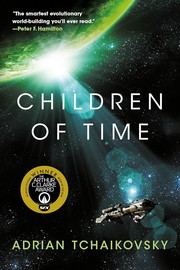
Children of Time
Humanity's ark ship Gilgamesh reaches a terraformed world, only to find intelligent spiders raised over millennia by a lost terraformer's virus.
2,976-word summary · 13 min read
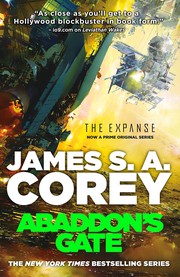
Abaddon's Gate
A dead detective guides Holden, an assassin hunts him, and a pastor walks unarmed into a mutiny as the Ring opens new worlds.
2,672-word summary · 12 min read
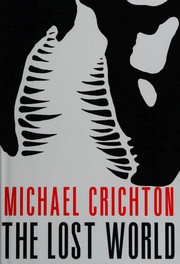
The Lost World
Malcolm lives after all and returns to Site B where engineered herds eat themselves and Dodgson steals eggs.
2,075-word summary · 9 min read
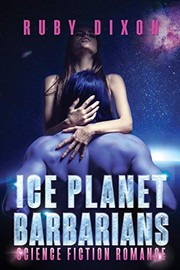
Ice Planet Barbarians
Crashed women meet blue hunters on ice and a parasite forces a mating choice.
1,983-word summary · 9 min read
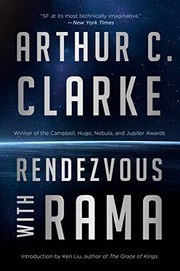
Rendezvous with Rama
In 2131 a silent cylinder enters the solar system, and Commander Norton's crew explores its seas and empty cities before Rama seals itself and sails on.
3,108-word summary · 14 min read
The Knife of Never Letting Go
Todd Hewitt flees Prentisstown with silent Viola as Noise exposes the town lie, hunted by Aaron and Mayor Prentiss toward Haven and a cure rumor.
2,512-word summary · 11 min read
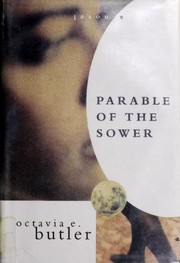
Parable of the Sower
Lauren Olamina flees burning Robledo with her Earthseed verses and walks north to plant a new faith.
2,311-word summary · 10 min read
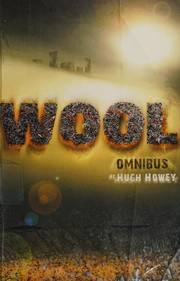
Wool Omnibus
In a buried silo, a sheriff asks to go outside, and a mechanic learns why no one returns from cleaning.
2,095-word summary · 9 min read
The Passage
A failed Army experiment makes blood-hungry virals, and a quiet girl named Amy may hold the answer a century later.
2,755-word summary · 12 min read