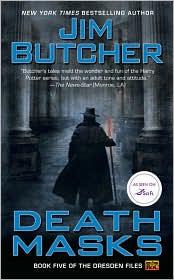
Death Masks
2,979-word summary 13 min read 374 pages in the book
- First published
- 2003
- Publisher
- Roc
- Pages
- 374
- ISBN
- 9780451459404
- Series
- The Dresden Files (#5)
Reading options
What's inside (8 sections)
I came to Death Masks because Summer Knight left Harry in a rough spot and I wanted to see if book five kept the climb going. It did, in a messy way I ended up liking more than I expected. This is the fifth Dresden Files book, first published in 2003 by Roc as a 374 page paperback, and it throws three big problems at Harry at once. A stolen holy relic. A duel to the death with a vampire lord. A crew of fallen angels with old coins and worse manners. My copy is creased at the spine from being carried around for a week. That feels right for this one. It reads fast and crowded, like Butcher had three book ideas and decided to run them all together to see what held.
Harry at this point is still Chicago's only listed wizard, still broke, still living in a basement with a talking skull named Bob who keeps the lore straight. Karrin Murphy is still the Chicago cop who calls him when a case smells wrong. Michael Carpenter is the big carpenter with a sword who serves as Harry's conscience with muscles. Susan Rodriguez, Harry's ex, is still half turned after the vampire attack in an earlier book, trying to hold onto herself. If you read books one through four you know the war setup too. The Red Court of vampires and the White Council of wizards are fighting, and Harry started a lot of it by burning a vampire noble to save Susan. That history matters here because people are tired. Wizards are dying. Vampires are pressing. Everyone wants an out.
A priest, a vampire, and a TV show
The opening stuck with me because it is so Chicago and so Harry. He agrees to go on a local TV talk show about the paranormal, which he already regrets before the cameras warm up. On the panel with him is a Catholic priest named Father Vincent and a suave professor named Don Paolo Ortega, who teaches at a university in Brazil and talks smoothly about myth. Harry smells a rat through the studio lights. Ortega is not what he claims. He is a lord of the Red Court, old and polished, using the show to get close.
What happens on air sets the whole book in motion, and I appreciated that Butcher does it in public instead of in a dark alley. Ortega issues a formal challenge. Single combat. If Ortega wins, Harry dies and the war pressure eases for the vampires. If Harry wins, the Red Court backs off in a way that gives the Council breathing room. It is old custom stuff, with seconds and rules and a neutral judge, which Harry hates because he is not a duelist. He is a brawler with a staff who wins by being stubborn.
Father Vincent hires Harry separately. The Shroud of Turin has been stolen, the cloth many believe wrapped Christ after the crucifixion, and Vincent wants it back quietly before anyone learns it is gone. Harry takes the job because rent exists and because Michael gives him a look that says this one matters. Right after the show, things turn nasty. Harry gets jumped by something huge and wrong that wears a man like a coat. That is our first taste of the Denarians, humans carrying one of thirty silver coins, each holding a fallen angel. This one is tied to Ursiel, all brute force and hunger. Harry would have died there if Michael had not shown up with two other men carrying swords.
Those two men matter a lot. Shiro Yoshimo is an older Japanese man, calm and kind, who carries Fidelacchius, one of three holy Swords. Sanya is a big Russian who jokes and swears and carries Esperacchius, and he will tell you straight out he does not believe in God even though an archangel handed him a sword. I love that contradiction and Butcher lets it sit without fixing it. The three Knights ask Harry to walk away from the Shroud job. They say the Denarians want it and Harry poking around will get people killed. Harry says no, which is both his best trait and his most tiring one. He cannot leave a client hanging, even when smarter people tell him to.
The Shroud job goes sideways
The missing relic plot moves like a heist story for a while, and those were my favorite chapters. Harry follows the usual chain. Who stole it, who paid, where would you sell something that hot. The trail leads to a group called the Churchmice, thieves who specialize in church jobs. One of them is Anna Valmont, sharp and professional, not a caricature. She and her crew lifted the Shroud for a buyer, but they did not plan on monsters crashing the handoff.
Harry tracks them to a boat on Lake Michigan. This goes badly, as Harry plans often do. He gets caught. He talks. He stalls. Then Deirdre, another coin holder, hits the boat hard and kills one of the thieves without much effort. Harry pulls a switch I did not see coming on first read, though on reflection the clues were there. He lets her take a decoy safe while the real Shroud slips out with Anna. It is a good Harry win. Not power. Misdirection. He lives because he lies well under pressure.
Back on shore, Murphy pulls him into a different ugly scene. A corpse with no hands and no head, dumped where it will be found. The coroner on duty is a nervous night guy named Waldo Butters, new to the series here, who notices odd details and passes them to Murphy and Harry when the official report would sound crazy. Butters would become a fan favorite later, but here he is just a tired medical guy with a polka interest and sharp eyes. I liked how small his first appearance is. He does not save the day. He just does his job and tells the truth when it would be easier to sign the form and go home.
Meanwhile Susan is back in town, and this part hurt to read in a good way. She is working with a group called the Fellowship of St. Giles, people half turned by the Red Court who fight back before they lose themselves. She has a coworker named Martin with her, a quiet man who watches everything. Harry still loves her and hates what happened to her. Their scenes avoid big speeches. A ride together. A fight where she moves faster than she should and hates that Harry saw it.
Susan gets Harry into a high end charity art event run by Johnny Marcone, the crime boss of Chicago who has rules and tailors and no patience for fools. The Shroud is expected to surface there through back channels. Marcone hosts killers and rich people in the same room and keeps both calm, which tells you plenty about his pull. Harry hates needing him. He needs him anyway. The sale blows up when the Denarians walk in like they own the place. Their leader is Nicodemus, a tall man with a ropey scar and two thousand years of practice at getting his way. He takes the Shroud and takes Harry too, which ends the heist section and starts the darker middle of the book.
Duel at Wrigley and the coin that talks
Nicodemus is the kind of villain who talks to you like a recruiter. He offers Harry a coin. Specifically the coin holding Lasciel, called the Temptress, who can give knowledge and power and company inside your head. All Harry has to do is pick it up. Harry refuses, which sounds simple until Butcher shows the pressure. They beat him. They threaten people he loves. Lasciel whispers in a way that makes sense even to the reader. Power to protect everyone. A voice that never leaves. Harry still says no, and Shiro pays for that no by trading himself for Harry's freedom. Shiro walks into Nicodemus's hands so Harry can walk out. I had to put the book down for a minute there. It felt unfair in the way the best mentor sacrifices do.
Harry gets out with help from Susan, who fights through pain that would drop most people. Her half vampire strength lets her keep up for short bursts, but it costs her. She shakes after. She bleeds. Martin covers them with cold efficiency. Back in a safe place, Harry starts piecing together the priest problem. Father Vincent's story has gaps. The real Vincent is dead, I think the morgue case, and the man hiring Harry is wearing his face. The imposter works for the Denarians, which means the Church did not hire Harry at all. A monster did, to find its own stolen goods. Harry and the Knights grab the false Vincent and squeeze the plan out of him. The Shroud will be used to anchor a curse, a plague spell meant to unmake people at scale, starting where travelers crowd together. The target named is O'Hare Airport. An airport makes awful sense for a plague. Planes carry more than luggage.
Before Harry can run to O'Hare, he has to survive the duel. This is where Butcher swings big and, for me, connects. The fight is set at Wrigley Field, empty and strange at night, with the field lights on for two men trying to kill each other under old laws. The judge is a little girl called Ivy, known as the Archive, who carries the written memory of humanity. She is maybe seven or eight, polite and terrifying, with a bodyguard named Kincaid, a lean man with predator calm who could end most fights before they start. Harry faces Ortega, who is faster and stronger and trained for this exact ritual. Harry is none of those things. He prepares with wards and wind and cheap tricks, because cheap tricks are what he has.
The duel itself is tense without dragging. Ortega fights clean until he starts losing, then he cheats with a forbidden weapon. That choice tells you what the Red Court thinks of honor when no one important is watching. Martin shoots Ortega at the key moment, which breaks the rite and starts a brawl. Vampires rush the field. Spells tear up grass. Harry gets out by the skin of his teeth while Ortega escapes with his people. Some readers hate the outside interference in a formal duel. I get that. It felt unsatisfying in the moment, like training for a marathon and then catching a bus at mile twenty. On reflection I think that is the point. Honor among killers only holds while they are winning. Still, if you wanted a clean win for Harry, you will not get one here.
Knights, coins, and hard choices
What follows is my favorite stretch for character work, even though the pace sags a little. Harry runs to O'Hare with Michael and Sanya expecting a ritual circle and chanting villains. What they find is worse. Shiro, broken from torture, barely alive, held where the curse crew worked. Nicodemus has already moved the operation. The plague will go by train toward St. Louis now, not by plane. Shiro knows he is dying. He gives Harry his sword Fidelacchius to hold for what comes next, which is a huge gesture in this world. These Swords choose their bearers. They do not pass around like borrowed tools. Then Shiro dies, and the book lets that sit without rushing to the next explosion. Michael prays. Sanya swears softly. Harry holds the sword like it burns.
Lasciel's shadow stays with Harry after he touches the coin briefly during captivity, and this thread would matter for several books after. I want to be careful here because it is easy to oversell. She is not possessing him. She left an imprint, a whisper that offers help with magic and math and memory. Harry hears her when he is tired or hurt. He argues with her. Sometimes he uses what she shows him and hates himself after. I found this more interesting than a simple power boost. It gives Butcher a way to show temptation as useful, which is scarier than a simple threat. The wrong choice helps in the short run. That is why people keep making it.
Michael's family gets more page time here, and it grounds the cosmic stuff. Charity is prickly with Harry because he brings danger to her door. Little Molly Carpenter shows up as the oldest daughter, sharp eyed and curious. When Nicodemus later tries to lure Michael's youngest boy toward a coin, it lands harder because we ate dinner with that family first.
There is a fair question about whether the book juggles too much. Shroud theft plus duel plus Denarians plus Fellowship plus Archive plus Marcone plus train chase. That is a lot for 374 pages. The middle wobbles when Harry races from one crisis to the next without sleep, and I lost the thread once around the airport switch. But the crowding fits Harry's life at this point in the war. He does not get one clean case at a time anymore.
The train, the plague curse, and Marcone
The train sequence pays off the buildup. Harry works with Marcone to chase the Denarians toward St. Louis. On the train, in tight halls and between cars, Harry and the Knights fight coin holders with very different styles. Ursiel is muscle. Deirdre is speed and spite. The Shroud is there, carried as the focus for the curse, cloth that believers soaked with meaning for centuries. Butcher treats faith as weight here, not as sermon. Belief charges objects.
Harry gets the Shroud back and breaks the curse working, though Nicodemus slips away as he always does. That escape annoyed me the first time. What surprised me more was Marcone. After the fight, Marcone keeps the Shroud instead of handing it over. He takes it to a quiet rural hospital where a comatose woman named Amanda Beckitt lies unresponsive after violence tied to earlier books. Marcone hopes the cloth can heal her.
Harry agrees to three days, then the Shroud goes back to the Church. It complicates Marcone in a way I appreciated. He is still a criminal who orders deaths. The book does not forgive that. It just adds that he loves one wounded person enough to risk holy wrath to help her.
Back home, Harry learns by letter that Shiro knew he was dying of cancer before Nicodemus ever touched him. He chose his ending, trading himself to buy Harry time. That reframes the sacrifice. Less spur of the moment. More planned. It made Shiro kinder and sadder. It also made me wish we had gotten one more quiet scene with him before the end.
The last moves widen the war. Harry's mentor Ebenezar McCoy, an old wizard with rough hands and rougher methods, answers Ortega's treachery by dropping a satellite on Ortega's compound in Latin America. No duel. No rite. Just orbital debris as a message. Harry is disturbed too, even as he benefits. Ortega survives, barely, which keeps that feud alive. The book closes with Harry healing at Michael's house, Lasciel whispering at the edge of sleep, and Susan leaving again with work undone between them.
What works and what creaks
Let me say what I will carry forward, since that is why I write these notes to myself. The faith mechanics finally click. Relics, Swords, curses, and healing all run on the same fuel here, which makes later books easier to follow. The Knights feel like people rather than props, especially Sanya with his jokes covering old wounds and Michael with his fear for his kids showing through his courtesy. Ortega makes a strong short term foe because he is courteous until he is not. Ivy and Kincaid steal every scene they enter, and I wanted more of them immediately. Anna Valmont and the Churchmice add a crime flavor that suits Harry's street level roots. Marcone's hospital vigil is the scene I keep thinking about weeks later.
Criticism belongs here too, because the book is not tidy. The duel solution will frustrate readers who favor fair fights. Martin's shot is realistic for the world and flat as drama. Susan's arc gets squeezed between the Shroud and the duel, so her choices with the Fellowship read as summary in places where I wanted scenes. Butters is thin here, mostly a function, though later books would fill him out. Some of Harry's narration about women leans toward leering, a holdover from earlier books that has aged poorly. Butcher improved this over time, but in 2003 it still pops up and pulls me out. The prose also repeats a few tics. Harry quips when afraid, which fits, but the quips arrive on schedule even when silence might hit harder.
Who should pick this up. If you like detective stories where the detective bleeds on the clues, start at Storm Front and read to here in order. You could start at Death Masks because Butcher recaps the war and Susan and the Swords enough to follow, but you would lose the weight of Shiro's gift and Susan's distance. The train fight and Wrigley duel are violent but not gory for the sake of it. The interest is in cost. Every win takes something.
I closed the book feeling that Butcher learned how to run a big cast without losing Harry's voice. Harry still narrates like a friend telling you about his worst week, with jokes that do not always land and guilt he does not always name. Death Masks is where the series stops being a set of cases and starts feeling like a war with receipts. Debts. Scars. Coins in pockets. Names on swords.
FAQ
Do I need to read the earlier Dresden Files books before Death Masks?
You can follow it, since Butcher recaps the war, Susan, and the Swords, but books one through four give Shiro's gift and Susan's distance their full weight. This is book five, first published in 2003.
Who are the Denarians in Death Masks?
They are humans carrying thirty silver coins, each holding a fallen angel, led by Nicodemus, who wants the Shroud to anchor a plague curse aimed at travelers.
Is Death Masks only about the Shroud of Turin?
No, the relic hunt shares the book with Ortega's duel at Wrigley Field, the Knights of the Cross, and Harry's deal to return the Shroud to the Church after three days.
Similar books
More from The Dresden Files first, then related titles.
Storm Front
Wizard PI Harry Dresden hunts heart-explosion killer in Chicago.
2,563-word summary · 11 min read
Fool Moon
Wizard Harry Dresden hunts a full moon killer through Chicago werewolf packs.
2,855-word summary · 13 min read
Grave Peril
Chicago ghosts turn murderous as Harry Dresden faces a vengeful sorcerer and Bianca's vampire trap.
3,484-word summary · 15 min read
Summer Knight
Harry refuses Mab to solve a Summer Knight murder and stop fairy war.
2,147-word summary · 10 min read
Blood Rites
Wizard Harry Dresden guards a porn set from entropy curses while learning brother Thomas and fighting Black Court nest.
2,211-word summary · 10 min read
Dead Beat
Wizard Harry Dresden hunts the Word of Kemmler through necromancers to stop a Halloween godmaking rite.
2,883-word summary · 13 min read
Proven Guilty
Warden Harry defends teen Molly from White Council while fear phages stalk con.
2,068-word summary · 9 min read
White Night
Wizard Harry Dresden hunts fear-feeding White Court killers preying on Chicago's minor talents, reunites with Elaine Mallory, and faces a coup at Chateau Raith.
2,521-word summary · 11 min read
Small Favor
Harry owes Mab a favor and must find Marcone while Denarians hunt a holy girl.
2,741-word summary · 12 min read
Turn Coat
Morgan asks Harry for sanctuary as the Council calls him traitor.
2,590-word summary · 12 min read
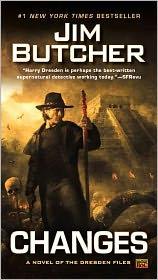
Changes
Harry Dresden learns he has a seven-year-old daughter Maggie, hidden for years. The Red Court seizes her for a bloodline rite, forcing him toward Chichen Itza.
2,855-word summary · 13 min read
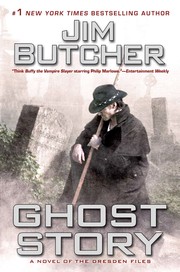
Ghost Story
Dead but not gone, Harry Dresden returns as a spirit to find his killer, protect the friends he left behind, and learn why the afterlife gave him a second…
1,978-word summary · 9 min read
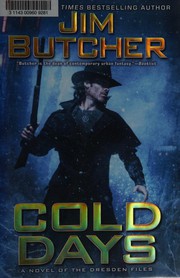
Cold Days
Back from the dead as the Winter Knight, Harry Dresden must follow Mab's order to kill an immortal and defend Demonreach on Halloween night.
2,361-word summary · 10 min read
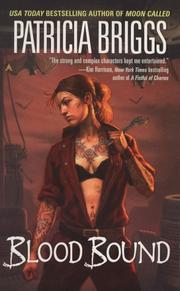
Blood Bound
Coyote mechanic Mercy Thompson stands with vampire friend Stefan against a demon driven rival while pack ties strain.
2,636-word summary · 12 min read
Moon Called
A coyote mechanic in wolf country gets pulled into pack fights and fae bargains when a lost teen shows up.
1,943-word summary · 9 min read
Twelve Months
A grieving Dresden rebuilds Chicago over one year while ghouls gather and Thomas fades.
2,193-word summary · 10 min read
At Grave's End
Cat and Bones face Max, a zombie-raising ancient vampire, and a prophecy that ties their marriage to Patra's death in the third Night Huntress novel.
2,061-word summary · 9 min read
Circus of the Damned
A rogue master vampire arrives in St. Louis and Anita Blake is caught in an undead turf war, with a science teacher in the crossfire.
2,757-word summary · 12 min read
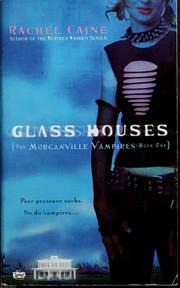
Glass Houses
Claire Danvers moves off campus to escape a bully and lands in a house where the roommates know Morganville's real secret: the town belongs to vampires.
2,345-word summary · 10 min read
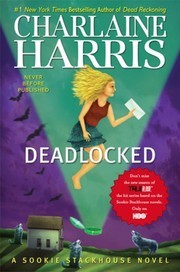
Deadlocked
A dead woman on Eric's lawn starts a murder investigation, a vampire queen wants Eric as her consort, and the fairies in Sookie's life close in.
2,885-word summary · 13 min read
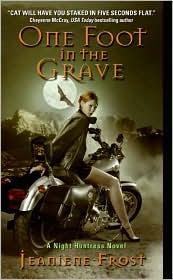
One Foot in the Grave
Cat hunts vampires with Bones while her Sire plots from the grave.
2,200-word summary · 10 min read
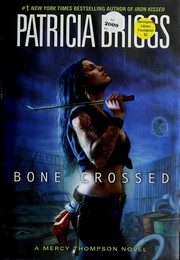
Bone Crossed
Mercy faces vampire queen Marsilia after killing a vampire to save friends.
2,261-word summary · 10 min read
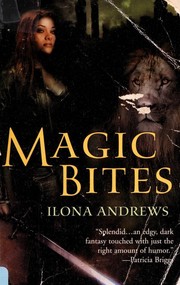
Magic Bites
A broke Atlanta mercenary takes her murdered guardian's last case and walks into a war between vampires and shapeshifters.
2,272-word summary · 10 min read
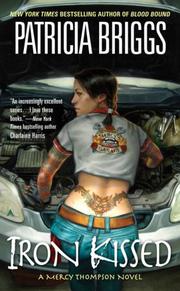
Iron Kissed
Mercy repays Zee by hunting a fae killer, clears his name, and finally chooses between Adam and Samuel.
2,944-word summary · 13 min read
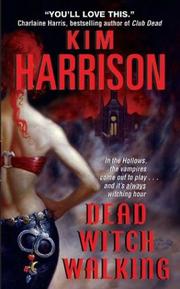
Dead Witch Walking
Witch and runner Rachel Morgan quits the agency with a death mark on her head and hunts an untouchable crime lord.
2,709-word summary · 12 min read
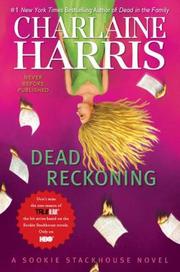
Dead Reckoning
Sookie confronts the firebombing of Merlotte's, Sandra Pelt's revenge, and a vampire power struggle while questioning her future with Eric.
2,391-word summary · 11 min read
Guilty Pleasures
Animator Anita hunts a vampire killer while Jean-Claude pulls her close.
2,136-word summary · 9 min read
Blue Bloods
At an elite Manhattan school, Schuyler Van Alen learns she is a forbidden half-vampire as someone starts killing her kind.
2,725-word summary · 12 min read
Dead in the Family
Sookie shelters fairy kin and a telepathic boy while pack murder and Eric's vampire kin close in.
2,412-word summary · 11 min read