
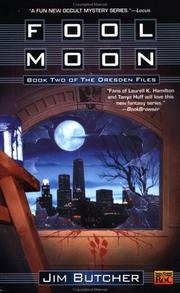
Fool Moon
2,855-word summary 13 min read 352 pages in the book
- First published
- 2001
- Publisher
- Roc
- Pages
- 352
- ISBN
- 9780451458124
- Series
- The Dresden Files (#2)
Reading options
What's inside (7 sections)
I came to Fool Moon right after Storm Front, mostly because book one ended with Harry Dresden owing favors in three directions and I wanted to see if Jim Butcher could keep that many plates spinning. I had liked the scrappy Chicago wizard setup but I had also rolled my eyes at parts of it. This second book in The Dresden Files, first published in 2001 by Roc at about 352 pages in the first paperback, felt like the right test. Could Butcher repeat the trick with more monsters and higher stakes, or would the formula sag?
It does not sag. It gets louder, bloodier, and a lot more crowded. Where Storm Front was about scorched hearts and drug dust, Fool Moon is about torn throats under a full moon. Harry is still broke. Murphy is still angry with him. Marcone is still scary in a suit. Only now there are at least four groups of werewolves running around Chicago, the FBI has shown up, and Harry keeps getting bitten, shot, and thrown in trunks. I read it fast, with that tired but wired feeling you get when a thriller refuses to let you sleep.
The structure is still detective first, magic second. Harry gets a call, looks at a body, follows a smell that is not quite a smell, asks Bob the skull a question he regrets asking, and then gets punched for his trouble. If you liked the legwork in book one, you will feel at home here. If you wanted quiet character study, this is not that book.
Bodies when the moon is fat
The story opens with Harry on the outs. After the events with Victor Sells, Lieutenant Karrin Murphy and Special Investigations are keeping him at arm's length. She thinks he held back too much. He thinks she does not trust him enough. Both of them are right, which is why their scenes crackle.
Then come the Lobo killings. A handful of savaged corpses found around the last full moon, torn open in ways that look animal but feel wrong. Murphy brings Harry in quietly because the press is circling and Internal Affairs is already sniffing around her unit. A new man, Detective Rudolph, hovers in the background, eager and useless in the way only a career minded transfer can be.
Harry does what he always does. He goes to the scene and tries to read what is left behind. Blood leaves a kind of echo for someone with his talent, and he follows it without telling Murphy. That choice, impulsive and a little arrogant, sets the tone for the whole book. Harry keeps acting alone to protect people, and people keep getting hurt because he acted alone.
The blood trace leads him to a scuffle with young, leather clad punks who turn into wolves. Not metaphor wolves. Actual wolves, fast and coordinated, led by a strange woman named Tera West who moves like she was born to it. Harry gets away, barely, and realizes Chicago has a pack problem.
At the same time, the FBI arrives in the form of Agent Phillip Denton and his team, Agents Benn, Harris, and Wilson. They claim jurisdiction and they treat Murphy like a local nuisance. Denton is smooth in the way that makes Harry's neck itch. The agents ask sharp questions and share nothing. Murphy, who cannot afford a turf war, tells Harry to stay clear. Harry, who has never stayed clear of anything, nods and then ignores her completely.
There is also a billionaire in the mix, Harley MacFinn, an environmentalist with money, land, and a reputation for howling at causes most rich men ignore. His fiancee is Tera West, the same woman Harry saw with the young wolves. And there is Mac, the taciturn owner of McAnally's pub, who serves Harry beer in a place that stays neutral ground and who notices more than he says.
It is a lot of threads for an early series book. Butcher keeps them moving by making every scene do two jobs. A talk with Murphy advances the murder inquiry and the status of their friendship. A drink at McAnally's gives lore and a warning. A visit from an old acquaintance gives Harry a client and a guilt trip at the same time.
Four kinds of wolf, all bad news
My favorite part of the book is the middle lore dump, because Butcher actually earns it. Harry goes home to consult Bob, the spirit in the skull who knows too much about black magic and enjoys explaining it far too much. Bob lays out that lycanthrope is not one thing in this world.
There are classic werewolves who change shape with their own power. There are hexenwulfen, people who use an enchanted wolf pelt belt to change, borrowing speed and rage from a trapped spirit and paying with control. There are lycanthropes in the narrower sense, humans whose inner beast makes them strong and vicious without ever growing fur. And then there is the loup garou, a cursed human who becomes a huge, nearly unstoppable killing engine at the full moon and remembers nothing after.
Bob delivers this with glee. Harry receives it with dread. Because if all four kinds exist, Chicago could hold all four at once. And the murders do not fit one pattern. Some happened just before the full moon. Some happened during it. Some victims were criminals. Some were just in the wrong parking lot.
The college kids, the Alphas, turn out to be the first kind, or close to it. Billy Borden and his friends, including Georgia, are bright, nervous, Dungeons and Dragons types who learned a shape changing spell and decided to patrol the streets. They are not good at it yet. They bicker. They almost mutiny. Tera West has been teaching them, though she holds back more than she shares. Harry first meets them as enemies and slowly recasts them as earnest amateurs who could get killed trying to help.
The Streetwolves are different. They are a biker gang, all muscle and engine oil, humans whose beast side makes them cruel even on two legs. They push Harry around when they can and run when they cannot. They feel like the kind of gang that would exist without magic, which makes them scarier when magic backs them.
And then there is MacFinn. Through a risky summoning, Harry learns the MacFinn family carries a curse laid long ago, tied in local story to Saint Patrick himself. One member in each generation turns into a loup garou when the moon is full. Harley has tried to manage it with circles, chains, and isolation at a camp outside town. Someone broke his circle last month. Someone who knew exactly what would happen next.
That broken circle becomes the hinge of the book. If you want to frame a monster, you do not need to build one. You just need to unlock the cage of the one already here.
Kim, circles, and a mistake Harry cannot take back
The saddest thread belongs to Kim Delaney, a former lover of Harry's old mentor who comes to him with a plain question. She wants to know how to build a circle strong enough to hold something big. Harry likes her. He also knows that circles are dangerous knowledge. Give the wrong person the right diagram and you hand them a loaded gun.
He gives her a partial answer and holds back the key piece, telling himself it is safer that way. She tries anyway, meaning to help MacFinn lock himself in for the next moon. It fails. She dies for it, torn apart in a basement that smells of copper and rain, and Harry finds out in the worst possible way.
Butcher handles this without speeches. Harry just goes quiet. He replays the talk in his head. He understands that his caution killed her as surely as the claws did. It is one of the few moments in the early Dresden books where Harry's usual quip falls flat and he lets it fall flat. He was trying to be responsible. Being half helpful turned out worse than saying no.
This guilt drives his next bad decision. He decides he will build the circle himself and hold MacFinn through the coming full moon nights. He tells almost no one the full plan. He asks Susan Rodriguez, his sometimes girlfriend and a reporter at the Midwestern Arcane, for a ride after he gets shot escaping police custody, trading her an exclusive for wheels and gauze. Susan agrees because she cares about him and because she smells a front page. Both motives sit in the car with them and neither one blinks.
Meanwhile Murphy, following procedure and pressure from above, arrests MacFinn in human form and locks him in the station holding cells as the sun goes down. Harry knows what will happen when the moon rises inside a concrete box full of cops. He tries to get there with a blending potion and a stolen moment. He is late.
What follows is grim even by this series' standards. MacFinn changes in the cell block. Bars peel like foil. Officers die at their desks. Murphy's partner and several others are killed before Harry can drive the thing off. Murphy survives, but she sees something no training covers and she will carry it into every book after this. The partnership between her and Harry takes another hit, because he knew and he could not stop it, and she jailed the bomb after he warned her not to.
I found these chapters hard to read in a good way. Butcher does not linger on gore for fun. He lingers on noise, on Harry shouting names down a hallway that has gone too quiet, on the way a police station smells after violence. It lands because we spent a whole book learning these cops are underfunded and stubborn and human.
Marcone's pit and the belts
If the station sequence is horror, the last third is heist meets cage match. Harry, broke and bleeding, keeps pulling at the FBI thread. Why did Denton's team push so hard to take over? Why do they show up at crime scenes a little too fast? Why did one of them watch from a car while the Streetwolves stuffed Harry into a trunk?
The answer is as ugly as you expect. Denton, Benn, Harris, and Wilson are hexenwulfen. They got hold of wolf pelt belts, objects that let the wearer turn into a huge wolf by giving room to something cruel inside. The belts make them strong. They also shave off restraint. What started as a plan to hit Marcone's operations and blame monsters turned into sport killing, because the magic rewards giving in.
Their plan is clever in a rotten way. Use the full moon panic as cover. Kill Marcone's people and a few others. Let the White Council and the local cops chase MacFinn as the obvious beast. If anyone looks too close, point at the bikers or the college kids. Denton even tries to bargain with Harry at one point, offering secrets about Harry's dead mother in exchange for cooperation. Harry, who hungers for any scrap about his parents, almost listens. Almost.
Marcone, meanwhile, has prepared his own trap. The gangster has built a pit at the Full Moon Garage, a sunken holding pen ringed to contain a loup garou. He means to catch MacFinn and end the threat in a way that helps his business. Instead the pit catches almost everyone. Harry, Murphy, Susan, the Alphas, Tera, and Marcone himself end up in the same hole while armed hexenwulfen circle above and the real loup garou howls somewhere close.
This is where Butcher lets Harry be smart instead of strong. Harry cannot out muscle three belt wolves and a cursed giant. So he cheats. He steals a belt off the youngest agent during the fight and puts it on. For a few minutes Harry is a wolf himself, all scent and speed and fury, and he uses that clarity to tear the fight apart from the inside. It costs him. The belt whispers to him to stay, to hunt, to stop being the tired man with rent due. He takes it off by will and by help, and the moment feels earned because the book spent chapters showing how the belts rot their users.
Tera's role sharpens here too. She is not human, as Harry confirms when a soulgaze fails to catch. She is something older that learned to live near people through MacFinn. She fights for the Alphas when she could run, and she stays with MacFinn when staying means dying. Her goodbye with him is brief and physical, not flowery, and that restraint makes it ache more.
The end comes fast and messy. Three of the FBI wolves turn on each other once fear replaces discipline. Murphy shoots the last one. Harry faces MacFinn with fire and pity and does what has to be done. They burn the belts so no one else can pick them up. Susan gets the Alphas out before the sirens close in. The police arrest Marcone on general principle, though Harry predicts, correctly, that nothing will stick. Too many witnesses saw too much impossible stuff, so the official story will smooth the edges and file the rest under gang violence.
Harry lives. Murphy lives. Their trust does not fully live, not yet. That feels honest.
Bigger than book one, messier too, in a fun way
Fool Moon is better plotted than Storm Front and less careful with people, if that makes sense. The mystery has more fair play clues. The different wolf types give Harry real detection work instead of just bigger fire. The station massacre and the garage pit are set pieces Butcher would reuse in later books with more polish, but they already hit here.
The banter is still there. Bob steals scenes. Toot Toot, the tiny pizza obsessed faerie, gets a brave moment guarding Harry's apartment that made me grin. Susan pushes Harry about honesty while chasing a story that could get him killed, and Butcher lets both of them be right and wrong at once. Marcone gets a few quiet lines that show why even monsters respect him. He keeps his word in the pit when breaking it would be easier, and that choice echoes for books to come.
What drags? The middle sags a little under exposition. Bob's lesson is fun but long, and Harry spends a lot of pages driving between camps, stations, and hideouts while bleeding on upholstery. Some of that is classic detective pacing, and some of it is a young writer padding travel time. The FBI villains work as a unit but blur as individuals. Benn, Harris, and Wilson get few marks to tell them apart until the belts come off, so their fall feels collective rather than personal. Denton carries the menace alone, which is enough but not rich.
There is also the early series gaze problem from book one. Susan and Murphy and Tera all get described through Harry's hungry eye, and while Murphy and Susan push back more here, the narration still lingers. Readers who bounced off that in Storm Front will notice it again. I noticed it less because the women drive more of the plot this time. Murphy makes command calls under fire. Susan saves lives with a car and a camera. Tera leads a pack and chooses her ending. Still, the lens is male and first person and of its era. Fair to name it.
Who should read it? If you want Chicago detective procedure with fire magic and pack politics, start with Storm Front then come straight here. The books reward order. You could start with Fool Moon, Butcher recaps enough, but you would lose the weight of Murphy's anger and Marcone's debts. If you dislike gore, skip this one or brace. The kills are close up. If you love werewolf lore, this is a treat, because Butcher sorts the types with care and then breaks his own rules on purpose in the garage.
For series readers, this is where the Alphas debut, and they matter later. Billy and Georgia will grow from comic relief into steady allies. This is also where Harry learns that knowledge withheld can kill, a lesson that shapes how tight lipped he becomes with the Council. And it is where Marcone stops being just a mobster and starts being a power, someone who builds pits for monsters because no one else will.
I closed the book liking Harry more and trusting him less, which seems to be the point. He will throw himself between a wolf and a friend without thinking. He will also lie to that friend about how bad the wolf is, to spare them, and that spare will cost lives. Fool Moon sits comfortably in the middle of my Dresden ranking so far. Not as fresh as the first hello, but stronger as a story. Onward to Grave Peril, where the ghosts are waiting.
FAQ
Do I need to read Storm Front before Fool Moon?
It helps a lot, since Murphy anger, Marcone debts and Harry parole carry over, but Butcher recaps the key points.
Who is killing people in Fool Moon?
FBI Agent Denton team uses hexenwolf belts to murder around the full moon while the freed loup garou MacFinn kills beyond control.
Is Fool Moon only for fantasy readers?
No, it reads as a Chicago detective story with legwork and procedure, though the gore and male gaze show its age.
Similar books
More from The Dresden Files first, then related titles.
Storm Front
Wizard PI Harry Dresden hunts heart-explosion killer in Chicago.
2,563-word summary · 11 min read
Grave Peril
Chicago ghosts turn murderous as Harry Dresden faces a vengeful sorcerer and Bianca's vampire trap.
3,484-word summary · 15 min read
Summer Knight
Harry refuses Mab to solve a Summer Knight murder and stop fairy war.
2,147-word summary · 10 min read
Death Masks
Wizard Harry Dresden hunts the stolen Shroud of Turin while dueling a vampire lord and facing fallen angels.
2,979-word summary · 13 min read
Blood Rites
Wizard Harry Dresden guards a porn set from entropy curses while learning brother Thomas and fighting Black Court nest.
2,211-word summary · 10 min read
Dead Beat
Wizard Harry Dresden hunts the Word of Kemmler through necromancers to stop a Halloween godmaking rite.
2,883-word summary · 13 min read
Proven Guilty
Warden Harry defends teen Molly from White Council while fear phages stalk con.
2,068-word summary · 9 min read
White Night
Wizard Harry Dresden hunts fear-feeding White Court killers preying on Chicago's minor talents, reunites with Elaine Mallory, and faces a coup at Chateau Raith.
2,521-word summary · 11 min read
Small Favor
Harry owes Mab a favor and must find Marcone while Denarians hunt a holy girl.
2,741-word summary · 12 min read
Turn Coat
Morgan asks Harry for sanctuary as the Council calls him traitor.
2,590-word summary · 12 min read
Changes
Harry Dresden learns he has a seven-year-old daughter Maggie, hidden for years. The Red Court seizes her for a bloodline rite, forcing him toward Chichen Itza.
2,855-word summary · 13 min read
Ghost Story
Dead but not gone, Harry Dresden returns as a spirit to find his killer, protect the friends he left behind, and learn why the afterlife gave him a second…
1,978-word summary · 9 min read
Cold Days
Back from the dead as the Winter Knight, Harry Dresden must follow Mab's order to kill an immortal and defend Demonreach on Halloween night.
2,361-word summary · 10 min read
Iron Kissed
Mercy repays Zee by hunting a fae killer, clears his name, and finally chooses between Adam and Samuel.
2,944-word summary · 13 min read

Blood Bound
Coyote mechanic Mercy Thompson stands with vampire friend Stefan against a demon driven rival while pack ties strain.
2,636-word summary · 12 min read

Moon Called
A coyote mechanic in wolf country gets pulled into pack fights and fae bargains when a lost teen shows up.
1,943-word summary · 9 min read
Twelve Months
A grieving Dresden rebuilds Chicago over one year while ghouls gather and Thomas fades.
2,193-word summary · 10 min read

Bitten
Elena Michaels is the world's only female werewolf, and keeping that world away from her human life in Toronto works fine until the Pack calls in a favor.
2,039-word summary · 9 min read
Silver Borne
Mercy hides a Fae book while Samuel slips and the fae close in.
2,571-word summary · 11 min read
Cry Wolf
Omega Anna joins Charles to hunt a rogue werewolf in Montana.
2,463-word summary · 11 min read

Bone Crossed
Mercy faces vampire queen Marsilia after killing a vampire to save friends.
2,261-word summary · 10 min read
Magic Bites
A broke Atlanta mercenary takes her murdered guardian's last case and walks into a war between vampires and shapeshifters.
2,272-word summary · 10 min read
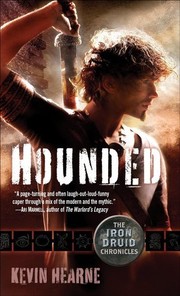
Hounded
A two-thousand-year-old druid runs a bookshop in Arizona, hides from an Irish god who wants his sword back, and talks to his dog.
2,159-word summary · 10 min read

First Grave on the Right
Charley Davidson is a private investigator in Albuquerque and the grim reaper. When three murdered lawyers come back as ghosts, her two jobs collide.
2,770-word summary · 12 min read

River Marked
Mercy and Adam's honeymoon on the Columbia River turns into a fight with an ancient river devil, and Mercy finally learns the truth about her father.
2,008-word summary · 9 min read

Magic Burns
A magic flare hits Atlanta, and mercenary Kate Daniels must recover stolen maps, find a missing witch, and keep a teenage girl alive while Celtic gods try to…
2,021-word summary · 9 min read
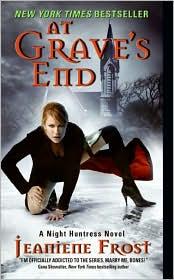
At Grave's End
Cat and Bones face Max, a zombie-raising ancient vampire, and a prophecy that ties their marriage to Patra's death in the third Night Huntress novel.
2,061-word summary · 9 min read
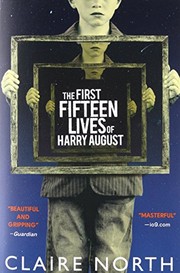
The First Fifteen Lives of Harry August
Harry August dies and is born again into the same life, again and again, until a warning from a child tells him the world is ending faster with each pass.
2,189-word summary · 10 min read
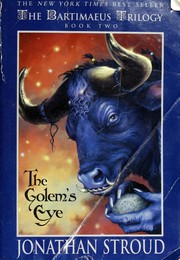
The Golem's Eye
Two years after The Amulet of Samarkand, Nathaniel is a rising bureaucrat, Bartimaeus is his unwilling servant again, and something made of clay is tearing…
2,299-word summary · 10 min read