
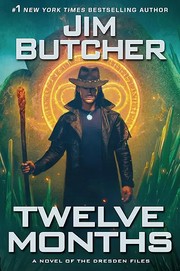
Twelve Months
2,193-word summary 10 min read 480 pages in the book
- First published
- 2026
- Publisher
- Ace Books
- Pages
- 480
- ISBN
- 9780593199336
- Series
- Dresden Files (#18)
Reading options
What's inside (14 sections)
I picked up Twelve Months knowing it had been years since the last Dresden book and wondering if Butcher could still find Harry's voice after that long. He can. This is the quietest Dresden novel by a mile, and for the first half I kept waiting for the usual breakneck case to kick in. It never quite does, and that turns out to be the point. Chicago is wrecked, Harry is wrecked, and the book sits with both.
You do need the backstory here. Battle Ground leveled parts of the city, killed thousands, got Harry expelled from the White Council, and took Murphy from him. Twelve Months covers the year after, month by month in loose order. If you have not read the series, start elsewhere. This one is for the invested.
A city without power
Chicago in this book feels genuinely post-disaster. Whole blocks without electricity. Supply lines jury-rigged. Neighborhoods organizing around whoever can keep generators running and ghouls out. Butcher is good at the logistics of ruin: who eats, who freezes, who decides. Harry throws himself into ward work and small rescues because the big war is over and the small ones never stop.
The ghoul problem gives the early chapters their shape. With so many dead unburied or half-buried, packs move in from outside the city. Harry, running on fumes, has to keep putting himself between hungry things and tent camps. These fights are smaller than the set pieces of recent books, and deliberately so. He wins most of them and feels worse each time.
Molly, Butters, and the remaining allies all carry their own damage. Butcher spreads the grief around instead of letting Harry hog it. One short scene with Butters trying to keep a clinic lit during a brownout does more work than any speech about loss. The Knight of the Cross material stays mercifully light.
Thomas fading
The emotional core is Thomas, Harry's half brother, who is losing himself to the thing inside him. Ever since the war, the Hunger has had its hooks deeper, and Thomas spends much of the book distant, cold, dangerous to be near. Harry's helplessness here is the point. He can punch gods but cannot reach his own brother.
Their scenes together are careful and sad. Thomas surfaces in flashes: the old humor, the old loyalty, then the flat affect again. Harry tries everything except the obvious violent answer, because using force on family would finish what the war started. I found this thread the strongest in the book. It gives Harry's guilt a specific face instead of a general cloud.
The solution, when it comes, is partial and costly rather than clean. Nobody gets cured by love or willpower. The best outcome available is time and attention, bought at prices people argue about afterward. That feels honest for book eighteen of anything.
The Council and the courts
Expelled and distrusted, Harry operates without backup for most of the book. The remaining Wardens treat him as a hazard. Ramirez gets a few good scenes that show respect mixed with genuine fear. The message is consistent: the Council did not kick Harry out because he is evil, but because broken weapons still cut the wielder.
On the supernatural politics side, the Winter Queen's alliance with the White Court tightens, and Harry's betrothal to Lara Raith hangs over everything. Lara remains one of Butcher's best creations: honest about being a predator, useful, funny, impossible to trust. Their negotiations are all smiles with knives underneath.
Mab gets less page time than usual but makes it count. One audience scene recalibrates the whole book. Winter does not care about Harry's grief, only his function, and the contrast with the human characters' patience lands hard.
Lara's bargain
The betrothal plotline could have felt soapy. It mostly does not, because both parties treat it as business with personal static attached. Lara needs Winter's cover for her own court's survival. Harry needs resources for Chicago and something to bargain with for Thomas. They circle each other warily, each waiting for the clause that bites.
There is one genuinely funny dinner sequence where both of them perform civility for witnesses while trading threats in subtext. Butcher still writes this kind of scene better than almost anyone in the genre. The romance, such as it is, stays transactional. Anyone hoping for a real turn here will wait at least another book.
What the bargain costs becomes clear late. Protection always has a price in these books, and Harry pays in autonomy, which is the one currency he hates spending. The final terms set up the next volume without feeling like a trailer.
Grief doing its work
The last third finally gives Harry something like forward motion. Without spoiling the mechanism, he gets a chance to do one useful thing for someone else's grief instead of marinating in his own. It is small, local, and human. It helps more than any battle would have.
Butcher's handling of Murphy's absence deserves praise. She is everywhere in this book without a single cheap resurrection tease. Harry talks to her memory, argues with it, gets no answers. The book trusts readers to sit with that. After seventeen books of escalation, choosing restraint reads as confidence.
The closing chapters point Harry toward the next conflict with clearer eyes. He is still damaged, still dangerous, still loved by stubborn people. The optimism the reviews mention is real but thin, like sun through smoke. I bought it.
Who this is for
If you want wizards blowing up city blocks, this is the wrong entry. The action is present but secondary. If you want to spend a year watching Harry learn how to keep going, it delivers. Longtime readers will forgive the slow middle for the character payoffs. Newcomers will bounce off hard.
My complaints are small. A few therapy-adjacent conversations circle the same insight, and one ghoul subplot exists mostly to fill a quiet month. But the Thomas material and the final act justify the slower pace. After the bombast of Battle Ground, a book about sweeping up feels right.
The allies carry weight
One of this book's quiet strengths is how much page time goes to the supporting cast. Molly's struggles with Winter's mantle get honest, uncomfortable scenes. She holds terrible power and a teenager's uncertainty about it, and the combination produces choices that worry everyone including her. Butcher resists making her either mascot or menace.
Butters continues his long evolution from comic relief to load-bearing pillar. His clinic chapters show what heroism looks like without magic: inventory lists, triage decisions, staying calm when the lights flicker. The book clearly loves him, and longtime readers will feel rewarded for years of investment in a character who started as a joke about polka.
Ramirez and the remaining Wardens get a fair hearing too. Their fear of Harry is rational, and the book lets them say so to his face. That honesty keeps the Council conflict from curdling into simple persecution narrative. Expelled or not, Harry needs these people, and they need him functional. Mutual need without much liking describes most adult alliances.
Lara and the long game
Readers who have followed the White Court thread across a dozen books will find this installment's developments significant. Lara Raith has been maneuvering toward something like stability for her people for years, using Harry as both shield and lever. The betrothal formalizes a partnership that has been building since the war forced strange bedfellows together.
What impresses me is how little the book romanticizes any of it. Every scene between Harry and Lara crackles with mutual awareness that this is business conducted by predators. They like each other in the way rival chess players like each other. Trust extends exactly as far as verified interest, and both keep verifying.
The Winter-White Court alliance itself reshapes the series map. Two formerly hostile powers coordinating changes every other faction's math. Butcher doles out the implications rather than dumping them, mostly through other characters reacting to rumors. By the final chapters the new shape of things feels established without needing a summit scene.
Grief as plot engine
Fantasy novels often treat grief as a prologue emotion, something to motivate revenge by chapter three. Twelve Months treats it as the whole weather system. Harry's mourning for Murphy does not resolve, transform into power, or get replaced by new love. It just sits there, coloring decisions, slowing reactions, making him kinder in some moments and unreachable in others.
The book's structure mirrors that reality. Months pass. Small duties get done. Big questions stay open. Healing, such as it is, arrives sideways through work rather than head-on through confrontation. There is no scene where Harry defeats grief. There are scenes where he carries it more carefully, which is both less satisfying and more true.
I appreciated that the book extends the same patience to Chicago itself. The city does not bounce back. Repairs take all year and remain incomplete. People adapt rather than recover. That parallel between man and place gives the novel its backbone. Both are still standing. Neither is what it was.
Series stamina
Eighteen books in, most series run on fumes. Butcher avoids that here by changing the fuel. Instead of bigger explosions, he offers deeper attention. The prose is leaner than the early books, the jokes fewer but better timed, the emotional beats given room to breathe. It feels like a writer who knows these characters well enough to let them be quiet.
New readers should still start at Storm Front. Nothing here orients the uninitiated, and the emotional payoffs assume seventeen books of context. But for the faithful, this is a necessary book, the exhale the series needed. It clears the ground for whatever comes next while honoring what came before.
After years of escalation, restraint reads as mastery. I closed the book steadier than I opened it, which seems to be exactly what Harry was doing all along.
Seventeen books of road behind him
It is worth pausing to consider what eighteen books means. When Storm Front opened, Harry was a down-on-his-luck wizard detective taking missing-person cases for rent money. Since then he has died, come back, taken Winter's mantle, lost loves, made bargains, and watched his city burn. Few series protagonists have traveled this far without becoming unrecognizable. Harry remains himself: mouthy, guilty, stubborn about protecting people at his own expense.
That continuity is Butcher's great achievement and his great constraint. Longtime readers bring seventeen books of feeling to every scene, which lets quiet moments land like hammer blows. A shared look with Molly carries the weight of apprenticeship, war, and Winter. A beer with Butters carries HMOs, heroism, and polka. New readers get none of that interest on their investment, which is why the onboarding warning matters.
The series has also run the full tonal range by now: noir mystery, horror, war epic, heist, political thriller, tragedy. Twelve Months adds the grief novel to the list. That generic flexibility explains the longevity better than any single plot. Butcher keeps finding new shapes for the same core question of what power costs the powerful.
For rereaders, this book will reward attention to callbacks. Small kindnesses from early books get remembered by characters in moving ways. Debts Harry forgot get collected gently. The sense of a lived-in world with functioning memory sets this series apart from competitors where continuity resets every volume. Chicago remembers, and so does everyone in it.
Reading order and entry points
Newcomers sometimes ask where to start, and the honest answer is book one. Storm Front is rough around the edges but short, and it teaches you Harry's voice fast. From there, read in order through at least Grave Peril before deciding. The series rewards commitment the way long television does. Skipping ahead spoils payoffs you have not earned.
That said, certain volumes work as samplers. Dead Beat shows Butcher at his most purely entertaining. Changes shows the stakes at their highest. Small Favor shows the moral complexity at its best. Twelve Months, ironically, shows the series at its most human and is the worst possible entry point. Context is everything here.
For those catching up, the essential pre-reading for this book is the two-volume war duology immediately before it, plus a passing familiarity with Thomas's arc across the middle books. The White Council politics assume knowledge of years of friction. Murphy's death lands hardest if you watched that relationship grow across a dozen volumes from antagonism to partnership to love.
Audiobook listeners get continuity of a different kind. The longtime narrator's performance has grown with the character, and the quieter material here reportedly suits him well. Grief scenes that might drag on the page gain gravity in a good reading. Whatever format you choose, give the slow months your patience. They pay off.
The wait for the next book starts now, and for once it feels comfortable rather than agonizing. Harry is in a better place than he was. So is Chicago. So, faintly, is the reader.
FAQ
When was Twelve Months published?
Ace Books published it on January 20, 2026. The hardcover runs 480 pages with ISBN 9780593199336.
Where does it fit in the Dresden Files?
It is book eighteen, set in the year after Battle Ground. New readers should start with Storm Front or at least Peace Talks.
Who returns in this one?
Chicago wizard Harry Dresden, his half brother Thomas, the Winter Queen, and vampire Lara Raith, plus ghoul packs in the ruins.
Similar books
More from Dresden Files first, then related titles.
Ghost Story
Dead but not gone, Harry Dresden returns as a spirit to find his killer, protect the friends he left behind, and learn why the afterlife gave him a second…
1,978-word summary · 9 min read
Cold Days
Back from the dead as the Winter Knight, Harry Dresden must follow Mab's order to kill an immortal and defend Demonreach on Halloween night.
2,361-word summary · 10 min read
Turn Coat
Morgan asks Harry for sanctuary as the Council calls him traitor.
2,590-word summary · 12 min read
Small Favor
Harry owes Mab a favor and must find Marcone while Denarians hunt a holy girl.
2,741-word summary · 12 min read
White Night
Wizard Harry Dresden hunts fear-feeding White Court killers preying on Chicago's minor talents, reunites with Elaine Mallory, and faces a coup at Chateau Raith.
2,521-word summary · 11 min read
Changes
Harry Dresden learns he has a seven-year-old daughter Maggie, hidden for years. The Red Court seizes her for a bloodline rite, forcing him toward Chichen Itza.
2,855-word summary · 13 min read
Proven Guilty
Warden Harry defends teen Molly from White Council while fear phages stalk con.
2,068-word summary · 9 min read
Dead Beat
Wizard Harry Dresden hunts the Word of Kemmler through necromancers to stop a Halloween godmaking rite.
2,883-word summary · 13 min read
Blood Rites
Wizard Harry Dresden guards a porn set from entropy curses while learning brother Thomas and fighting Black Court nest.
2,211-word summary · 10 min read
Death Masks
Wizard Harry Dresden hunts the stolen Shroud of Turin while dueling a vampire lord and facing fallen angels.
2,979-word summary · 13 min read
Summer Knight
Harry refuses Mab to solve a Summer Knight murder and stop fairy war.
2,147-word summary · 10 min read
Grave Peril
Chicago ghosts turn murderous as Harry Dresden faces a vengeful sorcerer and Bianca's vampire trap.
3,484-word summary · 15 min read
Fool Moon
Wizard Harry Dresden hunts a full moon killer through Chicago werewolf packs.
2,855-word summary · 13 min read
Storm Front
Wizard PI Harry Dresden hunts heart-explosion killer in Chicago.
2,563-word summary · 11 min read
Hounded
A two-thousand-year-old druid runs a bookshop in Arizona, hides from an Irish god who wants his sword back, and talks to his dog.
2,159-word summary · 10 min read

Magic Burns
A magic flare hits Atlanta, and mercenary Kate Daniels must recover stolen maps, find a missing witch, and keep a teenage girl alive while Celtic gods try to…
2,021-word summary · 9 min read
At Grave's End
Cat and Bones face Max, a zombie-raising ancient vampire, and a prophecy that ties their marriage to Patra's death in the third Night Huntress novel.
2,061-word summary · 9 min read
The Golem's Eye
Two years after The Amulet of Samarkand, Nathaniel is a rising bureaucrat, Bartimaeus is his unwilling servant again, and something made of clay is tearing…
2,299-word summary · 10 min read
Magician: Apprentice
An orphan kitchen boy and a smith's son grow up in a frontier castle just as invaders from another world open a rift and begin a war that will change both of…
2,114-word summary · 9 min read

Lore
Lore Perseous, the last of a hunted bloodline, is pulled back into the Agon when a wounded Athena offers her revenge against the god who killed her family.
2,188-word summary · 10 min read
Tithe: A Modern Faerie Tale
A retelling of Holly Black's Tithe: Kaye Fierch returns to the Jersey Shore, discovers she is a changeling, and becomes the mortal sacrifice in a faerie power…
2,586-word summary · 11 min read
The Magician King
Quentin rules a peaceful Fillory until a golden key strands him on Earth, while Julia's brutal road from hedge witch to demigod rewrites the whole story.
2,431-word summary · 11 min read

The Bane Chronicles
Eleven stories across five centuries follow Magnus Bane from a ban in Peru to his first date with Alec in this illustrated Shadowhunter companion.
2,470-word summary · 11 min read

Glass Houses
Claire Danvers moves off campus to escape a bully and lands in a house where the roommates know Morganville's real secret: the town belongs to vampires.
2,345-word summary · 10 min read
Sourcery
A dying wizard hides his soul in a staff, his eighth son becomes a sourcerer strong enough to break the world, and Rincewind is sent to stop him with a sock.…
2,404-word summary · 11 min read
Dreamfever
With the walls between worlds down and Mac broken by the Fae, Dreamfever is the darkest volume of the Fever series, and the one that changes everything.
2,007-word summary · 9 min read

Bitten
Elena Michaels is the world's only female werewolf, and keeping that world away from her human life in Toronto works fine until the Pack calls in a favor.
2,039-word summary · 9 min read
Silver Borne
Mercy hides a Fae book while Samuel slips and the fae close in.
2,571-word summary · 11 min read
Shadowfever
Mac Lane hunts the Sinsar Dubh in Dublin as Fae walls fail and Barrons secrets surface.
3,016-word summary · 13 min read