
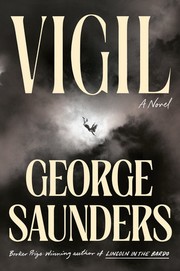
Vigil
2,434-word summary 11 min read 192 pages in the book
- First published
- 2026
- Publisher
- Random House
- Pages
- 192
- ISBN
- 9780525509622
Reading options
What's inside (8 sections)
I picked up Vigil because I still think about Lincoln in the Bardo at odd moments, usually when I am stuck in traffic or waiting in a hospital lobby. That book made a cemetery feel crowded and tender. When I heard Saunders had written another short novel about ghosts and dying, this time with an oil CEO on the deathbed, I was curious and a little wary. It sounded like a setup for a lecture. It is not. I read the 192 page Random House edition in one evening, late, with a lamp on, and I kept laughing in places where I should have felt grim.
The premise is simple enough to fit on an index card. K. J. Boone built a career selling doubt about climate change. He ran an oil company, funded friendly research, smiled through hearings, and got rich. Now he is dying, down to hours, in a private room with machines beeping and family hovering. Ghosts come to sit with him. They argue with him. One of them will not leave him alone. What follows reads like A Christmas Carol rewritten for a hotter century, with Saunders doing what he does best, which is letting loud, funny, damaged voices talk over each other until something true slips out.
A man who sold doubt is running out of hours
Boone is not introduced as a monster. He is introduced as a tired old man who cannot breathe well and who keeps trying to manage the room the way he managed board meetings. He wants the blinds adjusted. He wants his son to stop crying in a way that embarrasses everyone. He wants a doctor to give him a number, a clean timeline, as if death were a quarterly report.
Saunders fills in the career in flashes. Boone did not start as a cartoon villain. He started as a smart engineer who liked solving hard problems and who learned early that saying maybe next to climate science paid better than saying yes. The company paid for ads with green fields and smiling workers. It paid for think tank papers with footnotes that looked serious. Boone told himself he was protecting jobs and towns long after his own researchers told him the science was settling fast.
I found these early pages strong because Saunders lets Boone be charming. He jokes with nurses. He remembers names. That charm is part of the point. Men like Boone do not get to run big companies by shouting. They get there by being likable in rooms where likability moves money. That skill turns useless in the death room. You cannot charm a lung back into shape.
His family drifts in and out. A son who worked for the company and now is not sure what he believes. An ex wife or late wife figure in memory. Assistants with phones that keep buzzing. Boone keeps reaching for control, for one more statement, one more correction to the record. The machines keep their own rhythm. The night stretches. Then the first ghost arrives, and the air in the room changes.
The room where dying happens
Much of Vigil takes place in one room, which makes sense for a 192 page book about final hours. Saunders is good at small spaces. He notices the plastic chair, the humming fridge for medicines, the television muted on a news channel showing fires somewhere west. Boone watches the fire footage with the sound off and thinks about insurance exposure before he catches himself and feels ashamed, then angry at feeling ashamed.
The medical details stay light. This is not a hospital procedural. We get morphine schedules, oxygen levels, a hospice nurse who has seen enough death to be kind without being soft. She tells Boone the truth when he asks, and redirects him when he tries to pull her into old debates. When Boone tries a favorite line about energy poverty, she does not argue. She adjusts his pillow and asks if he is scared. He says no too fast. She waits. He says yes.
Time behaves strangely here, in a way readers of Lincoln in the Bardo will recognize. Minutes stretch when Boone panics. Memories arrive whole, with smells. A Texas summer with heat coming off asphalt. A boardroom with cold air blasting. Saunders cuts between present suffering and past choices without flashing big signs. One paragraph Boone is coughing, the next he is thirty years younger signing a memo he knows is slippery, then he is back, coughing again.
This structure could feel choppy. It mostly does not, because the voice stays close to Boone. We stay in his head for the physical stuff, the fear, the bargaining, the sudden hunger for a burger at 2 a.m. Dying, in this book, is boring and vivid at once. Long waits. Bright flashes. Breath, thirst, cold feet, hot face.
Then Jill shows up, and the book tilts.
Jill arrives and refuses to be small
Jill is the ghost you will remember after you forget plot points. Saunders introduces her as blunt, funny, and furious in a way that fills the room. She died young, tied to a place Boone helped ruin, and she has no interest in his excuses. Where other ghosts circle and sigh, Jill points.
Her scenes crackle because she will not let Boone use his usual moves. When he tries biography, saying he grew up poor and worked hard, she says fine, lots of people grew up poor, what did you do after you got power. When he tries complexity, saying energy systems are hard and transitions take time, she says yes, they are hard, which is why lying about them for decades was cruel. When he tries apology in the abstract, saying mistakes were made, she asks him to name one, with dates and names of who got hurt.
I laughed out loud at her timing. She interrupts. She mimics his press voice. Saunders gives her the best comic lines in the book, and that comedy does real work. It keeps Boone from sliding into self pity. Every time he starts a speech about how hard it is to lead, Jill cuts it with a specific memory. A town meeting where mothers brought inhalers. A river that changed color.
What makes Jill more than a scold is that she is stuck too. She is not a serene guide. She is angry and grieving and, in her own way, afraid to move on. She clings to Boone because blaming him gives her shape. Saunders shows her learning, in small steps, that holding one man in place will not clean a creek or cool a summer. She has to want something beyond a final gotcha. Her arc, for me, carries the middle of the book.
If Boone is a caricature at times, Jill is fully alive, which is an odd thing to say about a ghost. You can hear her. Readers who loved the chorus in Lincoln in the Bardo will feel at home, but Jill is less choral and more solo. She steals scenes the way a smart friend steals dinner conversation, by being right and funny at the same time.
Doll, Blaine, and the rest of the chorus
Jill does not come alone. Doll and Blaine are the other named ghosts in Boone orbit, and a few vaguer presences drift at the edges. Doll is older, softer, tired in a way that reads as grief rather than defeat. She lost people slowly, to smoke and heat and stress, the kind of losses that do not make headlines. Blaine is pricklier, a working man who once believed company promises about safety and pensions and now feels foolish for having believed them.
Their stories arrive in fragments. Doll talks about a house that was always dusty no matter how she cleaned, about nights when the air smelled sweet and wrong. Blaine talks about overtime, about a foreman who said the smell was normal. These are not courtroom exhibits. They are kitchen table memories. Saunders trusts small details here. A lunchbox. A porch chair. A bill.
The chorus scenes echo Lincoln in the Bardo without copying it. In that earlier novel, 166 voices bickered and harmonized in a cemetery. Here the group is smaller, focused on one dying man, which makes the book feel more like a play. Ghosts argue about tactics. Should they scare him. Should they comfort him. Should they show him the worst footage or let him remember on his own. Doll wants mercy. Blaine wants admission. Jill wants both, plus a fight.
I liked how Saunders uses the ghosts to show Boone from outside. Boone thinks of himself as a builder. Doll remembers him as a signature on a letter denying help. Boone thinks of himself as rational. Blaine remembers him on television smiling while saying the science was unclear. That gap, between self image and impact, is where the book lives.
One risk with this setup is repetition. Saunders mostly avoids that trap by varying the form. One visit plays as farce, with ghosts talking over each other about hospital food. One plays as memory dive, where Boone relives a deposition and hears his own smooth answers with new ears.
What Boone did, and what it cost
For a short novel, Vigil spends a surprising amount of time on persuasion mechanics. How do you sell doubt. Boone remembers meetings where lawyers and marketers chose words with care. Uncertainty. Balance. Sound science. Fund three studies that find no link for every one that finds a link, then say the jury is out. Never say climate change is fake when you can say more research is needed.
The book connects those tactics to specific harms without turning into a pamphlet. Heat waves that kill older people alone in apartments. Floods that wipe out small towns twice in five years. Kids with asthma missing school. Workers handling chemicals with thin gloves. Boone did not cause a hurricane with his own hands, and the book does not claim he did. It claims he helped delay action that could have softened blows, and that delay was a choice made for profit, with knowledge. That is a narrower charge, and a harder one to dodge.
Boone fights back with arguments many readers will have heard at family dinners. Poor countries need cheap energy. Wind and solar were not ready. People would have lost jobs. Saunders does not strawman these points. He lets Boone make them well, then lets Jill and Blaine answer with lived facts. Jobs were lost anyway when plants automated. The company knew enough to protect its own rigs from rising seas while telling towns not to worry. That last detail lands hard.
The satire here is broad. Boardroom scenes lean into jargon. PR men practice concerned faces. A Christmas party speech about freedom goes on a beat too long. Readers who want a balanced debate about energy policy will not find it. This is a moral story wearing satire clothes. I did not mind, because the comedy keeps it moving, but I can see why some critics call Boone thin. He is built to stand for something. At times that squeezes out stranger, more private parts of him that would make his reckoning hurt more.
A reckoning that does not let him off easy
The last third moves like A Christmas Carol, which Saunders clearly intends. Boone revisits moments he wishes he could edit. A hearing where he smiled while a mother cried. A memo he signed after only skimming the scary appendix. A phone call where he killed funding for a safety upgrade because the quarter looked soft. The ghosts do not show him alternate futures with marshmallow endings. They show him what happened after he left rooms. Coughs. Bills. Funerals with folding chairs.
What I appreciated is that Boone does not get a clean redemption. He tries apology drafts in his head. Sorry if anyone was offended. Sorry for any pain. Jill grades them like a strict teacher. Try again, she says. Say what you did, who paid, what you knew and when. Boone sweats. He tries. He fails. He tries again. The prose in these pages is plain and painful. Short sentences. Stops and starts. A man used to scripts trying to speak without one.
There is a scene near the end, in the death room, where Boone asks his son for something small and specific. Not forgiveness in big letters, but help with a letter, or a fund, or a call to someone harmed. I will not spoil whether the son agrees or what comes of it. The point is scale. Boone cannot fix the sky in his final hour. He can move a little money, admit a little truth, make one phone call less cowardly than the last hundred. Saunders treats that smallness with respect. It matters because it is all Boone has left, not because it balances books.
Does Boone change enough. That is the question the book leaves buzzing. Doll thinks yes, enough to loosen his grip. Blaine thinks maybe, but wants receipts. Jill thinks change is not a feeling, it is what happens next, and Boone will not be around for next. That disagreement feels honest. Dying men do not get to see results. They get to choose a direction for the last step. Boone chooses, haltingly, to face outward rather than curl inward. Whether readers call that hope or too little too late will depend on their patience for stories about powerful men learning late.
My own gripe matches what early critics flagged. Boone can feel like a type, the oil CEO, rather than a full person. When Jill is on the page, the book sings. When she steps back, the satire of corporate greed can feel familiar, even easy. Still, the final pages moved me. A dying man listening to people he spent a career not hearing is a simple image. Saunders earns it by keeping the ghosts particular. Dust on a sill. A cough in September.
I closed Vigil thinking about excuses I use in my own smaller life. The book is 192 pages and reads fast, but Jill voice stayed with me on the walk to make tea. Name one, with dates, she keeps saying. Random House published it in 2026, and at 192 pages it asks for one evening and gives back a longer echo. Readers who like short, funny, sad books about big problems should pick it up. Readers burned out on climate lectures, even warm ones, may want to wait.
FAQ
Is Vigil connected to Lincoln in the Bardo?
It shares the method, a small ghost chorus and bardo logic where the dead linger, but it is a new story. Random House published Vigil in 2026 at 192 pages, aimed at climate guilt instead of parental grief.
Who are Jill, Doll, and Blaine?
They are the named ghosts around Boone. Jill is blunt and funny and refuses his excuses, Doll is older and grieving slow losses, and Blaine is a worker who once trusted company safety promises.
Does Boone get forgiven at the end?
No clean redemption. He drafts weak apologies, gets graded hard by Jill, and can only attempt small late amends, which the book treats as real but far from balancing the books.
Similar books
Lincoln in the Bardo
Willie Lincoln dies in 1862 and lingers while 166 cemetery voices squabble his father toward release.
2,032-word summary · 9 min read

The Crying of Lot 49
A California woman named executor of her ex-lover's estate follows a muted post horn into a possible centuries-old postal conspiracy, and Pynchon refuses to…
2,003-word summary · 9 min read

James
Percival Everett retells Huckleberry Finn from Jim's side, giving him a library, a hidden school, and a voice the novel lets loose.
2,211-word summary · 10 min read
Naked Lunch
Burroughs's banned 1959 collage novel follows Bill Lee through addiction, Tangier, and the nightmare bureaucracy of the Interzone.
2,082-word summary · 9 min read
Infinite Jest
A film that kills its viewers, a tennis academy, a halfway house for addicts, and a future America where corporations name the years, all tangled together.
2,084-word summary · 9 min read
Her Fearful Symmetry
Twins Julia and Valentina inherit a London flat above Highgate Cemetery from an aunt they never met, then find a ghost in it and a family secret.
2,057-word summary · 9 min read
Hogfather
Death fills in for a missing Father Christmas, Susan Sto Helit hunts the Hogfather, and the twentieth Discworld novel turns Santa into a management problem.
2,871-word summary · 13 min read
The Sisters Brothers
Two hired killers ride from Oregon to Gold Rush California to murder a prospector, and find their trade, their brotherhood, and the frontier myth coming apart.
2,095-word summary · 9 min read
If on a Winter's Night a Traveler
You, the Reader, chase a defective novel through bookshops and translators while ten other novels keep interrupting. Calvino's famous puzzle about the act of…
2,173-word summary · 10 min read
Severance
Candace keeps office routine as fever empties New York, then joins survivors.
2,340-word summary · 10 min read

An Object of Beauty
Lacey climbs the art world from Sotheby to fraud and fall.
2,629-word summary · 12 min read
White Noise
Jack Gladney teaches Hitler studies, flees a chemical cloud with his family, and chases a drug for dread in DeLillo's funny and bleak 1985 novel of…
2,768-word summary · 12 min read
Post Office
Chinaski drifts through postal shifts, cheap rooms, horse tracks and rough love in Bukowski's 1971 debut about work, drink and survival.
2,444-word summary · 11 min read
The Valley of Vengeful Ghosts
A grieving therapist buys a model home in a rainy valley where the walls leak ghosts.
2,035-word summary · 9 min read
Sing, Unburied, Sing
A Mississippi family drives to Parchman prison while ghosts press close, and a dying grandmother holds the house together.
2,871-word summary · 13 min read
Lost Lambs
A coastal family fractures as an open marriage fails and three sisters spiral while the youngest traces a shipping magnate's plot.
2,471-word summary · 11 min read

The Glass Hotel
A hotel bartender marries a wealthy investor, his fund collapses in 2008, and Mandel traces the money, the guilt, and the ghosts left behind.
2,785-word summary · 12 min read
The White Tiger
A poor driver writes to the Chinese Premier about rich masters, corruption, and murder.
2,251-word summary · 10 min read
The Corrections
An aging Midwestern couple tries to gather three troubled adult children for one last Christmas at home.
2,094-word summary · 9 min read
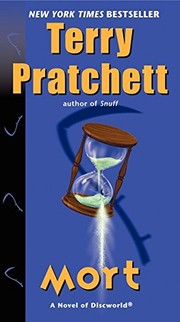
Mort
Death hires apprentice Mort in this 1987 Discworld comedy, where a spared princess splits reality and duty bends for love, with no Rincewind.
2,386-word summary · 11 min read
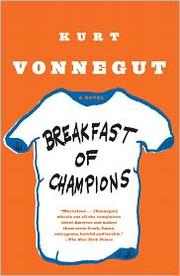
Breakfast of Champions
A Pontiac dealer breaks down while a broke sci-fi writer brings the book that tells him others are robots.
2,013-word summary · 9 min read
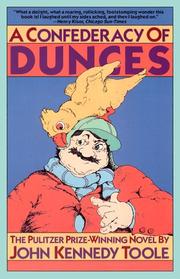
A Confederacy of Dunces
Ignatius J. Reilly, jobless and full of opinions in New Orleans, meets work, his mother, and the law in Toole's posthumous Pulitzer winner.
3,089-word summary · 14 min read
The Master and Margarita
Devil Woland visits 1930s Moscow while Master writes Pilate and Margarita bargains.
2,535-word summary · 11 min read

My Year of Rest and Relaxation
A young art graduate tries to sleep for a year with pills and Reva while the city drifts toward 2001.
3,146-word summary · 14 min read
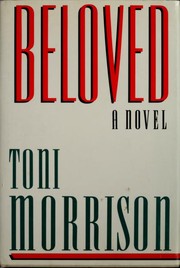
Beloved
Sethe lives with the memory of killing her child to save her from slavery until a young woman named Beloved arrives.
2,586-word summary · 11 min read
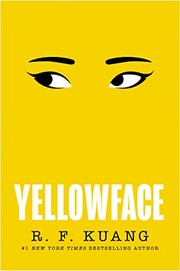
Yellowface
Struggling writer June steals her dead friend Athena's manuscript and publishes it as Juniper Song.
2,081-word summary · 9 min read

Violeta
A woman born in 1920 writes her life story to her grandson, from one pandemic to another, through wealth, ruin, passion, and dictatorship in South America.
2,555-word summary · 11 min read
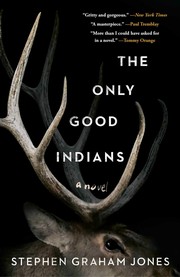
The Only Good Indians
Four Blackfeet men who killed a pregnant elk are hunted by her spirit a decade later, and the only person who can end the cycle is a teenage girl who was not…
2,010-word summary · 9 min read
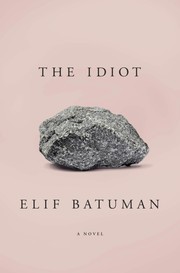
The Idiot
A Turkish-American freshman at Harvard falls in love through email with a Hungarian math student and spends a summer in Hungary trying to turn correspondence…
2,019-word summary · 9 min read
The Guest
Cast out of her wealthy boyfriend's Hamptons house, twenty-two-year-old Alex spends five days talking her way through other people's homes and accounts.
2,165-word summary · 10 min read