
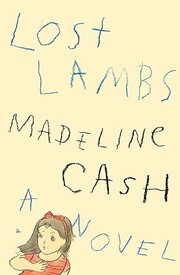
Lost Lambs
2,471-word summary 11 min read 323 pages in the book
- First published
- 2026
- Publisher
- Farrar, Straus and Giroux
- Pages
- 323
- ISBN
- 9780374619237
Reading options
What's inside (8 sections)
I picked up Lost Lambs because three different friends sent me the same link in one week with some version of you have to read this family. Madeline Cash published it with Farrar, Straus and Giroux on January 13, 2026. The US hardcover is listed at 323 pages for ISBN 9780374619237, and the copy I read felt dense in a good way. It is a literary satire about the Flynn family coming apart in a small coastal town while a billionaire shipping magnate looms over everything. I finished it in five sittings, sometimes laughing and sometimes putting it down to stare at the wall. It ping pongs between voices, parents and kids and neighbors and hangers on, and it holds together through momentum and jokes more than plot.
The setup is easy to pitch and strange to live inside. Catherine and Bud Flynn have been married for years and have tried to keep things open and modern. That arrangement has reached a breaking point. They still share a house. They still parent. They no longer seem to like each other much, and their attempts at honesty keep turning into new ways to avoid the point. Around them orbit their three daughters, each spinning fast in a different direction. Cash writes them as smart and self sabotaging in distinct ways, and the book moves chapter to chapter letting each voice take the wheel for a while before handing it off.
Abigail is the eldest. She is out of high school energy and into messy adult dating, seeing a much older guy her friends call War Crimes Wes. The nickname tells you how the town sees him and how Abigail half sees him too. Louise is the middle child. She is quieter online than off, keeping up a secret correspondence with someone who claims ties to extremist politics. She tells herself it is research or irony or boredom. It reads as loneliness with an edge. Harper is the youngest at twelve, brilliant and restless, teaching herself languages and reading adult books she only half grasps. She has become convinced someone is watching the town. Cameras. Drones. Vans that park too long. Adults call it paranoia. The book lets her keep looking anyway.
Catherine and Bud and the open marriage that stopped working
Catherine and Bud met young and built an identity around being the cool parents. Open relationship. Artists and thinkers. No jealousy, just compersion and calendars. Cash is sharp on how that story curdles. Early chapters show them in couples therapy language that no longer fits. They process. They name needs. They schedule date nights with other people and then sulk when the other person has fun. I recognized these scenes from real life, the way progressive ideals can become a script people recite while feeling awful.
Bud works a job that keeps him adjacent to town power without giving him much of it. He wants to be liked. He wants to be seen as generous. He hates conflict and creates more of it by dodging. Catherine is tougher and funnier on the page. She runs the household with a mix of warmth and control. She loves her daughters in a fierce and distracted way. She notices everything and acts on half of it. Their fights are specific. Who picks up Harper from school. Who pays for what. Who told Abigail she could stay out. Underneath is a larger grief. They wanted a marriage that would prove they were different from their parents. Instead they built a different kind of stalemate.
What I liked is that Cash does not pick a villain here. Bud is passive. Catherine is sharp to the point of cutting. Both have lovers and crushes who come and go. Both lie by omission. The book lets friends weigh in, which helps. A neighbor says Bud is kind but absent. A coworker says Catherine is brilliant but exhausting. Those outside views kept me from settling into team husband or team wife. They are two people who opened their marriage to fix distance and found the distance got wider with more people in the room.
Abigail and Wes and the need to be seen as adult
Abigail chapters were the hardest for me to read, which I mean as praise. She is nineteen in spirit if not in exact years, working a service job, living half at home and half elsewhere, dating Wes because he treats her like she is interesting. Wes is in his late twenties, drifting between gig work and stories about his past. People around town call him War Crimes Wes as a joke that is not fully a joke. He talks big about travel and politics and ex girlfriends. Abigail hears attention where others hear warning signs. Cash writes their dialogue well. He asks her questions no one else asks. She performs worldliness she does not yet have. Both things can be true at once.
The satire here is gentle compared to later chapters. Cash is interested in how young women audition adulthood through older men, and how older men borrow youth to avoid reckoning with their own drift. Abigail tells friends Wes gets her. Friends nod and text each other concerns behind her back. A scene at a beach bonfire captures it. Music too loud. Beer warm. Wes holding court about shipping routes and customs, topics he knows a little about and stretches. Abigail laughing a beat too hard. I have sat near that fire. I wanted to shake her and hug her at the same time.
Abigail also carries middle child energy despite being the eldest. Louise pulls focus with secrecy. Harper pulls focus with brilliance and trouble. Abigail tries to stay out of family drama by building a separate life, only to import drama of her own. Her arc is not about rescue. No one swoops in to save her from Wes. She has to notice the condescension herself, in small moments. He forgets details she told him. He borrows money. He makes her the punchline in front of his friends. The slow recognition feels honest. Growing up, in this book, is mostly learning to hear how people talk about you when they think you are not listening.
Louise and the secret inbox
Louise is the middle daughter and the quietest on the page at first. She does well enough at school. She helps with dishes without being asked. She spends a lot of time in her room. That room hides a second life. She has fallen into an online correspondence with a man who hints at radical ties and secret knowledge. She tells herself she is just curious. She likes having someone who writes long messages back. She likes feeling chosen for her mind. Cash never makes thistitillating in a cheap way. The messages are shown in fragments, flattering and vague, full of promises to reveal more soon.
I found this thread upsetting and believable. Louise is not radicalized in any simple sense. She is lonely and bright and bored in a town that offers little to a teenage girl who reads too much. The man gives her a role. Researcher. Confidante. Someone who sees through lies. Her parents are too wrapped in their own unraveling to notice how much time she spends online. Her sisters notice but misread it as boy trouble or homework. A school counselor scene lands hard. Louise deflects with humor. The adult marks her as fine because fine is easier to file.
Cash deserves credit for restraint here. She does not turn Louise into a headline or a lesson. The correspondence stays mostly textual, which keeps focus on why Louise answers rather than what the man wants. When the thread collides with the larger town plot late in the book, it does so sideways. A name mentioned in a message matches a name on a shipping manifest. A joke about containers stops being funny. Louise has to decide whether she was played and what to do with shame. I thought those chapters were among the strongest because they refuse easy redemption. She does not get a big speech. She gets a long night of deleting messages and wondering who else saw them.
Harper and the town that might be watched
Harper is twelve and the engine of the book. She taught herself bits of several languages from library books and apps. She reads town council minutes for fun. She keeps notebooks on cars that idle too long near the school and on men who check their phones near the harbor. Adults call her a troublemaker with no origin story. That line fits. She is not acting out because of one trauma. She is bored and wired and convinced the official story about her town is thin. Her insistence that someone is monitoring citizens gets her labeled as a problem. Plans get made to send her to a wilderness reform camp, the kind with hikes and group circles and no phones.
Camp chapters mix comedy with dread. Harper hates the songs. She likes the sky. She befriends a girl who can start fires and a boy who cries when he thinks no one looks. Counselors mean well and miss plenty. Harper keeps watching even without her notebooks, tracking supply trucks and counting how often certain names come up. I laughed at her field notes voice, blunt and smart, and I ached at how alone she is in them. No adult asks what she saw. They ask how she feels about what she saw, which is not the same question.
Back home, Harper fixates on the harbor and on Paul Alabaster, the billionaire shipping magnate whose name is on buildings and boats. Rumors say his company cuts corners. No one digs because jobs depend on him. Harper does not care about jobs. She cares about a specific container she saw moved at an odd hour, with numbers that do not match the public log she found online. Her obsession reads as kid detective work until it stops reading that way. She follows. She photographs. She asks a dockworker a question that gets repeated to the wrong person. That choice puts her family in danger and finally forces the adults to pay attention to what she has been saying for a hundred pages.
Paul Alabaster and the container that links everything
Paul Alabaster rarely appears directly, which makes him scarier. He is present in sponsorship banners and charity galas and citations in council meetings. He owns shipping lines that keep the town employed. He donates to the school while his lawyers fight emissions rules. Cash writes him as charm plus menace, a man who remembers your kid's name while his staff takes photos of your license plate. Townspeople joke about corruption the way people joke about weather. Everyone knows. No one can prove. Or no one wants to try.
The container plot gives the satire teeth. Harper notices a box with mismatched paperwork. Louise sees a familiar alias in a forum post about port jobs. Abigail hears Wes brag about a friend who gets cash for night drives without questions. Catherine hears gossip at a fundraiser and pockets it. Bud hears a warning at work to stop asking. Piece by piece, a picture forms of smuggling and favors, with the harbor as the hinge. Cash doles this out in short chapters that cut between voices, which I liked. No single hero detective. Just a family tripping over the same secret from different sides.
The climax involves Harper getting too close and the family having to act together for the first time in years. I will keep details light because twists land better blind, but the broad shape is this. A night run to the docks. Phones dying. Adults who finally listen to a twelve year old. A container opened or missed by minutes. Threats made plain. Afterward, no tidy takedown. Alabaster does not fall in a courtroom scene. Power rarely does in real life. What shifts is the Flynns. They see each other clearly under stress. That sounds soft. On the page it plays as relief. For once they are in the same story instead of five separate ones.
What works and where it strains
Cash can write a sentence that makes you snort and then feel bad for laughing. A church service overrun by gnats in the opening pages sets tone perfectly. Bodies trying to be solemn while swatting air. A priest theorizing about a Trojan horse plant. It is gross and funny and a little sad, like much of the book. Her ear for euphemism is just as good.
Structure is both a strength and a strain. Pinging between voices keeps pace fast and lets jokes land from new angles. It also means some threads get thin. Bud's work plot could have used ten more pages of concrete detail. A few neighbor chapters feel like sketches rather than people. I wanted more of Catherine's interior life beyond witty deflection. The book tells us she is tired. I wanted a scene where tired wins over funny for a full chapter. Abigail's ending also felt rushed to me. Recognition arrives, then life moves on quickly to make room for the harbor plot. I get the trade. I still wanted one more quiet Abigail scene to sit with what she learned.
Tone will divide readers. This is satire with tenderness, but the satire bites. If you want warm family repair without mockery, parts will feel cold. If you want pure farce, the middle stretch with Louise and Harper gets dark enough to slow laughter. I landed in the sweet spot. I like books that love their characters while refusing to excuse them. Cash loves the Flynns. She also shows them as self absorbed and careless in ways that have costs. The final chapters argue, without speeches, that closeness comes from shared risk more than shared ideals. They survive a scare together. They eat together after. They listen better, at least for a while.
Who should read it. Fans of ensemble family novels with a sharp comic edge will find a lot here. Readers who liked satires of progressive family life and small town power will feel at home. Those sensitive to plots involving teens and online extremism should know that thread stays mostly off screen and psychological, but it is present and tense. Those wanting a clean thriller resolution around Alabaster should adjust hopes. This is a family saga with a conspiracy inside it, not the reverse. I closed it thinking about Harper's notebooks and Louise's inbox and Abigail at that bonfire, three girls trying to be seen in a house full of adults talking about honesty. That image stuck harder than any container reveal, which tells me Cash did what she set out to do.
FAQ
When was Lost Lambs published?
Farrar, Straus and Giroux published it on January 13, 2026. The hardcover is listed at 323 pages and the ISBN is 9780374619237.
Who are the Flynns?
Catherine and Bud Flynn, their daughters Abigail, Louise and Harper, plus billionaire shipper Paul Alabaster who looms over their coastal town.
Is Lost Lambs part of a series?
No. It is Cash's debut novel after the story collection Earth Angel, and it stands alone as a family saga with a conspiracy inside it.
Similar books
The Most Fun We Ever Had
Four Sorenson sisters orbit perfect parents hiding old cracks.
2,590-word summary · 12 min read
White Noise
Jack Gladney teaches Hitler studies, flees a chemical cloud with his family, and chases a drug for dread in DeLillo's funny and bleak 1985 novel of…
2,768-word summary · 12 min read
We Are All Completely Beside Ourselves
Rosemary tells of twin sister Fern, a chimp raised as family, and research fallout.
2,058-word summary · 9 min read
This Is Not About Us
Sisters Sylvia and Helen Rubinstein feud over apple cake in linked stories spanning divorces, bat mitzvahs and three generations of family life.
2,064-word summary · 9 min read
The Corrections
An aging Midwestern couple tries to gather three troubled adult children for one last Christmas at home.
2,094-word summary · 9 min read
The Crying of Lot 49
A California woman named executor of her ex-lover's estate follows a muted post horn into a possible centuries-old postal conspiracy, and Pynchon refuses to…
2,003-word summary · 9 min read

The Shadow Sister
Star D'Apliese steps out of her sister's shadow and follows a bookshop clue into the Edwardian life of Flora MacNichol, a woman who gave up love for duty.
2,260-word summary · 10 min read

Little Town on the Prairie
In the spring after the Long Winter, fifteen-year-old Laura sews shirts, studies for a teaching certificate, and helps send her blind sister Mary to college.
2,071-word summary · 9 min read
Mrs. Everything
Two Jewish sisters in Detroit grow up, apart and together, across seven decades of American life, from the 1950s to the 2016 election.
2,362-word summary · 10 min read

Howards End
Forster's 1910 novel follows two families, a house in Hertfordshire, and a burned note, asking whether money and feeling can ever be connected.
2,187-word summary · 10 min read

James
Percival Everett retells Huckleberry Finn from Jim's side, giving him a library, a hidden school, and a voice the novel lets loose.
2,211-word summary · 10 min read

Fathers and Sons
Arkady brings the nihilist Bazarov home to his father's estate, and a generational argument turns into love, a duel, and an early death.
2,192-word summary · 10 min read

Unaccustomed Earth
Lahiri’s second story collection follows Bengali families in America and abroad, tracing the quiet distances between parents and children, spouses, and the…
2,333-word summary · 10 min read
The Age of Miracles
A California girl grows up while the Earth's rotation slows, and ordinary adolescence continues alongside slow catastrophe.
2,417-word summary · 11 min read
Naked Lunch
Burroughs's banned 1959 collage novel follows Bill Lee through addiction, Tangier, and the nightmare bureaucracy of the Interzone.
2,082-word summary · 9 min read
The Lowland
Two brothers grow up beside a marshy lowland in Calcutta, and the choices of the younger one draw the older into a life of duty, distance, and quiet grief that…
2,213-word summary · 10 min read
Peace Like a River
An asthmatic boy in the early 1960s narrates his family's search for his older brother, who is accused of two killings and has escaped custody.
1,969-word summary · 9 min read

We Are Okay
Marin fled San Francisco after her grandfather vanished and stopped answering anyone. When Mabel visits her college dorm, she has to say what happened.
2,253-word summary · 10 min read

The Chosen
A shattered pair of glasses in a 1944 Brooklyn softball game starts a friendship between a Hasidic boy and his Orthodox neighbor, and their fathers pull them…
2,443-word summary · 11 min read
Infinite Jest
A film that kills its viewers, a tennis academy, a halfway house for addicts, and a future America where corporations name the years, all tangled together.
2,084-word summary · 9 min read
Between Sisters
Estranged sisters Meghann and Claire reunite in Washington when Claire announces a rushed wedding, then face their mother's desertion and a medical crisis.
2,467-word summary · 11 min read
The House We Grew Up In
The Bird family of the Cotswolds breaks apart after a suicide and spends twenty years not talking about what happened.
2,198-word summary · 10 min read
Eligible
Austen's Bennet sisters move to modern Cincinnati, where marriage is a reality show and the house is losing its value.
2,293-word summary · 10 min read

A Spool of Blue Thread
Four generations of the Whitshank family in Baltimore, and the silences, resentments and quiet love they hand down without ever saying so.
2,408-word summary · 11 min read
This Is How You Lose Her
Yunior cycles through love affairs and betrayals in nine linked stories, tracing the damage he does and the family history behind it.
2,195-word summary · 10 min read
The Sisters Brothers
Two hired killers ride from Oregon to Gold Rush California to murder a prospector, and find their trade, their brotherhood, and the frontier myth coming apart.
2,095-word summary · 9 min read
Flight Behavior
Dellarobia Turnbow is stuck in a Tennessee farm marriage until a valley full of monarch butterflies, and the scientist who comes to study them, force her to…
2,051-word summary · 9 min read
And Every Morning the Way Home Gets Longer and Longer
An elderly grandfather, his son, and his grandson share memories and fears as the old man's mind begins to fade, in a short novel about grief and love.
2,078-word summary · 9 min read
The Tiger's Wife
A young doctor in a war-scarred Balkan country chases the stories her grandfather left behind, including a deathless man and a deaf girl who loved an escaped…
2,232-word summary · 10 min read

The Story of Edgar Sawtelle
A mute boy on a Wisconsin dog-breeding farm relives Hamlet as his uncle returns, his father dies in the barn, and the dogs inherit what is left.
2,392-word summary · 11 min read