
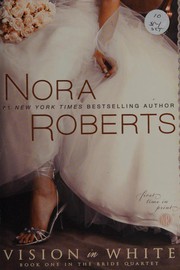
Vision in White
2,167-word summary 10 min read 352 pages in the book
- First published
- 2009
- Publisher
- Berkley Books
- Pages
- 352
- ISBN
- 9780425227510
- Series
- Bride Quartet (#1)
Reading options
What's inside (8 sections)
I came to this book sideways. A friend who reads a lot of romance told me Nora Roberts had a series about four women who run a wedding company, and that the first one was about the photographer. I am a sucker for workplaces as settings, so the idea of a whole novel set inside the wedding industry pulled me in. I expected something light. What I got was lighter than literary fiction, sure, but heavier than I assumed on the subject of parents and how long their mistakes echo.
The edition I read was the 2009 Berkley Books trade paperback, about 352 pages. It is the first of four books about the Vows partners, followed by stories for Emma, Laurel, and Parker in that order. You could read them out of order and still follow the romance, but the friendship plot builds across the books, so starting here makes sense.
The setup: four friends and a wedding machine
Vows is a one stop wedding planning company in Connecticut, run by four women who have been close since childhood. Parker Brown is the organizer, the one who meets the brides and keeps the schedule tight. Emma Grant designs the flowers. Laurel McBane bakes the cakes. And Mackensie Elliot, called Mac, handles photography.
The business grew out of dress up games they played as girls, which Roberts returns to in small flashback moments. As an origin story for a company it is sweet without being sticky. These women are good at their jobs and they know it. Clients pay serious money and the partners deliver.
What I liked right away is how much of the book is just work. Consultations, tastings, trial runs, rehearsals, long Saturdays where something always goes slightly wrong. Roberts clearly did her homework on the industry, or faked it very well. The wedding sequences give the novel its texture. You learn how Mac thinks about light, how Laurel structures a cake so it survives transport, how Parker reads a nervous mother of the bride in about ten seconds.
If that sounds boring, it mostly is not, because the four friends bicker the way real long term friends do. They interrupt each other. They finish tasks without being asked. Emma fusses, Laurel snipes, Parker commands, Mac deflects with jokes. The dialogue moves fast and carries a lot of the book.
Mac and the family she did not choose
Mac is the heart of this one, and she is prickly in a way I found believable. She grew up watching her parents cycle through marriages and divorces, and she came out of it convinced that commitment is a trap people walk into with good lighting. She loves her work. She adores her friends. She does not want a husband, a mortgage, or anyone rearranging her darkroom.
Her mother Linda is the wound that never quite closes. Linda is unreliable, dramatic, and skilled at turning every phone call into a guilt trip or a request for money. Mac keeps answering anyway, which tells you how deep the hook goes. There are scenes where Linda breezes in, charms everyone for ten minutes, and then says something careless that ruins Mac's whole day. I recognized that dynamic from people I have known, and Roberts writes it with more honesty than I expected from a genre romance.
The counterweight is the Parker family. When Mac's home life was chaotic, Parker's parents took her in for long stretches, along with Emma and Laurel when they needed it. So Mac grew up with two models of adulthood sitting side by side. One chaotic and self absorbed. One stable and generous. She chose the stable one for her working life and built Vows around it, but in her private life she still flinches whenever anyone gets too close. That contradiction drives the whole novel.
One thing worth saying: Mac reads as competent rather than broken. She runs a business, she has savings, she shows up for her friends. Her fear of commitment is specific and earned, tied to particular memories, not a vague cloud of trauma. I appreciated that. Too many romances give the heroine a sad backstory and then never connect it to anything. Here the connection is the point.
Carter, the brother at the rehearsal
Carter Maguire enters the way romantic interests should more often: by accident, at work, at the worst possible moment. He is escorting his sister to a planning meeting at Vows, and he literally bumps into Mac right before an important rehearsal. Cameras, flowers, a harried timeline, and this rumpled English teacher underfoot. Both of them see stars, as the cover copy puts it, though in the actual scene it plays more awkward than electric.
Carter teaches high school English. He quotes Shakespeare when he is nervous, which is often around Mac. He is the kind of man who owns too many books, drives a practical car, and remembers everything people tell him. Years earlier, he knew of Mac in high school and carried a quiet crush on her from a distance. He admits this fairly early, and Mac does not know what to do with the information. Being longed for from afar fits nobody's image of herself less than hers.
I found Carter easy company. He is steady without being dull, funny in a self deprecating way, and direct about wanting Mac. There is a nice role reversal going on that the book never makes a big speech about. Usually in this genre the man is the one who will not settle down and the woman waits him out. Here Mac is the flight risk and Carter is the one arguing, in word and deed, that staying can be good. Roberts lets him do the pursuing without turning him into a doormat, which is a harder balance than it looks.
His family helps. The Maguires are warm, normal, and slightly nosy in the way functional families are. Dinners at their table, with overlapping conversation and nobody keeping score, show Mac what she missed without anyone lecturing her about it. I think these scenes are the strongest in the book. They work by contrast. You watch Mac relax by degrees and then catch herself relaxing, which scares her more than any fight would.
A casual fling that refuses to stay casual
Mac's solution to her attraction is to propose something temporary. No labels, no promises, just two adults enjoying each other until it runs its course. Carter agrees, though it is obvious to everyone except Mac that he wants more from the start. This is the engine of the middle third: Mac trying to keep things light while everything around her gets heavy.
The dating sequences are charming. There is a rhythm to them. Carter says something earnest and slightly formal. Mac deflects with a joke. He laughs, tries again, gets a little further. They go to dinners, they meet friends, they spend nights together that feel domestic long before either of them admits it. Roberts is good at this kind of slow accumulation. No single scene is dramatic. The pile of them starts to mean something.
Meanwhile Vows keeps humming. I lost count of the weddings in the background, but a few stand out. One outdoor ceremony where the light does exactly what Mac wants and she gets the shot she had been chasing all day. One reception where a drunk uncle nearly topples Laurel's cake and Parker intercepts him with terrifying politeness. These set pieces are fun, and they do double duty, showing the partners at their best while Mac's private life wobbles.
The friction comes from two directions. First, Linda keeps intruding, with new crises timed to Mac's happiest moments. A late night call here, a surprise visit there, a loan that will never be repaid. Second, Carter's ex girlfriend makes trouble, trying to pull him back and rattle Mac. I will not spoil the specifics, but the ex's games force Mac to ask whether she trusts Carter at all, which is really a question about whether she trusts her own judgment.
The big fight, when it comes, felt earned to me. Mac pulls away hard. Carter, who has been patient for two hundred pages, finally loses his temper and says so. Both of them behave a bit badly and both have a point. I have read too many romances where the breakup is caused by a misunderstanding that one conversation would fix. This one is about the actual problem. She is scared. He is tired of being kept at arm's length. No villain required.
I should mention the friends here, because they carry a lot of weight in this stretch. Parker tells Mac hard truths. Emma listens without pushing. Laurel makes jokes that are also diagnoses. None of them tells Mac what to decide, which I respected. They hold the business together while she sorts herself out, covering shoots and consultations, and they do it without martyrdom. That is what long friendship looks like when it works.
What frustrated me
This would be a shorter review if I pretended everything worked. Some of it did not, at least for me.
The wedding detail sometimes crowds out the romance. I enjoy process writing, but there were passages about consultations and vendor logistics where my attention drifted. Readers who pick up Roberts for the relationship may find these stretches slow. I kept thinking one or two fewer showcase weddings would have tightened the whole book.
Linda verges on caricature in a couple of scenes. Most of the time she is written with care, selfish and pitiable at once. But once or twice she twirls the mustache, showing up at exactly the worst moment with exactly the worst line. Real difficult parents are usually more subtle than that. They ruin things by accident as often as on purpose. I wished Roberts had trusted the quieter version of Linda throughout.
Carter borders on too good. He is patient, kind, funny, gainfully employed, close to his family, good with Mac's friends, and handsome in an unthreatening way. His flaws are mostly that he talks too much when nervous and owns an embarrassing amount of tweed, metaphorically speaking. I liked spending time with him, but I never worried he would do anything truly wrong, which lowers the tension. The book knows Mac is the problem, and that is fine, but a hero with a sharper edge would have made the central couple more interesting.
And yes, the plot is predictable. You know from chapter one roughly where this ends. That is the genre contract, so I am not marking it down much. Still, readers who want surprises should adjust expectations. The pleasure here is execution, not plot twists.
What worked outweighed all that for me. The friendship among the four women feels lived in. The humor lands more often than it misses. The role reversal gives a familiar story some fresh energy. And the Connecticut setting, all old houses and changing leaves and high end venues, is rendered with enough specifics to feel like a place rather than a backdrop.
Where it lands
The last stretch belongs to Mac. Without spoiling the mechanics, she finally draws a line with Linda, out loud, with consequences. It is not a screaming match, which I appreciated. It is firmer than that. She states what she will and will not do, and then she follows through when Linda tests her. For a character who has spent the book avoiding this confrontation, the scene feels like the real climax, more than any romantic gesture.
What follows is Mac choosing Carter on purpose rather than sliding into it. She has to say what she wants, which has been her weak spot all along, and accept that choosing someone means accepting risk. There is a wedding in the background, because of course there is, and the final pages give the series its launch: one partner settled, three to go, the business thriving.
Who should read this? If you enjoy contemporary romance with a strong friend group, a capable heroine, and a patient hero, this is an easy recommendation. If you like your love stories with heavy steam or high drama, look elsewhere. This one runs warm rather than hot, and its biggest conflicts are emotional rather than external. Readers who dislike wedding culture may bounce off the setting, since so much of the book lives inside consultations and ceremonies.
I closed it thinking about the mothers and daughters I know, and about how early we decide what kind of life is available to us. Mac decided young that marriage was a performance other people put on. Watching her change her mind slowly, with setbacks, felt honest in a way the wedding gloss almost hides. I will be reading Emma's story next, partly to see the next romance and partly to spend more time with these four women. That, more than any single scene, tells me the book did its job.
FAQ
Is Vision in White the first Bride Quartet book?
Yes. Published by Berkley Books in 2009, it is book one of four about the Vows partners. Mac's romance comes first, followed by Emma, Laurel, and Parker.
Who is Carter Maguire?
An English teacher and the brother of a Vows client. He knew Mac slightly in high school and pursues her with unusual patience and humor.
Is this book only for romance readers?
Mostly yes, since it follows genre conventions closely. Readers who enjoy friendship centered stories and wedding settings will get the most from it.
Similar books
More from Bride Quartet first, then related titles.
Ricochet
Lily Calloway tries to stay celibate for ninety days while Loren is in rehab, leaning on Rose, Connor, and Ryke as therapy forces her to face her childhood.
2,575-word summary · 11 min read
Under Locke
Iris Taylor moves to Austin broke and wary, takes a front-desk job at a tattoo shop, and spends the book learning that Dex Locke’s blunt cruelty and unexpected…
2,591-word summary · 12 min read
Bet Me
A sharp actuary agrees to dinner with a charming serial bettor, then spends the next month pretending the wager does not matter.
2,710-word summary · 12 min read
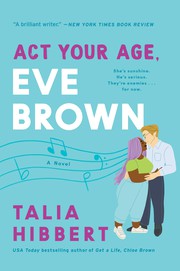
Act Your Age, Eve Brown
Eve Brown crashes into a Lake District bed and breakfast, breaks the owner's arm, and talks her way into his kitchen. A grumpy-sunshine romance about work,…
2,474-word summary · 11 min read

Two by Two
Sparks's twentieth novel turns from first love to a marriage breaking up: Russell Green loses his wife and his job, then rebuilds his life around his…
2,192-word summary · 10 min read

One to Watch
A plus-size fashion blogger takes the lead role on a reality dating show to prove she belongs on television, and finds she might want what the cameras offer.
2,478-word summary · 11 min read

At First Sight
Jeremy and Lexie are married and expecting a baby when anonymous emails tell him the child may not be his.
2,317-word summary · 10 min read

2 States: The Story of My Marriage
A Punjabi boy from Delhi and a Tamil Brahmin girl from Chennai meet at IIM Ahmedabad, and turn a love marriage into a campaign to convince two families.
2,634-word summary · 12 min read

The Second Summer of the Sisterhood
Four friends share the traveling pants through a summer of grandmothers, first loves, and mothers who are learning to let go.
2,209-word summary · 10 min read

Delilah Green Doesn't Care
Delilah returns to Bright Falls to photograph her stepsister's wedding and falls for Claire, a bookstore owner and single mother, while a cruel bet threatens…
2,315-word summary · 10 min read

Aristotle and Dante Dive into the Waters of the World
Ari and Dante return for senior year in El Paso, navigating first love, AIDS, family grief, and the cost of being openly gay in 1987 Texas.
2,188-word summary · 10 min read
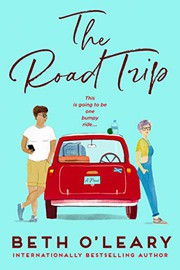
The Road Trip
Two exes squeeze into one small car for the drive to a Scottish wedding, with four years of history and one photograph between them.
2,418-word summary · 11 min read

Someone Like You
Halley and her best friend Scarlett face a summer of grief, a surprise pregnancy, and Halley's dangerous first romance in Sarah Dessen's 1998 young adult novel.
2,218-word summary · 10 min read
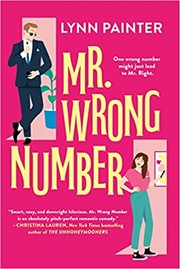
Mr. Wrong Number
After a fire and a wrong-number text, Olivia falls for a stranger who is closer than she thinks in this funny Omaha rom com.
2,248-word summary · 10 min read
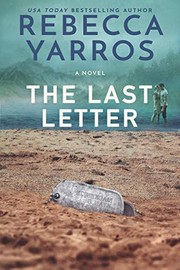
The Last Letter
Ella trades letters with soldier Chaos, then her brother Ryan death brings Beckett to Telluride with a hidden name, sick Maisie, and a love tested by truth.
2,559-word summary · 11 min read

Lock and Key
Abandoned Ruby moves in with her sister and learns to trust Nate and Cora.
2,407-word summary · 11 min read
Big Summer
After a six-year rift, plus-size influencer Daphne becomes maid of honor at her ex-friend's Cape Cod wedding, where joy turns to mystery.
2,878-word summary · 13 min read
The DUFF
Bianca Piper hates Wesley Rush for calling her the DUFF, until a secret arrangement during her parents' divorce forces both teens to grow up.
2,323-word summary · 10 min read

What Happened to Goodbye
Mclean has reinvented herself in four towns since her parents divorced. In Lakeview she uses her real name, and for the first time staying put becomes a choice.
2,796-word summary · 12 min read

The Japanese Lover
A Polish refugee and the son of a Japanese gardener fall in love in San Francisco in 1939, then keep the affair secret for nearly seventy years.
2,286-word summary · 10 min read
Austenland
A New York graphic designer obsessed with Mr. Darcy inherits a trip to a Jane Austen theme park, where the fantasy of Regency romance collides with the men…
2,030-word summary · 9 min read

The Shadow Sister
Star D'Apliese steps out of her sister's shadow and follows a bookshop clue into the Edwardian life of Flora MacNichol, a woman who gave up love for duty.
2,260-word summary · 10 min read

Little Earthquakes
Four Philadelphia women meet during pregnancy and discover that new motherhood is nothing like the plan, while friendship becomes the thing that holds them…
1,997-word summary · 9 min read

Dumplin'
Willowdean Dickson enters her town's beauty pageant as a protest and discovers that confidence is harder to keep once she lets someone close.
1,922-word summary · 9 min read

Lick
Evelyn wakes up married to the lead guitarist of Stage Dive after a Las Vegas birthday she cannot remember, and the annulment gets complicated.
1,989-word summary · 9 min read
Hard Luck
Rowley has a girlfriend, so Greg turns to a Magic 8 Ball, a family Easter hunt and the school yearbook for answers.
2,586-word summary · 11 min read

The Bookshop on the Corner
A Birmingham librarian loses her job, buys a van, and moves to the Scottish Highlands to run a mobile bookshop. Warm and bookish, with uneven pacing.
2,557-word summary · 11 min read
My Dark Romeo
A debutante ball kiss traps Dallas Townsend in a marriage to Romeo Costa, a man who wants her as leverage in a war against his father and her fiance.
2,530-word summary · 11 min read
The Ex Talk
Two rival public radio producers pretend to be exes for a dating show, then fall for each other while the lie grows.
2,389-word summary · 11 min read

Sam's Letters to Jennifer
A grieving journalist reads her grandmother's letters and finds a decades-long love affair that changes how she sees her family.
2,310-word summary · 10 min read