

Magic Bites
2,272-word summary 10 min read 352 pages in the book
- First published
- 2007
- Publisher
- Ace Books
- Pages
- 352
- ISBN
- 9780441014897
- Series
- Kate Daniels (#1)
Reading options
What's inside (8 sections)
I started Magic Bites the way I start most urban fantasy, half braced for disappointment. A mercenary with a sword and a sharp tongue in a ruined city, vampires on one side and werewolves on the other, a love interest with too much hair. I have read that book before, or so I thought. Then Kate Daniels opened her mouth on page one and I kept turning pages past midnight. This debut is rough in the ways first novels usually are, but the voice is strong from the start, the world runs on rules instead of vibes, and the mystery at its center actually holds together.
Atlanta when the magic comes up
The setup won me over fast because it commits. Years back, magic returned to the world in waves, and now it rolls over everything in surges. When a magic wave is up, spells work, strange creatures walk out of nowhere, guns jam, engines die, and tall buildings go dark. When the wave drops and tech comes back, cars start and phones ring and the monsters mostly clear out. Atlanta lives between the two, half fortress and half salvage yard, with warded houses, flare shelters, and shops that sell both charms and spark plugs. A flare, a huge surge nobody fully predicts, can flood the city for days and leave bodies behind it.
Kate Daniels is a mercenary who cleans up the magical mess for hire. She is twenty-something, broke, sleeping with one eye open, and funny in the tired way of people who bill by the hour for danger. She carries a sword, takes jobs through a dispatcher when she can get them, and patches her own clothes because new ones cost money she does not have. What I liked right away is how practical she is. She checks her wards, counts her cash, eats when she can, and treats magic the way a plumber treats pipes. It is work. The work can kill her, but rent still comes due.
Under the jokes sits the secret that drives the whole series. Kate hides the scale of her own power. She was raised by her adoptive father and trained from birth to one day face the sorcerer Roland, and her blood carries magic she dares not show. So she keeps her head down, takes small jobs, and lets the city think she is a minor talent with a blade. That tension hums under every scene. Each time she considers cutting loose, you feel the cost calculation happen behind her eyes.
What sells the setting is how lived in it feels. Kate rides through suburbs where one street has power and the next is back in the dark ages, past houses wrapped in wards and strips of dead cars from the last surge. People plan weddings around flare forecasts and carry silver alongside cell phones that may or may not work by evening. The book never lectures about this for long. It shows Kate checking the wave almanac the way the rest of us check rain, and the normalcy of that gesture does more world building than a chapter of history could.
Greg Feldman's murder
The plot kicks in when Greg Feldman, Kate's guardian and one of her few ties to anything like family, is found murdered. Greg was a serious operator with deep ties to the city's power players, and his death does not look random. Kate inherits his last case, a string of killings that both big factions blame on each other, and her promise to find his killer drags her out of the obscurity she has paid so much to keep.
The shape of the case is a classic pressure cooker. Shapeshifters are being murdered in ways that point at the People, and the People's interests are being hit in ways that point at the Pack. The Masters of the Dead, the necromancers who pilot vampires like drones, insist the shapechangers are killing their people. The Pack, the paramilitary clan of shapeshifters under its Beast Lord, insists the bloodsuckers started it. Both sides lean on Kate to prove them right, and both make it clear what happens to freelancers who prove them wrong. Greg had been hired to look into the deaths, which means his murder is almost certainly part of the same pattern. Kate follows his notes, his contacts, and his enemies straight into the middle.
What elevates this beyond a standard whodunit is how exposed it leaves her. Every interview raises her profile. Every spell she casts in front of witnesses risks showing too much. She needs the truth about Greg, but the search forces her to spend the cover she spent her whole adult life building. Grief and self preservation pull in opposite directions for the whole book, and that is what makes Kate's choices land.
The early investigation chapters are my favorite kind of detective work. Kate picks through Greg's house, reading the wards he left and the notes he hid, looking for what he knew and who knew he knew it. She leans on informants who charge by the answer, revisits the scenes where bodies were found, and compares wounds the way a veteran reads tracks. Greg was careful and connected, so the fact that someone still got to him tells Kate the killer is patient, strong, and already watching her. The dread builds the right way, one small wrong detail at a time.
The Pack and the People
Kate's visits to the two powers give the book its best scenes. The Pack holds a fortified Keep and runs itself like an army with fur. Its Beast Lord is Curran, a shapeshifter of enormous strength who spends much of the book in lion form and treats Kate with amused contempt when he is not threatening to eat her. Their early exchanges are genuinely funny, two predators circling, but the comedy has teeth. Curran runs a brutal hierarchy where challenges are settled by combat, and Kate walks into that hall with no rank and no backup. Watching her refuse to flinch, and watching Curran notice the refusal, sets the slow burn that powers the rest of the series.
The Pack chapters also give Kate her conscience subplot. She crosses paths with a young wolf, Derek, brutalized and left for dead in the feud, and she puts herself at risk to pull him through. Derek barely speaks and trusts nobody, and Kate's stubborn care for him shows the reader who she is when no client is paying. The shapechanger politics around them stay clear enough to follow. Clan rivalries simmer, the alphas posture, and Curran holds the whole thing together by being the most dangerous thing in the room.
The People are creepier. Forget seductive aristocrats. Here vampires are mindless hunger in a body, piloted by necromancer navigators from a distance, studied and rented out like equipment. Their headquarters has the chill of a corporation that happens to farm corpses, with the Masters of the Dead negotiating in boardroom tones about murder. Kate's scenes there made my skin crawl in the right way. She is outclassed in raw force by everyone past the lobby, so she wins ground with nerve, preparation, and a willingness to be rude to people who could have her killed. The contrast between the Pack's hot animal rage and the People's cold office menace gives Atlanta a full spectrum of threat, and Kate stuck between them feels exactly as small as she should.
One detail I admired is how the feud logic holds together. Each side has real grievances and real dead, so the blame game never feels staged even though the reader learns it was seeded. The Pack mourns its own and wants blood for blood. The People tally their losses and bill for them. Kate has to treat both claims as serious while hunting the third party that profits from the spiral. It gives the middle of the book a knotty, pressure-building feel, since every favor she accepts from one side looks like betrayal to the other.
The Order and stray souls
The third power in the city is the Order of Merciful Aid, a paramilitary brotherhood dedicated to protecting humans from magic, and Kate's history with it is tangled. Greg belonged to its orbit, and his colleague Nick becomes Kate's reluctant partner in the case. Nick is buttoned up where Kate is frayed, devout where she is skeptical, and their teamwork improves the book. He gives Kate access and backup, and she gives him results his rulebook cannot produce. Their arguments about methods carry real weight because both of them want the killing stopped. The Order itself is sketched with a light hand that suits a debut. We get its chapterhouse, its rigid code, and its suspicion of freelancers, with plenty of room for later books to fill in the ranks. What matters here is that it offers Kate the one thing she has never had, a steady wage for dangerous work, and the offer arrives only after she proves she does the job for reasons beyond pay.
Kate also picks up a stray in Julie, a homeless teenager scraping by in the magic-struck streets, and her care for the girl sneaks up on you. Kate feeds her, finds her shelter when she can, and pretends it is no big deal. Nobody pays Kate for any of this. It costs her food money she cannot spare. Those small choices do more character work than any speech could. This is a heroine whose kindness shows up as logistics: a sandwich, a ward, a door that locks. I believed in her because of scenes like these, not because the narration kept telling me she was tough.
What the killer really wants
Saying too much would spoil the back third, but the shape of the reveal is fair and well planted. The killer is an upir, an old and hungry strain of undead with appetites beyond the People and their pilots. He murdered Greg, and he has been killing shapeshifters and striking at the People to set the two camps at each other's throats. A city-wide faction war would give him cover and corpses, and he plays both sides with patience.
His true target, though, is Kate. Her blood and power are what he needs to reproduce, which reframes the whole book. She is not a detective who stumbled into the crossfire. She is the prize, and the murders were bait and camouflage. That reveal lands because the book earned it. Her hidden strength, her refusal to show her hand, Greg's protectiveness, all of it clicks into a new pattern. The final fight throws Kate together with Curran and Nick against something that outmatches all three of them, and the victory costs nearly everything. No rescue arrives clean. No power appears from nowhere. Kate wins with preparation, pain tolerance, and help she finally accepts, and she walks out of it changed.
I also liked that the book lets the cost linger. Kate does not walk away clean or quippy. She is hurt, grieving Greg all over again now that she knows why he died, and aware that every powerful witness in that final fight now has questions about her. Curran's respect is real but so is his curiosity, and curiosity from something that dangerous is its own problem. The win feels earned because it creates new trouble instead of wiping the slate.
The aftermath is quiet and satisfying. Impressed and perhaps a little frightened by what she did, the Order offers Kate steady work, ending the hand-to-mouth scramble that opened the book. She keeps her secrets, banks her pay, and looks at a city that nearly killed her with something like ownership. It is a complete story that still leaves the door wide open, and the last chapters made me reach for the next book the same night.
A debut with teeth, and its rough edges
Honesty requires the complaints, because this is a first novel and it reads like one in spots. The early chapters front-load world explanation, and a few scenes stop the story to teach. Some side characters start as functions, the snob, the thug, the informant, before they grow faces. The romance with Curran is barely a spark here, more threat display than chemistry, so readers who came for the famous slow burn should know it simmers at low heat in this volume. And Kate's voice, strong as it is, occasionally tips from witty into glib when the book wants a laugh on every page.
None of that sank it for me. The magic system stays consistent, the investigation plays fair, the action is clean and easy to picture, and Kate's money trouble keeps the stakes grounded when the monsters get large. I also appreciated how self contained it is. The mystery opens and closes inside this volume, so you finish with a real ending rather than a cliffhanger tax. Reviewers at the time praised the world building and the fresh angle on vampires and werewolves, and the book's reputation has only grown since, with later critics calling it an iconic series opener. I agree with the praise and the caveats together. If you want polished prose and deep ensemble work from page one, start later in the series. If you want a fast, funny, gory mystery that builds a city worth revisiting and a heroine worth following, start here. I came in braced for disappointment and left with a new series to tear through, which is the best outcome a first book can ask for.
FAQ
Is Magic Bites the first Kate Daniels book?
Yes. It is book 1 of the 10-book Kate Daniels series, published in 2007 by Ace Books, and it is followed by Magic Burns.
Who is Ilona Andrews?
Ilona Andrews is the pen name of husband-and-wife team Ilona and Gordon, and Magic Bites was their debut novel.
Do I need to like romance to enjoy Magic Bites?
The romance with Curran is only a spark here. The core of this volume is the murder mystery, the action, and Kate hiding the scale of her power.
Similar books
More from Kate Daniels first, then related titles.

Magic Burns
A magic flare hits Atlanta, and mercenary Kate Daniels must recover stolen maps, find a missing witch, and keep a teenage girl alive while Celtic gods try to…
2,021-word summary · 9 min read
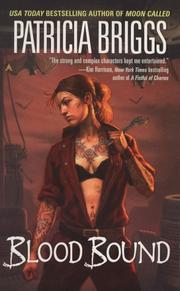
Blood Bound
Coyote mechanic Mercy Thompson stands with vampire friend Stefan against a demon driven rival while pack ties strain.
2,636-word summary · 12 min read
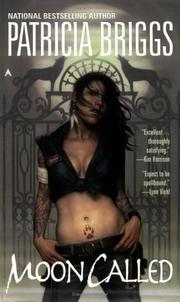
Moon Called
A coyote mechanic in wolf country gets pulled into pack fights and fae bargains when a lost teen shows up.
1,943-word summary · 9 min read

River Marked
Mercy and Adam's honeymoon on the Columbia River turns into a fight with an ancient river devil, and Mercy finally learns the truth about her father.
2,008-word summary · 9 min read
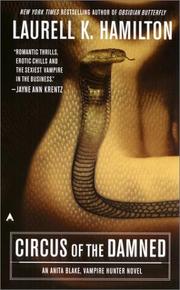
Circus of the Damned
A rogue master vampire arrives in St. Louis and Anita Blake is caught in an undead turf war, with a science teacher in the crossfire.
2,757-word summary · 12 min read
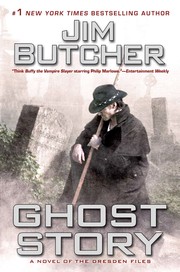
Ghost Story
Dead but not gone, Harry Dresden returns as a spirit to find his killer, protect the friends he left behind, and learn why the afterlife gave him a second…
1,978-word summary · 9 min read
Cold Days
Back from the dead as the Winter Knight, Harry Dresden must follow Mab's order to kill an immortal and defend Demonreach on Halloween night.
2,361-word summary · 10 min read
Turn Coat
Morgan asks Harry for sanctuary as the Council calls him traitor.
2,590-word summary · 12 min read
Small Favor
Harry owes Mab a favor and must find Marcone while Denarians hunt a holy girl.
2,741-word summary · 12 min read

Bone Crossed
Mercy faces vampire queen Marsilia after killing a vampire to save friends.
2,261-word summary · 10 min read
White Night
Wizard Harry Dresden hunts fear-feeding White Court killers preying on Chicago's minor talents, reunites with Elaine Mallory, and faces a coup at Chateau Raith.
2,521-word summary · 11 min read
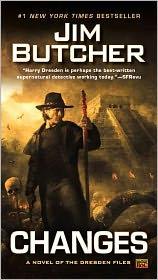
Changes
Harry Dresden learns he has a seven-year-old daughter Maggie, hidden for years. The Red Court seizes her for a bloodline rite, forcing him toward Chichen Itza.
2,855-word summary · 13 min read
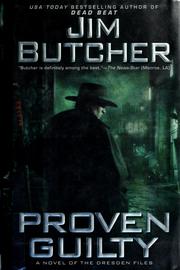
Proven Guilty
Warden Harry defends teen Molly from White Council while fear phages stalk con.
2,068-word summary · 9 min read
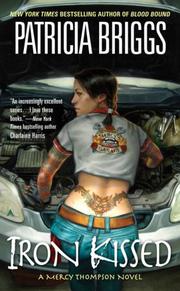
Iron Kissed
Mercy repays Zee by hunting a fae killer, clears his name, and finally chooses between Adam and Samuel.
2,944-word summary · 13 min read
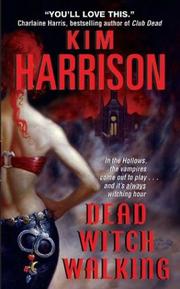
Dead Witch Walking
Witch and runner Rachel Morgan quits the agency with a death mark on her head and hunts an untouchable crime lord.
2,709-word summary · 12 min read
Dead Beat
Wizard Harry Dresden hunts the Word of Kemmler through necromancers to stop a Halloween godmaking rite.
2,883-word summary · 13 min read
Blood Rites
Wizard Harry Dresden guards a porn set from entropy curses while learning brother Thomas and fighting Black Court nest.
2,211-word summary · 10 min read
Rivers of London
A London constable takes a statement from a ghost and trains as a wizard, policing river gods and a riot spirit.
2,886-word summary · 13 min read
Death Masks
Wizard Harry Dresden hunts the stolen Shroud of Turin while dueling a vampire lord and facing fallen angels.
2,979-word summary · 13 min read
Grave Peril
Chicago ghosts turn murderous as Harry Dresden faces a vengeful sorcerer and Bianca's vampire trap.
3,484-word summary · 15 min read
Fool Moon
Wizard Harry Dresden hunts a full moon killer through Chicago werewolf packs.
2,855-word summary · 13 min read
Hounded
A two-thousand-year-old druid runs a bookshop in Arizona, hides from an Irish god who wants his sword back, and talks to his dog.
2,159-word summary · 10 min read

First Grave on the Right
Charley Davidson is a private investigator in Albuquerque and the grim reaper. When three murdered lawyers come back as ghosts, her two jobs collide.
2,770-word summary · 12 min read
At Grave's End
Cat and Bones face Max, a zombie-raising ancient vampire, and a prophecy that ties their marriage to Patra's death in the third Night Huntress novel.
2,061-word summary · 9 min read

Masquerade
After Cordelia's death, Schuyler flies to Venice to find her exiled grandfather, then returns to the Blue Bloods as they prepare for a masked ball and a hidden…
2,543-word summary · 11 min read

The Golem's Eye
Two years after The Amulet of Samarkand, Nathaniel is a rising bureaucrat, Bartimaeus is his unwilling servant again, and something made of clay is tearing…
2,299-word summary · 10 min read
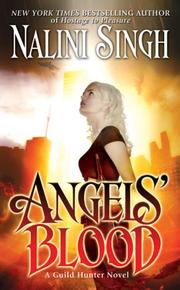
Angels' Blood
Nalini Singh's 2009 Guild Hunter opener sends vampire hunter Elena Deveraux after a murderous archangel in New York, while its most powerful ruler watches.
2,367-word summary · 11 min read

The Hazel Wood
Alice Proserpine has spent her life running from bad luck. When her mother vanishes, she follows a trail of fairy-tale clues to her grandmother's estate and…
2,064-word summary · 9 min read
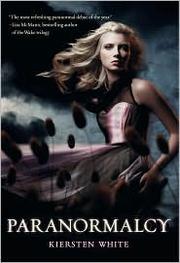
Paranormalcy
A teenage agent who can see through glamour falls for a shape-shifter and learns the agency she works for is hiding her true nature.
2,041-word summary · 9 min read

The Bane Chronicles
Eleven stories across five centuries follow Magnus Bane from a ban in Peru to his first date with Alec in this illustrated Shadowhunter companion.
2,470-word summary · 11 min read