
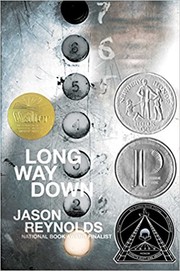
Long Way Down
2,172-word summary 10 min read 306 pages in the book
- First published
- 2017
- Publisher
- Atheneum/Caitlyn Dlouhy Books
- Pages
- 306
- ISBN
- 9781481438254
Reading options
What's inside (8 sections)
I read Long Way Down in one sitting on stairs, which felt right because the whole book happens in an elevator going down. Jason Reynolds published it October 24, 2017 with Atheneum/Caitlyn Dlouhy Books, a 306 page hardcover with ISBN 9781481438254. It is a standalone novel in verse, though Reynolds returns to gun violence themes elsewhere. It won Newbery Honor, Printz Honor, Coretta Scott King Honor. It takes sixty seconds to read in story time and stays for years. If you think verse novels are thin, this one proves otherwise.
Will is fifteen. His older brother Shawn was shot dead yesterday. In Will neighborhood, there are rules. No crying. No snitching. Revenge. Will finds Shawn gun, puts it in waistband, steps into elevator to kill the man he thinks killed Shawn, a guy named Riggs. The elevator stops on each floor. Each time, a ghost boards. Each ghost knew Shawn. Each tells Will a piece. By lobby, Will must decide. Step out shooting or step out different.
The ghosts are not tricks. Uncle Mark, shot young. Buck, the man who taught Shawn the rules. Dani, a friend killed as a child. Shawn himself. Will mother? No, she lives and calls. Pop? He appears too. Each speaks in verse that sounds like them, not like lessons. They smoke though dead. They bleed though dead. They ride down though the building only has seven floors and more than seven ghosts board. Time stretches because grief stretches seconds into years.
Rules
The rules drive everything and Reynolds names them plainly. No crying means swallow. No snitching means handle yourself. Revenge means prove love by blood. Will believes them because Shawn lived them. Shawn taught Will to fight, to hide, to be hard. After Shawn death, Will mother cries into towels. Will cannot cry because rule one. Neighbors whisper Riggs did it. Police ask. Will will not snitch because rule two. So rule three remains. The gun feels heavy and right.
Each ghost tests a rule. Uncle Mark, who followed rules and died, asks if crying would have saved him. Dani, eight when killed by stray, asks why revenge for her never came. Buck, who taught revenge, admits he misses the man he killed and the man he was before. Pop, who left, admits snitching might have been telling truth that saves. Shawn, last to board, says little and smokes. His silence is heaviest. Will wants Shawn to say shoot or stay. Shawn says to listen. Listening is not in rules.
Verse form carries weight. Short lines, white space, staccato like shots or heartbeats. Reynolds uses anaphora, repetition with change, to show thought looping. Another and another. The elevator dings. Doors open. Close. The poems can be read fast, but should be read aloud once. Breath matters. When Will holds breath, lines shorten. When ghost talks long, lines stretch. My stairs reading slowed at Dani floor. Her poem about swings and shots took three pages and felt like minutes. That is craft, not accident.
Will mother calls during ride, or Will remembers her calling. She begs him to come home. She knows where gun is. She knows what he plans because she lived rules too. Her voice, worried and tired, is the only living ghost. She tells him she lost one son to street. She will not lose another to prison or grave. Will does not answer because answering would break. He keeps riding down.
Ghosts as history
Each floor adds history Will never knew. Buck killed a man who killed his friend, starting chain that led to Shawn. Shawn killed Buck brother? Or thought he did. Riggs brother was killed by Shawn? The chain loops. Reynolds diagrams revenge as circle, not line. Every shooter was mourner first. Every mourner becomes shooter unless someone steps off. The elevator is purgatory and family tree at once. Going down means going back through causes.
Dani floor hurts most. She was eight, playing, caught by stray from a fight about nothing. No one avenged her because she was a girl, because shooter was connected, because rules bend for power. Will loved Dani as sister. Her ghost asks why her life did not trigger rule three. Will has no answer. That silence indicts rules better than speeches. If revenge only for some, rules are not law. They are stories men tell boys to make grief into action.
Pop floor aches differently. Pop left after shooting a man. He tells Will prison taught him nothing except how to be harder. He tells Will his mother waited, then stopped. He tells Will Shawn visited him once and left angry. Pop wants Will to break chain by naming it. Snitch, cry, live. Those verbs sound weak in neighborhood. In elevator they sound brave because dead men say them.
Shawn floor is quiet. Shawn, who Will worshipped, appears tired, not heroic. He smokes. He looks at gun in Will waistband. He asks if Will knows who killed him, really. Will says Riggs. Shawn asks how he knows. Someone said. Shawn asks if someone ever lied. Will thinks of all lies told to keep rules. Shawn does not order. He tells a story about a day they fished and laughed. That memory, warm and useless for revenge, is the true inheritance. Love, not orders.
The lobby arrives. Doors open. Light, street noise, Riggs maybe waiting, maybe not. Will must step. Reynolds ends without telling if Will shoots. The last lines are Will considering, gun heavy, ghosts watching, mother calling. Some readers hate ambiguity. I love it because choice is the point, not outcome. The book puts you in sixty seconds where a life turns. You feel weight. You choose with Will each reread.
Why verse works
Critics sometimes dismiss verse novels as prose with line breaks. This book proves form matters. White space is silence after shots. Short poems are breaths held. Repetition is trauma loop. The elevator ding as section break is genius. Ding means another dead, another story, another chance to get off. Kids who hate reading finish it because pages turn fast. Then they reread because ghosts demand. Teachers report boys who never read arguing about ending. That is literature working.
Fair criticism is light but real. At 306 pages with white space, story is slim. Characters outside elevator get sketches. Riggs never fully appears. Mother gets phone voice only. Some readers want more about Dani life, not just death. The supernatural logic blurs. Are ghosts real or Will mind. Reynolds refuses to say, which frustrates literal readers. Language is strong but not graphic. Gun violence is central. Sensitive readers should know shooting, blood, grief are constant, though described sparely.
Awards make sense. Newbery Honor for kid power. Printz for teen craft. Coretta Scott King for Black life rendered fully, not as issue. Will is Black, fifteen, loving, funny, scared. His neighborhood is specific, with corner stores, aunties, music. Violence is not exotic. It is Tuesday. That normalcy indicts more than statistics. Reynolds, who grew up with similar rules, writes without preaching. He shows.
Who should read it
Ages twelve and up fits, grades seven and up as publisher says. There is shooting, death, grief, strong language, no explicit sex. Middle schoolers ready for hard topics can handle with discussion. High schoolers should all read. Adults who think they know about street violence should read and listen. Pair with Angie Thomas Hate U Give for different angle, or with Reynolds Ghost for younger take. Read aloud once. Time sixty seconds. Feel how long a minute holds when a gun is involved.
I closed it on stairs and stayed sitting. Elevators dinged in my building. I thought about rules I inherited, be tough, do not cry, get even. Will ghosts ask if those rules serve. They do not, mostly. They serve grief by moving it into others. Stepping out without shooting is not snitching or crying. It is living. Whether Will does is up to each reader each time. That open door is why the book stays. Step out carefully. Someone loves you upstairs.
Mother, Dani, and what rules miss
Will mother voice on the phone deserves its own space because she is the living ghost who loves hardest. She lost Shawn to street and may lose Will to lobby. She calls, begs, prays, cooks though no one eats. Her grief is practical. She hides the gun? No, she cannot find it. She hides Will shoes? He wears another pair. She stands by elevator though he already left. Reynolds writes her in short bursts that hurt. Baby, come home. Please. I cannot bury two. Those lines, plain and repeated, do more than ghost speeches because she is alive and can still lose. When Will hears her through elevator walls, or remembers, he pauses. That pause is the book hope. Love from the living competes with orders from the dead. Sometimes it wins by volume of care, not argument.
Dani ghost at eight years old breaks every rule talk. She was playing with friends when a stray found her. No one avenged her because shooter had power, because she was small, because rules apply selectively. Will loved her like sister. He carried her picture. Her ghost asks why her death did not count. Will has no answer that does not indict the rules. Buck shifts. Pop looks down. Even Shawn goes quiet. Dani does not accuse. She swings her legs and asks to be remembered, not avenged. That request reframes justice. Remembering means living in ways that honor, not killing in ways that repeat. Teachers should pause here with students. Who gets avenged in your school. Who gets mourned quietly. Why.
The elevator itself as device needs praise. Seven floors, sixty seconds, each stop a life. Reynolds uses dings as chapter breaks kids can hear. Ding means choose again. Will can get off any floor, but does not, because stories pull. Readers can stop any page, but do not, because verse pulls. That parallel makes form and content one. Going down is going deeper into causes. Lobby is surface where action lives. To act without descending is to shoot blindly. To descend without acting is to stall. Will must do both, learn then choose. The book gives him, and us, exactly enough time. Sixty seconds that feel like years. That is how decisions feel at fifteen with a gun. Fast and endless.
Rereading changes ghosts. First read, Buck seems wise. Second, he seems guilty, grooming Will as he groomed Shawn. First read, Pop seems absent. Second, he seems bravest for returning to say he failed. First read, Shawn seems hero. Second, he seems tired boy who wants brother to live differently. The book rewards reread because ghosts do not change, but Will listening does. Classrooms should read twice, once for plot, once for who talks most and least. Dani talks least and says most. Shawn talks last and says little. Silence teaches. Listen for it.
What the lobby holds
The lobby as threshold needs attention because Reynolds makes it more than doors. It smells of bleach and cigarettes. Fluorescent buzz. Riggs maybe leaning by mailboxes, maybe not. Will gun feels heavier going down than up because stories added weight. Each ghost gave not just history but a hand on shoulder. Uncle Mark hand heavy with regret. Dani hand light with play. Buck hand rough with calluses. Pop hand shaking. Shawn hand warm and gone. Will carries all hands into lobby. That carrying is why choice matters. He does not walk out alone. He walks with dead who love him enough to ride.
The decision itself, shoot or not, is left open for good reason. If Reynolds told, readers would judge Will instead of joining him. By leaving, he forces each reader to decide in Will shoes. Teachers report fierce debates. Some say Will shoots because rules demand. Some say he drops gun because ghosts warned. Both cite lines. That debate is the book working as ethics lab. No lecture. Just sixty seconds with weight. I changed my mind twice. First read I thought he shoots. Second, after Dani, I thought he stays hand in pocket. Third, after Shawn silence, I thought he walks past Riggs without a word. Each reading reflects my week more than Will. Good books do that. They hold mirror in elevator doors.
After lobby, life continues in Sinner? No, in readers heads. Will mother still calls. Riggs still breathes or bleeds. Police still write. Reynolds refuses epilogue because epilogues lie that choices end. Choices echo. If Will shoots, another elevator will fill with his ghost someday. If he does not, grief remains without target. Both futures hurt. One hurts fewer strangers. The book bets teens can bear that ambiguity. They can. They live it daily with rumors, posts, threats. Give them credit. They choose thoughtfully when given stories, not slogans. Long Way Down gives story in verse that sings and stings. Keep it on shelves where boys who hate reading can find it fast.
FAQ
When was Long Way Down published?
Atheneum/Caitlyn Dlouhy Books published it October 24, 2017. The hardcover runs 306 pages with ISBN 9781481438254.
Is it part of a series?
No. It is a standalone novel in verse, though Reynolds returns to gun violence themes elsewhere.
What age is it for?
Ages 12 and up fits best. There is gun violence, grief, and strong language.
Similar books

Clap When You Land
Two half sisters, one in Sosúa and one in Queens, discover each other after their father dies in a plane crash, in Elizabeth Acevedo's novel in verse.
2,890-word summary · 13 min read

We Are Okay
Marin fled San Francisco after her grandfather vanished and stopped answering anyone. When Mabel visits her college dorm, she has to say what happened.
2,253-word summary · 10 min read

Someone Like You
Halley and her best friend Scarlett face a summer of grief, a surprise pregnancy, and Halley's dangerous first romance in Sarah Dessen's 1998 young adult novel.
2,218-word summary · 10 min read

Wintergirls
After her ex-best friend dies, eighteen year old Lia fights anorexia, guilt and a ghost while her family tries to pull her back.
2,740-word summary · 12 min read

We Begin at the End
Thirteen-year-old Duchess Day Radley shields her little brother Robin after their mother dies, as freed killer Vincent King returns and sick chief Walk tries…
2,956-word summary · 13 min read

The Poet X
Harlem teen Xiomara finds voice in slam poetry against strict mother, church, and a love she must hide.
2,056-word summary · 9 min read
This Girl
Honeymoon retelling as Will recalls first love, classroom ban, loss, fights, and vows that stick.
2,526-word summary · 11 min read
Little Secrets
A mother missing a son finds her husband cheating and handles both herself.
2,008-word summary · 9 min read

The Truth About Forever
A grieving teen trades a dull library summer for catering work and learns to let people in again.
2,088-word summary · 9 min read
The Summer of Broken Rules
Meredith plays Assassin at Vineyard wedding a year after sister Claire died.
2,288-word summary · 10 min read
A Monster Calls
A grieving boy is visited at 12:07 by a yew tree monster whose three tales force his hidden truth about his mother's illness.
3,353-word summary · 15 min read
If I Stay
Mia Hall watches her body after a crash and must decide whether to live for Adam and cello.
3,907-word summary · 17 min read

What Happened to Goodbye
Mclean has reinvented herself in four towns since her parents divorced. In Lakeview she uses her real name, and for the first time staying put becomes a choice.
2,796-word summary · 12 min read
Love Letters to the Dead
A fifteen-year-old writes letters to dead artists because they cannot ask questions, and slowly tells the one story she has been hiding about her sister's…
2,520-word summary · 11 min read
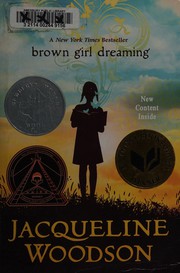
Brown Girl Dreaming
Jacqueline Woodson retells her childhood in verse, moving from Ohio to South Carolina to Brooklyn while the civil rights movement reshapes the world around her.
2,727-word summary · 12 min read
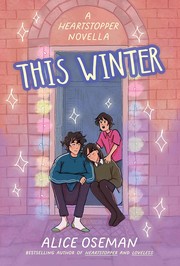
This Winter
On one difficult Christmas Day, Tori, Charlie, and Oliver Spring try to hold their family together while Charlie's eating disorder makes every tradition a test.
2,034-word summary · 9 min read

Sam's Letters to Jennifer
A grieving journalist reads her grandmother's letters and finds a decades-long love affair that changes how she sees her family.
2,310-word summary · 10 min read

Amy & Roger's Epic Detour
Amy Curry has not driven since the crash that killed her father. With Roger at the wheel and a box of maps between them, a cross-country trip becomes a slow…
3,034-word summary · 13 min read
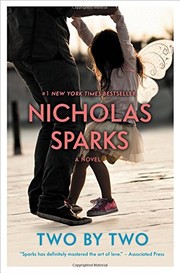
Two by Two
Sparks's twentieth novel turns from first love to a marriage breaking up: Russell Green loses his wife and his job, then rebuilds his life around his…
2,192-word summary · 10 min read
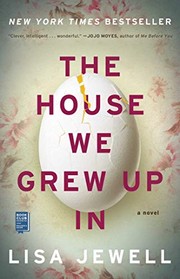
The House We Grew Up In
The Bird family of the Cotswolds breaks apart after a suicide and spends twenty years not talking about what happened.
2,198-word summary · 10 min read
The First to Die at the End
On the night Death-Cast launches, a boy with a bad heart meets a model with everything ahead of him, and one of them gets the call.
2,908-word summary · 13 min read

At First Sight
Jeremy and Lexie are married and expecting a baby when anonymous emails tell him the child may not be his.
2,317-word summary · 10 min read

A Spool of Blue Thread
Four generations of the Whitshank family in Baltimore, and the silences, resentments and quiet love they hand down without ever saying so.
2,408-word summary · 11 min read

The Second Summer of the Sisterhood
Four friends share the traveling pants through a summer of grandmothers, first loves, and mothers who are learning to let go.
2,209-word summary · 10 min read
On the Come Up
Bri Jackson, a sixteen-year-old rapper in Garden Heights, chases a record deal while a viral song turns her into a symbol she never wanted to be.
2,034-word summary · 9 min read
In an Instant
After a family camper crashes down a snowy mountain, sixteen-year-old Finn watches from the afterlife as survivors make impossible choices and try to live with…
2,130-word summary · 9 min read

Delilah Green Doesn't Care
Delilah returns to Bright Falls to photograph her stepsister's wedding and falls for Claire, a bookstore owner and single mother, while a cruel bet threatens…
2,315-word summary · 10 min read

Aristotle and Dante Dive into the Waters of the World
Ari and Dante return for senior year in El Paso, navigating first love, AIDS, family grief, and the cost of being openly gay in 1987 Texas.
2,188-word summary · 10 min read
And Every Morning the Way Home Gets Longer and Longer
An elderly grandfather, his son, and his grandson share memories and fears as the old man's mind begins to fade, in a short novel about grief and love.
2,078-word summary · 9 min read