
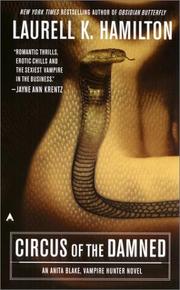
Circus of the Damned
2,757-word summary 12 min read 329 pages in the book
- First published
- 1995
- Publisher
- Ace Books
- Pages
- 329
- ISBN
- 9780441001972
- Series
- Anita Blake, Vampire Hunter (#3)
Reading options
What's inside (10 sections)
- The circus and the secret of the master's name
- The first body and the rule for rising
- Yasmeen, Marguerite, and a snake with an ego
- The science teacher who was not a teacher
- Larry Kirkland and the night that went wrong
- The cave, the lamia, and the third mark
- Halloween at the circus
- What works and what creaks
- Key takeaways
- FAQ
I read Circus of the Damned on a long bus ride, three years after Guilty Pleasures and certain I had the series figured out. Laurell K. Hamilton published it in 1995 with Ace Books, and my copy is the 329 page Ace edition, ISBN 9780441001972, book three of Anita Blake, Vampire Hunter. Two months of story time have passed since The Laughing Corpse. Anita is twenty-four, and the creatures of St. Louis have a new boss.
The whole book hangs on one question that nobody will say out loud: who is the Master of the City, and where does that master sleep in the daytime?
The circus and the secret of the master's name
St. Louis in this series has a legal system for monsters, and the change since book one is that Jean-Claude runs the town. Nikolaos is dead. The rest of the city has accepted that the Master of St. Louis is Jean-Claude, which means his daytime resting place is the most valuable secret in Missouri.
It is called the Circus of the Damned, and it is not a metaphor. It is a converted warehouse in the District with carnival posters out front and dancing clowns on the sign. The lights slashed the black night like swords. Inside there is a circus ring under a big blue tent with bleachers and a concrete stairway up to an office, and underneath the whole building are the sleeping quarters: a coffin chamber for the vampires, dormitories for the humans and shapeshifters living with them, a gym with an indoor track, a kitchen, and a banquet hall lit with gas lamps. Wererats, werewolves and werehyenas provide security.
Anita is still carrying the marks Jean-Claude put on her in book one. Those marks are a leash that works in both directions. He can feel where she is, call on her, and put his claim on her in front of other vampires. She can feel him the same way, which is why she dreads seeing him. The whole book plays that arrangement for tension: she needs him and she resents needing him.
Everybody in this book wants the same secret. Two men open the story by asking Anita for the name and the location of the Master of the City. Jeremy Ruebens and Karl Inger have started an organization called Humans First, and they would like to kill every vampire in St. Louis by whatever means work. Their pitch is that the creatures are citizens now, paying taxes and holding office while humans get murdered. Anita listens, decides their plan is bad and would get them killed, and refuses. Ruebens takes it badly. Inger is the smarter one.
So the book becomes something cleverer than a vampire hunt. Several parties want the same secret, all for different reasons, and Anita is the only person who knows it. Ruebens wants it to wipe out vampires. Edward, the cheerful professional killer, wants it for a fee and has taken a contract to kill the Master of St. Louis. Jean-Claude wants it kept. Mr. Oliver, an ancient vampire who wants the title himself, wants it so he can take the city. And Anita keeps saying no to all of them, because the person who benefits from that secret staying buried is the person she is not supposed to admit she cares about.
The first body and the rule for rising
The case starts when Dolph calls her to a body. The victim is Carl Rupert, and Anita works out from the bite pattern that several vampires fed on him together. That matters more than it sounds, because a man killed by a whole pack of vampires does not rise as a vampire himself. A pack implies a master pulling strings, and a master means someone with enough power to walk into St. Louis and start a war.
The paperwork thread runs under the whole case. The victims belong to Humans Against Vampires, they carry dying wills asking to be staked, and they share a lawyer. Ronnie spots the join, Anita passes it to Dolph, and a paralegal turns out to be the leak. Hamilton plants that thread early and pays it off at the end without bending.
Yasmeen, Marguerite, and a snake with an ego
The middle of the book is politics with knives in it. Anita goes to the Circus to ask Jean-Claude whether any rogue masters have come to town, and he says no, then admits the situation is chaotic enough that he might not know. In the inner chamber she meets Yasmeen, a master vampire allied with Jean-Claude, and Marguerite, Yasmeen's human servant and lover.
Yasmeen wants Anita's place and tests her with questions and then with seduction. When Marguerite challenges Anita to a duel, Anita wins with a knife, fast. That is not the end of it. Angry and humiliated, Marguerite's master attacks, and Anita refuses to call for Jean-Claude's help even while she is losing. What saves her is her silver cross, which burns so hot against Yasmeen's bare skin that it burns Anita too. That is a good piece of writing: the religious object that has been part of Anita's kit since page one becomes a weapon that hurts its owner.
The performance is interrupted in the middle of that confrontation. The charmer has been working with a cobra that was once worshipped as a god in ancient Egypt, and the thing kills him and tears loose in the arena. Jean-Claude, Yasmeen, Marguerite, Rashida, Stephen and Richard all go down to fight it, and Anita helps because Jean-Claude asks her to, her presence feeding his power and her gun doing the rest. It nearly takes Rashida's arm off. It is a set piece with real weight, because the snake has been performing in that room all day.
When she gets home that night, Edward is waiting. He has taken a contract to kill the Master of St. Louis, he wants the name and the daytime resting place, and he tells her that he followed her to the Circus and watched the whole snake fight. She bluffs him that the true master is somebody else, and he gives her a deadline.
The science teacher who was not a teacher
Richard Zeeman teaches science to junior high kids. He is kind, funny, and about as far from Anita's usual circle as a person can get. She agrees to a caving date with him. Then a Halloween party at Catherine's gets in the way, and she ends up going to that instead, which is the kind of ordinary life this series rarely lets her keep.
The romance in this book is the weakest part of it, and I will say so. It plays like a 1995 romance thriller dropped into a horror novel: the meet cute, the attractive stranger who turns out to be deeper than he looks, the alpha posturing from Jean-Claude, who criticizes Richard for standing back during the snake fight. Anita also keeps insisting she hates vampires while being marked by one and drawn to the two most powerful men in the room. Later books lean into that pull deliberately. Here it reads as a writer working out how much sensuality the audience would take in a book where the hero is a professional killer.
The Richard material also sets up the book's best twist. When Anita wakes in hospital after the finale, Richard is alive after having his throat torn out, and he explains that he is a werewolf, and a powerful one, sent by his pack leader to keep an eye on Jean-Claude. He is also the reason Anita survives the night, because it is his idea that she be infected with lycanthropy when the lamia venom is killing her, and he will not let her refuse.
Larry Kirkland and the night that went wrong
The second victim is a woman, and she does something worse than dying. Anita and Dolph stand over the body and watch it change, going from dead to something luminously beautiful. If the master is powerful enough, one bite can turn a victim. So Anita calls the hospital to warn them, and nobody answers the phone. When she gets there the morgue wing is empty and torn open. Carl Rupert has come back animalistic, killed the vampire counselor, and gone through nurses and guards on the way out. John Burke, who handles preternatural cases, is hunting him in there. Anita and the police take him down together.
That sequence is the book's horror at its best. No ornate set pieces, just a morgue, a steel door, an emergency room, and a man who came back wrong.
Later that night Anita stops by the office to check on the new hire. Larry is twenty, a college senior on a co-op at Animators Inc., and he is so new that he loses control of a zombie halfway through a signing. Anita steps in, feeds the zombie her own blood to steady it, and watches the dead man sign his will before she has to tell the family what happened. Then she tries to talk Larry out of the job. He refuses. She decides to mentor him instead, which is one of the nicer pieces of judgment in the book.
Then the attack comes. Humans First try to force Anita to give up Jean-Claude's name and location, she and Larry run, and they hit something with the car. It looks like a child. It is not. It is a child vampire older than Jean-Claude and enormously powerful, and it joins two other vampires and Alejandro, the rogue master who has come to town.
Larry is taken. Alejandro tells Anita that if she wants him back she has to surrender, and he wants the name of the Master of the City as well. She holds out. She is put under, and when she comes to the vampires have been driven off by Humans Against Vampires, which is the sort of dirty convenience that makes Anita's job harder rather than easier.
The cave, the lamia, and the third mark
Karl Inger comes back with a plan and takes Anita to a rural house where she meets Mr. Oliver. He is a vampire from Homo erectus, so old that the human race is barely a step in his history, and he wants to become Master of the City. Melanie is a lamia under his control. Raju is Melanie's mate, half snake, and Raju bites Anita before he dies.
She escapes by swimming through a submerged tunnel and out into a lake, where Edward is waiting because he followed her. The venom is killing her and there is no cure, because lamias are believed to be extinct. Richard suggests lycanthropy. Anita says she would rather die than become a lycanthrope. Richard does not accept that answer. He takes her to Jean-Claude, who drinks from her wrist and marks her a third time, and the venom stops, because a master's blood makes a servant immune.
Anita is furious about being saved. Being marked means belonging to someone, and she has spent three books refusing exactly that. The scene where she threatens to kill the man who saved her life is one of the better ones in the series, because Hamilton writes the resentment honestly instead of turning it into swoon.
Halloween at the circus
The trap closes. Anita calls Mr. Oliver and gives him Jean-Claude's name and the location of the Circus, and she does it to get the lamia venom out of her own blood. Then she warns Jean-Claude anyway, which is the contradiction that defines her.
What follows is a fight staged in front of a circus audience, with the crowd as referee. Jean-Claude and Mr. Oliver have agreed to settle the ownership of the city by force, and their people fight it out in the ring while the two masters trade raw power. Edward kills most of Alejandro's pack. Alejandro kills Yasmeen, and Marguerite, unhinged by grief, puts out her own eyes and drops out of the fight. Alejandro marks Anita a third and fourth time, drinking her blood and making her drink his, and she becomes fully his servant, which means she can see what he thinks.
That link is where the motive lands. Oliver believes the legalization of vampires is wrecking society, and he means to force every vampire in St. Louis into a killing spree. Anita realizes what he wants the city to become.
Then Oliver wins. He restrains Jean-Claude and demands that Anita stake him, because a master killed by his own servant looks like justice rather than a coup. Anita does not. Instead she carries out Alejandro's plan and stakes Oliver, then decapitates him. Alejandro tries to kill Jean-Claude and take both positions at once. Anita tears his heart out of his chest and strangles him, and the strain of her master's death kills her with it.
Edward and paramedics bring her back with CPR. Jean-Claude lives. Richard lives, for the reasons above. And because Alejandro is dead, the marks go with him, so Anita walks out of the hospital with no master at all, which is the closest thing to freedom she has had in three books.
What works and what creaks
What works is the shape of the thing. It is a locked-room mystery dressed as a vampire book. A secret, a list of people who want it, a set of rules about who can rise from the dead and who cannot, and clues planted early enough that the ending can be traced backward. The paralegal. The dying wills. The same lawyer. Jean-Claude's private fear that another master is in his city and his admission that he might not know. You can play the deduction yourself after the fact, and when I did, it held.
The circus is the best idea in the series so far, and I wish the book had leaned harder on it. A warehouse full of monsters who pass the daytime in a coffin chamber, eat in a gas-lit hall, and keep a gym upstairs is more interesting than most of the vampire politics, and the snake in the arena makes the place feel lived in.
What creaks is the romance and the violence. The sex in this book is a power exchange, and it is written with the bluntness of the era, including a servant arrangement that nobody in the book treats as anything to argue about. The gore in the morgue sequence is graphic and stays graphic. Richard's whole existence can be summarized as a device to give Anita someone to be charming with, and his secret, when it lands, is the only time the book remembers that a werewolf in a schoolteacher's clothes is a problem in itself.
The middle is also uneven, and this is my main structural complaint. Between the morgue rampage and the Halloween finale, the book hops between the lawyer investigation, the snake fight, the cave escape, the training of Larry, the romance, and Mr. Oliver's recruitment, and one of them gets the least room and the most damage. The negotiation with Mr. Oliver in the farmhouse should have been the spine of the second half. It gets a scene.
Content notes. Graphic blood, a torn-open morgue, a rampage through a hospital, a throat torn out, and a heart removed from a living body. Sexual content built on ownership and coercion, including a master and servant arrangement the characters do not choose. Necromancy, animalistic reanimation, and one lamia sequence with a snake. No sexual content involving the child vampire. Language is strong but not constant.
Who it is for. If you liked the first two books, this is the one where the city stops being a backdrop and starts being a creature with a basement. If you want a clean procedural, look elsewhere, because the mystery is real but the lawyer thread is the only one that behaves. If the 1995 roughness is what you are after, the wrestling scene between Anita and Yasmeen and the whole business of Jean-Claude acting like a disappointed alpha will deliver it. Read it for the fight at the circus. The book earns its title there, in a room where monsters watch each other tear each other apart while somebody's pet snake waits in the wings.
FAQ
When was Circus of the Damned published?
Laurell K. Hamilton published it in 1995 with Ace Books. The first edition runs 329 pages and the ISBN is 9780441001972.
Do I need to read the earlier Anita Blake books first?
Yes, it helps. This is book three, and it assumes you already know who Jean-Claude is, that Anita is still carrying his marks, and that Nikolaos is dead.
Is it as violent as the first two books?
More so. There is a graphic rampage in a hospital morgue, a heart torn from a chest, and sexual content built on ownership rather than consent.
Similar books
More from Anita Blake, Vampire Hunter first, then related titles.
Guilty Pleasures
Animator Anita hunts a vampire killer while Jean-Claude pulls her close.
2,136-word summary · 9 min read
First Grave on the Right
Charley Davidson is a private investigator in Albuquerque and the grim reaper. When three murdered lawyers come back as ghosts, her two jobs collide.
2,770-word summary · 12 min read
At Grave's End
Cat and Bones face Max, a zombie-raising ancient vampire, and a prophecy that ties their marriage to Patra's death in the third Night Huntress novel.
2,061-word summary · 9 min read

Masquerade
After Cordelia's death, Schuyler flies to Venice to find her exiled grandfather, then returns to the Blue Bloods as they prepare for a masked ball and a hidden…
2,543-word summary · 11 min read
Angels' Blood
Nalini Singh's 2009 Guild Hunter opener sends vampire hunter Elena Deveraux after a murderous archangel in New York, while its most powerful ruler watches.
2,367-word summary · 11 min read
Paranormalcy
A teenage agent who can see through glamour falls for a shape-shifter and learns the agency she works for is hiding her true nature.
2,041-word summary · 9 min read
House of Salt and Sorrows
Annaleigh Thaumas investigates her sister's death in a cursed island manor where the balls are illusions and the sea god is always listening.
2,025-word summary · 9 min read
Deadlocked
A dead woman on Eric's lawn starts a murder investigation, a vampire queen wants Eric as her consort, and the fairies in Sookie's life close in.
2,885-word summary · 13 min read
Warm Bodies
Zombie R eats Perry, spares Julie, and starts turning human again.
2,366-word summary · 11 min read
One Foot in the Grave
Cat hunts vampires with Bones while her Sire plots from the grave.
2,200-word summary · 10 min read
Lover Enshrined
Phury's celibacy, addiction, and duty collide when Cormia enters his life, in J.R. Ward's sixth Black Dagger Brotherhood novel of war, ritual, and mating built…
2,630-word summary · 12 min read
Magic Bites
A broke Atlanta mercenary takes her murdered guardian's last case and walks into a war between vampires and shapeshifters.
2,272-word summary · 10 min read
Dead Reckoning
Sookie confronts the firebombing of Merlotte's, Sandra Pelt's revenge, and a vampire power struggle while questioning her future with Eric.
2,391-word summary · 11 min read
Dead Beat
Wizard Harry Dresden hunts the Word of Kemmler through necromancers to stop a Halloween godmaking rite.
2,883-word summary · 13 min read
Blood Rites
Wizard Harry Dresden guards a porn set from entropy curses while learning brother Thomas and fighting Black Court nest.
2,211-word summary · 10 min read
Blood Bound
Coyote mechanic Mercy Thompson stands with vampire friend Stefan against a demon driven rival while pack ties strain.
2,636-word summary · 12 min read
Pride and Prejudice and Zombies
Austen's courtship plot survives intact while Elizabeth and Darcy battle zombies, from the Netherfield ball to a duel with Lady Catherine.
2,526-word summary · 11 min read
Lover Unbound
Scarred genius Vishous falls for human surgeon Jane after a Lesser attack pulls her into his hidden war.
2,786-word summary · 12 min read
Lover Revealed
Human cop Butch loves Marissa from afar until Lessers take him and the Brotherhood fights to bring him home.
2,592-word summary · 12 min read
Death Masks
Wizard Harry Dresden hunts the stolen Shroud of Turin while dueling a vampire lord and facing fallen angels.
2,979-word summary · 13 min read
Blue Bloods
At an elite Manhattan school, Schuyler Van Alen learns she is a forbidden half-vampire as someone starts killing her kind.
2,725-word summary · 12 min read
Stalking Jack the Ripper
Lord's daughter Audrey Rose studies corpses in secret while the Ripper works Whitechapel beside Thomas.
2,030-word summary · 9 min read
Halfway to the Grave
Half vampire Cat hunts rogues to atone until Bones captures her and pulls her into vampire politics and love.
2,995-word summary · 13 min read
Grave Peril
Chicago ghosts turn murderous as Harry Dresden faces a vengeful sorcerer and Bianca's vampire trap.
3,484-word summary · 15 min read
Dead in the Family
Sookie shelters fairy kin and a telepathic boy while pack murder and Eric's vampire kin close in.
2,412-word summary · 11 min read
From Dead to Worse
Sookie mediates a Were war and vampire takeover while learning about her fairy blood.
2,533-word summary · 11 min read
Dead and Gone
Weres reveal themselves as Sookie faces a murder, a Fellowship trap, and a brutal fairy war.
2,798-word summary · 12 min read
Moon Called
A coyote mechanic in wolf country gets pulled into pack fights and fae bargains when a lost teen shows up.
1,943-word summary · 9 min read
Definitely Dead
Sookie heads to New Orleans for her dead cousin estate and finds witches, vamps, and family curses.
2,027-word summary · 9 min read