
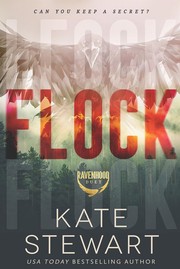
Flock
2,997-word summary 13 min read 354 pages in the book
- First published
- 2020
- Publisher
- Independently published
- Pages
- 354
- ISBN
- 9798666886403
- Series
- The Ravenhood (#1)
Reading options
What's inside (8 sections)
I picked up Flock because it keeps showing up in romance conversations as the book that broke a lot of reading slumps. It is the first volume in The Ravenhood series by Kate Stewart, first put out herself in 2020 through Independently published, with the original paperback running 354 pages. Later trade editions are longer, but that 2020 text is the one people fell for online. It is marketed as a modern Robin Hood retelling with suspense, and it reads like a new adult romance with a mystery humming underneath. This is an adult book with open door scenes. I will keep this retelling non graphic and focus on plot and choices, but you should know the steam is there.
The setup is simple and a little mercenary, which I liked. Cecelia Horner is nineteen and has spent most of her life with her mother. Her father, a wealthy factory owner in the small town of Triple Falls, has been absent. He offers a deal. Come live in Triple Falls for a year, work at his plant, keep your head down, and at the end he will hand over money that can change her mother life. College tuition, debts cleared, breathing room. Cecelia agrees, not because she forgives him but because the payoff matters for someone else. She plans to arrive, serve her time, and leave.
Triple Falls itself feels like a character in the early pages. It is the kind of place where everyone knows whose truck is parked where, where the factory sets the rhythm of the day, where newcomers get watched. Cecelia rents a small place, learns the routines of the line, and tries to stay invisible. That plan lasts about one shift. The people are too curious, the town is too tight, and two men at work notice her right away. The book leans into that small town pressure well. Favors matter. Reputations stick. A wrong word at lunch follows you to the parking lot.
What makes the premise work is that Cecelia is not naive so much as determined. She has raised herself to be practical. She budgets, she shows up early, she writes to her mother, she counts the months. At the same time she is nineteen and hungry for a life that feels like her own choice rather than a reaction to her parents. Stewart gives her a clear voice for that tension. Cecelia wants the money and wants to prove she cannot be bought. She wants freedom and also wants to belong somewhere for once. That push and pull drives almost every bad decision she makes, and I understood most of them even when I winced.
A year in Triple Falls
The first stretch is mostly arrival logistics, and Stewart takes her time with them. Cecelia meets her father and finds him exactly as distant as she feared, polite in a way that feels like a wall. Work at the factory is loud and physical, with rules that matter for safety and supervisors who enforce them. She learns names, learns who to avoid, learns where to eat so she does not get drawn into gossip. Her apartment is spare. Her car is her lifeline. Evenings are quiet until they are not.
I liked how the book handles class here. Cecelia is the boss daughter doing line work, which puts her in an awkward middle. Floor workers suspect she reports back to her father. Her father treats her like any other hire, or colder, to prove a point. She cannot win by working hard because hard work reads as performance, and she cannot win by slacking because that confirms every rumor. The only way through is steady attendance and a willingness to listen. Those pages feel true to real workplaces, and they slow the romance down enough that the town feels lived in before the love story takes over.
Her mother stays present through calls and memory. Cecelia left a tight two person household to enter a town where her last name opens doors she does not want opened. The money at the end is for her mother as much as for herself, and Stewart returns to that motive whenever Cecelia drifts. It keeps the stakes grounded. This is not a heroine chasing excitement for its own sake. She is trading a year of discomfort for someone else security, and every distraction carries a price.
The father plot never becomes a warm reunion, and I respected that choice. He is not a villain twirling a plan. He is a man who built power in a small place and does not know how to be a parent inside it. He watches, he tests, he withholds. Cecelia stops expecting softness fairly early and starts treating the year like a contract. That clear eyed tone helps later, when other men in town make promises that sound better than his silence. She has already learned to read offers carefully.
Sean on day one
Sean is the first pull. He is a supervisor at the plant, older than Cecelia by a few years, quick with a grin, good at making a new hire feel seen without making it weird in front of others. On her first day he helps her find her footing, explains the unwritten rules, and teases just enough to get her to laugh. He looks like trouble in the way competent, confident men sometimes do, and Cecelia clocks it right away. She tells herself to keep distance. She does not.
Their early scenes run on banter and proximity. Shared breaks. Rides offered when her car acts up. A hand on the small of the back to steer her clear of a forklift path. None of it is subtle, and Stewart does not pretend it is. Sean pursues her openly once he senses interest, and Cecelia, lonely and tired of being careful, lets herself enjoy the attention. There are long talks after shifts, jokes with his friends, invitations that stretch a little later each night. For a while it feels like a normal small town courtship with a faster pulse.
What complicates Sean is how curated he seems. He is warm, but he edits. He answers questions about his past with charm instead of detail. He has a tight circle and a schedule Cecelia cannot quite map. He disappears at odd hours and returns as if nothing happened. Cecelia notices and asks, and he deflects with affection. Because the attraction is strong, she lets the deflection work longer than she should. I found this part frustrating in the way the book wants you to be frustrated. You can see the gap between what Sean shows and what he hides, and you can also see why a nineteen year old far from home would fill that gap with hope.
Physically, their relationship turns serious fairly early, and the book treats those scenes as consensual adult moments that deepen Cecelia attachment. I will leave the details alone here. What matters for the story is the emotional effect. Each step closer makes it harder for Cecelia to ask hard questions. She starts shaping her days around Sean moods. When he is present, Triple Falls feels bright. When he pulls back, the town feels empty. That swing is the real engine of the middle chapters.
A fair criticism is that Sean stays smooth for a long stretch. We get heat and hints of weight, but his interior life arrives late. Readers who want equal access to both leads early may fidget.
Dominic and the edge of the group
If Sean is the open door, Dominic is the locked one. He is Sean best friend and part of the same crew, but where Sean charms, Dominic watches. He is quieter, rougher around the edges, quick to challenge Cecelia when she repeats town gossip or assumes she understands people she just met. Their first exchanges are prickly. He thinks she is slumming. She thinks he is rude. Both are partly right, which makes their slow thaw fun to read.
Dominic role in the crew is hard to pin down at first. People defer to him in a way that does not match any job title. He knows roads and schedules and who owes whom. He shows up when plans change. He leaves rooms to take calls. Cecelia senses authority in him that Sean does not quite have, or does not show. Where Sean invites her in, Dominic warns her off, then contradicts himself by helping her in small, practical ways. A ride in bad weather. A blunt tip about who to avoid at a party. A look that says pay attention when Sean is spinning a story.
The triangle that forms is not a light one. Cecelia feels a pull toward both men for different reasons. Sean offers ease and open want. Dominic offers friction and a strange steadiness. She does not handle it cleanly. She hides things, delays choices, tells herself she can sort feelings later. Stewart lets her be messy without turning her cruel. Cecelia knows she is risking hurt for everyone, and guilt sits beside the thrill in most of her choices. I appreciated that the book does not pretend indecision is harmless. Friends notice. Moods sour. Trust thins.
What I liked most about Dominic chapters is how they change the texture of Triple Falls. With Sean, the town feels like bars and late drives and laughter. With Dominic, it feels like early mornings and locked gates and conversations that stop when Cecelia enters. The contrast builds dread without any single scary scene. You start to feel, as Cecelia does, that the crew fun covers something organized. The raven tattoos they share stop looking like friendship ink and start looking like membership.
This is where the book shades from romance into suspense. Dominic warns Cecelia off lines he then crosses himself. Sean asks for trust while withholding the facts that would let her give it. If love triangles exhaust you, this stretch may test your patience.
The Ravenhood and the secret they keep
The group calls itself, or gets called, the Ravenhood, and the Robin Hood echo is deliberate. A tight brotherhood of men in and around Triple Falls, marked by raven tattoos, running money and favors by their own code. They talk about loyalty, about taking care of their own, about righting imbalances the law ignores. In practice that means secret runs, cash moving at night, jobs that sound simple and turn out layered. Stewart feeds this out in pieces. A name dropped and not explained. A warehouse that is busier than it should be. A sudden generosity toward a struggling family that does not match reported wages.
Cecelia learns sideways rather than through confession. She overhears, she pieces together schedules, she notices who fears whom. Sean frames the work as protection, as brotherhood, as something she should not worry about. Dominic frames it as risk she should avoid. Neither gives her the full map. The book keeps the exact mechanics vague for a long while, which works for mood but can annoy readers who want systems. I did not need a ledger of crimes. I did need a clearer sense of danger, and the book provides that through small consequences. A beating that gets laughed off. A cop who looks away. A friend who leaves town fast.
The Robin Hood label matters because Cecelia wants to believe it. If these men steal from the rich or bend rules for good reasons, then loving them feels less reckless. Stewart plays with that wish without endorsing it. The crew does help people, and the town has real need. It also profits, and it scares people, and its code serves its members first. Cecelia swings between these readings depending on who she is with. With Sean, the myth glows. With Dominic, the cost shows. That swing is the point. The book asks whether a good motive cleans a hidden method, and it lets Cecelia answer differently on different nights.
There is a strong set piece around the middle where Cecelia gets pulled closer to the inner workings. I will keep the specifics light. What lands is realization. She sees how well the men lie together and how fast they cover. She is now someone they lie to and also someone they lie for.
If I have a criticism of the mystery, it is that the secrecy lasts a touch too long. Cecelia asks fair questions and gets fog. The plot needs her partly in the dark so the final reveals hit, but a few scenes repeat the same dance. She pushes, he charms or snaps, she retreats, they reconnect physically, the question gets shelved. Readers who binge may not notice. Readers who pause between sittings may feel the loop. Either way, the last third pays off the patience, so the withholding earns its keep even when it irritates.
Love, lies, and a choice that hurts
The back third moves fast. Cecelia can no longer float between Sean and Dominic, and events force her to pick a person and, harder, a version of herself to live with after. Secrets she tolerated become facts she cannot file away. A lie she told herself about being temporary in Triple Falls cracks, because a year is long enough to root. Work, which started as cover, becomes a place where people count on her. Her father deal, which started as the whole plan, starts to look like one thread among many rather than the rope holding her up.
Without giving away the final twists, the shape is this. Something the crew has hidden breaks into the open in a way Cecelia cannot ignore. Someone she trusted has managed her contact with information carefully, choosing what she learns and when. Someone else tells her a harder truth that reframes earlier kindness as strategy. Cecelia reacts first with hurt, then with anger, then with a steadier kind of accounting. What do I actually know. Who showed up when it cost them. What would my mother say if she saw me now. Those questions carry her better than any speech from the men does.
The romance resolves, for this volume, toward one bond while leaving wreckage around it. Stewart writes the choosing scenes with care. There is no easy speech where everyone agrees the past was fine. People say sharp things. Apologies land awkwardly or not at all. Cecelia sets terms that reflect what she has learned about secrecy, and the man she leans toward has to meet her inside those terms rather than charm past them. I liked that the book makes the choice cost something real. Friendships cool. Plans change. The year she meant to endure becomes a year that marks her.
The steam stays present but never takes over the plot logic. Closeness quiets Cecelia doubts for a night, then morning brings the same unanswered questions back louder. Want does not equal trust, and the book knows the difference.
The final chapters land like a door shutting and another opening. A major reveal about the Ravenhood purpose and about Cecelia own place in it reframes much of what came before. A loss hits hard near the end, the kind that makes earlier light scenes ache in memory. Flock closes on a cliffhanger that points straight into Exodus, the second book. Some readers will feel tossed. I felt the hook was fair because the emotional story of this volume, Cecelia learning to stop outsourcing judgment, completes even as the plot stays open.
Where Flock leaves you
Stepping back, Flock works best as a character study wearing a suspense costume. The Robin Hood frame gives the marketing hook, but the pages that stayed with me were smaller. Cecelia learning to run a machine without flinching. A shared meal where she finally gets a joke no one explains. Stewart writes young want with sympathy rather than judgment, and that generosity carries the book through its messier loops.
The flaws are real and worth naming plainly. The middle repeats its central fight about secrets more than it needs to. Sean stays opaque past the point where opacity feels like character and starts feeling like delay. Cecelia can be slow to ask the blunt question the reader is already shouting. The prose leans on banter and charged glances to bridge gaps that a harder talk would close faster. None of this broke the spell for me, but readers who want tight plotting and fast answers may sigh in chapters that circle.
Who should try it. Adults who like angsty contemporary romance with suspense, small town texture, and a love triangle that actually shapes the plot rather than decorating it. Readers who want Robin Hood as vibe more than blueprint, brotherhood codes, tattoos, night runs, loyalty tests, will find plenty to chew on. Readers who avoid cliffhangers should wait until they have Exodus ready, because Flock does not tie its plot with a bow. Readers who want fade to black romance should skip, since the page level heat is high even though this summary stays vague.
Exodus continues Cecelia story directly and answers the questions Flock holds back. The Finish Line closes the trilogy. If Triple Falls charmed you, the later books deepen the town and the crew.
I finished Flock in two sittings and thought about it for days after, mostly about Cecelia deal with her father and how it warped every other bargain she made. A year for money sounds clean on paper. In practice it meant living inside other people schedules, wanting people she should have questioned, and learning that belonging has dues. Stewart does not excuse the lies told to Cecelia, nor does she let Cecelia off for the ones she told herself. That even handed ache is why the book stuck. The secrets were interesting. The girl counting months until she could leave, then realizing she had changed too much to leave the same way, mattered more.
FAQ
Is Flock appropriate for teen readers?
No. Flock is an adult romance with open door scenes. This summary stays non graphic, but the book itself is explicit and meant for adult readers only.
Is Flock part of a series?
Yes. Flock is book 1 of The Ravenhood, followed by Exodus and The Finish Line. This volume ends on a cliffhanger, so keep the next book ready.
When was Flock first published?
Kate Stewart first put it out herself in 2020 through Independently published. The original paperback runs 354 pages, and later trade editions run longer.
Similar books
More from The Ravenhood first, then related titles.

Exodus
Cecelia grieves Sean while Dominic pulls her into the Ravenhood reckoning.
2,463-word summary · 11 min read
The Finish Line
Tobias King seeks forgiveness from Cecelia as the Ravenhood past closes in.
2,868-word summary · 13 min read

Indigo Ridge
A new police chief in a Montana town meets the founding family's eldest son in a bar, and one night later a body turns up under their cliff.
2,763-word summary · 12 min read
The Bookshop on the Corner
A Birmingham librarian loses her job, buys a van, and moves to the Scottish Highlands to run a mobile bookshop. Warm and bookish, with uneven pacing.
2,557-word summary · 11 min read

Act Your Age, Eve Brown
Eve Brown crashes into a Lake District bed and breakfast, breaks the owner's arm, and talks her way into his kitchen. A grumpy-sunshine romance about work,…
2,474-word summary · 11 min read
There Are No Saints
Two rival artists circle a struggling San Francisco painter. Cole Blackwell wants her, Alastor Shaw wants her dead. Book one of the Sinners duet.
2,190-word summary · 10 min read

At First Sight
Jeremy and Lexie are married and expecting a baby when anonymous emails tell him the child may not be his.
2,317-word summary · 10 min read
True Believer
Jeremy Marsh, a science journalist who debunks paranormal claims, comes to a small North Carolina town and falls for a librarian who believes in things he…
2,125-word summary · 9 min read

Say You're Sorry
A widowed prosecutor defends the teenager accused of killing her babysitter, uncovering a small town's secrets and a killer hiding in plain sight.
2,116-word summary · 9 min read

Juniper Hill
Fleeing New York with her baby, Memphis takes a housekeeping job above Knox Eden's garage, and the grumpy chef becomes the first person she can rely on.
2,021-word summary · 9 min read

Delilah Green Doesn't Care
Delilah returns to Bright Falls to photograph her stepsister's wedding and falls for Claire, a bookstore owner and single mother, while a cruel bet threatens…
2,315-word summary · 10 min read

Lovelight Farms
Stella fakes dating Luka to save her Christmas tree farm.
2,584-word summary · 11 min read

The Simple Wild
City Calla flies to Alaska to face dying father and gruff pilot Jonah, learning bush life and love.
2,284-word summary · 10 min read
Secretly Yours
A bubbly Napa gardener sends anonymous love letters to her grumpy professor neighbor in this steamy small-town rom-com.
2,504-word summary · 11 min read
My Killer Vacation
A teacher and a bounty hunter share a Cape Cod rental with a corpse and a growing attraction.
2,625-word summary · 12 min read
Good Girl Complex
A people-pleasing college girl moves to beach town Avalon Bay and falls for a local boy who distrusts her whole world.
2,225-word summary · 10 min read
All Rhodes Lead Here
Grieving Aurora moves to Colorado to fix a farmhouse, finding slow healing with her gruff older neighbor Tobias Rhodes.
2,249-word summary · 10 min read
The Guardian
Widowed at twenty-five, Julie Barenson leans on a Great Dane named Singer, then dates two men and learns one of them is a killer.
2,221-word summary · 10 min read
Hopeless
Fake engaged to town hero Beau Eaton, outcast bartender Bailey Jansen finds pretend and real blurring in Chestnut Springs.
2,491-word summary · 11 min read
Heartless
Gruff single dad Cade Eaton hires bubbly Willa Grant as summer nanny in Chestnut Springs, and two months together wear down his walls.
2,967-word summary · 13 min read
Corrupt
College student Rika Fane faces Michael Crist and his friends three years after Devil's Night put them in prison.
2,870-word summary · 13 min read
Safe Haven
Katie hides in Southport from a violent husband and falls for widower Alex.
2,480-word summary · 11 min read
Flawless
Pro bull rider Rhett Eaton is benched by scandal, and his agent's daughter Summer must keep him in line in Chestnut Springs.
2,484-word summary · 11 min read
Austenland
A New York graphic designer obsessed with Mr. Darcy inherits a trip to a Jane Austen theme park, where the fantasy of Regency romance collides with the men…
2,030-word summary · 9 min read

Lick
Evelyn wakes up married to the lead guitarist of Stage Dive after a Las Vegas birthday she cannot remember, and the annulment gets complicated.
1,989-word summary · 9 min read
The Unmaking of June Farrow
A woman in a North Carolina flower-farming family walks through a red door into 1951, where she must solve her mother's disappearance and decide whether to…
2,701-word summary · 12 min read
Ricochet
Lily Calloway tries to stay celibate for ninety days while Loren is in rehab, leaning on Rose, Connor, and Ryke as therapy forces her to face her childhood.
2,575-word summary · 11 min read
My Dark Romeo
A debutante ball kiss traps Dallas Townsend in a marriage to Romeo Costa, a man who wants her as leverage in a war against his father and her fiance.
2,530-word summary · 11 min read
Cruel Beauty
A girl raised to kill the demon prince who rules her cursed land instead falls in love with him, in a retelling that mixes Beauty and the Beast with Bluebeard…
2,669-word summary · 12 min read
Under Locke
Iris Taylor moves to Austin broke and wary, takes a front-desk job at a tattoo shop, and spends the book learning that Dex Locke’s blunt cruelty and unexpected…
2,591-word summary · 12 min read