
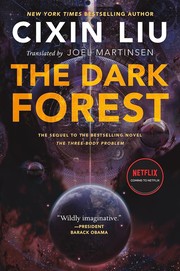
The Dark Forest
2,852-word summary 13 min read
- First published
- 2008
- Publisher
- Tor Books
- ISBN
- 9780765386694
- Series
- Remembrance of Earth's Past (#2)
Reading options
What's inside (8 sections)
I did not plan to read The Dark Forest right after the first book. I finished The Three-Body Problem late at night and told myself I would take a break and read something short. Then I kept thinking about the ending and about the sophons and about Luo Ji, who had seemed like a side character. Two days later I was back at the bookstore. This one is the second volume in Remembrance of Earth's Past. It first appeared in Chinese in 2008. The English translation by Joel Martinsen appeared in 2015, and the edition cited here is from Tor Books. It picks up where the alien contact story left off and asks a colder question. What if staying quiet is the only way to stay alive.
The setup is simple to describe and strange to live with. The Trisolarans are coming. Their world is in trouble and they want ours. They cannot get here fast, since the fleet will take centuries, but they have already sent something ahead. The sophons are tiny and very smart machines that can watch and listen and mess with our physics research. So Earth knows it is in danger and at the same time cannot trust its labs or its meetings. Every plan made in the open will be heard. That pressure shapes everything that follows.
The first part of the book spends time showing how people react to that kind of wait. Some join the fight. Some give up. Some join groups that almost welcome the invaders because they think humans have ruined Earth. Governments argue. Scientists get stuck because their experiments stop making sense. Ordinary life goes on in a weird way, with people going to work and raising kids while knowing a fleet is moving toward them through space. Liu is good at this mood. The mix of daily routine and far off doom feels true.
Then comes the Wallfacer idea, which is the engine for most of the plot.
The Wallfacer project and four chosen people
Since the sophons can hear and see almost everything except what goes on inside a mind, the United Nations group in charge decides to try something odd. They pick four men and give them huge power and almost no oversight. The title is Wallfacer. Each one can ask for men and machines and money. Each one does not have to explain his real goal. He can lie to everyone, including the people helping him. The hope is that at least one hidden plan will work because the Trisolarans cannot read thoughts.
Luo Ji is the strange pick. He is not a general or a president. He is an astronomer who drifted into sociology and who likes an easy life. He jokes. He avoids duty. When soldiers show up to bring him to a meeting, he thinks it must be a mistake. It is not. His name is read out with the other three. The others look like more normal choices, men with public records in war and politics and science. Luo Ji looks lost by comparison.
Liu keeps the other three Wallfacers in the background for much of the telling. We see enough to get the shape of their styles. One leans on military force. One leans on politics and nerve. One leans on brain science and attempts to shape loyalty. I will stay general here because the book itself moves past them fairly fast and keeps returning to Luo Ji. The point is not their full biographies. The point is the contrast. Three men act at once, with big projects and press coverage. Luo Ji does almost nothing for a long stretch, and that delay starts to feel like a plan of its own.
The early Wallfacer scenes have a dry humor that I liked. Luo Ji asks for things that sound selfish. A quiet house. Time to think. Leave to travel. People around him get angry because the world is ending and he seems to be on holiday. His guards and helpers do not know if he is brilliant or broken. That confusion is useful. If his own side cannot tell, the watchers probably cannot either.
There is a sad thread under this too. Being a Wallfacer cuts a person off from normal trust. You cannot tell your wife or your friend what you really mean. Every kind act looks like a trick. Luo Ji feels that weight in a slow way. He is not a hero at the start. He is tired and a bit spoiled. Watching him learn to carry silence is one of the better arcs in the book.
Luo Ji and the woman in his mind
One reason Luo Ji resists the job is that he meets someone and wants a normal life. The book gives him a stretch of imagined love that some readers adore and others find odd. He dreams up an ideal woman, soft spoken and calm, and then by chance meets a woman in real life who reminds him of that image. He marries her in a quick rush. They have a child. For a while he lives in a shut off house by a lake, protected and pampered, and tries to forget Trisolaris.
I found these chapters both moving and frustrating. Moving because Liu writes rest and quiet very well. Morning light. Boiled water. A baby sleeping while the lake stays still. You can feel why a man would trade the fate of the world for one more year like that. Frustrating because the women here exist mostly to soften Luo Ji or to push him forward. They get little inner life of their own. His wife is patient and kind and then mostly gone from the center when the plot needs him alone again.
This is a fair place to note a weakness that runs through the book. The people besides Luo Ji can feel thin. Helpers speak in brief updates. Colleagues explain ideas and then step back. Even Luo Ji himself is drawn in broad strokes for long stretches, clever but distant, sad but hard to know. If you need close and warm character work on every page, this will test you. I kept reading for the ideas, not because I felt tied to the whole cast.
The lake section ends the way you expect. The safe life breaks. Luo Ji is pulled back to duty by loss and by a meeting with an older scientist that plants the seed for everything after. That meeting matters a lot, so I want to give it room.
A talk by a grave and the start of cosmic sociology
Before he dies, Ye Wenjie from the first book talks with Luo Ji. She does not hand him a weapon. She hands him two ideas and tells him to think. The two ideas are the axioms of what Luo Ji later calls cosmic sociology.
The first is that survival stays the main drive for any civilization. The second is that while civilizations grow and spread, the total matter in the universe stays limited. From those plain points Luo Ji starts to build a darker picture over years of quiet study.
Ye also points him at two extra notions that fill out the picture. One is chains of suspicion. The other is often called technological explosion. The book returns to these again and again, in classrooms and in war rooms and in Luo Ji thinking alone at night.
Chains of suspicion means contact is poisoned from the start. If I find you out there, I cannot know if you mean harm. You cannot know if I mean harm. Talking itself can be risky because it reveals where we live. Even if both sides start calm, neither side can prove it will stay calm. So silence starts to look smart.
Technological explosion means no one can relax because a weak neighbor today might pass you tomorrow. Growth is not smooth. A small group can jump ahead fast after a slow age. So if you spot another life, waiting to see what it does is dangerous. It might stay behind you for a thousand years, or it might learn fast and arrive over you in a century.
Put those together and the sky looks very different. It is not empty because life is rare. It is quiet because everyone learned to keep their lights off. To send a loud signal is to invite a strike from someone who heard you first and who would rather act early than risk later regret. That is the dark forest image. A forest at night where every hunter stays still and listens, afraid to make a sound.
Liu explains this in long talks that can feel like class. Characters sit and work through models with diagrams. At times I enjoyed the patience. The book really wants you to follow each step. At other times I skimmed a little, since the same point gets restated through new speakers. This is the info dump habit that many readers mention. The ideas are strong, but the delivery can be heavy.
What the Wallfacers try while Luo Ji waits
The middle of the book cuts between large projects and Luo Ji studying in the background. Earth tries to build space forces. Engineers argue about ships and fuel and orbits. There are fights about whether to run or to fight or to hide. Money flows. Tests fail. A few bold plans get announced with fanfare and then fade when physics or politics gets in the way.
I will keep the other Wallfacer plans general on purpose, since memory blurs on exact labels and the book cares more about effect than about hardware lists. One path leans on brute force in space, with big fleets meant to meet the enemy far from home. One leans on shocking an enemy through extreme acts meant to show resolve. One leans on changing minds themselves, trying to shape loyalty so firmly that defeat cannot break it. Each plan looks bold from far away and stressed from close up. Funds run short. Helpers doubt. The sophons watch and pass notes back home.
What I took from these sections was not the tech detail. It was the mood of trying to act while being seen. Every meeting feels bugged, because it is. Commanders start to talk in hints. Scientists stop sharing drafts. Trust falls apart even among friends, since no one knows what the Wallfacers truly intend. That social decay might be the most believable part of the whole invasion setup. Fear makes people formal and cold.
Luo Ji, meanwhile, asks for odd and small things. At one point he centers his requests on stories and images tied to stars and snow and old signals, which confuses his guards. I am staying vague here because the exact project names matter less than the method. He wants to test how the universe reacts to a loud trace. He wants to see if silence is just habit or if it is enforced. His helpers think he has lost focus. Readers are meant to share that doubt for a while.
There is a long patch in this middle where the pace dips. Meetings repeat. New officers arrive and need the same briefing the last group got. The same fear gets voiced in fresh rooms. I liked the scope, but I checked the page count more than once. If you felt the first book dragged during its game sections, brace for a similar pull here. Liu loves to explain, then explain again from a new angle.
Still, the slow build pays off in one sharp scene I will not spoil in full. Luo Ji uses a distant star and an old public signal to run a test. He basically shouts in the forest to see what happens. Then he waits. What follows is quiet for a long time, then sudden and chilling. It is one of the best reveals in recent science fiction, in my view. The book earns it because it made you sit through the theory first.
The spell that works and the price that follows
After the test, Luo Ji changes. He stops drifting. He starts to act like a man who saw the shape of the woods and cannot unsee it. He goes back to work with focus. He eats less. He sleeps less. His talk gets shorter and harder. The guards notice. The reader notices.
He pieces together a move that is not a fleet and not a secret weapon. It is a threat built on the same logic as the forest. If the universe punishes noise, then a small and weak civilization can still scare a strong one by holding a loud bell and promising to ring it. The strong one might crush you after, but it would give away its own place by doing so. Both sides would then face the deeper dark. So the strong one may choose to leave you alone, not from kindness but from self care.
This is where the idea of deterrence takes over the last part of the book. Luo Ji sets up a way to broadcast the position of the Trisolaran home system and our own system if he dies or if he chooses. It is a dead hand with a cosmic reach. He does not need to win a war. He needs to make war too costly for the other side to start.
The final meetings between Luo Ji and the Trisolaran voice through the sophons are tense in a quiet way. No big battle. Just talk in a cold place, with snow around and time running thin. Luo Ji lays out what he learned and what he built. He sounds calm because he has already accepted that he might not walk home. That calm is what makes the threat stick.
I liked this ending more than the big space fights in many other novels. It fits the ideas. Force matters less than knowledge and nerve. One man with a clear read of the rules can hold off a fleet, at least for a while, by pointing at the dark and saying we both know what lives there.
But I should be honest about what did not land for me. The love story thread never fully ties to this late resolve in a way that feels earned. It reads like two books stitched together, a soft romance and a hard theory tale. The stitch shows. Some side figures vanish without a proper goodbye. A few twists lean on people acting dumb for one chapter so the plan can work in the next. And the science talks, while fun for me, will wear out readers who want pace and heat.
Why it still sticks after the slow parts
What stays with me is not any single ship or battle. It is the shift in how I look at silence. After this book, every story about sending signals to space feels a little naive. The old hope was that someone kind will answer. Liu answers that hope with a cold shrug. Maybe someone kind is out there, but kindness cannot be proved across light years, and fear can act faster than proof.
The book also sticks because it treats strategy as a human cost, not a clever game. Luo Ji pays for his insight with years of doubt and with love cut short and with friendship turned into cover. Being right does not make him happy. It makes him lonely and feared and, in the eyes of many on Earth, hard to like. That feels closer to how real burdens work than the usual tale where the smartest person gets cheers.
If you read the first book for the physics puzzles, this one gives you sociology puzzles instead. If you read it for Ye Wenjie and Wang Miao, adjust your hopes. This is Luo Ji from start to finish, with others circling him. Go in ready for lectures, for slow stretches, for characters who speak like position papers. Stay for the test on the distant star and for the snow talk at the end, which reframes everything that came before.
I closed it feeling both tired and awake, which is rare. Tired because the middle asks a lot. Awake because the core image is so plain and so harsh. In a dark forest, the safest voice is no voice at all. Liu makes you believe that rule for four hundred pages, then shows one man learning how to speak inside it without getting shot at once. That tension held me even when the prose went flat.
Read it if you like big ideas with room to breathe, if you liked the first book enough to forgive slow patches, and if you want science fiction from China that thinks at planetary scale. Skip it for now if you need fast action or warm and close character work on every page. For me, despite the drag and the thin side roles, the forest image alone was worth the walk.
FAQ
Is The Dark Forest part of a series?
Yes. It is book 2 in Remembrance of Earth's Past, after The Three-Body Problem. It was first published in Chinese in 2008 and in English in 2015.
Who is Luo Ji?
Luo Ji is an astronomer and sociologist who becomes one of four Wallfacers. He starts out unserious and later carries the main plan against the Trisolarans.
What is the dark forest theory in the book?
It is the idea that the universe is full of hidden civilizations that stay silent because contact can lead to attack. Suspicion and the chance of rapid growth make trust very hard.
Similar books
More from Remembrance of Earth's Past first, then related titles.
The Three-Body Problem
A physicist meets a secret from the Cultural Revolution and a game that models a dying alien sky.
2,465-word summary · 11 min read
Death's End
A hibernating engineer inherits a star, holds the trigger of a cosmic truce, and watches humanity face the dark forest.
2,980-word summary · 13 min read
Network Effect
Murderbot's contract job turns into a rescue mission when a hijacked research ship and a colony of corrupted colonists appear.
2,256-word summary · 10 min read
The Rise of Nine
John, Six and Nine race to India to find Eight before the Mogs strike.
2,321-word summary · 10 min read
Children of the Mind
Ender's children split across worlds as Jane faces shutdown and Lusitania flees.
2,532-word summary · 11 min read
Ringworld
Bored Louis Wu joins alien crew to explore a vast ring habitat around a star.
2,370-word summary · 11 min read
Armada
Gamer Zack learns Armada game trains real defense against alien Europans.
2,004-word summary · 9 min read
The Power of Six
John and Six run from the FBI and Mogs while Marina plots escape from a Spanish convent.
2,904-word summary · 13 min read
The Infinite Sea
Cassie and Squad 53 wait out winter in a hotel while Ringer is retaken and learns the truth behind the 5th Wave.
2,985-word summary · 13 min read

Skyward
Spensa dreams of flying for Detritus though her father was branded a coward, until a crashed ship, a talking AI, and flight school force out the truth.
2,865-word summary · 13 min read
Xenocide
Lusitania faces a fleet with planet death while Ender, Jane, and families debate virus, souls, and law.
2,647-word summary · 12 min read

The Long Way to a Small, Angry Planet
Runaway clerk Rosemary joins the Wayfarer crew for a year long tunnel job that tests family and love.
3,295-word summary · 15 min read


Ice Planet Barbarians
Crashed women meet blue hunters on ice and a parasite forces a mating choice.
1,983-word summary · 9 min read

Childhood's End
Silver ships end war and want while Overlords midwife humanity's children into something beyond human.
2,054-word summary · 9 min read

The Forever War
Drafted in 1997, physics student William Mandella fights Taurans across collapsars while centuries slip past back on Earth.
3,136-word summary · 14 min read
Dreamcatcher
King's 2001 novel follows four Maine friends whose hunting trip meets an alien crash. A friendship story wrapped in graphic infection horror.
2,627-word summary · 12 min read


Old Man's War
At 75, John Perry joins the army for a new body and a brutal war over colonies.
2,636-word summary · 12 min read
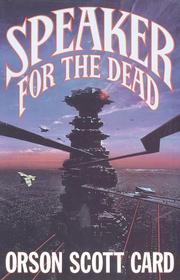
Speaker for the Dead
Ender speaks whole truths for alien deaths on a fenced colony where biology confuses murder.
1,992-word summary · 9 min read
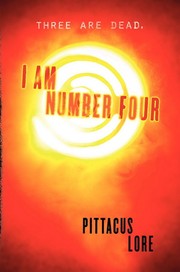
I Am Number Four
Alien teen Four hides in Ohio and develops Legacies with Sam and Sarah.
2,335-word summary · 10 min read
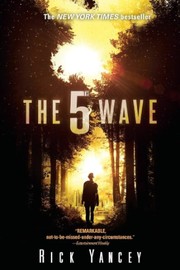
The 5th Wave
Cassie Sullivan crosses ruined Ohio to save Sammy after four alien waves, trusting Evan Walker while doubting him.
3,063-word summary · 14 min read

The Host
Stephenie Meyer imagines Earth settled by Souls, where Wanderer wakes inside Melanie Stryder and hears her voice refuse to fade, sparking a desert flight to…
2,288-word summary · 10 min read

Heretics of Dune
Fifteen centuries after Leto II, the Bene Gesserit raise a new Duncan Idaho while the Honored Matres return and Rakis burns.
2,673-word summary · 12 min read
Prelude to Foundation
A young Hari Seldon arrives on Trantor with a theory he cannot yet prove, and a hunt through the planet-city forces him to turn psychohistory into a real…
2,013-word summary · 9 min read

Authority
The new director of the Southern Reach takes over an agency that is hiding the truth about Area X, and the building starts to change around him.
2,029-word summary · 9 min read
The Diamond Age: Or, A Young Lady's Illustrated Primer
A stolen nanotech primer raises a poor girl in 22nd-century Shanghai, and Neal Stephenson turns her education into an argument about class, freedom, and who…
2,055-word summary · 9 min read

Iron Widow
Wu Zetian enlists to avenge her sister, kills her pilot, and becomes an Iron Widow in a mecha Huaxia where the machines are built to kill women.
2,444-word summary · 11 min read

Archenemies
Nova steals for the Anarchists while Adrian hides his Sentinel identity, and a serum that erases prodigy powers puts them both at risk.
2,485-word summary · 11 min read