
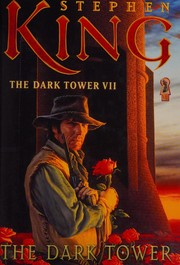
The Dark Tower
2,897-word summary 13 min read 845 pages in the book
- First published
- 2004
- Publisher
- Donald M. Grant
- Pages
- 845
- ISBN
- 9781880418628
- Series
- The Dark Tower (#7)
Reading options
What's inside (8 sections)
I started The Dark Tower knowing the ending annoys half the people who love the series. Stephen King published it with Donald M. Grant in 2004, an 845 page finale listed as book 7 of The Dark Tower. I had lived with Roland and his friends through six books, so I wanted them safe at the Tower. I also wanted answers about the Beams and the Crimson King and the child growing inside Susannah. This book gives answers, though not always the ones I hoped for. I closed it sad and full and a little angry, which feels about right for this series.
The story picks up with the ka-tet split and tired. Roland Deschain the gunslinger keeps walking toward the Tower with Eddie Dean and Jake Chambers. Susannah Dean is gone from them for now, carried off by the Mia part of herself toward a birth that frightens everyone. Oy the billy bumbler stays loyal to Jake with dogged love. Father Callahan, met in the prior book, travels with them for a stretch. The Beams that hold the Tower shake. The Breakers in their prison keep draining them. If the Beams fail, the Tower falls and all worlds go with it. That threat pushes every choice.
King opens with a rush. The group fights to free Callahan from a nest of low men and vampires in a Dixie Pig sort of place between worlds, all chrome and blood and bad jokes. Jake and Callahan go in while Roland and Eddie give cover. It is messy and loud and sad, because Callahan knows his time runs short. He buys Jake time with his life. Jake escapes with Oy through a door to Maine in 1999, shaken and grieving. I liked this start for speed after the slow town politics of book six. It reminds you the low men still hunt, the Crimson King still plots, and doors still open where they should not.
Where the ka-tet stands after book six
To track this finale, it helps to hold the threads plainly. Roland leads. Eddie backs him with humor and growing steel. Jake grows from boy to young gunslinger with Oy at his heel. Susannah carries Mia, a woman who is both separate and part of her, pregnant with a child meant to harm Roland. Mia promised her child to dark powers in exchange for being made mortal and able to bear him. Susannah cannot stop the birth by will. She can only steer where it happens and try to keep some say.
The Beams give the quest its clock. Think of them as great supports that keep the Tower upright. Six Beams, twelve Guardians in old tales, now mostly gone. Two Beams remain strong enough to matter. The Breakers, many taken from our world because their minds run hot, sit in a prison town and chip at those Beams with dull routine. They play games, they eat meals, they use their gift day after day. Most do not grasp they serve the Crimson King. Some know and still comply because prison life feels safe. Roland plans to break that prison. He has few fighters and little time.
There is also the writer thread. King writes himself into the tale as a young man in Maine in 1977 and as an older man later. His characters believe he dreamed them, or channeled them, and that his writing keeps them alive. If he dies before finishing, their path may close. If he stops out of fear, the Tower may fall for lack of a tale to hold it. I found this strange on first read and stronger on this reread. It lets King talk about duty and fear without hiding behind a sage figure. He is just a guy with a typewriter who hit a rough patch and looked away.
Devar-Toi and the attack on the Breakers
The prison town is called Devar-Toi, also named Algul Siento in the old speech, a neat and grassy camp with watchers and alarms. Inside live the Breakers, men and women with mild manners and strong minds. Ted Brautigan, familiar from other King pages, helps anchor this part. He is kind and tired and very bright. He keeps notes and routines to resist the soft control of the place. Dinky Earnshaw and a young man with shining skill join him. They pass word, they map guard shifts, they wait for Roland.
Roland's plan is bold and thin. He, Eddie, and Jake will slip in with help from inside and free the town in one sharp strike. They cannot match numbers, so they need surprise and exact timing. Ted feeds them details through dreams and notes. The group studies the layout, the sheds, the fences, the way guards grow bored at night. Susannah is absent, which hurts numbers. They go anyway because the Beams cannot wait. I held my breath through the prep because King shows meals and jokes and small fears. Eddie teases Jake to keep him loose. Jake checks his guns twice. Roland says little and sees much.
The battle itself is bright and grim. Alarms, dust, shouting, minds pushing against minds. Breakers who spent years draining Beams now turn that force outward in panic. Guards fire from towers. Ted and Dinky guide friends through gaps. Roland moves like age has left him, fast and sure, calling shots and taking ground. Eddie fights with joy and fury that scared me. Jake holds with Oy, who barks and darts and warns. When it ends, the prison breaks. Many Breakers walk free into a fog of relief and guilt. The Beams ease. For one chapter, hope feels real. Then King counts the cost, and the cost is high.
I will keep deaths general here because they land harder in order. The win at Devar-Toi does not come free. Good people fall in the dust there. The ka-tet wins the field but loses warmth it will not get back. Roland accepts it with dry eyes and a bowed head. Eddie jokes less after. Jake looks older. Oy stays close. The book does not pause long to mourn, which fits war and still stung me. I wanted a campfire scene of grief. King gives a short prayer and a march order. The Tower pulls.
Susannah, Mia, and Mordred
While the men fight, Susannah walks her own hard road. Mia holds her body for long stretches now, riding toward New York to bear the child. Mia wants motherhood so badly she shakes with it. She traded much to feel a baby kick. Susannah, trapped in the same skin, talks to her hour by hour. Sometimes they fight for hands and mouth. Sometimes they trade memories to pass fear. Susannah tells Mia about Eddie and New York and doors. Mia tells Susannah about halls of stone and promises made in the dark. Neither fully trusts the other. Both fear the birth.
The birth brings Mordred, a child of two fathers in old stories and of Mia and Susannah in lived pain. He is born able to shift between human baby and spider horror, hungry from the first breath. He eats his mother Mia soon after birth, which is as grim as it sounds. Susannah escapes in the chaos with help and a mix of luck and grit. She takes a hard wound in the leaving and keeps moving because staying means death. Mordred grows fast and hunts by instinct. He wants Roland most, his hated father figure, and he wants to reach the Tower too.
These chapters mix body horror with pity. Mia is selfish and brave at once. She risked Susannah's life for her own dream, yet she faces birth pain without flinching and loves the baby even as it kills her. Susannah is fierce and tired, funny in bleak moments, unwilling to quit. King gives Susannah long solo pages of walking and hiding and talking to herself to stay sane. I admired those pages. After books of group banter, her lonely trek through winter streets shows what she is made of. She binds her hurt, she finds food, she keeps her guns dry. She refuses to lie down.
Mordred stalks the later road like a rumor. He eats what he catches. He dreams of Roland's face. He grows thin and sore because his spider half outruns his boy half. Readers expecting a grand dark prince may be surprised. He is more like a sick stray with great power and little guidance. That choice moved me. Evil here is not grand. It is hungry and cold and soon lame. Still, he kills when close, and the ka-tet must watch shadows all the way to the field of roses.
Losses on the road to the Tower
After Devar-Toi, the road narrows to snow and stone. The group uses doors that still work to hop between Maine and Fedic and the border lands near the Tower. They chase Susannah's trail. They dodge followers of the Crimson King. They meet a mute servant of the Tower road who aids them in plain ways. Food runs short. Weather bites. Guns need care. Oy sleeps against Jake for warmth. These travel chapters breathe after battle noise. Eddie and Jake talk like brothers. Roland teaches by doing. Susannah rejoins them worn and limping, and the reunion made my throat tight. Hugs are brief. Work comes first.
Then King takes more than he gives. Eddie falls in a small town fight that should have been routine, shot while trying to save others near a door in Maine. He dies slowly with Susannah holding him, joking to the end because that is who he is. Jake falls later on a Maine road, pushing King himself, the writer as character, out of the path of a van. Jake dies saving the man who made him. Oy dies last near the Tower, defending Roland from Mordred with blind courage, teeth bared though small. Each death felt like a punch I saw coming but could not dodge. King spaces them so grief has no time to settle.
I found these losses the hardest part to accept, not because death has no place here but because the shapes feel sharp. Eddie's death comes from a side clash, not the big field. Jake's death comes from a traffic accident, not a duel. Oy dies in a brief savage tussle. After thousands of pages of training and prophecy, to lose three loved ones to sudden hits feels blunt. Friends who love the book say that bluntness is the point. Ka is a wheel, not a plan. Roads kill more walkers than kings do. I see that now, though I still wish Eddie had one more full chapter of teasing Roland before the end.
Susannah keeps walking with Roland after burying her heart twice. She shoots well though her body aches. She watches Roland grow more fixed on the Tower and less fixed on people. She asks what he will do at the top. He cannot say. She fears he knows and will not speak. Their talks on the last miles are plain and tired and true. No speeches about fate. Just two friends sharing heat and asking if the flowers near the Tower smell sweet. I loved her here. She sees the loop forming before he does and chooses life anyway.
Stephen King in the story
The writer chapters need their own space because they break rules. Young King in 1977 meets Roland and Eddie in Maine woods and feels terror he will later call fiction. He sees guns and a hard face and hears a warning to keep writing. Older King in 1999 walks a road with earphones, lost in thought, while Jake watches from cover. Jake sees the van coming before King does. Jake moves. Tires scream. Jake dies. King lives with a broken body and a whole life of guilt he will carry into oncoming books he has not yet written in story time.
Some readers hate this. I get it. A famous writer saving himself through a made up boy's death can read as self pity. The pages where King scolds himself for drink and delay and fear can feel like a diary slipped into an epic. But I came to like the risk. The series always claimed tales hold worlds. Here King tests that claim by putting his own skin in it. He says a maker owes his made people care. He says walking away has a price. When Roland later scares the older King back to work, it plays less as ego and more as debt collection. You made us, now see us through.
The car accident mirrors King's real 1999 injury, and he does not hide the link. He gives the driver a plain face and a loose dog and a wandering mind, not horns. Horror stays human. That restraint helps. The dread comes from knowing how thin the line is between a walk and a grave. Jake knows too. He chooses in a breath. After, Roland marks the spot with stones and moves on because ka demands it. King the character limps home to write. King the writer, outside the tale, keeps typing to earn that gift. It is messy and bold and very King.
There is also the late face of the Crimson King, shouting from a balcony of the Tower and throwing sneezing powder and curses, less dark lord than ruined heckler. Roland and Susannah expect finding a god of evil. They find a stuck old hate, loud and spent, kept from full force by old wards. Some call this a letdown. I found it bleakly funny and true to the series. Power that feeds on ruin ends as noise. The true test waits inside the Tower, not on its porch.
The Tower and the loop
The last approach is the finest writing in the book. A field of red roses stretches for miles, humming under a dark sky. The Tower stands black and tall, with windows climbing and doors at its base that show scenes from all the books. Roland and Susannah cross the field slowly, guns tied, hands touching roses that cut and heal. Susannah hears a door call her name. It opens on a New York that might be kinder, with a version of Eddie and Jake waiting in another turn of the wheel. She must choose between the Tower and a life. She chooses life. She steps through with Oy gone and Eddie gone, asking only to remember love without pain. Roland walks on alone, as he always feared he must.
Inside, Roland climbs. Each floor shows his life back to him. His mother. His father. His friends Cuthbert and Alain. The fall of Gilead. Susan Delgado. The long road. Doors that will not open. Voices that name his sins and his mercies. He calls out and hears only his boots and breath. At the top he finds a door marked with his own name. He opens it with hope that breaks my heart, thinking rest waits. What waits is the desert at the start of book one. The loop closes. He is sent back to chase the man in black again, with his horns of Eld now at his side, a sign he learned something this turn.
That reset is the bittersweet loop people argue about. King even adds a note that warns you can stop before the final pages and keep the reunion on the field as your end. I first took that as a tease. On reread it reads as mercy. He knows some readers walked thousands of pages for rest and will hate being sent back. He offers a door out. If you push on, the last line lands like a bell. The gunslinger moves on. Ka is a wheel. Next time he may choose one kind act more and break the ring. The horns, picked up this time because he stopped for them on a old field, hint growth counts even when memory fades.
Fair criticism fits here, held with love. A late rescue near the Tower, where a mechanical seeming force clears the path at just the right beat, can feel too easy after so much earned pain. Readers call it a hand from above, and they have a point. The Crimson King as heckler may underpay seven books of dread. The self insert still wobbles for many. And the loop, though moving to me, can read as refusal to end. I felt all those gripes at points. Yet the image of Roland with horns, granted one small grace for one small mercy, steadied me. It says change is slow and still worth trying.
Who should read this 845 page close. Anyone who reached book six must finish, clearly. New readers should not start here. Begin with The Gunslinger and walk forward. Expect western gunplay and old speech, plus doorways into New York and Maine. Expect horror in short bursts more than long haunts. Expect jokes from Eddie that broke me even near the end. Expect to lose people you love. When you reach the field, sit a while before the climb. Smell the roses with Susannah. Then follow Roland up if you have the heart. I did, and I still hear that top door shut.
FAQ
When was The Dark Tower published?
Donald M. Grant published it in 2004. The finale runs 845 pages and the ISBN is 9781880418628.
Is The Dark Tower part of a series?
Yes. It is book 7 of The Dark Tower series, closing Roland Deschain's long quest for the Tower.
Who are the main characters?
Roland Deschain, Susannah Dean, Eddie Dean, Jake Chambers, and Oy, with Mordred and Stephen King in a fictional role.
Similar books
More from The Dark Tower first, then related titles.
The Gunslinger
Roland chases the man in black across desert to the tower, losing Jake and learning ka is a wheel.
2,071-word summary · 9 min read
The Drawing of the Three
Wounded on a beach, Roland pulls two strangers from New York through doors to survive and keep moving toward the Tower.
3,252-word summary · 14 min read
The Waste Lands
Jake rejoins ka tet through Lud toward Blaine riddle ride.
2,072-word summary · 9 min read
Wizard and Glass
Stuck on a deadly train, Roland tells of Susan Delgado and how the tower took his youth.
1,938-word summary · 9 min read
Wolves of the Calla
Roland and his ka tet defend a farming town from robotic Wolves while Father Callahan offers a deadly magic ball.
2,331-word summary · 10 min read
Song of Susannah
Mia takes Susannah to 1999 New York to bear a chap while Roland meets his author in Maine.
2,051-word summary · 9 min read

Magician's Gambit
Garion and his companions cross haunted Maragor and the caves beneath Rak Cthol to recover the Orb of Aldur.
2,391-word summary · 11 min read
Enchanters' End Game
Garion marches toward Torak while Ce'Nedra leads the West's army in the final Belgariad volume, where prophecy and war meet.
2,557-word summary · 11 min read
Fool's Errand
FitzChivalry Farseer has lived in exile for fifteen years. When Prince Dutiful vanishes before his betrothal, Fitz returns to Buckkeep to find him, with a wolf…
2,606-word summary · 12 min read
The Sword of Shannara
A young half-Elf and a company of companions set out to recover a magic sword before the Warlock Lord destroys the Four Lands.
2,474-word summary · 11 min read
Pawn of Prophecy
Farm boy Garion learns sorcerers watch him as an old Orb wakes.
2,331-word summary · 10 min read

Shadows of Self
Wax and Wayne hunt a rogue kandra through Elendel as labor riots rise and old grief returns.
2,643-word summary · 12 min read

The Alloy of Law
Wax and Wayne chase Vanishers by rail in a gunpowder Mistborn city 300 years later.
2,535-word summary · 11 min read

Rose Madder
After fourteen years of abuse, Rosie Daniels flees her cop husband and finds a painting that opens into a dangerous mythic world.
2,349-word summary · 10 min read
The Eyes of the Dragon
In the kingdom of Delain, a jailed prince and his younger brother face a magician whose long plot for the throne turns on a napkin clue.
2,018-word summary · 9 min read
Insomnia
Widowed Ralph stops sleeping in Derry and sees small doctors with scissors deciding who lives and dies.
3,605-word summary · 16 min read
Fairy Tale
A grieving teen cares for a recluse and his old dog, then finds a shed well leading to Empis, a fading world at war.
3,203-word summary · 14 min read
The Green Mile
Guard Paul Edgecombe watches John Coffey show healing miracles on death row in 1932 Louisiana.
2,549-word summary · 11 min read
The Thief
A boastful young thief is pulled from a prison to steal a legendary stone for the king's magus, and the story he tells about himself is not the whole story.
2,514-word summary · 11 min read

The Tale of the Body Thief
Lestat trades bodies with a psychic thief for one day of mortality and ends up trapped, sick, and hunting his own vampire body.
2,069-word summary · 9 min read

The Blinding Knife
Kip trains to join the Blackguard while the Prism hides his true identity, loses his colors, and fights a war against a rogue drafter who wants to birth a god.
2,049-word summary · 9 min read
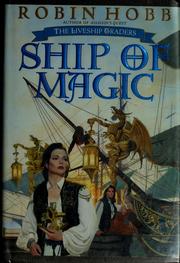
Ship of Magic
A sentient ship wakes when her captain dies, and the family that owns her starts to come apart over who gets to sail her.
2,026-word summary · 9 min read

The Icebound Land
Captured and enslaved in Skandia, Will fights a drug that erases him while Halt and Horace cut a bloody road through Gallica to bring him home.
2,088-word summary · 9 min read

Secrets of the Dragon Sanctuary
Kendra is replaced by a plant copy and held by the Society, while Seth steals a unicorn horn so the family can enter a dragon sanctuary.
2,590-word summary · 12 min read

Lioness Rampant
Alanna searches for the Dominion Jewel with the Shang Dragon, then returns to Tortall to face Duke Roger at Jonathan's coronation.
2,478-word summary · 11 min read
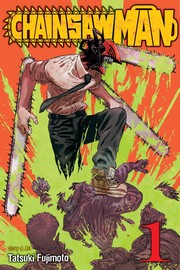
Chainsaw Man, Vol. 1: Dog and Chainsaw
A broke teenage devil hunter and his chainsaw dog get a second life, a government leash, and a fight that stops mid-swing in Fujimoto's horror comedy.
2,584-word summary · 11 min read

Homeland
Drizzt Do'Urden is born into the cruel drow city of Menzoberranzan, where his father teaches him to fight and to doubt everything his family believes.
2,303-word summary · 10 min read
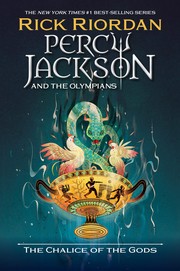
The Chalice of the Gods
Percy needs three recommendation letters from three gods to apply to college, so his first quest is recovering a stolen chalice from the god of old age.
2,106-word summary · 9 min read
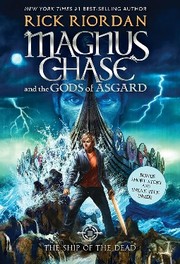
The Ship of the Dead
Magnus and his crew sail to the edges of the Norse worlds to stop Loki from launching Naglfar, the ship of the dead.
2,426-word summary · 11 min read

The Queen of the Tearling
Nineteen-year-old Kelsea leaves the woods to take her throne, ends a shipment of human captives, and draws the Red Queen's revenge.
2,357-word summary · 10 min read