
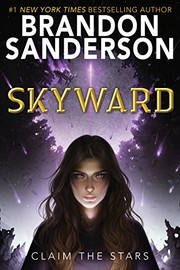
Skyward
2,865-word summary 13 min read 528 pages in the book
- First published
- 2018
- Publisher
- Delacorte Press
- Pages
- 528
- ISBN
- 9780399555770
- Series
- Skyward (#1)
Reading options
What's inside (8 sections)
A friend handed me Skyward after I complained that most flight school books feel the same. She said this one has snarky ship computers and kids who actually screw up. That sold me more than the cover copy about a girl who dreams of the sky. I started it on a Saturday and kept going because Spensa Nightshade is loud in a way I did not expect. She is seventeen, living with the wreck of humanity on a planet called Detritus, and she has spent her whole life preparing to fly. The book was published in 2018 by Delacorte Press. The first US hardcover runs 528 pages. It is the first book in the Skyward series.
Detritus is not a good place to live. Generations ago humans crashed there, or fled there, and now they live in caverns under a belt of broken metal and old stations. Above them the Krell attack in waves. No one down below really knows what the Krell want at first. They just know pilots are the only thing keeping the caverns alive. Kids grow up trading pilot stories the way other kids trade ball cards. Spensa grew up worse off than most because her father Zeen Nightshade, who flew under the callsign Chaser, died in something called the Battle of Alta when she was small. The official story says he deserted his flight. His own wingmates shot him down. In the caverns that makes Spensa the daughter of a coward. Teachers go quiet when she walks in. Other kids repeat what their parents say.
What got me early is how stubborn Spensa is about it. She does not do quiet shame. She tells herself her father must have had a reason. She practices with a flying chair rigged in a cave. She memorizes old battles. Her grandmother tells her old warrior stories, the kind with oaths and last stands, and Spensa takes them completely seriously. Her mother works and worries. Rodge, her best friend since childhood, is the practical one who can fix almost anything and who keeps her from getting into fights she cannot win. Spensa wants to prove she is not her father in the way people mean it. She wants to prove she is her father in the way she means it. That knot drives the first third of the book.
A rigged test and a second chance
To fly for the Defiant Defense Force you have to pass a written test and then get taken as a cadet. Spensa is ready for the real test. What she gets on the day is a fake version about sanitation work. She fails because she skipped the class where they covered it, chasing her own exploring instead. She sits in the empty room after, furious, and fills out a leftover copy of the real pilot exam just to prove to herself she could have passed.
That scene matters because Cobb sees it. Cobb is an instructor at the flight school and he flew with her father. He is older and tired and does not impress easily. He grades her retake and finds it near perfect. He offers her a spot as his private project. Admiral Ironsides, who runs the DDF, hates the idea. She thinks courage runs in families in reverse, that Spensa will break the same way. She lets Spensa train but bars her from sleeping or eating at the school. Spensa has to commute from her cave and hunt mushrooms and rats in the tunnels. It is petty and it is meant to make her quit.
The cadet group becomes Skyward Flight at Spensa's suggestion. The names took me a chapter to keep straight. Jorgen Weightman is the serious son of an important family, a natural stickler who takes charge because no one else does. Spensa calls him Jerkface and it sticks longer than either of them expects. Kimmalyn is kind and religious and a better shot than she looks. Hurl is tough and prickly. FM is sharp and observant. Nedd is funny in the nervous way. Arturo is decent and caught between his parents and the cockpit. Morningtide and Bim round out the group at the start. Rodge is there too, until he is not. He washes out of flying after real combat scares him badly, and he chooses engineering instead. I thought that choice was handled well. He does not become a joke for leaving. He becomes the person who keeps ships alive.
Training is mostly sim time and drills with light-lances. Cobb teaches like someone who has lost pilots before. He yells, then explains, then yells again. The kids compete, mess up landings in the sim, and slowly learn to trust each other a little. Jorgen outs Spensa as Chaser's daughter after she beats him in a drill, and the flight goes cold toward her for a stretch. That part rang true to me. Teenagers can be cruel without trying very hard, especially when an adult has already marked someone.
The ship in the cave
The best thread for me was the cave. Near where Spensa sleeps she finds a crashed ship that should not exist. It is sleek and advanced, nothing like the patched DDF fighters built from salvage. When she finally gets power to it, the ship talks. It calls itself M-Bot. Its memory is corrupted. It remembers orders to lie low and avoid fights, and almost nothing else. It is curious about mushrooms in a way that is funny the first few times.
Getting M-Bot awake takes stealing. Spensa lifts a power matrix from Jorgen's hover car. I laughed, then felt bad for Jorgen, then laughed again. With Rodge helping, she starts repairing systems piece by piece. Rodge is cautious. He likes rules and intact fingers. He also lights up around M-Bot because it is real engineering, not textbook diagrams. Their friendship is one of the steadier things in the book. He does not fly, but without him Spensa stays on the ground.
M-Bot refuses to fight at first. Its old pilot told it to stay hidden. Spensa argues with a computer the way she argues with people, which is to say loudly and without much pause. Slowly the ship bends. It will run sims. It will share sensor data. It will complain. It also has a small passenger Spensa did not plan for. A yellow and blue slug she names Doomslug. The slug copies sounds and hangs around the cockpit. At this point in the story Doomslug is mostly comic relief and mascot. Readers who know where the series goes will catch more in those scenes than Spensa does.
I liked these cave chapters more than the school chapters. The school has hierarchy and speeches. The cave smells of grease and old rations while two friends try to make a dead machine live. Sanderson is good at systems, and watching Spensa learn what M-Bot can and cannot do felt like the early Mistborn training scenes, only with wiring instead of metals. If you get bored by tech talk, this stretch might drag for you. I did skim one repair passage on first read and still followed everything.
Learning to fly while the flight shrinks
The middle of the book does something harsh. Skyward Flight starts getting called to real fights before they are ready. The Krell push hard, the DDF is short on pilots, and cadets get thrown in. People die. Bim and Morningtide are killed in action. It happens fast, without a long goodbye. Nedd quits after his brothers are killed elsewhere in the fighting. He just cannot do it anymore. Hurl crashes and dies. Kimmalyn quits after that. Arturo gets pulled out by his worried parents.
That thinning bothered me in two ways. On one hand it makes the war feel real. Flight school is not a game with respawns. On the other hand I had barely learned Bim and Morningtide before they were gone, so their loss hit the flight more than it hit me. Hurl's death lands harder because we have spent time with her sharp edges. Jorgen helps Spensa cremate Hurl at the crash site, and they strip a usable booster from the wreck. Rodge later uses that booster to help get M-Bot truly airborne. It is grim practicality. You mourn, then you salvage, because the next wave is already coming.
Spensa keeps flying through all of it, sometimes with the DDF, sometimes in secret with M-Bot. She is talented but reckless. She breaks formation to chase kills. She hears things other pilots do not hear. A kind of singing at the edge of sound. Flashes that look like eyes in the dark of the cockpit. She tells almost no one. She is afraid Ironsides will ground her for medical reasons, and she is afraid Cobb will look at her the way everyone looked at her father.
Her bond with the remaining flight grows in the gaps. Shared meals she is finally allowed to eat after Cobb intervenes. Late talks. Jorgen slowly shifting from rule keeper to someone who actually listens. Kimmalyn's kindness even as she steps back from flying. FM noticing more than she says. These small moments carry more weight than the big speeches about bravery. Spensa learns formation flying the hard way, by failing at it in public and getting chewed out and having to try again while everyone watches.
One honest complaint. The sim and drill chapters start to blur around the halfway mark. There are only so many ways to describe a mock dogfight before I started flipping faster. The banter helps. Jorgen and Spensa sniping on the comm while M-Bot asks earnest questions about human behavior. But if you came for space battles only, be warned that a lot of pages are school and maintenance.
The Defect and what happened at Alta
Spensa eventually gets her hands on a recording of the Battle of Alta. Cobb gives her his access code, and M-Bot plays the old footage on its projectors. What she sees is worse than desertion. Her father does break away from his flight and climbs toward a gap in the debris field. He says he can hear the stars. When he comes back, he fires on his own people. Cobb, his wingmate, shoots him down on Ironsides order.
Cobb then tells her about the Defect. Some pilots have it. It is inherited. It lets a person hear the Krell, sense them before they move, sometimes see visions. It also makes that person vulnerable. The Krell, or something behind them, can get inside that hearing and twist what the pilot sees. Her father was not a coward in the simple sense people use in the caverns. He was a pilot with an ability no one understood yet, caught by something that turned his senses against him. He thought he was shooting enemies. He was shooting friends.
This reframes the whole book without excusing everything. The DDF hid the truth because panic about mind powers would have broken recruitment. Ironsides still treats Spensa as a risk, and from a command view I could almost see why, even as I disliked her for it. Cobb tells Spensa to report any singing or visions at once. She nods and keeps quiet anyway. She has seen the eyes. She has heard the song. Telling the truth might end her flying, and flying is the only way she knows to answer the question about her father.
Then she gets shot down herself in a later fight and ejects to save her life. Ironsides calls it cowardice and uses it to wash her out of the academy. The parallel is deliberate and cruel. Spensa did what any sane pilot would do, and it gets stamped with the same word that ruined her family. I felt for her here in a way I had not earlier. Her loud confidence cracks. She goes back to the cave with nowhere to report and a ship that is still not fully ready.
A note on the science of this. The book does not explain the Defect in full. You get hints about sound and something outside normal space, plus the idea that Doomslug and other star slugs might be tied to it somehow. Readers who need every rule spelled out in book one may feel shorted. I took it as setup for Starsight and the later books, and on that level it works. The ability explains just enough to make the ending possible without explaining so much that mystery dies.
The bomber run
Graduation day looks like a triumph for everyone except Spensa. Ironsides sends the full DDF after a fallen salvage prize, a valuable piece of space wreck that could help build better ships. While the fleet is distracted, the Krell send a bomber in from another direction aimed at the base itself. It is a trap, and the base has almost no one left to stop it.
Spensa tries in a broken fighter and gets shot down again. She crashes. Cobb shows up with M-Bot, which Rodge has finally made flyable with Hurl's booster and a lot of borrowed parts. Spensa climbs into M-Bot and goes up against a ship much larger than anything she has flown against. M-Bot's stealth and advanced guns give her a chance, but what really matters is her hearing. She can sense Krell moves a beat before they happen. She can hear their comm chatter as something close to language. She breaks the bomber's run and saves the DDF and the caverns below.
Then she keeps going. She pushes beyond Detritus shell with M-Bot, out where the debris thins and real space opens. Her Defect lets her intercept Krell communications clearly for the first time. What she learns changes the frame of the series. The Krell are not a single species lashing out. They are part of a coalition, a group of aliens intent on keeping humans trapped on Detritus. Worse, that policy of containment is shifting toward extermination. Humanity is besieged. The cage is about to close.
She comes back down with that warning. The book ends with her people alive but exposed, her name partly cleared among those who saw what she did, and a much larger conflict visible past the sky. Ironsides has to reckon with a pilot she tried to discard. Cobb has to reckon with what the Defect means for every cytonic pilot, including Spensa and Jorgen in different ways. Skyward Flight, reduced and scarred, has to rebuild around survivors who have seen friends die.
What carried it and what dragged
The flying carries this book. Sanderson writes three dimensional movement cleanly enough that I could follow dives and debris dodges without a diagram. M-Bot is a win. A warship that loves fungi and worries about orders is funny without turning the war into a joke. Spensa's voice is strong when she is angry or scared, less so when she repeats her warrior creed for the fifth time. I got the point about her grandmother's stories early. I did not need them restated before every big flight.
The teen dynamics felt true more often than not. Jorgen grows the most, from prig to flight leader who admits he needs Spensa even after she hits him in a fight. That punch is ugly and the book does not glamorize it. He tells her the flight needs every pilot, and they start over on warier terms. Rodge choosing wrenches over a cockpit is treated with respect. Kimmalyn leaving flying after Hurl dies is treated as sense, not failure.
Criticism wise, Ironsides stays thin. She is obstacle more than person for most of the book, always there to say no. The early villains among cadets fade fast once real losses start. Some readers will also tire of Spensa's refusal to tell anyone about the singing. I understood it, but after the third close call I wanted to shake her. And as I said, the training loop repeats. Sims, scolding, Sims, scolding. The plot needs those hours to justify later skill, but the rhythm sags.
Who should pick it up. If you like underdog pilots and mysteries that keep opening outward, this fits. Teens who found his adult books too long often start here. Readers who want hard physics or grim moral gray from page one may bounce off. The tone is hopeful even when people die. The science leans toward adventure, not textbook. The 528 page count looks thick, but the chapters move fast and the last hundred pages barely pause.
I closed it thinking about Detritus differently than when I opened it. At the start the debris belt looks like a shield. By the end it looks like bars. Spensa starts wanting to prove a story about her father wrong. She ends carrying a warning no one on her planet wants to hear and a power she barely controls. For a first book that is enough. I wanted the next one, Starsight, the same night, mostly to find out what she heard out there past the shell.
FAQ
When was Skyward published?
Delacorte Press published the first US hardcover on November 6, 2018. It runs 528 pages and the ISBN is 9780399555770.
Is Skyward part of a series?
Yes. It is book one of the Skyward series, followed by Starsight, Cytonic, and Defiant.
What is the Defect in Skyward?
It is an inherited ability to hear and sense the Krell before they move. It helps in battle but leaves pilots open to manipulation.
Similar books
More from Skyward first, then related titles.

Starsight
Spensa Nightshade goes undercover aboard the Superiority space station Starsight to steal a hyperdrive, and finds a frightened bureaucracy where she expected…
2,568-word summary · 11 min read

Wilder Girls
At a quarantined boarding school off Maine, three girls with strange mutations search for a missing friend and learn what the adults have hidden.
2,594-word summary · 12 min read
Saving the World and Other Extreme Sports
Max and the flock split in two to take down the lab behind their lives, one half in California and the other in Europe.
2,175-word summary · 10 min read
The Rise of Nine
John, Six and Nine race to India to find Eight before the Mogs strike.
2,321-word summary · 10 min read
School's Out - Forever
The bird kids try normal school under FBI guard until hunters crash class and chase them to Itex in Florida.
2,584-word summary · 11 min read
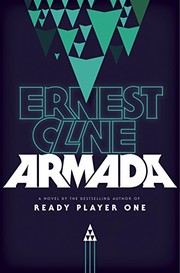
Armada
Gamer Zack learns Armada game trains real defense against alien Europans.
2,004-word summary · 9 min read
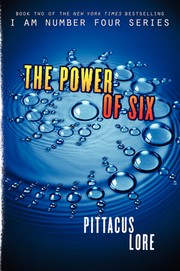
The Power of Six
John and Six run from the FBI and Mogs while Marina plots escape from a Spanish convent.
2,904-word summary · 13 min read
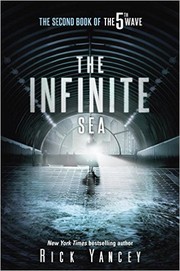
The Infinite Sea
Cassie and Squad 53 wait out winter in a hotel while Ringer is retaken and learns the truth behind the 5th Wave.
2,985-word summary · 13 min read

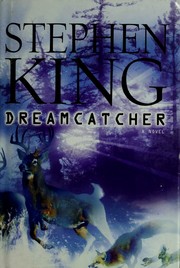
Dreamcatcher
King's 2001 novel follows four Maine friends whose hunting trip meets an alien crash. A friendship story wrapped in graphic infection horror.
2,627-word summary · 12 min read
The Darkest Minds
A teen with mind powers escapes a government camp and joins three runaways in Bracken's 2012 dystopia, first in The Darkest Minds series.
2,038-word summary · 9 min read

I Am Number Four
Alien teen Four hides in Ohio and develops Legacies with Sam and Sarah.
2,335-word summary · 10 min read
The 5th Wave
Cassie Sullivan crosses ruined Ohio to save Sammy after four alien waves, trusting Evan Walker while doubting him.
3,063-word summary · 14 min read

Anya's Ghost
A lonely Russian immigrant falls into a well, befriends the ghost trapped there, and discovers that the ghost's help comes with a dangerous price.
2,001-word summary · 9 min read

Dumplin'
Willowdean Dickson enters her town's beauty pageant as a protest and discovers that confidence is harder to keep once she lets someone close.
1,922-word summary · 9 min read

Iron Widow
Wu Zetian enlists to avenge her sister, kills her pilot, and becomes an Iron Widow in a mecha Huaxia where the machines are built to kill women.
2,444-word summary · 11 min read

Archenemies
Nova steals for the Anarchists while Adrian hides his Sentinel identity, and a serum that erases prodigy powers puts them both at risk.
2,485-word summary · 11 min read

Carve the Mark
On a planet divided between conquered and conqueror, the tyrant's sister and a kidnapped oracle's son discover that their gifts make them useful to everyone…
2,340-word summary · 10 min read
The House of the Scorpion
A clone raised in a drug lord's poppy fields learns what he was made for and chooses what to do with the life he was given.
2,527-word summary · 11 min read
Leviathan
In an alternate 1914, a prince on the run and a girl disguised as a soldier meet aboard a living airship.
2,406-word summary · 11 min read

Heist Society
A teenage art thief gets expelled from boarding school, then has two weeks to steal five paintings back from a London museum and clear her father.
2,781-word summary · 12 min read

We Are Okay
Marin fled San Francisco after her grandfather vanished and stopped answering anyone. When Mabel visits her college dorm, she has to say what happened.
2,253-word summary · 10 min read
The First to Die at the End
On the night Death-Cast launches, a boy with a bad heart meets a model with everything ahead of him, and one of them gets the call.
2,908-word summary · 13 min read
Network Effect
Murderbot's contract job turns into a rescue mission when a hijacked research ship and a colony of corrupted colonists appear.
2,256-word summary · 10 min read
Divergent: Official Illustrated Movie Companion
An oversize behind-the-scenes guide to the 2014 Divergent film, with casting stories, costume and set design, and scores of photos.
2,524-word summary · 11 min read

The Second Summer of the Sisterhood
Four friends share the traveling pants through a summer of grandmothers, first loves, and mothers who are learning to let go.
2,209-word summary · 10 min read
The Ask and the Answer
Todd and Viola are separated in occupied Haven, where the Mayor's Ask tortures suspects and the Answer plants bombs in the name of freedom.
2,265-word summary · 10 min read
Stars Above: A Lunar Chronicles Collection
Nine Lunar Chronicles stories fill in the histories of Cinder, Wolf, Thorne, Cress, Winter, and Jacin, and end with a wedding after the war.
2,230-word summary · 10 min read