
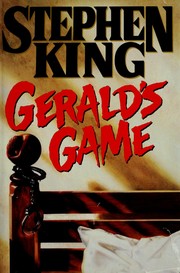
Gerald's Game
2,940-word summary 13 min read 352 pages in the book
- First published
- 1992
- Publisher
- Viking
- Pages
- 352
- ISBN
- 9780670846504
Reading options
What's inside (8 sections)
I picked up Gerald's Game because someone told me it was the one where nothing happens. A woman chained to a bed for three hundred pages. That sounded like a dare more than a plot, and I was curious whether King could hold me there. Stephen King published it with Viking in 1992, a 352 page hardcover with ISBN 9780670846504, and it turned out to be stranger and sadder than the setup suggests. It is a horror novel with almost no monsters for most of its length. The scare is thirst, cramp, panic, and memory.
Jessie Burlingame is 39 and has been married to Gerald for close to twenty years. Gerald is a successful lawyer, confident, a little smug about trying new things in bed. They drive out to their summer place on a lake in western Maine on a warm weekday in October. No neighbors around. The lake houses are shut for the season. Gerald brings a pair of handcuffs and talks Jessie into playing along. She has gone along before. This time she does not like the way he sounds when he starts the routine, bossy in a way that stops being play. She panics, kicks out, catches him in the stomach and lower down. He slides off the bed, hits his head, clutches his chest, and dies of a heart attack on the floor. Just like that. One minute a stupid marital argument, the next minute she is cuffed to the bedposts and her husband is dead.
That first hour is written with awful clarity. Jessie yells. Nobody hears. The phone is on the far side of the room. The keys to the cuffs slid somewhere she cannot reach. The house has an open back door banging in the wind. She tries to stay calm by listing what she has: a glass of water on the shelf above her head, her own breathing, time. She thinks someone will come. Then she starts doing the math on October at a lake in Maine and realizes no one has a reason to stop by. The mailman does not walk up. The caretaker is not due. She could scream until her throat bleeds and the trees would take it.
King keeps the mechanics simple, which makes it worse. The bedposts are sturdy. The cuffs bite. Her shoulders start to burn. Her hands tingle, then go numb, then wake up stinging. She needs to pee and hates that she needs to think about it. She tries rocking the bed. She tries pulling one post loose. Nothing gives. The glass of water sits up there like a joke. She can see it. She cannot lift her head enough to drink. Every small failure costs sweat, and sweat costs water she does not have.
The voices move in
What saves the book from being only pain is what happens in Jessie's head. She starts hearing herself talk. Not ghosts, at least not at first. More like parts of her personality peeling off and arguing out loud.
There is the proper wife voice, the one she thinks of as Goodwife Burlingame, telling her to be quiet and tidy and wait for help like a lady. There is Ruth Neary, her old college roommate, loud and blunt, the friend who always said what Jessie would not say. There is Nora, another old friend, practical about bodies and fear. And there is Punkin, which was her father's pet name for ten year old Jessie. Punkin remembers things the adult Jessie buried.
I liked this device more than I expected to, because King lets the voices be funny and mean by turns. Ruth swears at Jessie for wasting energy screaming. Goodwife scolds Ruth for swearing. Nora tries to keep track of water and time. It reads like being stuck in a room with three tired women who all know you too well. The conversations also let King pass along backstory without stopping for a dry flashback. Jessie and Gerald met when she was a secretary. The marriage was good in places, thin in others. Gerald paid for things and made decisions. Jessie smoothed things over. The handcuff game was his idea of fixing a stale sex life. She went along because going along was easier than a fight about why she did not want to.
By afternoon the room gets hotter and the dog shows up. A big stray, hungry, ribs showing, drawn by the open door. At first Jessie is glad to see something alive. Then the dog sniffs Gerald's leg. Then it starts to feed. King does not look away here, and I will warn you plainly that these pages are hard. Jessie screams and throws a pillow with her feet. The dog leaves for a while and comes back. It is not evil. It is starving. That is the point that stuck with me. Nature is not punishing Jessie. It just does not care that she is handcuffed two feet away.
Thirst becomes the main enemy. Her mouth dries. Her lips crack. She tries to tip the water glass with her foot and only spills a little onto the shelf. She dozes and wakes with her arms on fire. Her left hand swells. She thinks about dislocating a thumb. She thinks about screaming again. Ruth tells her screaming is throwing away moisture. Goodwife tells her to pray. Jessie tries both and neither helps much, which felt honest. Panic comes in waves. Between waves she plans.
What happened during the eclipse
The middle of the book keeps cutting back to one summer day when Jessie was ten. Her family rented a cabin. There was a total solar eclipse on July 20, 1963. Her father Tom took her out on the lake to watch it. Her mother and sister stayed behind. Out on the water, with the light going strange, her father touched her in a sexual way and told her not to tell.
King writes this in pieces, the way people actually remember shame. A flash of the boat. The eclipse glasses. Her father's hand. The way he cried after and said she was special and made her promise. Young Jessie did not have words for it. She knew it was wrong and she knew she loved him and those two facts would not fit together. She said nothing. Her mother asked if something was off and Jessie lied. The lie sat in her for almost thirty years and shaped how she handled Gerald, how she handled sex, how she handled saying no and then taking it back to keep the peace.
I am not going to pretend these chapters are easy. They are not graphic in the way horror readers might fear, but they are close and specific about confusion. What makes them work is Punkin. The ten year old voice remembers the boat seat and the mosquitoes and the way the light went pink and then dark. Adult Jessie wants to explain it away. Punkin will not let her.
Some readers find this subplot intrusive, like King paused a survival story for therapy. I thought it was the reason the survival story matters. Without the eclipse, Jessie is a woman in a bad fix. With it, she is a woman in a bad fix who finally has to hear herself. The cuffs force stillness. Stillness lets Punkin talk. The book argues, without speeches, that Jessie learned as a girl to freeze and please, and Gerald, who never knew about the eclipse, benefited from that habit without understanding it.
There is also a brief, odd link to Dolores Claiborne here. During the eclipse, young Jessie thinks she sees a woman in the woods watching, and adult readers learn that woman may have been Dolores on the day she did what she did. King later paired the two novels on purpose. You do not need to have read Dolores to follow this, but the moment gives the eclipse a wider chill, like two trapped women glimpsed each other across years.
Night and the man in the corner
As the first night comes, Jessie sees someone standing in the corner of the bedroom. Tall, thin, with a bag. Moonlight catches earrings or studs. He does not speak. He watches. She tells herself it is thirst and lack of sleep. She blinks and he is still there. She looks away and hears a soft step. She smells pennyroyal and rot.
King plays this well because he never settles it for a long stretch. Is the figure real or is Jessie hallucinating from dehydration? Ruth says hallucination. Goodwife says demon. Nora says burglar. Jessie cycles through all three. She remembers that the back door is open and anyone could walk in. The figure bends over Gerald's body at one point. Later it seems to hold out hands full of rings and bones. Jessie fades in and out. The dog whines. The moon moves.
They call him the Space Cowboy, because his long face and odd stance remind Jessie of something from a cartoon or a bad dream. The nickname sounds silly and that makes him scarier. Fear at 3 a.m. is often silly and specific. You fixate on a shoe, a glint, a smell. Jessie becomes convinced he will come closer when the moon goes down. She talks to keep herself awake. She lists groceries. She recites phone numbers. She tries to remember the license plate of her car. Anything to pin her mind to the world.
I found the night section the most gripping and also the most stretched. Grip comes from small events: the wind slamming the door, the dog returning, cramp seizing Jessie's calf so hard she screams into the pillow, the cuff cutting deeper when she thrashes. Stretch comes from repetition. Jessie faints, wakes, sees the figure, argues with Ruth, faints again. After the third loop I started skimming a little, waiting for morning. That may be the point, to make you feel stuck time, but on the page it drags. King has a habit in his longer books of circling a strong image until it thins. The Space Cowboy scared me most when King said least about him.
Getting off the bed
Morning brings no rescue. It brings sun, flies, and the smell from the floor. Jessie knows she will die if she waits. Her plan forms from scraps. There is a broken drinking glass on the shelf from her kicking the night before. If she can break it further and use a shard to cut her wrist and palm, blood could slick her skin enough to slide her hand through the cuff. It is a horrible plan. It is the only plan.
King earns this scene by showing how weak she is. She has to work the glass toward the edge with her toes, drop it, catch a piece, drag it up with her feet, get it into her hand. Every step takes forever because her arms barely obey. She cuts herself and almost faints at the sight. She talks herself through it in Ruth's voice, crude and encouraging. The slip itself is described as slow, skin tearing, thumb folding wrong. I had to put the book down and walk around. It is one of the most physical escape scenes King ever wrote, up there with the best of Misery, and it works because you know exactly how much it costs. She does not pop free like in a movie. She tears free and collapses.
What follows is messy in a good way. Jessie crawls, drinks toilet water, throws up, drinks again, wraps her hands in pillowcases, staggers to the car, realizes she cannot grip the wheel well, drives anyway. She nearly crashes. She gets to town. She gets help. King does not make her competent all at once. She is clumsy, weepy, furious. Her body keeps failing.
If you only know the Netflix film from 2017 with Carla Gugino and Bruce Greenwood, directed by Mike Flanagan, this stretch is very faithful. The film trims some voices and tightens the night loops. The book gives you more eclipse and more thirst. Both land the escape as ugly rather than triumphant. You feel relief, not victory.
Letters, court, and facing him
The last part shifts. Jessie survives but does not bounce back. Her hands need care. She cannot sleep. She drinks too much. She writes long unsent letters to Ruth, trying to explain what happened on the bed and what happened in 1963. Writing becomes her way of keeping the voices in order without letting them run her. She also learns through news and police talk that the Space Cowboy may have been real: a drifter and grave robber named Raymond Andrew Joubert, caught after other crimes, with a suitcase of trophies. He had been in houses. He may have stood in her bedroom and watched her and left her for dead.
King risks a lot here. After a tight survival plot, he asks you to sit with recovery and a courtroom. Jessie decides to face Joubert in court and to speak about the eclipse in a support group setting, breaking the promise she made to her father as a girl. Some readers love this. Some find it tidy. I landed in the middle. I liked that Jessie does not get cured by escape. Trauma does not end when the cuffs come off. Her hands scar. Her marriage is over in the only way it could be. Her mother is dead. Her sister is distant. She has to build new habits for saying what she wants.
But the courtroom confrontation felt thinner than the bedroom chapters. Joubert as an explained criminal is less frightening than the shape in the corner. Once King lists his crimes and history, the mystery drains. The scene still has power because Jessie looks at him and speaks instead of freezing. Yet the dialogue goes a little stiff after hundreds of pages of raw interior talk.
That is my fair criticism in one place. Gerald's Game is gripping, specific, and emotionally serious, and it sags in two spots: the middle of the night loops and the final twenty or so pages of explanation. King is so good at putting you inside thirst and cramp and shame that when he steps back to explain, the spell weakens. The book is also narrow by design. If you want a big cast or a fast plot, this is not that. It is one woman, one room, a dog, a corpse, and memory. The narrowness is the strength, but it asks patience. A few scenes with Gerald before his death feel a bit stock, the entitled husband pushing until his wife snaps. Later chapters add shading to him, vain and needy rather than purely cruel, but early on he reads more like a device than a man.
Why it still holds
What holds me is how physical and psychological the book stays at once. Thirst is not a metaphor here. It is cracked lips and a swollen tongue and bad decisions. Memory is not a theme statement. It is Punkin asking why Jessie lied and Ruth refusing to accept the lie. Marriage is not an issue. It is twenty years of small surrenders, the handcuffs as a literal version of going along. When Jessie finally uses blood to slip the cuff, the image is gross and clear: she has to wound herself to get free of a game she never wanted to play. King does not underline it. He just shows her wrapping her hands and driving with her wrists.
There are details I will remember. The water glass just out of reach. The pillow thrown with bare feet at the dog. The eclipse light going wrong over the lake. The suitcase in the corner glinting. The toilet water drunk too fast. These are not set pieces. They are small miseries stacked until they become a life.
I also appreciated that Jessie is allowed to be unlikable in flashes. She is snobbish about Ruth. She is prickly about her body. She resents Gerald even while grieving him. She says unfair things in her head about her mother and sister. Goodwife scolds her for it and Ruth tells Goodwife to shut it. The mess makes her human. Too many survival heroines are noble from page one. Jessie is a tired woman in her late thirties who made compromises and now has to pay for one with interest. Her courage at the end feels earned because she was not brave at the start. She was polite.
If you read King for monsters, you may find the middle slow. If you read him for people under pressure, this is near the top. It pairs well with Misery for confinement and with Dolores Claiborne for its interest in women keeping secrets in Maine. The 2017 film is worth watching after, mostly for Gugino's performance. The book gives you more interior noise, which is the whole point.
I closed it thinking less about the Space Cowboy and more about the eclipse promise. A ten year old told to keep a secret will keep it with her whole body. A grown woman handcuffed to a bed finally runs out of ways to keep still. The escape is bloody and practical. The harder escape is saying out loud what her father did and what her husband wanted and where she ends and their wants begin. King lets that take months, not pages. That patience, even when the pacing wobbles, is why the book stays with me more than louder horror novels from the same shelf.
FAQ
When was Gerald's Game published?
Viking published it in 1992. The first US hardcover runs 352 pages and the ISBN is 9780670846504.
Who are the main characters in Gerald's Game?
Jessie Burlingame, her husband Gerald, her father Tom Mahout, friends Ruth Neary and Nora, and drifter Raymond Andrew Joubert.
Is Gerald's Game part of a series?
No. It stands alone, though King links it to Dolores Claiborne through a shared eclipse and it was filmed by Netflix in 2017.
Similar books

Rose Madder
After fourteen years of abuse, Rosie Daniels flees her cop husband and finds a painting that opens into a dangerous mythic world.
2,349-word summary · 10 min read

Skeleton Crew
King's 1985 collection pairs The Mist with The Jaunt, The Raft, and Survivor Type: 22 stories of Maine dread.
3,209-word summary · 14 min read

The Mist
Mist full of creatures traps a Maine supermarket while Mrs. Carmody builds a congregation inside.
2,104-word summary · 9 min read

The Girl Who Loved Tom Gordon
Nine-year-old Trisha McFarland strays off the Appalachian Trail and spends days lost in Maine woods with a Walkman and Tom Gordon on her mind.
2,957-word summary · 13 min read
The Troop
A Boy Scout troop on a Canadian island takes in a stranger who cannot stop eating, and the worm inside him turns a camping trip into a war.
2,457-word summary · 11 min read

Still Missing
A realtor is abducted at a Vancouver Island open house and held for more than a year. Told through therapy sessions, the novel follows her escape and the hunt…
2,466-word summary · 11 min read

The Widow
A widow of a suspected criminal faces reporters and police while hiding what her marriage really cost.
2,599-word summary · 12 min read
The Last House on Needless Street
A lonely man, a cat and a mysterious neighbor pull you into a house full of buried trauma.
2,627-word summary · 12 min read
I'm Thinking of Ending Things
A woman drives out to meet her boyfriend's parents while planning to leave him, and the night turns quietly wrong.
2,754-word summary · 12 min read

The Wives
A woman who sees her husband only on Thursdays tracks down his other wives and learns her marriage is not what she believed.
2,454-word summary · 11 min read

Final Girls
A survivor of a cabin massacre tries to live normally until another Final Girl dies and a second one shows up at her door.
2,176-word summary · 10 min read
Behind Closed Doors
Grace seems to have a perfect marriage to Jack, until her sister and a friend see the locks and rules.
2,056-word summary · 9 min read

Lisey's Story
Two years after her novelist husband dies, Lisey Landon follows a trail of clues into his childhood and the other world that made him a writer.
1,998-word summary · 9 min read

Full Dark, No Stars
Four novellas about revenge where ordinary people do terrible things and live with it.
2,646-word summary · 12 min read
Duma Key
After losing his arm, Edgar Freemantle paints on a Florida island and learns his pictures can open doors for something hungry.
2,530-word summary · 11 min read
Desperation
Travelers on Highway 50 are hauled into empty Desperation, Nevada, where a possessed deputy serves an old thing in the mine.
2,993-word summary · 13 min read

Song of Susannah
Mia takes Susannah to 1999 New York to bear a chap while Roland meets his author in Maine.
2,051-word summary · 9 min read
Night Shift
King's first story collection moves from haunted mills to killer cornfields, twenty early tales where ordinary places turn evil.
2,488-word summary · 11 min read

Cell
A cell signal turns callers into violent phoners, and a father walks north through ruins to find his son.
2,103-word summary · 9 min read
Needful Things
A smiling man sells exactly what you want for cash plus one small cruelty to a neighbor.
2,007-word summary · 9 min read

Under the Dome
Chester's Mill is sealed under an invisible dome as cook Barbie and editor Julia face Big Jim Rennie's rule.
2,731-word summary · 12 min read
The Institute
A kidnapped prodigy wakes in a Maine facility where gifted kids earn tokens in Front Half and vanish from Back Half.
3,814-word summary · 17 min read
Cujo
A rabid St. Bernard traps a mother and her young son in a broken-down car at a lonely Maine garage.
2,910-word summary · 13 min read

11/22/63
A Maine teacher steps through a diner portal to 1958 to stop the Kennedy assassination, and learns the past resists change while a new life pulls him in.
2,799-word summary · 12 min read
The Stand
A superflu wipes out most people as good and evil gather in two towns.
1,959-word summary · 9 min read

What She Knew
Rachel lets her eight-year-old son run ahead in a Bristol park, and the nine-day search turns her into a suspect in the public eye.
2,952-word summary · 13 min read

Wilder Girls
At a quarantined boarding school off Maine, three girls with strange mutations search for a missing friend and learn what the adults have hidden.
2,594-word summary · 12 min read
Saving Noah
A seventeen-year-old swimmer confesses to molesting two girls he coached, and his mother must decide what unconditional love is worth.
2,976-word summary · 13 min read

The Ex
Cassie thinks her new boyfriend's ex is the woman harassing her, but Freida McFadden's thriller keeps rearranging who the ex actually is.
2,103-word summary · 9 min read

The End of Her
A sleep-deprived mother of twins faces a stranger's accusation that her husband murdered his first wife in Shari Lapena's domestic suspense novel.
2,383-word summary · 11 min read