
Her Body and Other Parties: Stories
2,997-word summary 13 min read 245 pages in the book
- First published
- 2017
- Publisher
- Graywolf Press
- Pages
- 245
- ISBN
- 9781555977887
Reading options
What's inside (9 sections)
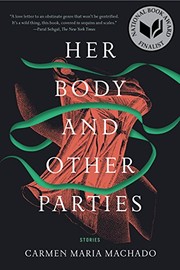
The cover is what sold me. A figure drawn in scratchy red-brown lines, a torso and a bent leg, and a green ribbon winding around the whole thing in loose loops, the title stacked in white capitals across it, the word STORIES in small green letters at the bottom. The ribbon is the argument of the book in one image. Everything in these eight stories gets tied, held, cut, or owned by somebody else, and the ribbon is both the mark on the body and the thing that could be removed.
Carmen Maria Machado wrote Her Body and Other Parties, Graywolf Press published it in Minneapolis on October 3, 2017, and the paperback I read is 245 pages with the ISBN 9781555977887. It is a debut collection of eight stories, and within two years it made her a National Book Award finalist and the winner of the Shirley Jackson Award and the National Book Critics Circle's John Leonard Prize. The other story people talk about, "The Husband Stitch", had already taken the Nebula Award for best novelette when it came out of Granta in 2014.
The Husband Stitch
The collection starts with the story that gives the book its name, and it is the best thing in it. A woman goes to a party with her parents when she is seventeen, drinks half a glass of white wine in the kitchen with the neighbor's teenage daughter, and meets a boy. The rest of her life is in that party.
The device is a green ribbon worn at the back of the neck and tied in a bow at the front, and every woman in the story has one, each in her own place and color. The ribbon comes out of the old tale of the girl with the green ribbon, and Machado turns the childhood horror inside out, so that the ribbon is no longer a warning to the world but a private fact the woman keeps, and the man she marries is not allowed to touch it. She gives him two rules. He breaks the important one.
What follows is a woman who is a possession to everyone around her. She lists the kinds of boys she has been with, stupid boys, prudish boys, violent boys. She describes the man who kissed her and broke her open by a lakeside, who did with her what she wanted, who gave her a son and helped him grow into a man himself. She writes about sex with the directness that some readers will hate and other readers will recognize, and then, because this is Machado, with an anatomist's honesty and a poet's ear at once, so that a sentence about a body can be funny and devastating in the same breath.
The urban legends are part of the machinery. Everyone knows those stories, she says, everyone tells them even if they do not know them, and no one ever believes them, and brides never fare well in them. She hands the legends down to her son, one at a time, and as he grows up he hears them less often and cares about them less, and the telling thins out. The margins of her marriage are where the horror lives.
Then the birth. A doctor with white eyebrows peers down between her legs and tells her to breathe, and in the hospital the doctors do what the story's name refers to, a repair after childbirth, tightened and stitched, because that is what the husband wants and what the culture has agreed to do to her. Machado's narrator is dry about it, which is how she gets through it. And because the story is a story being told out loud, she does not want the listeners idle: if you are reading this story out loud, give a paring knife to the listeners and ask them to cut the tender flap of skin between your index finger and thumb, and then thank them.
The epigraphs tell you what the book is for. Jacqui Germaine: there are no doors but there are knives and a hundred windows. Elisabeth Hewer: god should have made girls lethal when he made monsters of men.
The last page is the part I cannot get out of my head. She has given this man everything he has asked for, with one exception, permission to untie the ribbon. And then she understands that he will not be satisfied by anything less than everything he demands. He is not a bad man, she realizes, and to call him evil or wicked would do him a disservice, and yet. That is the whole argument of the story in one clause. The hurt is not caused by a monster. It is caused by a decent man who wants what she is not allowed to give.
Inventory, and a body counted like property
The second story is called "Inventory" and it is a list, which is the only honest way to tell that kind of story. One girl, in a musty basement, comparing bodies with shirts pulled up, and the narrator still has not seen the movie they claimed to be watching. One boy and one girl, drinking stolen wine coolers, and she says she felt like a guitar with someone turning the tuning pegs. Two boys and one girl, his parents away, lemonade mixed with vodka, the boyfriend encouraging her to make out with his friend's girlfriend while the boys make out with each other. One man, slender and tall, who gave her a massage and rolled a condom down, and it hurt worse than anything, ever, and the condom came away covered in blood, and she wanted more. One man, a boyfriend, who did not like condoms, asked if she was on birth control, pulled out anyway. A terrible mess, she writes. One woman, an on-and-off sort of girlfriend, a classmate from a computer systems class.
Each entry is a paragraph. Each is funny. Each is also an item on a list, and the list keeps going, and the collecting is what lets her hold any of it at all.
"Mothers" is the shortest piece in the book and the one I would most like to see someone write about at length. It is a story of women and children, with a baby whose screaming starts from nowhere and goes on as long and even as the horizon at sea, a bus ride to Bloomington in spring, and a wedding where a woman wrapped in muslin pops out her collar, rolls up her starched sleeves and begins to dance, and the narrator says she had always heard that weddings were supposed to make women horny, and for the first time she understood. The domestic material here is not a warm glow. It is where the rules get made, quietly, by people who love you.
Especially Heinous
If you have ever watched Law and Order: Special Victims Unit, this novella will get its hooks in you whether or not you want them to. Machado takes all 272 episodes of the show and retells them as what they are, which is to say fairy tales. The detectives are named for their fates rather than their functions. The episode titles arrive in quotation marks like titles of stories, GHOST, RAGE, PURE, CONSENT, BRANDED, and each one is a small sharp variation on the show's usual plot.
Benson and Stabler are the two leads, and Machado writes them as recognizably human in a way the show never quite manages. Stabler works out three times a day and insists on jogging to crime scenes instead of taking the squad car. Benson sleeps whenever she can and says she needs to sleep to go faster. The cases are recognizably Law and Order cases, which means the endless parade of hurt women, and the trick Machado plays is to keep the show's structure intact while slowly changing what is inside it. A girl with bells for eyes. A restaurant that has stopped using plates and started using models, where a detective pinches a red swatch of tuna from the hip bone of a brunette who is trying very hard not to breathe. A doctor who talks about Antarctica and penguins while a nurse tells a patient about her vacation to Chile.
Three episodes in a row begin the same way, with a prostitute murdered, and the difference is what she fails to become: too tired to become a spirit, too angry, too sad. The detectives trade theories the way the show always has, but the theories have gone nihilistic. My theory, Benson says, is that I have a theory. Stabler offers to come over. My theory, she says, is that there is no god. And the city turns out to be built on the back of an ancient and monstrous god that is hungry for blood, which is the one image in the book I would put on a poster.
The novella is funny for most of its length, and then it stops being funny. By the end the show's hunger for victims has become a physical feature of New York, and the two officers are the only people in the story willing to say so out loud.
Real Women Have Bodies
This is the story I would hand to somebody who thinks contemporary fiction is too coy. The narrator works at Glam, a store in the east wing of a mall, and she describes the place with a shopper's exact eye for detail: the entrance recedes like a black hole between a children's photography studio and a white-walled boutique, the lack of color is meant to show the clothes, the store looks like the view from inside a casket. Her coworkers include Chris, Casey, and a rotating assortment of other assholes. Her mother is one of the mall's biggest suppliers, which is a very small town to live in.
Then the world of the story changes. Women in the mall start folding themselves into the needlework, into the prom dresses, and the narrator finds a prom dress creature in her hands, trembling, with the plastic sheeting sending off drops of water. Outside, an epidemic of evaporation is eating the population down to just skin, then just muscle, then merely bone. The bodies of women in this story are public property in a literal sense: merchandise, materials, what the shops are made of.
What the story does with sex is the sharpest thing in it. The narrator is frank about what she wants, the men are not always villains, and the plaguetown setting gives every encounter a deadline. Near the end she compares herself to a too-hard pear, real but not ready, and it is one of those sentences that arrives wearing a whole story on its back.
Eight Bites and The Resident
The two stories in the middle are the most physically alarming. "Eight Bites" is a bitter fairy tale about weight. It opens with the narrator going under anesthesia, and afterward the stairs in her own house are impossible, so she lives on a couch, and she was once a performer who hated the flat dressing room lights, who used to grab at the things she hated and lift them, clawing deep, and then let them drop and ache. She has invasive weight-loss surgery, and she has three sisters who got the same operation and are delighted with it, endlessly, identically, so that their happiness becomes one mouth that once ate and now only says I feel so good. The story is saturated with the rhetoric of transformation: will I ever be done, transformed in the past tense, or will I always be transforming, better and better, until I die. She is transformed, and then there is a twist. The flesh she has banished comes back to haunt her like a ghost inverted, pure corporeality, and she attacks her own flesh and rejoices in the act. I am a new woman, she announces. A new woman does not just slough off her old self, she tosses it aside with force. The title counts out an appetite that used to organize a life.
"The Resident" takes a novelist to a rural artist residency, and it is the story where Machado turns the apparatus on herself. The narrator is at the residency, near the site of a childhood trauma, and her central fear is that her life will be reduced to a trope. Perhaps, she says near the end, you are thinking that I am a cliché, a weak trembling thing with a silly root of adolescent trauma, straight out of a gothic novel. Over dinner, Lydia asks whether she ever worries about writing the madwoman in the attic, and whether she has considered the mad lesbian, because that is a stereotype too. When the narrator explains that the protagonist of her novel is a version of herself, Lydia tells her not to write about herself. Men are permitted to write concealed autobiography, the narrator answers, but I cannot do the same. Then she carves her initials into the tablet above the writing desk, as the residency's previous guests have done, and they read C, M, M. It is a wink, and it is also the moment when the collection stops being about a book and becomes about a writer.
Difficult at Parties
The last story takes the book's machinery apart and puts it back slightly wrong. A woman is trying to recover from a sexual assault. She watches pornography in the hope that it will help her reconnect with her boyfriend, and she discovers that she can hear the thoughts of the actors on the screen. She starts free trials at four different websites and cannot stop. A man with slender wrists wonders endlessly about someone named Sam. Two women are surprised about each other's bodies. The camera is steady, and the woman on the video has the same mouth as she does. She is on the floor on a carpet in front of the television, chin in her hand, and the movie plays automatically.
There is a bath with a slotted spoon and a great deal of bubble bath, a foot going into hot water, a gasp, and then a decision not to pause. There is a sense of something being done to her and of her own jokes about it, which is the only way some people get through a thing, and Machado lets the joke be both the armor and the evidence. At the end she rewinds the whole night and puts it back in the camera, and she stops ordering DVDs by mail, because the point of the story is not the pornography. The point is the hearing.
The collection opens with a woman whose body is at the center of a marriage and closes with a woman whose body is at the center of a wound, and in between it takes on surgeons, malls, needles, and television sets. It refuses to end on hope, which is rarer than it sounds.
What she is doing, and where it strains
Machado's debts are visible if you read widely. Parul Sehgal's review in The New York Times called the book a wild thing blazing with the influence of fabulists from Angela Carter to Kelly Link and Helen Oyeyemi, borrowing from science fiction, queer theory and horror. The Carter line is the deepest one. The Millions' Nathan Goldman put the collection in the same conversation as The Bloody Chamber, and quoted Kelly Link on what Carter taught her: that stories could be in conversation with other stories, and that friction of ideas is an engine for structure. Carter's own line is the one Machado keeps rewriting, that there is no such thing as a vampire except in stories, because of stories. The title itself twists the ordinary collection template, X and Other Stories, and points at the collective body underneath the individual tales.
The Latin American thread is one Machado claims out loud. She has said that One Hundred Years of Solitude broke her open when she was fifteen, that she went on to García Márquez, Juan Rulfo and Borges, and that her family is Cuban and Austrian, her grandfather from Santa Clara, a storyteller who taught her the building blocks of narrative, irony, exaggeration, making old material new again. She was also raised in a religious Methodist household in Allentown, Pennsylvania, its own kind of texture in a book about other people's rules. Describing the collection, she talks about the oppressed body, and about genre, gender, abuse, hypochondria and illness, sex, storytelling and myth, sexual violence and media. That list is the argument in her own words.
The criticism I would make is about weight and machinery. The politics are sometimes so visible that they become a second plot, and a few of the endings lean on shock the way a card trick leans on a hidden card. "Especially Heinous" is the longest piece and the most demanding, since it asks you to know the show, and there are stretches where you can feel the machine turning. You could also say the shock has been priced in by now, that a reader in 2026 has had six years to get used to feminist body horror, and that a book this angry can exhaust the reader who is already angry.
And yet. The inventory of small cruelties is unmatched by anything else I read that year, and the tenderness is real. A nurse scooping a newborn. A bath that hurts and is not stopped. A baby screaming for a mother who is not there. In her Dream House memoir, Machado wrote about a house that was also a haunting. Here she writes about a body that is also a haunting, in eight pieces, none longer than a long night, and every one funnier and more frightening than I expected.
FAQ
How many stories are in the collection?
Eight. Especially Heinous is the long one, a novella that reimagines every episode of Law and Order: Special Victims Unit, while Inventory and Mothers are short pieces of a few pages each.
Is Her Body and Other Parties the same book as In the Dream House?
No. Her Body and Other Parties is Machado's 2017 debut collection of eight stories. In the Dream House, published by Graywolf in 2019, is her memoir about an abusive relationship, told in a run of short chapters, each one trying a different storytelling trick.
Why does the green ribbon matter so much?
It comes from the old tale of the girl with the green ribbon, and in Machado's version the ribbon is a private mark the woman keeps hidden from her husband. The cover ties it around a body, which is the argument of the whole collection in one image.
Similar books
Wilder Girls
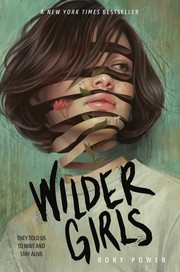
At a quarantined boarding school off Maine, three girls with strange mutations search for a missing friend and learn what the adults have hidden.
2,594-word summary · 12 min read
I Who Have Never Known Men
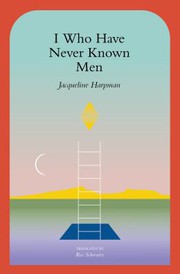
Forty women in a cage, one child who remembers nothing, and a nearly empty world above the bunker. Harpman's quiet, unexplained dystopia.
2,025-word summary · 9 min read

The Yellow Wallpaper and Other Stories
A young mother confined for her health fixates on yellow wallpaper, plus 39 other Gilman stories on marriage and work.
2,989-word summary · 13 min read
Frankenstein
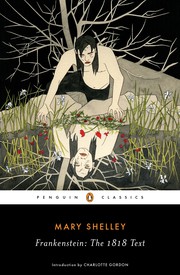
Frankenstein retold: Victor builds, the creature wakes, Arctic letters, demand and refusal.
1,901-word summary · 8 min read
In the Dream House
Machado retells an abusive same-sex relationship through haunted house tropes. A daring memoir about harm, memory, and queer silence.
2,903-word summary · 13 min read
The Only Good Indians
Four Blackfeet men who killed a pregnant elk are hunted by her spirit a decade later, and the only person who can end the cycle is a teenage girl who was not…
2,010-word summary · 9 min read
Lisey's Story
Two years after her novelist husband dies, Lisey Landon follows a trail of clues into his childhood and the other world that made him a writer.
1,998-word summary · 9 min read
Authority
The new director of the Southern Reach takes over an agency that is hiding the truth about Area X, and the building starts to change around him.
2,029-word summary · 9 min read

Iron Widow
Wu Zetian enlists to avenge her sister, kills her pilot, and becomes an Iron Widow in a mecha Huaxia where the machines are built to kill women.
2,444-word summary · 11 min read
Unaccustomed Earth
Lahiri’s second story collection follows Bengali families in America and abroad, tracing the quiet distances between parents and children, spouses, and the…
2,333-word summary · 10 min read

The Age of Miracles
A California girl grows up while the Earth's rotation slows, and ordinary adolescence continues alongside slow catastrophe.
2,417-word summary · 11 min read

We Are Okay
Marin fled San Francisco after her grandfather vanished and stopped answering anyone. When Mabel visits her college dorm, she has to say what happened.
2,253-word summary · 10 min read
Infinite Jest
A film that kills its viewers, a tennis academy, a halfway house for addicts, and a future America where corporations name the years, all tangled together.
2,084-word summary · 9 min read
The Lottery
In Jackson's 1948 story, a village draws lots to keep the corn heavy, and the chosen person is stoned by her neighbors.
3,080-word summary · 14 min read

Big Swiss
A transcriptionist for a sex coach falls for one of his clients, the tall Swiss gynecologist she calls Big Swiss, in a funny novel about work and secrets.
2,523-word summary · 11 min read
Wide Sargasso Sea
Jean Rhys gives the first Mrs. Rochester a Caribbean childhood, a marriage built on money and suspicion, and a voice that Charlotte Bronte left in the attic.
2,021-word summary · 9 min read
This Is How You Lose Her
Yunior cycles through love affairs and betrayals in nine linked stories, tracing the damage he does and the family history behind it.
2,195-word summary · 10 min read
The Silence of the Girls
Briseis, queen of Lyrnessus, is captured by Achilles and narrates the Trojan War from inside the Greek camp, where women are prizes and survival is its own…
2,098-word summary · 9 min read
The Bone Clocks
A teenage runaway, a Cambridge con artist, a war reporter and a dying novelist circle a hidden war between immortals across sixty years, with Holly Sykes at…
2,125-word summary · 9 min read
The Birth of Venus
A Florentine merchant's daughter trains as an artist, marries a man who hides a secret, and survives Savonarola's bonfire of the vanities.
2,404-word summary · 11 min read
Stars Above: A Lunar Chronicles Collection
Nine Lunar Chronicles stories fill in the histories of Cinder, Wolf, Thorne, Cress, Winter, and Jacin, and end with a wedding after the war.
2,230-word summary · 10 min read
Orlando
A young Elizabethan nobleman becomes a woman and lives for centuries, moving through English history while writing a single poem about an oak tree.
2,030-word summary · 9 min read
Exhalation
Ted Chiang's second collection contains nine stories about time, memory, free will, and artificial minds, told with clarity and moral seriousness.
2,075-word summary · 9 min read
The Memory Police
On an unnamed island, ordinary things keep vanishing from memory, and a novelist hides her editor from the police who make sure the vanished stay forgotten.
2,440-word summary · 11 min read
The Illustrated Man
A tattooed drifter's moving pictures retell eighteen Bradbury stories of children, rockets, Mars and the last night of the world.
2,791-word summary · 12 min read
Olive, Again
Elizabeth Strout returns to Crosby, Maine, as Olive Kitteridge marries Jack Kennison, confronts her son, and faces old age, grief, and small-town judgment.
2,333-word summary · 10 min read
Galatea
The statue brought to life narrates her own story: a jealous sculptor, a locked hospital room, a daughter to protect, and one last plan to escape.
1,972-word summary · 9 min read
The Twelve
The middle volume of the Passage trilogy braids the year America died, a picnic massacre decades earlier, and the survivors' war against the twelve master…
2,089-word summary · 9 min read
Everything's Eventual: 14 Dark Tales
Fourteen Stephen King stories shuffled by the deal of a card deck, from the haunted room of 1408 to quiet tales of grief that sting as much as the monsters.
2,000-word summary · 9 min read
The Day of the Triffids
Blinded survivors flee carnivorous plants after a meteor shower.
2,171-word summary · 10 min read