
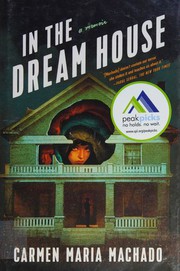
In the Dream House
2,903-word summary 13 min read 264 pages in the book
- First published
- 2019
- Publisher
- Graywolf Press
- Pages
- 264
- ISBN
- 9781644450031
Reading options
What's inside (9 sections)
I picked up In the Dream House because a friend would not stop talking about the structure. She said it was a memoir where every chapter tries a different storytelling trick, and somehow that trick makes a painful story easier to stay with rather than harder. I was skeptical. Formal games can feel cold when the subject is harm. I read the Graywolf Press hardcover from 2019, 264 pages, over three nights, and I kept stopping to stare at the wall. Not because the tricks failed. Because they worked.
The basic story is plain, and Machado tells you that plain version early so you do not get lost later. In her mid twenties, while studying for an MFA at the Iowa Writers Workshop in Iowa City, she falls for a charismatic woman a little older, also a writer. The relationship lasts about two years. It starts tender and exciting and turns controlling and frightening. There is shouting. There are thrown objects. There is the slow narrowing of a life around one persons moods. Machado leaves, goes back in her head, leaves again. That is the whole arc. The way she tells it is what makes the book unusual.
She calls the ex only the woman in the Dream House. She never gives her a legal name on the page. The Dream House itself is real, a house in Bloomington, Indiana, where the woman lived while attending a writing program there, and where Machado spent long stretches driving back and forth from Iowa. Machado insists the house is as real as the book in your hands. She also treats it as a haunted house in the old storybook sense, a place that promises shelter and then changes the locks.
One more thing to know going in: she writes mostly in second person. Her younger self is you. Her present self watches that you with a mix of anger and pity that never quite settles into forgiveness or blame. At first the you feels like a dare. After fifty pages it feels like protection, a way to look straight at shame without flinching.
Meeting in Iowa City
Before the woman, there is a messy little two bedroom in Iowa City shared with roommates John and Laura. Machado paints it with affection, the slumlord paint, the crowded kitchen, the particular freedom of grad school when everyone is broke and writing badly and reading each other with total seriousness. She had grown up in Allentown, Pennsylvania, with church youth group years that left her both hungry for meaning and suspicious of easy answers. She had not had a serious girlfriend yet. She was, by her own account, open and a little unguarded in the way people can be at twenty four when talent and praise arrive together.
The woman enters through mutual writer circles. She is confident, funny, well read, the kind of person who remembers the obscure story you mentioned once and brings it back weeks later as a gift. Machado is frank about the physical pull. This part of the book has real warmth. Late talks. Jokes. The giddy feeling of being chosen by someone you admire.
There is a snag from the start. The woman is in an open relationship with another woman, Val. Machado agrees to something casual at first, or tells herself she agrees. They take a road trip to Savannah over spring break. The woman keeps stepping away to call Val. Then, a week later, the woman says she loves Machado, and Machado says it back. Reading it now, with the later chapters ringing in your ears, that week feels like a hinge. tenderness on one side, possession starting on the other.
When the woman moves to Bloomington for her own program, the geography of the book locks in. Iowa City to Bloomington. Long drives. Gas station coffee. The Dream House waiting at the end of the road with its porch and its rooms that will hold so many fights. Machado also floats the idea, pushed by the woman, that she and Val and the woman might try polyamory. It does not hold. The woman breaks with Val to be monogamous with Machado, and Machado feels she has won something. I found that win painful to read. You can see how much she wants to be special enough to end the competition. You can also see how the prize isolates her.
When love starts keeping score
The turn does not arrive as one big scene. It arrives as weather. Phone calls that must be returned at once. A silence that means you did something wrong but you have to guess what. Fights about nothing that become fights about everything. Machado describes screaming matches where objects fly, and moments where the woman grips her hard enough to hurt. The Publishers Weekly review from that summer called it mental and physical abuse, and that plain phrase fits. The worst parts are not always the physical ones. They are the reversals, harm one minute and declarations of love the next, until Machado stops trusting her own memory of what just happened.
What stayed with me is how precisely she catches the logic of staying. The woman can be tender in the morning and terrifying at night, and the tender version keeps testifying for the terrifying one. Machado starts editing herself before she speaks. She stops telling friends the full story because the full story sounds wild and she is tired of watching their faces. She rehearses explanations in the car. She tells herself the jealousy means passion, the monitoring means care. She knows better and does not know better at the same time. Anyone who has stayed too long in a bad arrangement will recognize that split.
The second person pays off here. She can scold her younger self and hold her at once, without handing her comfort she did not have at the time.
They drive to visit the womans parents in Florida, quarreling over small things the whole way down. At one point Machado walks away and the woman finds her and holds her too tight. Later they overhear the womans parents fighting, the father sounding threatening toward the mother, and the woman says she worries she might be like him. Machado lets the moment sit there, sad and unhelpful, the way family patterns often are.
A haunted house with many rooms
The famous part of the book is the container. There are 145 short chapters across those 264 pages, almost every one titled Dream House as something. Dream House as Overture. Dream House as Not a Metaphor. Dream House as Picaresque. Dream House as Haunted House. Dream House as Bildungsroman. Dream House as Erotica. Dream House as Stoner Comedy. Dream House as Choose Your Own Adventure. Dream House as Bluebeard. Dream House as Noir. Dream House as American Gothic. Dream House as Queer Villainy. Some run several pages. One is a single sentence.
I expected this to feel like homework. It does not, or not mostly. Each trope works like a different lamp in the same dark room. The haunted house chapter lets her talk about creaks and cold spots without sounding silly, because fear in an abusive home really does feel spatial. You learn which stair to skip. Which door to close softly. The bildungsroman chapter lets her admit she thought suffering would educate her, the way novels promise young heroes wisdom in exchange for pain. The erotica chapter is honest about desire persisting inside fear, which many abuse stories skip because it embarrasses the moral. The stoner comedy chapter should not work and sort of does, catching how laughter and dread can share a couch.
The choose your own adventure chapter is the one people cite, for good reason. Machado gives you numbered choices and page turns, then narrows them until every path loops back into the same fight. A friend told me she flipped back and forth getting annoyed, which is exactly the point. The form lets your hands feel the loop your mind wants to judge. You keep choosing and you keep ending up in the kitchen with raised voices. On my reading I tried to cheat the loop by skipping ahead, then felt sheepish, which is also the point. Outsiders always think they would pick the exit faster.
My favorite small move is Dream House as Epiphany, which is only one line long. It says most types of domestic abuse are completely legal. It sits alone on the page like a chair pulled out. I sat with that sentence longer than with some ten page chapters. A lot of what Machado describes, the surveillance, the humiliation, the threats that stop just short of what police would touch, lives in that gap between awful and actionable. Naming the gap does not close it, but it explains why leaving felt so lonely.
If you need this book, it is for you. That is the opening dedication, and it sets the contract. She is not writing to impress. She is writing to place a record where there was none.
The empty shelf where queer stories should be
Between personal chapters Machado steps back to ask why she had so few models for what was happening to her. She had grown up hearing, in both straight and gay circles, a cozy story that relationships between women were naturally gentle, egalitarian, safe. The stereotype sounds like praise and functions like a gag. If women cannot really hurt each other, then what do you call the bruise on your arm. If your community is already under threat, do you report harm inside it and risk feeding outsiders who hate you. She writes about that bind with steady anger, not as theory but as a practical problem. She needed a shelf of stories. The shelf was bare.
So she starts building it. She digs into legal history, where protections for battered partners assumed a male abuser and a female victim, and where police and courts often failed to read violence between women as violence at all. She looks at folklore and pop culture with a scholars eye and a fans impatience. Bluebeards forbidden room. The 1944 film Gaslight, which gave us a verb for a tactic she knew by heart. Star Trek episodes she clearly loves. Disney villains with their arched eyebrows and solo numbers. Old lesbian pulp novels where the endings punished everyone. She is playful here, even bitchy in a fun way, but the argument stays serious. Culture taught her what a victim looks like and what a villain looks like, and neither picture had room for two young women writers fighting in a rented house in Indiana.
I may be misremembering the exact order of some of these digressions, since the chapters deliberately scramble chronology, but the effect across fifty pages is cumulative. Each essay widens the frame a little. Abuse stops looking like a private failure and starts looking like a public silence. That sounds grand. On the page it feels earned, because she keeps returning to small scenes. A dismissed friend. A counselor who does not know what to do with her story. A form with the wrong boxes.
There is also a thread about her religious youth that I wish were longer. She connects the mixed messages of those years, purity talk beside love talk, obedience beside ecstasy, to later confusion in romance. It rings true and she does not oversell it. Some readers may want memoir or history, not both. I liked the braiding, though I admit I skimmed one law heavy passage on first pass and caught it properly only on reread.
Trying to leave, learning to grieve
No one leaves cleanly in this book, and Machado does not pretend she did. Late in the relationship the woman leaves her briefly for someone else, then they sleep together one last time and Machado considers trying again. It is bleakly honest. The body keeps voting after the mind has resigned. What pulls her out is not a dramatic rescue but a slow accumulation. Friends who keep the door open without keeping score. Writing that names things. Exhaustion that finally outweighs hope.
Val returns here in a way I did not expect and ended up moved by. Machado gets back in touch with Val, the womans ex, the person who had been the rival. They compare notes, apologize for the triangle, talk often while Machado is away at a writing workshop in California. On the drive back to Iowa she picks Val up. They take a scenic road trip. Wariness turns to care. Readers who know Machado's life will know Val Howlett later became her wife in 2017, though the book keeps the focus on that early fragile friendship rather than the later marriage. I liked that restraint. It lets the new bond feel like luck and work, not destiny paying off a plot.
The last movement is quieter than the middle. No courtroom triumph. No confrontation where the abuser sees the light. The woman keeps trying to contact her. People she tells sometimes do not believe her or change the subject. She grieves the years and also the person she was becoming inside them, someone smaller and more watchful. Healing looks like ordinary things done steadily. Sleeping through the night. Writing without asking permission in her head. Letting herself be loved without auditioning.
Spoilers feel odd to warn about in a memoir, but I will say the ending does not stage forgiveness. It stages authorship. She gets to be the one who decides what the Dream House means. After so many chapters where tropes tell her story, the final pages feel like her taking the pen back from the genres. It is satisfying without feeling tidy, which suits a book that distrusts tidy.
What sings and what sags
I admire this book a lot, and I argued with it too, which seems like the response Machado wants.
What sings is the voice. She can be funny about dire things without minimizing them. A line about grad school poverty or a bad drive through fast food country will make you laugh, then the next paragraph will drop the floor out. Her reading across genres is joyful even when the conclusions are grim. The haunted house conceit never feels pasted on, because she commits to it physically. You believe in the cold hallway. You believe her when she calls the house real, and also when she lets it stand for every home that turned strange. Real walls held real shouting.
The research chapters are the books gift to future readers. Putting queer partner abuse into history, into law, into fairy tale, gives isolated people language. Awards voters noticed. It won the Lambda Literary Award for LGBTQ nonfiction and the Judy Grahn Award, and later took the Rathbones Folio Prize. Those prizes make sense. This is the rare memoir that adds to an archive while also working as art.
What sags, for me, is pace in the middle third. Some essay chapters repeat the same move: open with a cultural object, circle it, connect it to the Dream House. Individually they shine. Together they stall the personal story just when tension is highest. I found myself rushing to get back to Iowa and Indiana. A friend who adores theory will call that braiding. I call it a lull. Twice I had to put the book down for a day, partly because the content is heavy, which it is, and partly because the form kept reminding me I was reading a constructed object. Distance helps analysis. It can thin feeling.
The second person will also divide readers. I grew to love it, but early on it can read as instruction, as if the narrator knows exactly what her younger self meant. Trauma scrambles motive. Sometimes the confident you papers over what must have been blur. And readers who want a straight linear memoir may bounce off entirely. This is not a book that holds your hand through dates. It loops, withholds, jokes, footnotes itself.
Who should read it. Anyone interested in memoir form will get a lot, even if the subject scares them. Queer readers, especially younger ones, may find the naming of things useful beyond measure. Survivors should pace themselves and maybe skip the most essayistic knots on hard days. Readers looking for a simple villain punished plot will not find it. The woman remains a person, not a monster, which is more upsetting and more honest.
I closed my copy thinking about houses. Not the big symbols, but the rentals I have lived in where I learned which floorboard sang. Machado takes that small bodily knowledge and treats it as evidence. Where you felt unsafe is data. What you did to stay safe is intelligence. A book that trusts those facts, and that admits where its own tricks fall short, earns its place. Mine sits now where I can see the spine, which is not true of every admired book. Some I respect and shelve high. This one I keep close, though I do not lend it lightly.
A note on the edition I read
Mine was the first Graywolf Press hardcover, published November 5, 2019, 264 pages, ISBN 9781644450031. A paperback followed in late 2020 with a higher page count from the new design. Same house, slightly wider halls.
FAQ
Is In the Dream House a true story?
Yes. It recounts her abusive relationship in her mid twenties while studying for an MFA at Iowa, published by Graywolf Press in 2019 at 264 pages in hardcover. The ex is never named and appears only as the woman in the Dream House.
Why is every chapter called Dream House as something?
Each of the 145 short chapters filters the same relationship through a storytelling trope like the haunted house, the road trip, or the courtroom. The forms show how genre shapes what victims can say, and the looped adventure chapter makes the cycle of abuse felt on the page.
Is this book only for queer readers?
No. Queer readers may find its naming of partner abuse most urgent, but its questions about memory, control, and leaving reach anyone. Survivors should pace themselves, since the middle chapters are dense and the subject stays heavy throughout.
Similar books
Hunger
Roxane Gay traces how assault at twelve shaped her body, appetite, and daily life as a fat Black woman refusing shame.
2,583-word summary · 11 min read
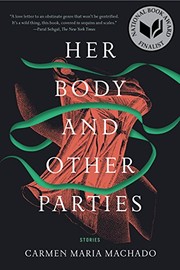
Her Body and Other Parties: Stories
Eight stories where bodies, medicine and old fairy tales get taken apart, with a green ribbon running through the whole book.
2,997-word summary · 13 min read
In Order to Live: A North Korean Girl's Journey to Freedom
A young North Korean girl crosses the Yalu, survives trafficking in China, and rebuilds her life in Seoul in this unsparing memoir.
2,027-word summary · 9 min read

Infidel
Ayaan Hirsi Ali's memoir of a Somali childhood, a forced marriage, a Dutch asylum claim, and the political fight that followed the murder of Theo van Gogh.
2,041-word summary · 9 min read
Dry
A memoir of drinking, rehab and relapse, and the strange business of getting sober one morning at a time.
2,643-word summary · 12 min read

Dear Girls: Intimate Tales, Untold Secrets & Advice for Living Your Best Life
Ali Wong's debut collects fourteen letters to her daughters, covering sex, money, work, marriage, Vietnam, and being a working Asian American mother.
2,266-word summary · 10 min read
Lucky
Alice Sebold's memoir of the 1981 rape she survived as a college freshman, the courtroom that followed, and a conviction later proven to be a case of mistaken…
2,091-word summary · 9 min read
How to Be a Woman
Moran mixes girlhood and work stories into plain feminist advice.
2,600-word summary · 12 min read
Not That Kind of Girl: A Young Woman Tells You What She's Learned
Girls creator Lena Dunham's essays on work, bodies, love, and family, frank and funny with uneven edges.
2,156-word summary · 10 min read
A Stolen Life
Kidnapped at eleven in 1991, Jaycee Dugard survived eighteen years in an Antioch backyard and tells her own story of endurance and motherhood.
2,807-word summary · 12 min read

Reading Lolita in Tehran: A Memoir in Books
Seven women meet in secret in Tehran to read Lolita, Gatsby, and Austen while revolution presses in.
2,916-word summary · 13 min read

A Hymn to Life
Gisele Pelicot tells her own story, from a shattering 2020 phone call to the open Mazan trial where shame changed sides.
2,456-word summary · 11 min read
A Woman Is No Man
Three generations in Brooklyn face marriage, honor, and silence as Deya seeks truth and school.
2,108-word summary · 9 min read
Fun Home: A Family Tragicomic
Alison Bechdel's graphic memoir about her father, their shared secrets, and the funeral home they called Fun Home in rural Pennsylvania.
2,755-word summary · 12 min read
Know My Name
Chanel Miller reclaims her story after the Stanford assault case, tracing family support, trial strain, her viral 2016 statement, and leaving Emily Doe for her…
3,092-word summary · 14 min read
Girl, Interrupted
In 1967, 18-year-old Susanna enters McLean Hospital for two years on a ward, probing sane versus insane.
2,396-word summary · 11 min read

Untamed
Glennon Doyle leaves a strained marriage, falls for Abby Wambach, and rebuilds life around honesty and desire.
2,561-word summary · 11 min read
Yes Please
Amy Poehler moves from Boston childhood through UCB and SNL to Parks and Recreation in this 2014 memoir. Funny essays on work, motherhood, divorce, and saying…
2,668-word summary · 12 min read
A Little Life
Four friends in New York orbit Jude, whose hidden past of abuse shapes every page of this 720-page epic.
1,972-word summary · 9 min read

Bossypants
Tina Fey moves from Pennsylvania childhood through improv and SNL to 30 Rock in this funny 2011 memoir. Expect backstage stories, jokes about work and…
2,301-word summary · 10 min read
Sybil
A 1973 case study of a woman treated for multiple personalities, and the book that made dissociative identity disorder a household phrase.
2,054-word summary · 9 min read

Long Walk to Freedom
Mandela's account of a Thembu childhood, a law practice, a banned movement, twenty-seven years in prison, and the negotiation that ended apartheid.
2,454-word summary · 11 min read
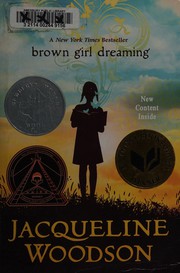
Brown Girl Dreaming
Jacqueline Woodson retells her childhood in verse, moving from Ohio to South Carolina to Brooklyn while the civil rights movement reshapes the world around her.
2,727-word summary · 12 min read

What Happened to You?
Oprah Winfrey and psychiatrist Bruce Perry explain how early experience shapes the brain, and why asking what happened to someone works better than asking what…
2,238-word summary · 10 min read
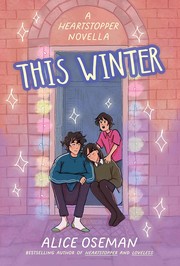
This Winter
On one difficult Christmas Day, Tori, Charlie, and Oliver Spring try to hold their family together while Charlie's eating disorder makes every tradition a test.
2,034-word summary · 9 min read

Ace of Spades
Two Black seniors at an elite academy are celebrated by day and hunted by an anonymous texter in this YA thriller about institutional racism.
2,066-word summary · 9 min read

Too Much and Never Enough: How My Family Created the World's Most Dangerous Man
Mary L. Trump's 2020 memoir traces how a cold, zero-sum Queens household shaped her uncle, and uses family tax documents to challenge his self-made story.
2,059-word summary · 9 min read
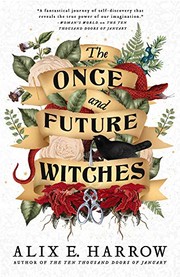
The Once and Future Witches
Three estranged sisters bring witchcraft back to an 1893 city where magic hides in nursery rhymes and the fight for the vote is also a fight for power.
2,132-word summary · 9 min read
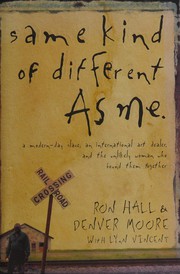
Same Kind of Different as Me
An art dealer and a formerly homeless sharecropper tell the story of the friendship that began at a Fort Worth mission and the woman who insisted on it.
2,023-word summary · 9 min read
My Life in France
Julia Child's memoir of learning to cook in Paris, testing recipes for nine years, and becoming the teacher who changed how America thought about French food.
2,038-word summary · 9 min read