
Reading options
What's inside (8 sections)
- Finding this novel and why the first pages hurt
- Isra, Adam, and a marriage that narrows by the month
- Fareeda and the rules she enforces to survive
- Deya, Sarah, and the fight for school and choice
- Truth, letters, and what really happened to Isra and Adam
- Endings, forgiveness, and whether change feels earned
- Key takeaways
- FAQ
Finding this novel and why the first pages hurt
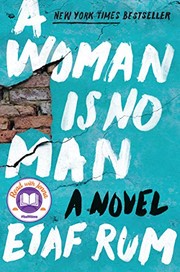
I found A Woman Is No Man on a staff picks shelf with a short note that said, Read this in one sitting if you can. I could not. Etaf Rum published it with Harper in 2019, 352 pages, ISBN 9780062699763, and it moves between Brooklyn and Palestine across two generations. I started it late at night and had to put it down after the first wedding scene because my chest felt tight. Not from gore, from recognition of how quietly a girls future can be signed away at a kitchen table.
The novel follows three women. Isra is a teenager in Palestine who loves books and dreams of college, married off to Adam, a Palestinian immigrant living in Brooklyn. Fareeda is Adams mother, the strict matriarch who rules the Brooklyn household and enforces old codes in a new country. Deya is Isras daughter, eighteen in the present timeline, bright and restless, facing the same pressure to marry young and quit school. Sarah is Deya's younger sister, and their grandparents Fareeda and Khaled control their daily lives after their parents deaths.
Rum opens with Isra. She reads in secret, she notices light on olive trees, she believes America will mean freedom. That hope makes what follows harder. Her wedding is quick, her travel is disorienting, her new home is crowded and loud. Fareeda inspects her cooking, her cleaning, her body. Adam works long hours in a deli or store, drinks, withdraws. Isra has babies fast, one after another, all girls, which Fareeda treats as failure. Deya, the eldest surviving daughter, grows up hearing that a womans worth is obedience, modesty, and sons.
I am not Palestinian, and I worried about reading as an outsider. Rum writes with enough specific detail, food, prayer, dialect, neighborhood streets in Bay Ridge, that the world feels lived in, not explained for tourists. She also makes clear this is one family, not a whole culture. That balance helped me keep reading with care rather than judgment.
Isra, Adam, and a marriage that narrows by the month
Isra and Adam are the tragic center. Isra arrives in Brooklyn in the 1990s believing marriage will expand her life. Instead her rooms get smaller. She shares a house with in laws. Fareeda corrects her Arabic cooking, her English, her walk, her voice. Khaled, the father in law, is quieter but upholds the same rules. Adam was supposed to be different. He once wanted education too, but exile, money stress, and family shame curdled him. He drinks, he stays out, he hits Isra when dinner is late or when Fareeda complains.
Rum writes domestic violence without sensational detail. A shove in a hallway. A hand around a wrist. A bruise covered with long sleeves in summer. What hurts more are the words. You are no one without us. No one will believe you. Your daughters will pay for your disobedience. Isra stops reading. She stops writing. She starts whispering stories to baby Deya instead, as if she can smuggle hope through lullabies.
One scene stayed with me. Isra hides a library book under the mattress, a novel she checks out with shaking hands. Fareeda finds it while changing sheets and throws it away, calling it filth that puts ideas in womens heads. Isra does not argue. She stands at the sink peeling potatoes while tears fall into the bowl. Later Adam asks why she is quiet and she says she is tired. That lie is the only privacy she has left.
My fair criticism is that Adam sometimes feels more like a function than a person in the early chapters. We get his shame and his drinking, but less of his interior life until later reveals. I wanted one scene of Adam at work, joking with a customer, showing the man Isra thought she married, to make his cruelty more complex. Rum does deepen him near the end through letters and memories, and that helped. Still, the middle sags a bit under repeated cycles of hope and beating without new insight. That repetition is realistic, but as a reader I wanted more variation in how Isra resisted, even in small ways.
Fareeda and the rules she enforces to survive
Fareeda is the character I argued about most with friends. She is harsh. She slaps, she shames, she arranges marriages for granddaughters still in high school. She tells Deya that education makes girls proud and unmarriageable. She counts money, guards reputation, gossips at gatherings, and prays. It would be easy to hate her. Rum does not let you.
We learn Fareedas past in Palestine. Married young herself, sent to a house where her own mother in law watched her bleed after the wedding night. She bore sons because her value depended on it. She survived Israeli occupation, poverty, displacement, and immigration by clinging to control. In Brooklyn, where her sons face racism and dead end jobs, respectability is the only currency she trusts. If daughters behave, the family keeps honor. If they stray, men will call them whores and no one will marry them, and then who will feed them. That logic is cruel, but Rum shows where it was learned.
There is a kitchen scene where Fareeda teaches Deya to make maqluba, layering rice, cauliflower, chicken, flipping the pot with practiced wrists. For a moment her voice softens. She tells Deya her own mother taught her this flip, and that a good flip means a steady home. Deya asks why steady must mean silent. Fareeda slaps the counter, not Deya, and says silence kept us alive. I read that twice. It does not excuse her, but it explains why change feels like death to her.
Fareeda believes honor is a roof, and Rum shows how that roof can crush the people it was built to shelter.
Rum also gives Fareeda private doubts. She rereads old letters. She watches Sarah draw and wonders if art is haram or just human. She remembers a sister who ran and was erased from family stories. Those cracks matter. They prepare the late book shift where Fareeda must choose between reputation and granddaughters. I did not fully believe the speed of that shift, and I will say more later, but I believed the grief under it.
Deya, Sarah, and the fight for school and choice
Deya is eighteen, smart, and tired of being looked at as a bride. The present timeline follows her senior year. She wants college, maybe literature, maybe teaching. A suitor comes, polite, with a good family, and Fareeda pushes meetings with tea and questions about cooking and prayer. Deya smiles, serves, then hides college brochures under her textbooks. Her sister Sarah, younger and bolder, wears makeup, texts boys, talks about running away. Sarah loves Deya fiercely and also resents her caution.
School is Deya's air. Sarah, her friend? Actually her confidante is more her own resolve plus a school counselor who encourages applications. There is also a boy, a classmate who likes her writing, who offers a glimpse of chosen love rather than arranged duty. Rum handles this gently. No savior romance. Just notes passed, library talks, a reminder that Deya is a person before she is a prospect.
The sisters share a bedroom full of specific life. Cheap perfume, chipped nail polish, a cracked phone they share, photos of their dead parents they study for clues. Their parents, Isra and Adam, died when Deya was young. The official story is an accident or murder by a stranger. Deya doubts it. She finds pages, hears aunts whisper at funerals, notices Fareeda flinch when Adam is named. Her search for truth drives the plot. Who killed her parents. Why does no one say their names. What happened the night the police came.
I loved these sister scenes most. They felt true to how girls in strict homes carve freedom. Borrowing a library card, staying late for a club, changing shoes at school. One afternoon they skip a family gathering to eat pizza in a park and talk about names they would choose for themselves. Sarah says she would pick something American and loud. Deya says she would keep Deya but make it mean writer. That small wish carries the whole book.
Truth, letters, and what really happened to Isra and Adam
Spoilers matter here, because the mystery is the engine. Deya discovers that Isra did not die in a random accident. Isra was killed by Adam, her husband, after years of abuse, and Adam was then killed in turn, in a confrontation tied to family shame and male violence. The exact sequence is revealed through hidden letters, Fareedas memories, and a relative who finally speaks. Isra had been writing down her life, hoping Deya would one day read it. Adam had been unraveling under pressure to control his wife and produce sons, egged on by community talk and his own failures.
Rum reveals this slowly. A torn notebook in a basement box. A neighbor who remembers screams. An aunt who says Isra asked for divorce and was told divorce would kill the family. Fareeda knew more than she admitted. She protected sons over daughters in law, as she was taught to do. The guilt now eats her. That is why she clings to Deya's marriage plans. If Deya marries well and obeys, Fareeda can tell herself the system works and Isra was the exception. If Deya refuses, Fareeda must face that Isra was the rule.
The letter scenes are devastating. Isra writes to her unborn daughter, apologizing for a world that calls girls burdens. She writes, I wanted to be a teacher, I wanted to see the sea in winter, I wanted you to choose. She hides the pages inside a Quran cover or a sewing kit, places Fareeda would not toss. When Deya reads them, Rum does not rush. Deya sits on a fire escape, city noise below, and reads the same line three times. I did too.
My criticism: the reveal relies on many people staying silent for a decade, which strains belief in close knit Brooklyn where gossip travels fast. Rum tries to explain it through shame and police indifference to immigrant domestic cases, which is plausible, but the mechanics of who hid what felt thin. Still, the emotional truth landed. Deya finally understands her mother was not weak for staying. She stayed because leaving meant losing her girls, facing deportation threats, and being disowned. That understanding frees Deya to choose differently, with clearer eyes.
Endings, forgiveness, and whether change feels earned
The ending does not offer easy triumph. Deya rejects the arranged match, applies to college programs in secret, and confronts Fareeda with what she knows. Sarah threatens to run if forced. Fareeda, confronted with Isra's words and Deya's resolve, bends in ways she once called impossible. She allows applications, delays marriage talk, even touches Isra's notebook with something like reverence. It is not a full apology. It is a cracked door.
I had mixed feelings. Part of me cheered. Deya reading her acceptance letter at the kitchen table while Sarah dances is a lovely image. Part of me thought Fareeda changed too fast after decades of rigidity. Rum earns some of it by showing Fareeda's private grief earlier, but one confrontation rarely rewrites a lifetime. I would have liked two more scenes of slow negotiation. Fareeda talking to an imam, Fareeda fighting with Khaled, Fareeda visiting a neighbor whose daughter went to college and survived. That would have made the turn feel sturdier.
What I keep is Rum's refusal to paint men as monsters and women as saints. Khaled is complicit but not gleeful. The suitor is decent but still expects obedience. Aunts both gossip and slip Deya bus money. Even Adam gets a late flash of humanity, remembering Isra reading under a blanket and feeling pride before fear took over. People contain both tenderness and cruelty. Systems reward the cruelty. That is the books hardest point, and its most honest.
Rum writes in clear, plain prose with short chapters and shifting points of view. Some sentences repeat. Silence, shame, honor cycle often. At times I wanted more sensory Brooklyn, smells from bakeries, subway rumble, snow on Atlantic Avenue, to balance the heavy interiors. But the simplicity serves the story. A teenage girl should be able to read this and see herself. A mother should be able to read this and ask hard questions. I closed it thinking about my own grandmothers compromises, and about how long it takes for a family story to change its ending.
FAQ
Is this based on a true story?
No, it is fiction, but Rum drew on experiences of Palestinian American women she knew.
Does it condemn a whole culture?
No, it focuses on one family and control, while showing loving cultural details.
Similar books
The School for Good Mothers
A mother sent to a reform school fights to keep her daughter under cold surveillance and strict rules.
2,114-word summary · 9 min read
Hunger
Roxane Gay traces how assault at twelve shaped her body, appetite, and daily life as a fat Black woman refusing shame.
2,583-word summary · 11 min read

Wintergirls
After her ex-best friend dies, eighteen year old Lia fights anorexia, guilt and a ghost while her family tries to pull her back.
2,740-word summary · 12 min read

The Tenant of Wildfell Hall
Helen flees a cruel marriage, hides as Helen Graham at Wildfell Hall, and tells her full story through a long diary young Gilbert Markham must read before…
2,838-word summary · 13 min read

Lady Tan's Circle of Women
Ming physician Tan Yunxian treats bound feet and births with midwife Meiling, defying male medicine rules.
2,330-word summary · 10 min read

Whidbey
Three women orbit one murdered abuser in this tense island whodunnit.
2,221-word summary · 10 min read

In the Dream House
Machado retells an abusive same-sex relationship through haunted house tropes. A daring memoir about harm, memory, and queer silence.
2,903-word summary · 13 min read

Those Who Leave and Those Who Stay
Elena publishes into Florence salons while Lila labors through Naples factories across the 1970s.
2,034-word summary · 9 min read

A Heartbreaking Work of Staggering Genius
After losing both parents to cancer, Dave Eggers raises his eight year old brother Toph in California with humor, chaos and self doubt.
2,326-word summary · 10 min read

The Vegetarian
After a bloody dream, Yeong-hye stops eating meat, and her ordinary marriage cracks open in Han Kang's spare and unsettling novel.
2,302-word summary · 10 min read
Losing Hope
Holder retells Hopeless from his side, grieving Less and searching for Hope.
2,492-word summary · 11 min read

Just Listen
After a falling out with Sophie, model Annabel stays silent until Owen, a music obsessed boy, helps her speak truth.
2,445-word summary · 11 min read

The Paper Palace
Elle faces Jonas choice at Cape Cod while assault memory returns.
2,588-word summary · 12 min read

She's Come Undone
Abused as a girl, divorced and struggling with weight, Dolores Price slowly finds healing after years of trauma.
2,550-word summary · 11 min read

Untamed
Glennon Doyle leaves a strained marriage, falls for Abby Wambach, and rebuilds life around honesty and desire.
2,561-word summary · 11 min read

The Vanishing Half
Twin sisters split as one lives Black and one passes as white.
1,971-word summary · 9 min read

What Happened to Goodbye
Mclean has reinvented herself in four towns since her parents divorced. In Lakeview she uses her real name, and for the first time staying put becomes a choice.
2,796-word summary · 12 min read

The Long Winter
Dakota Territory, 1880: seven months of blizzards cut a town off from the railroad, and a family survives on twisted hay, ground wheat, and a dangerous wheat…
2,210-word summary · 10 min read

The Japanese Lover
A Polish refugee and the son of a Japanese gardener fall in love in San Francisco in 1939, then keep the affair secret for nearly seventy years.
2,286-word summary · 10 min read
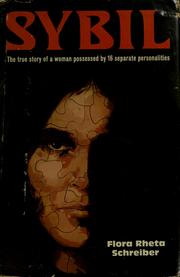
Sybil
A 1973 case study of a woman treated for multiple personalities, and the book that made dissociative identity disorder a household phrase.
2,054-word summary · 9 min read

Ship of Magic
A sentient ship wakes when her captain dies, and the family that owns her starts to come apart over who gets to sail her.
2,026-word summary · 9 min read
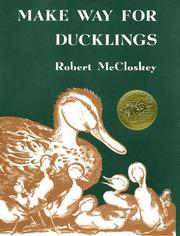
Make Way for Ducklings
A pair of mallards raise eight ducklings on the Charles River and lead them across Boston to the Public Garden, with a little help from a friendly policeman.
2,044-word summary · 9 min read
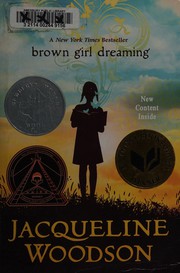
Brown Girl Dreaming
Jacqueline Woodson retells her childhood in verse, moving from Ohio to South Carolina to Brooklyn while the civil rights movement reshapes the world around her.
2,727-word summary · 12 min read
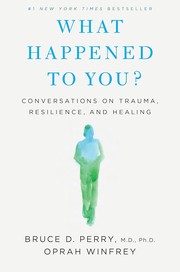
What Happened to You?
Oprah Winfrey and psychiatrist Bruce Perry explain how early experience shapes the brain, and why asking what happened to someone works better than asking what…
2,238-word summary · 10 min read
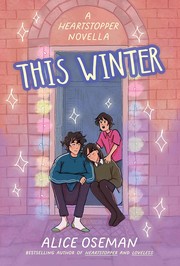
This Winter
On one difficult Christmas Day, Tori, Charlie, and Oliver Spring try to hold their family together while Charlie's eating disorder makes every tradition a test.
2,034-word summary · 9 min read

The Shadow Sister
Star D'Apliese steps out of her sister's shadow and follows a bookshop clue into the Edwardian life of Flora MacNichol, a woman who gave up love for duty.
2,260-word summary · 10 min read

Little Town on the Prairie
In the spring after the Long Winter, fifteen-year-old Laura sews shirts, studies for a teaching certificate, and helps send her blind sister Mary to college.
2,071-word summary · 9 min read
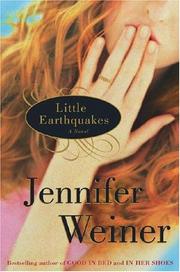
Little Earthquakes
Four Philadelphia women meet during pregnancy and discover that new motherhood is nothing like the plan, while friendship becomes the thing that holds them…
1,997-word summary · 9 min read

In Order to Live: A North Korean Girl's Journey to Freedom
A young North Korean girl crosses the Yalu, survives trafficking in China, and rebuilds her life in Seoul in this unsparing memoir.
2,027-word summary · 9 min read

Too Much and Never Enough: How My Family Created the World's Most Dangerous Man
Mary L. Trump's 2020 memoir traces how a cold, zero-sum Queens household shaped her uncle, and uses family tax documents to challenge his self-made story.
2,059-word summary · 9 min read