
Reading options
What's inside (9 sections)
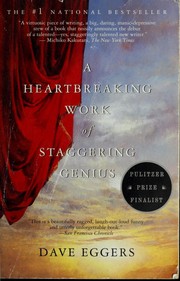
I picked this one up because a friend kept telling me it was the funniest sad book he knew, and that sounded like a trick. The title alone made me roll my eyes a little. A Heartbreaking Work of Staggering Genius sounds like someone daring you not to like it. Then I started reading and within fifty pages I got it. Dave Eggers writes like someone talking fast at a kitchen table at midnight, trying to make you laugh so he does not have to cry in front of you.
The facts first, so we are clear. The original came out in 2000, and the edition I am going from is the Vintage 2001 printing at 437 pages. Eggers was in his early twenties when both of his parents died of cancer within a short span. His older sister was already grown. His younger brother Toph was eight. Dave became, almost overnight, something between a brother and a parent. He and Toph left the Chicago suburbs for the Bay Area, mostly Berkeley and San Francisco, and tried to build a life from scratch.
What follows is my retelling in order, with the detours and jokes left in where they matter, and with a few complaints too, because this book earns them.
Both parents gone within a short span
Eggers grows up outside Chicago in a house that feels normal until it is not. His father drinks and can be hard to live with. His mother holds things together. There are the usual memories of school and sports and church and friends, plus the kind of latchkey afternoons a lot of kids from that time will recognize. You come home to an empty house. You make a snack. You watch TV too long. You wait for the sound of a car in the driveway.
Then illness moves in and stays. First one parent gets a cancer diagnosis, then the other. Eggers describes hospital visits and phone calls and the strange admin work of dying. Forms. Beds. Nurses who are kind and tired. Relatives who show up with food and advice. He is in college age, old enough to understand what the doctors mean and young enough to feel angry that he has to.
His mother dies first, then his father follows not long after. The gap is a matter of weeks in his telling, close enough that grief does not get a chance to settle into one shape before it changes again. The funeral details blur. People say things they mean well. Eggers and his siblings clean out rooms and find the small stuff that hurts most. A jacket. A note in a drawer. A brand of cereal nobody needs to buy anymore.
I found these early chapters blunt in a good way. He does not dress up the deaths with big speeches. He notices practical things, like who drives whom home, and that felt true to me. When my own family had a bad year, most of what I remember is logistics. Who had the car keys. Who remembered to eat.
Moving west with an eight year old
After the deaths, Dave and Toph head to California. On paper it sounds bold. In practice it is messy. They rent places in Berkeley. Friends drift in and out. There is never quite enough money, and there is always a new rule to make up about bedtime or homework or who cleans the bathroom.
Eggers is honest that he has no idea how to parent. He wants to be the cool older brother who lets Toph stay up late and eat what he wants. He also panics about safety and school and whether Toph is lonely. So the house swings between loose and strict. One night they are playing basketball until dark and eating pizza on the floor. The next morning Dave is lecturing about brushing teeth and calling the school to check attendance.
Toph, as written, is funny and watchful. He is eight going on much older in some moments, then completely eight in others. He cares about trading cards and friends and sports. He tests Dave the way any kid tests a parent. He sulks. He charms guests. He asks questions Dave cannot answer well about their parents and what happens now.
Some of my favorite pages are small. Dave trying to pack a decent lunch. Dave learning which teachers care and which ones just want quiet. Dave sitting in a tiny chair for a parent teacher meeting while everyone assumes he is the dad. He gets it wrong a lot. He admits it. That admission is what keeps the book from turning into a hero story.
There is a thread here about latchkey life repeating itself. Eggers remembers being left alone as a kid and now he is the one leaving Toph alone for stretches while he works. He hates that echo. He also cannot fix it right away because rent has to be paid. That tension never fully resolves, and I respected that he left it open.
Might magazine and a group of friends trying to make it
In San Francisco, Eggers throws himself into Might magazine, the scrappy publication he helped run with friends. The office scenes read like a group house crossed with a start up before start ups had a name for it. People sleep late. People argue about headlines. People staple and fold and haul boxes. Money is short. Energy is high.
He writes about this period with real affection. These are his people. They are in their twenties and convinced that jokes in a magazine can matter. They pull pranks. They write odd features. They mock mainstream media while secretly hoping mainstream media notices them.
This is also where the book shows its age in a fun way. The references are very nineties. Talk shows. Tabloids. Early reality TV. The tech boom hovering at the edges. If you lived through it, you will smile. If you did not, you still get the point because the feeling is familiar. A bunch of broke friends in a cheap office, sure they are smarter than the suits across town.
But there is a harder edge too. Work pulls Dave away from Toph. He misses things. He tells himself the magazine will lead to something stable, and sometimes he believes it. Other times he knows he is choosing the office over home and feels sick about it. I liked that he did not clean this up. He lets himself look selfish on the page.
One short scene stuck with me. He comes home late and Toph is already asleep on the couch with the TV on. Dave stands there too tired to move him to bed, so he just covers him with a blanket and sits on the floor for a while. Nothing big happens. That is the whole point.
The MTV audition and wanting to be seen
The most famous comic set piece is the audition for MTV's Real World. Eggers and a friend decide to try out, partly as a joke and partly because they want to be picked. They fill out forms. They wait in line with crowds of hopefuls. They perform versions of themselves that are louder and neater than real life.
He stretches this into a long riff about authenticity and TV. Are the producers looking for real people. Are applicants faking realness to look real enough for TV. He knows he is doing the same thing he accuses others of doing, and he says so, which saves the section from feeling superior.
Under the jokes there is something sore. Eggers has just lost his parents. He is raising a kid. Part of him wants a camera crew to show up and confirm that his life is interesting and worth watching. Part of him is disgusted with himself for wanting that. He swings between those poles for pages at a time.
I laughed a lot here, then felt a little wrung out. That is the pattern of the book. A joke runs long, turns sharp, then lands somewhere tender before you expect it. Sometimes the turn feels earned. Sometimes it feels like he could have cut ten pages and kept the punch.
The audition itself does not go as planned, which is probably for the best. What matters is what it reveals. He wants fame while making fun of fame. He wants privacy while writing a memoir about his family. He knows those wants clash. He puts the clash on the page instead of hiding it.
Babysitters and everyday chaos
Between the bigger stories, daily life keeps breaking in. Babysitters quit or do strange things. A house rule collapses. Someone gets sick. The car makes a noise it should not make. Groceries run out at the worst time.
Eggers piles up these anecdotes until they start to feel like the real plot. One week Toph brings home a note from school and Dave has to figure out if it is serious or just school paperwork. Another week they try to set up a chore chart and abandon it within days. Friends offer to watch Toph and return him wired on sugar and full of stories Dave only half believes.
The babysitter material is where Toph feels most like a real kid rather than a character. He negotiates. He complains. He plays adults against each other in the gentle way kids do. Dave tries to stay calm and fails. Then he tries to apologize without making it a huge deal, and sometimes fails at that too.
I recognized my own early years of looking after younger cousins in these pages. You plan a calm afternoon. You end up cleaning spilled milk while answering the phone with your shoulder. You promise yourself you will be more patient tomorrow. Tomorrow you are, until about four in the afternoon.
There are also quieter moments about food and money. Dave counts cash. He puts off bills. He says yes to free dinners. He feels shame about it, then anger at feeling shame, then hunger wins and he eats anyway. The book is good on how grief and poverty both narrow your focus to the next small task.
A style that shows off and then apologizes
We have to talk about the style, because it is half the book. Eggers interrupts himself. He adds footnotes and asides. He lists rules for the memoir and then breaks them. He imagines what critics will say and answers them before they speak. He writes long comic riffs that spin away from the plot and then snap back.
When it works, it sings. A paragraph will start with a chore and end up somewhere about death and memory without feeling forced. The footnotes can be very funny. The self awareness can feel brave, like he is willing to look vain or needy on the page so you trust him more elsewhere.
When it does not work, it drags. Some riffs run past the joke. Some apologies for the riffs run longer than the riffs. He worries so much about seeming self indulgent that the worry itself becomes self indulgent. I found myself skimming a few stretches in the middle, especially around the magazine lore and media satire.
The fair criticism, as I see it, is this. Eggers sometimes uses Toph as material in ways that made me uneasy. He loves his brother, that is clear. But there are scenes where Toph is doing something sweet or painful and I could feel Eggers the writer leaning in a little too fast. It raises a question the book never fully answers. How much of a kid's life should be in his brother's memoir.
That said, the style fits the subject. Grief at that age is jumpy and loud and performative and sincere all at once. A neat and quiet book about this mess would feel false. The mess on the page mirrors the mess in the house. I would rather have the extra pages than a tidy version that pretends early twenties grief is calm.
What still lands after the jokes fade
Late in the book, the pace slows. The jokes thin out. Eggers spends more time with Toph one on one, less time with crowds. There are drives and walks and small talks that do not try to be scenes. He thinks about his parents less as a crisis and more as an absence that will stay.
He does not claim to have figured out parenting. He does not claim the pain is useful. He says, in effect, we kept going. We fed each other. We showed up for school and work. We made a home that was imperfect and still a home.
That modesty is why the book has lasted. Strip away the nineties jokes and the MTV stuff and the magazine pranks, and you still have a clear story. A young man loses his mother and father to cancer. He takes in his eight year old brother. They move to Berkeley and San Francisco and learn how to live together day by day.
I closed the Vintage printing feeling fond of both of them and a little tired, the way you feel after a long visit with funny relatives who talk too much. I wished an editor had cut harder in a few spots. I also knew I would remember the blanket on the couch and the tiny chair at school and the late night kitchen talk for a long time.
If you are new to Eggers, start here but give yourself room. Read it in chunks. Let the long riffs wash past when they stall. Pay attention to Toph, who sees more than Dave thinks. And when the jokes stop for a page or two, stay with those pages. That quiet is where the title stops sounding like a dare and starts sounding true.
FAQ
When was A Heartbreaking Work of Staggering Genius published?
The original came out in 2000. The edition cited here is the Vintage 2001 printing, which runs 437 pages.
Who is Toph in the book?
Toph is Dave Eggers's younger brother, eight years old when their parents die. Much of the book follows Dave trying to raise him in Berkeley.
Is the book only sad?
No. Grief sits beside jokes, satire of media culture, Might magazine stories, and long comic scenes about babysitters, driving lessons, and house rules.
Similar books

Crying in H Mart
Japanese Breakfast singer Michelle Zauner remembers her Korean mother through food, grief, and growing up in Oregon.
2,337-word summary · 10 min read
Brown Girl Dreaming
Jacqueline Woodson retells her childhood in verse, moving from Ohio to South Carolina to Brooklyn while the civil rights movement reshapes the world around her.
2,727-word summary · 12 min read

Too Much and Never Enough: How My Family Created the World's Most Dangerous Man
Mary L. Trump's 2020 memoir traces how a cold, zero-sum Queens household shaped her uncle, and uses family tax documents to challenge his self-made story.
2,059-word summary · 9 min read

Sam's Letters to Jennifer
A grieving journalist reads her grandmother's letters and finds a decades-long love affair that changes how she sees her family.
2,310-word summary · 10 min read

Beautiful Boy: A Father's Journey Through His Son's Addiction
David Sheff recounts watching his son Nic slide into meth addiction, and his own desperate, humbling search for how to help without destroying them both.
2,076-word summary · 9 min read

We Are Okay
Marin fled San Francisco after her grandfather vanished and stopped answering anyone. When Mabel visits her college dorm, she has to say what happened.
2,253-word summary · 10 min read

Two by Two
Sparks's twentieth novel turns from first love to a marriage breaking up: Russell Green loses his wife and his job, then rebuilds his life around his…
2,192-word summary · 10 min read

The Magnolia Story
How Chip and Joanna Gaines met, closed their first shop, nearly lost everything in a housing development, and built Fixer Upper.
2,994-word summary · 13 min read
The House We Grew Up In
The Bird family of the Cotswolds breaks apart after a suicide and spends twenty years not talking about what happened.
2,198-word summary · 10 min read

At First Sight
Jeremy and Lexie are married and expecting a baby when anonymous emails tell him the child may not be his.
2,317-word summary · 10 min read

A Spool of Blue Thread
Four generations of the Whitshank family in Baltimore, and the silences, resentments and quiet love they hand down without ever saying so.
2,408-word summary · 11 min read

Smoke Gets in Your Eyes: And Other Lessons from the Crematory
A young medieval history graduate takes a job at an Oakland crematory and becomes a mortician, confronting the physical reality of death and the funeral…
2,003-word summary · 9 min read
In an Instant
After a family camper crashes down a snowy mountain, sixteen-year-old Finn watches from the afterlife as survivors make impossible choices and try to live with…
2,130-word summary · 9 min read

Delilah Green Doesn't Care
Delilah returns to Bright Falls to photograph her stepsister's wedding and falls for Claire, a bookstore owner and single mother, while a cruel bet threatens…
2,315-word summary · 10 min read
And Every Morning the Way Home Gets Longer and Longer
An elderly grandfather, his son, and his grandson share memories and fears as the old man's mind begins to fade, in a short novel about grief and love.
2,078-word summary · 9 min read

The Tiger's Wife
A young doctor in a war-scarred Balkan country chases the stories her grandfather left behind, including a deathless man and a deaf girl who loved an escaped…
2,232-word summary · 10 min read

The Storm Sister
Ally D'Aplièse loses her father and her lover within weeks, then follows a brass frog and a Norwegian biography into Anna Landvik's music and the world of…
2,376-word summary · 11 min read

Someone Like You
Halley and her best friend Scarlett face a summer of grief, a surprise pregnancy, and Halley's dangerous first romance in Sarah Dessen's 1998 young adult novel.
2,218-word summary · 10 min read
Maame
Maddie Wright, 25, has spent years as the responsible one in her Ghanaian British family, and the year she finally tries to live for herself is the year…
2,108-word summary · 9 min read

Clap When You Land
Two half sisters, one in Sosúa and one in Queens, discover each other after their father dies in a plane crash, in Elizabeth Acevedo's novel in verse.
2,890-word summary · 13 min read
The Accidental Tourist
Grieving Macon writes travel guides for haters of travel, then Muriel intrudes.
2,252-word summary · 10 min read
Sold on a Monday
A reporter hides a Depression photo of children for sale and must face the cost.
2,501-word summary · 11 min read

Kitchen
Orphan Mikage finds home in a kitchen with Yuichi and Eriko after loss.
2,597-word summary · 12 min read

Wintergirls
After her ex-best friend dies, eighteen year old Lia fights anorexia, guilt and a ghost while her family tries to pull her back.
2,740-word summary · 12 min read

We Begin at the End
Thirteen-year-old Duchess Day Radley shields her little brother Robin after their mother dies, as freed killer Vincent King returns and sick chief Walk tries…
2,956-word summary · 13 min read

The Deep End of the Ocean
A three year old vanishes at a Chicago hotel reunion, and nine years later the Cappadoras must face his return as a teen raised by someone else while grief…
2,951-word summary · 13 min read

The Berry Pickers
A four year old vanishes from a Maine blueberry camp in 1962, and two families carry the loss for decades until Joe and Norma face the truth.
2,606-word summary · 12 min read

We Are All Completely Beside Ourselves
Rosemary tells of twin sister Fern, a chimp raised as family, and research fallout.
2,058-word summary · 9 min read
The Winners
Two years on, Beartown opens a new rink, welcomes Maya and Benji home, and faces money fights and a gun at the ice.
2,366-word summary · 11 min read