
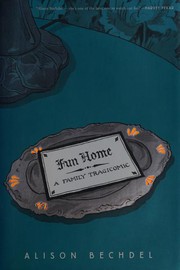
Fun Home: A Family Tragicomic
2,755-word summary 12 min read 232 pages in the book
- First published
- 2006
- Publisher
- Houghton Mifflin
- Pages
- 232
- ISBN
- 9780618477944
Reading options
What's inside (8 sections)
I came to Fun Home knowing it was famous and feeling a little wary of famous sad books. Alison Bechdel published Fun Home: A Family Tragicomic with Houghton Mifflin in 2006, a 232 page graphic memoir drawn in black line with a gray blue wash. It tells the story of her childhood in Beech Creek, Pennsylvania, her relationship with her father Bruce, and the months around his death when she was nineteen. It took her about seven years to write and draw. You can feel that time on every page. Panels are packed with furniture, book spines, wallpaper, letters, diary entries, maps. Nothing looks rushed.
The title needs explaining first because Bechdel means it two ways. Fun Home was the family nickname for the funeral home. Bruce Bechdel grew up in the family funeral business and later ran it while also teaching high school English. Alison and her brothers played hide and seek among caskets. Death was furniture in their house before they had words for grief. The second meaning is ironic. Home was not always fun. Bruce could be cold, exacting, and prone to sudden rage. He ruled the look of the house with total control and ruled the people in it with distance.
That tension between beautiful surfaces and withheld feeling is the whole book.
The house that father restored
Bruce bought and restored a Victorian house in rural Pennsylvania, and Bechdel draws it as his real self portrait. He hunted down period wallpaper, stripped wood, arranged rooms like stage sets. One panel shows a parlor so perfect it looks unusable. Alison remembers him polishing, positioning, correcting. A picture hung slightly wrong could set off a shouting fit. Company saw taste. The kids felt the cost.
Bechdel connects this to her father's two jobs. As a funeral director he made bodies presentable, hiding damage with cosmetics and lighting. As an English teacher he loved Fitzgerald and Henry James and taught his students to admire constructed worlds. At home he did both at once, composing rooms and children into a picture he could stand. When Alison describes herself as Spartan to his Athenian, plain to his ornate, she is pointing at something real. She wore no nonsense clothes and cut her hair short. He loved velvet and gilt and fresh flowers. They were both artists in a way, both obsessive, but their tastes faced opposite directions.
The art carries this better than prose could. Bechdel draws the house from many angles, close on a light fixture, wide on a staircase, tiny figures lost in big rooms. You see how small a child feels in a museum she is not allowed to touch. Backgrounds are full of period detail because Bruce filled the house with it. I spent a long time on these pages just reading the rooms. A lamp, a rug, a row of books can tell you more about control than a paragraph of explanation.
One fair warning: this is a slow book. If you want plot, the house chapters can feel static. Rooms do not change fast. But that stillness is the point. Bechdel is showing you what it was like to grow up inside someone else's restoration project, where dust was a moral failure and your body was another object to arrange.
Growing up Bechdel
Alison, the middle child with two brothers, narrates from the present looking back, and she does not pretend her memory is clean. She reproduces her childhood diary entries, complete with routine notes about weather and constipation and small worries, and she admits how much those entries leave out. She copies old letters, photographs, newspaper clippings, even a local map. The effect is strange and honest. You see the document and her drawing of the document at once, which reminds you that every memoir is a reconstruction.
As a kid Alison was anxious and precise. She developed obsessive habits early, counting, checking, repeating phrases to ward off bad thoughts. She shows this without self pity. One sequence lists her rituals in flat captions while the drawings show a small girl trying to get through a day. Her father shared that bent for order, though his went into houses and hers went into rules. Bechdel suggests the link without forcing it. They were alike in ways neither could stand.
Gender runs through these chapters in concrete scenes. Alison wanted short hair and boys clothes. She remembers wanting to trade her tank suit for shorts at Cannes, asking her brothers to call her Albert on a camping trip, feeling thrilled by competence and strength rather than prettiness. Bruce kept trying to feminize her, laying out barrettes, criticizing her clothes, pushing her toward a softer look. At the same time Alison saw her father as fussy and decorative in ways the town coded as feminine. She calls him a big sissy in one remembered thought, then complicates it. He policed her gender while breaking the rules himself in secret. That contradiction hurt both of them.
Her mother Helen gets less space but matters a lot. Helen was an actress and a reader, worn down by a marriage full of performance. She met Bruce when both were in a college production of The Taming of the Shrew, which Bechdel notes with dark humor. Later Helen played Lady Bracknell in The Importance of Being Earnest while her real marriage echoed Wilde's double life. Bechdel does not paint Helen as a simple victim. She is tired, sometimes sharp, sometimes absent, trying to keep three kids steady while her husband rages about curtains.
School, church, town, the funeral business, all of it sits in the background of these pages like weather. Bechdel draws television sets playing in corners, posters on walls, the funeral home prep room glimpsed through doors. Kids who grew up around death learn odd lessons. Alison ponders bodies and accidents early. When her father later dies under a truck, that old familiarity makes her questions colder and harder to shake.
Two coming outs, twenty years apart
The center of the book is Alison's first year of college and the parallel discovery that shapes everything after. At nineteen she reads, talks, tests words in her diary, and names herself as a lesbian. The scenes are funny and tender. She writes to her parents. She falls for a confident older student named Joan and has her first sexual relationship, drawn with care rather than heat. Bechdel includes diary lines and library books and late night talk. You feel how books gave her a path. She had read her way to herself.
Then comes the reply from home. Her mother writes back that her father has been having affairs with men. Not one rumor but a pattern, going back to the military and continuing with high school students, some of them boys the family knew, some who babysat Alison and her brothers. Alison's first reaction is not only shock. It is a weird displaced feeling she names with painful honesty. She had just claimed the lead role in her own drama, and suddenly her father steps into the same plot with a longer, darker script.
What follows is the most careful part of the memoir. Alison does not accuse from a distance. She tries to reconstruct what Bruce did and why he hid it. Small town Pennsylvania in the seventies, a teaching job, a funeral business dependent on reputation, three kids, a wife. He chose marriage and performance. He chose secret encounters that risked his job and his family. Bechdel shows him cruising, lying, paying, charming, always afraid. She also shows moments of near confession. Shortly before his death, father and daughter take a drive and talk around the truth. He admits some of his history. She tells him she is gay. The conversation never quite lands. It stays coded, careful, interrupted by the road. Bechdel presents it as the closest they ever came, which makes it both moving and thin. You want more for her. She knows you want more.
Critics sometimes argue Bechdel goes easy on Bruce about the students. Teenage boys, power imbalance, a teacher. She names it plainly as wrong and does not linger on graphic detail, choosing instead to focus on Alison's shock and Helen's exhaustion. I think that choice is defensible because the book is about Alison's understanding, not a court record, but readers should know the book will not give you a full investigation. It gives you a daughter's partial view, with gaps she admits.
The truck on the road
Bruce died at forty four, two weeks after Helen asked for a divorce. He stepped into the path of a Sunbeam Bread truck on a road near home and was killed. Bechdel lays out the facts with almost legal calm. Time of day, road, driver, what Bruce was doing with the house that week. Then she asks the question she cannot drop. Accident or suicide.
She leans toward suicide without claiming proof. The timing after the divorce request, his depression, the recklessness friends noticed, the way he had been careless around that road, the Camus books he was reading about whether life is worth living. She also admits the counter facts. The driver did not see him in time. The sun, the noise, the weeds he was clearing. Bechdel refuses a clean verdict, and that refusal is braver than a firm answer would be. She lets both versions sit on the page.
What hit me hardest is how she ties this to her own coming out. She wonders if her letter pushed him. Did telling her parents she was a lesbian crack his hiding place. Did he see in her openness a freedom he could not take, or a shame he could not face. She never answers this either. She returns to it from different angles across chapters, each time with new context, each time leaving it open. The structure here is spiral rather than straight. Bechdel calls the book a labyrinth in interviews, and you feel it. Same scenes come back with new captions. A photo means one thing on page forty and another on page one eighty.
The funeral scenes are quiet and expert. Of course she knows how funerals work. She draws the viewing, the casket, the neighbors, the strange normal talk. There is no big breakdown drawn for effect. Grief shows in small corrections, a caption revised, a date checked, a floor plan redrawn. I found that restraint more upsetting than any splash page would be.
How the pages are built
For a graphic memoir assignment or just for readers who love process, the art chapters deserve slow attention. Bechdel worked in black line with a gray blue wash that gives the whole book a bleak, elegiac tone. That blue gray was chosen with care. It suits memory, winter light in Pennsylvania, old photographs, formaldehyde coolness. Faces are drawn simply but distinctly. You always know who is who. Backgrounds carry the weight. Shelves, curtains, gravestones, car interiors, all rendered with steady patience.
Her method was famously laborious. She built each page digitally first for text placement, posed for nearly every figure herself with a camera, used old family photos and maps as reference, drew final line art on Bristol board, painted the wash separately on watercolor paper, then combined them. She even recopied handwriting, diary pages, and book passages by hand so they sit inside the drawing rather than looking pasted on. Knowing this changed how I read. When Alison holds up a photo of Bruce as a young man in uniform, you are seeing Bechdel's drawing of a photo, posed and copied, framed by a caption questioning it. Truth arrives with its seams showing, which feels right for this family.
Panels are dense. Captions run long, often literary, while dialogue stays short inside the scene. That split lets Bechdel be in two times at once. The caption is the adult writer thinking. The image is the child living it. Sometimes they agree. Often the image undercuts the caption, or the caption corrects the image. Reading means moving between them, checking one against the other. Sean Wilsey's old review called it a comic for lovers of words, and that still fits. There is more text here than in most graphic novels, and most of it earns its place.
Then there are the books inside the book. Each chapter centers on a literary lens. Joyce's Portrait and Ulysses for fathers and sons and artists. Proust for memory and hidden sexuality. Fitzgerald's Gatsby for Bruce's self invention. Henry James for Helen's trapped intelligence. Camus on suicide. Stevens, Wilde, Colette, Kate Millett's Flying, E. H. Shepard's drawings for The Wind in the Willows. Chapter titles quote Joyce, Camus, Stevens, Proust. Some readers love this. I mostly did. It shows how a bookish kid used reading to decode parents who would not speak plainly. At times it does feel heavy. A few pages read like an essay with pictures attached rather than a story told in pictures. If you bounce off literary name checks, pace yourself. The family scenes will still carry you.
One small craft note I appreciated: Bechdel draws media in the background with purpose. A television playing It's a Wonderful Life, Sesame Street figures, Batman, news of Nixon's resignation. These are not random jokes. They date scenes, mark class and town, and show what the kids watched while adults fought upstairs. Pay attention to what is on in the corner of a panel. It often tells you the year faster than a caption.
Awards, arguments, and who should read it
Fun Home did what few graphic books had done. It spent two weeks on the New York Times hardcover nonfiction bestseller list, won the Eisner Award for Best Reality Based Work, was a finalist for the National Book Critics Circle Award in memoir, took Stonewall and Lambda honors, and was named to many best of 2006 and best of the decade lists. Time called it the best book of 2006. Later it became a stage musical with book and lyrics by Lisa Kron and music by Jeanine Tesori, which won the Tony Award for Best Musical in 2015 after opening on Broadway. That stage life says a lot about the material. The story holds without the drawings because the structure is that strong.
It has also been challenged and removed in schools and libraries, and assigned in colleges to loud debate. The reasons are plain on the page. Frank lesbian sexuality, teenage diary notes about masturbation, adult gay affairs including with students, suicide, emotional abuse. None of it is drawn for shock. Bechdel's line stays controlled even when the subject is raw. But this is not a book for young kids, and older teens will do better reading it with context. I would hand it to a careful sixteen year old who reads literary fiction, and without hesitation to any adult who likes memoir.
Fair criticism, beyond the blind spots already named. The non linear spiral can frustrate. Bechdel repeats scenes with small changes, and if you want forward motion you may feel stuck. Her father remains partly opaque by design, which some readers will read as evasion. Helen and the brothers can feel thin next to Bruce and Alison, present more as witnesses than full people. Are You My Mother, Bechdel's later book, fills in Helen, but inside Fun Home the imbalance shows. And the literary scaffolding, strong as it is, sometimes crowds out feeling. A reference can explain a scene so neatly that grief has nowhere to sit.
Still, the whole is larger than those limits. The last pages do not offer healing or a moral. They offer an image of Alison as a child playing airplane with Bruce, held high in his hands, paired with adult captions about balance and falling. It lands because the book has earned tenderness without forgiveness theater. He failed her in specific ways. He also gave her art, attention to surfaces, love of sentences, a model of what hiding costs. She used all of it to make this.
Read Fun Home slowly, with light to see the wash. Read the captions, then read the pictures, then read them together. Check the dates on letters. Look at the wallpaper. Notice how often doors are half open. You will finish knowing this family better than you know some of your own neighbors, and you will understand why a funeral home nickname became the truest title Bechdel could choose.
FAQ
When was Fun Home published?
Fun Home: A Family Tragicomic was first published by Houghton Mifflin on June 8, 2006. The hardcover runs 232 pages and the ISBN is 9780618477944.
Is Fun Home part of a series?
No. It is a standalone graphic memoir, though Bechdel later wrote Are You My Mother? about her mother. You can read Fun Home on its own.
Is Fun Home suitable for teen readers?
It suits older teens and adults. It includes frank discussion of sexuality, suicide, and emotional abuse, drawn in a careful literary style that schools often assign with guidance.
Similar books
Brown Girl Dreaming
Jacqueline Woodson retells her childhood in verse, moving from Ohio to South Carolina to Brooklyn while the civil rights movement reshapes the world around her.
2,727-word summary · 12 min read

Aristotle and Dante Dive into the Waters of the World
Ari and Dante return for senior year in El Paso, navigating first love, AIDS, family grief, and the cost of being openly gay in 1987 Texas.
2,188-word summary · 10 min read
Blankets
Craig Thompson recalls sharing a bed with brother Phil, falling for Raina at church camp, losing his faith, and keeping art through Michigan winters.
2,586-word summary · 11 min read
Tell the Wolves I'm Home
A grieving fourteen year old secretly befriends her late uncle's boyfriend in 1980s New York, testing family loyalty and love.
3,014-word summary · 13 min read
On Earth We're Briefly Gorgeous
A son writes to the mother who cannot read him: war, migration, first love, and loss in one Vietnamese American family in Hartford.
3,113-word summary · 14 min read
Running with Scissors
A boy sent to live with his mother's psychiatrist grows up in a chaotic house with no rules.
2,036-word summary · 9 min read
Heartstopper: Volume Three
Nick and Charlie test honesty on a Paris trip while friends face exams, outings, and eating-disorder strain.
2,355-word summary · 10 min read

Aristotle and Dante Discover the Secrets of the Universe
Two Mexican American boys in 1987 El Paso become inseparable and learn what love asks of family.
2,093-word summary · 9 min read

What Happened to Goodbye
Mclean has reinvented herself in four towns since her parents divorced. In Lakeview she uses her real name, and for the first time staying put becomes a choice.
2,796-word summary · 12 min read
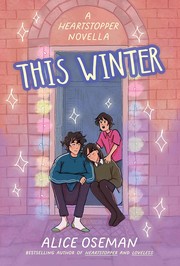
This Winter
On one difficult Christmas Day, Tori, Charlie, and Oliver Spring try to hold their family together while Charlie's eating disorder makes every tradition a test.
2,034-word summary · 9 min read

Little Town on the Prairie
In the spring after the Long Winter, fifteen-year-old Laura sews shirts, studies for a teaching certificate, and helps send her blind sister Mary to college.
2,071-word summary · 9 min read

Too Much and Never Enough: How My Family Created the World's Most Dangerous Man
Mary L. Trump's 2020 memoir traces how a cold, zero-sum Queens household shaped her uncle, and uses family tax documents to challenge his self-made story.
2,059-word summary · 9 min read

Mrs. Everything
Two Jewish sisters in Detroit grow up, apart and together, across seven decades of American life, from the 1950s to the 2016 election.
2,362-word summary · 10 min read

Ms. Marvel, Vol. 1: No Normal
Kamala Khan, a Jersey City teenager and Carol Danvers fan, gains shapeshifting powers and has to decide what kind of hero she wants to be.
2,579-word summary · 11 min read

The Age of Miracles
A California girl grows up while the Earth's rotation slows, and ordinary adolescence continues alongside slow catastrophe.
2,417-word summary · 11 min read

Peace Like a River
An asthmatic boy in the early 1960s narrates his family's search for his older brother, who is accused of two killings and has escaped custody.
1,969-word summary · 9 min read
Beautiful Boy: A Father's Journey Through His Son's Addiction
David Sheff recounts watching his son Nic slide into meth addiction, and his own desperate, humbling search for how to help without destroying them both.
2,076-word summary · 9 min read

We Are Okay
Marin fled San Francisco after her grandfather vanished and stopped answering anyone. When Mabel visits her college dorm, she has to say what happened.
2,253-word summary · 10 min read

The Chosen
A shattered pair of glasses in a 1944 Brooklyn softball game starts a friendship between a Hasidic boy and his Orthodox neighbor, and their fathers pull them…
2,443-word summary · 11 min read

The Magnolia Story
How Chip and Joanna Gaines met, closed their first shop, nearly lost everything in a housing development, and built Fixer Upper.
2,994-word summary · 13 min read

Sing You Home
A music therapist, her new wife and an evangelical ex-husband end up in court over three frozen IVF embryos.
2,952-word summary · 13 min read
Dry
A memoir of drinking, rehab and relapse, and the strange business of getting sober one morning at a time.
2,643-word summary · 12 min read

The Second Summer of the Sisterhood
Four friends share the traveling pants through a summer of grandmothers, first loves, and mothers who are learning to let go.
2,209-word summary · 10 min read
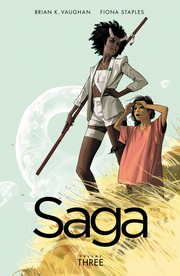
Saga, Volume 3
Marko, Alana, and Hazel hide on the planet Quietus with the reclusive author who inspired their romance, while assassins and a prince close in.
1,989-word summary · 9 min read
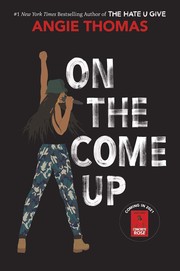
On the Come Up
Bri Jackson, a sixteen-year-old rapper in Garden Heights, chases a record deal while a viral song turns her into a symbol she never wanted to be.
2,034-word summary · 9 min read

Old Yeller
Travis Coates takes in a stray yellow dog that protects his family on the Texas frontier, and learns about loyalty and loss.
2,165-word summary · 10 min read
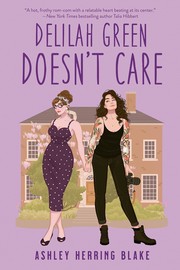
Delilah Green Doesn't Care
Delilah returns to Bright Falls to photograph her stepsister's wedding and falls for Claire, a bookstore owner and single mother, while a cruel bet threatens…
2,315-word summary · 10 min read
American Born Chinese
Three stories, a monkey king, a Chinese-American boy and a sitcom cousin, converge in a graphic novel about shame, assimilation and learning to accept yourself.
2,107-word summary · 9 min read
A Painted House
In 1952 Arkansas, seven-year-old Luke Chandler picks cotton with his family and learns how quickly poverty, violence, and adult secrets can end a childhood.
2,060-word summary · 9 min read