
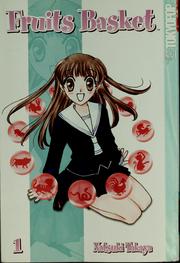
Fruits Basket, Vol. 1
2,284-word summary 10 min read 216 pages in the book
- First published
- 1999
- Publisher
- Tokyopop
- Pages
- 216
- ISBN
- 9781591826033
- Original title
- フルーツバスケット 1
- Series
- Fruits Basket (#1)
Reading options
What's inside (7 sections)
I came to Fruits Basket late, long after it had become one of those manga people describe with unusual tenderness. Friends who read it as teenagers talked about it the way others talk about a favorite teacher, with real gratitude. So I started at the beginning, with the first volume. It first appeared in Japan in January 1999 from Hakusensha, after serialization began in the magazine Hana to Yume in 1998, and the English edition I read is the 2004 Tokyopop release, 216 pages in the classic right to left format. The whole series would run to 23 volumes, closing in 2006, but here at the start it is small and domestic. One orphaned girl, one strange household, one secret.
The premise sounds like a comedy sketch. Tohru Honda, a high school girl whose mother has died, ends up living with three members of the wealthy Sohma family and discovers they turn into animals of the Chinese zodiac when hugged by someone of the opposite sex. A boy becomes a rat. Another becomes a cat. Their older cousin becomes a dog and collapses in a heap of laundry. It is funny, and Natsuki Takaya draws the comedy broadly, with flying figures and furious scribbles. Underneath, though, this volume is about grief and about what it means to be allowed to belong somewhere. I finished it faster than I expected and sat quietly for a while afterward.
Readers new to older shojo manga should know the art takes a chapter to get used to. Takaya draws extremely tall, thin figures with enormous eyes, and the tone swings hard between slapstick and sorrow, sometimes on the same page. Stick with it past the first two chapters. Once the household settles, the storytelling steadies, and the emotional payoff at the end of the volume is genuine.
A girl living in a tent
Tohru Honda is sixteen, orphaned, and determined not to be a burden to anyone. Her father died when she was small. Her mother Kyoko, who raised her alone, died recently, and Tohru speaks to her mother's photograph every morning like a daily report. Her grandfather's house is being renovated, and rather than impose on her two best friends, she pitches a tent in the woods and walks to school from there. She works part time to cover her own costs, keeps her grades up, and tells everyone she is fine. She is not fine. She is running on politeness and exhaustion, and Takaya shows this in small touches. Tohru smiles when she should rest, apologizes when she should ask for help, and treats her own needs as an inconvenience to others.
The tent sits on land owned by the Sohma family, which Tohru does not realize until she literally walks into the owners. Yuki Sohma is the beautiful, distant boy from her school, admired by half the student body and nicknamed the prince. Shigure Sohma is his older cousin, a laid back novelist who teases everyone and keeps a famously messy house. They find Tohru's tent, learn she has been secretly camping in their woods, and react with a mix of alarm and amusement. When a landslide swallows the tent, the question answers itself. Shigure and Yuki invite Tohru to move into their house in exchange for cooking and cleaning, which Tohru accepts because it lets her feel useful instead of pitied.
What I liked here is how much Takaya tells us about Tohru through housework. She throws herself into scrubbing and cooking with visible relief, because chores have rules and grief does not. Yuki watches her with a quiet attention that suggests he recognizes something. He is the school idol who goes home to a family that treats him as fragile property, and Tohru's plain kindness lands differently for him than admiration does. Shigure, meanwhile, plays the fool while steering events, and you can tell early that he understands more than he lets on. The household forms around Tohru's labor, but the book is already hinting that she is giving these boys something rarer than clean floors.
Three boys become three animals
The secret breaks open with a crash, literally through the ceiling. Kyo Sohma, another cousin, kicks his way into the house spoiling for a fight with Yuki, and the two start brawling before Tohru can even introduce herself. Kyo is all heat where Yuki is ice, orange haired, foul mouthed, and furious at Yuki for reasons he will not explain. Tohru rushes in to stop the fight, grabs at the boys to pull them apart, and suddenly there are animals on the floor. Yuki has become a small rat. Kyo has become an orange cat. Shigure, caught in the pile, has become a large dog.
The explanation that follows is the engine of the whole series. Thirteen members of the Sohma family carry a curse tied to the Chinese zodiac. Twelve hold the zodiac spirits, and one, Kyo, holds the cat, the animal left out of the zodiac story. When a cursed person is hugged by someone of the opposite sex, or when they are weak, stressed, or deeply embarrassed, they transform into their animal. Clothes do not survive the change, which supplies much of the volume's farce, since transformed boys must hide until they change back and dress. The family is led by a figure named Akito, and Tohru learns that outsiders who discover the secret normally have their memories erased. She begs to keep her memories and promises silence, and the household, somewhat to its own surprise, agrees to let her stay.
Takaya handles this reveal well because she keeps Tohru's reaction human. Tohru is startled, then curious, then sad on their behalf, and never disgusted. She apologizes for intruding on something private, which tells you everything about her. The boys, who expected fear or scheming, do not know what to do with simple acceptance. Kyo in particular cannot process it. He has been treated as the cursed outcast of a cursed family, blamed for things beyond his control, and Tohru's refusal to flinch unsettles him. Yuki, the rat, valued and caged in equal measure, finds in her the first person who sees him without wanting something. The curse mechanics are fantasy, but the feelings underneath are plain. Being known at your strangest and still being welcome is the wish at the center of the book.
Housework, homework, and sparring
With the secret out, the volume settles into daily life, and these middle chapters are where the series finds its rhythm. Tohru cooks, the boys bicker, school continues, and small incidents reveal character. Kyo and Yuki fight constantly, and Tohru learns the shape of their rivalry. Kyo has trained for years for a rematch he believes will decide his worth, while Yuki treats the whole contest as a burden he never chose. Tohru, who has no experience with brothers, first wishes they would simply get along, then starts to understand that easy advice from outside cannot fix a wound this old. Her growth in this volume is learning to sit with other people's pain instead of sweeping it tidy.
School scenes bring Tohru's two best friends into focus, and they are wonderful. Arisa Uotani, tall and tough talking, was once a delinquent whom Tohru's mother helped steer straight, and her loyalty to Tohru is fierce. Saki Hanajima, quiet and strange, is treated by classmates with superstitious fear, but her devotion to Tohru is absolute. Both girls adore Tohru and distrust the Sohmas on principle, and their protectiveness gives the book a second family to balance the first. When Uo and Hana visit or interrogate the boys, the comedy sharpens, because these are girls who cannot be charmed or deflected. They want to know who is feeding Tohru and whether she is sleeping enough, which are exactly the right questions.
Kagura Sohma arrives like a small storm and nearly steals the volume. She carries the boar spirit, loves Kyo with overwhelming force, and expresses it by tackling him through walls. At first she sees Tohru as a rival and acts accordingly, which frightens Tohru badly. But Kagura is not cruel, only intense and lonely, and once she understands that Tohru wants friendship rather than competition, she pivots hard into affection. Her chapters add something important. The curse does not look the same on everyone. For Yuki it means isolation inside admiration. For Kyo it means rejection. For Kagura it means love so large it hurts people by accident. Tohru absorbs all of this without judgment, and each Sohma files her away as someone safe.
The game that names the book
The title finally pays off near the end of the volume, and it reframes everything before it. As a child, Tohru played the classroom game where kids sit in a circle as fruits and scramble seats when their fruit is called. Tohru was given the rice ball, the onigiri, which is not a fruit at all. The other children laughed, nobody called her fruit, and she sat alone while the game went on around her. She tells this memory without self pity, as a funny story about herself, but it lands like a stone. Tohru has felt like the onigiri her whole life, present but not truly included, loved by her mother yet always slightly outside the circle.
This connects directly to the visit to her grandfather's house, the emotional center of the volume. With repairs finished, Tohru is expected to move back in with relatives, and for a stretch it looks like the Sohma household was only a loan. Her aunt makes cutting remarks, the old grief over her mother surges up, and Tohru has to decide where she actually wants to live. Yuki and Kyo come to bring her home, and the scene that follows earns its sentiment. Tohru realizes the Sohmas are not keeping her out of charity. They need her cooking less than they need her company. When she imagines herself hearing her fruit called at last, it is not subtle, but Takaya draws it with such tenderness that I did not mind. The girl who sat out the game has found a circle that calls her name.
Kyoko Honda hovers over all of this without dominating it. Flashbacks show a mother who was once a teenage runaway herself, who turned her life around and loved her daughter with startling intensity. Tohru idolizes her, perhaps too much, and part of her refusal to burden others comes from trying to live up to a mother who survived everything alone. The volume does not resolve this. It plants it. Tohru's devotion to Kyoko's memory is beautiful and also a little unhealthy, and later volumes will have to reckon with what happens when a girl who lives for the dead must choose the living. For now, the photograph on the shelf watches over a household that is slowly becoming a family.
What shines and what creaks
So much of this first volume works that I want to be fair about the parts that creak. The art is the first hurdle. Takaya's style in these early chapters is angular and exaggerated, with screentone doing heavy lifting and emotions telegraphed in giant sparkles and speed lines. Readers raised on cleaner modern manga may bounce off it. I did, briefly, in chapter one. It improves noticeably across the volume as Takaya settles into the characters' faces, and by the Kagura chapters the expressions carry real subtlety. Give it fifty pages before deciding.
The comedy is the second hurdle, and mileage will vary. Shigure's teasing runs constantly, including jokes about Tohru's age and obliviousness that read as the flirtation style of older manga and can feel off now. The transformation nudity is always played for slapstick and never drawn explicitly, since Takaya cuts away to steam and symbols, but the frequency of nosebleed style gags dates the book. None of it tipped into meanness for me, and the series clearly loves its characters, but a modern reader should know the humor comes from 1998. The 2019 anime smooths some of this down. The manga leaves it in.
The melodrama is the third thing, and honestly it is also the point. Takaya narrates feelings at length, characters explain their wounds out loud, and tears flow freely. If you prefer your emotion buried and dry, this will feel like too much. I found that the sincerity is the product. Fruits Basket never smirks at kindness. In a crowded field of manga where caring is often played as weakness, Tohru's stubborn gentleness feels radical. The volume's best trick is making you believe that listening to someone, really listening, can be a plot event on par with any fight scene. Kyo and Yuki's brawls shake the house. Tohru remembering what someone said shakes them more.
Who should read this? Anyone who likes character driven fantasy where the magic exists to reveal people rather than to stage battles. Fans of shojo classics, of stories about found family, of slow burn emotional arcs that pay off across many volumes. It is rated for young teens and up, and the content here is gentle, with slapstick violence, mild language, and themes of grief and parental loss. Readers who need tight plotting in every chapter may find the middle episodic. I would still tell them to finish the volume. The last third, from the grandfather visit through the fruits basket memory, ties the early comedy to real stakes, and it promises, correctly, that the story knows where it is going. Twenty two more volumes waited for me after this one, and for the first time in a long while I felt genuinely glad about that.
FAQ
What is the Sohma family curse?
Thirteen Sohmas turn into animals of the zodiac plus the cat when hugged by someone of the opposite sex, or when weak, stressed, or embarrassed.
Why is the series called Fruits Basket?
It comes from a classroom game where Tohru was assigned the rice ball instead of a fruit, so nobody ever called her name and she sat out.
Is Vol. 1 the whole story?
No. This is volume 1 of 23. The manga was serialized in Hana to Yume from 1998 to 2006, with the English edition following from Tokyopop in 2004.
Similar books
More from Fruits Basket first, then related titles.

What Happened to Goodbye
Mclean has reinvented herself in four towns since her parents divorced. In Lakeview she uses her real name, and for the first time staying put becomes a choice.
2,796-word summary · 12 min read

The Second Summer of the Sisterhood
Four friends share the traveling pants through a summer of grandmothers, first loves, and mothers who are learning to let go.
2,209-word summary · 10 min read

Aristotle and Dante Dive into the Waters of the World
Ari and Dante return for senior year in El Paso, navigating first love, AIDS, family grief, and the cost of being openly gay in 1987 Texas.
2,188-word summary · 10 min read

Someone Like You
Halley and her best friend Scarlett face a summer of grief, a surprise pregnancy, and Halley's dangerous first romance in Sarah Dessen's 1998 young adult novel.
2,218-word summary · 10 min read
The Rules of Magic
Franny, Jet, and Vincent Owens test strict family rules and a love curse in 1960s Manhattan and Massachusetts in Alice Hoffman's warm prequel about love, loss,…
2,686-word summary · 12 min read

Vampire Knight, Vol. 1
Guardian Yuki protects Day students from secret vampire Night Class while Zero hates what he may become.
2,106-word summary · 9 min read

Lola and the Boy Next Door
Costume maker Lola must choose between older Max and inventor Cricket while her two dads hold home steady.
2,045-word summary · 9 min read

Naruto, Vol. 1: Uzumaki Naruto
Naruto Uzumaki fails his ninja exam, steals a forbidden scroll, and lands on Team 7. A full chapter by chapter retelling of Vol. 1 plus Kishimoto context.
2,942-word summary · 13 min read

Along for the Ride
Insomniac Auden spends a beach summer with her dad and learns biking, parties, and love from Eli.
1,938-word summary · 9 min read

Always and Forever, Lara Jean
Senior year brings college letters, distance from Peter, and a dad wedding Lara Jean helps hold together.
2,037-word summary · 9 min read
Before the Coffee Gets Cold
In a Tokyo cafe where guests can revisit the past until their coffee cools, four visitors seek words left unsaid with lovers and kin.
2,233-word summary · 10 min read

The Last Song
Angry teen Ronnie spends a summer in Wilmington with her pianist father, finding first love, family repair, and loss.
2,761-word summary · 12 min read

The Japanese Lover
A Polish refugee and the son of a Japanese gardener fall in love in San Francisco in 1939, then keep the affair secret for nearly seventy years.
2,286-word summary · 10 min read

Six Scorched Roses
A dying scholar bargains with a reclusive vampire for blood, and six roses turn a transaction into a slow, dangerous romance.
2,663-word summary · 12 min read

Ship of Magic
A sentient ship wakes when her captain dies, and the family that owns her starts to come apart over who gets to sail her.
2,026-word summary · 9 min read
Brown Girl Dreaming
Jacqueline Woodson retells her childhood in verse, moving from Ohio to South Carolina to Brooklyn while the civil rights movement reshapes the world around her.
2,727-word summary · 12 min read

Vow of Thieves
Kazi and Jase return to Tor's Watch to find it occupied, and their marriage is tested by captivity, betrayal, and a war for the town of Hell's Mouth.
2,059-word summary · 9 min read

The Shadow Sister
Star D'Apliese steps out of her sister's shadow and follows a bookshop clue into the Edwardian life of Flora MacNichol, a woman who gave up love for duty.
2,260-word summary · 10 min read

The Lost Sisters
Taryn Duarte writes a letter to her twin, Jude, explaining how she fell for Locke and why she stayed silent while he used them both.
1,914-word summary · 9 min read

Magic Burns
A magic flare hits Atlanta, and mercenary Kate Daniels must recover stolen maps, find a missing witch, and keep a teenage girl alive while Celtic gods try to…
2,021-word summary · 9 min read

Little Town on the Prairie
In the spring after the Long Winter, fifteen-year-old Laura sews shirts, studies for a teaching certificate, and helps send her blind sister Mary to college.
2,071-word summary · 9 min read

Dumplin'
Willowdean Dickson enters her town's beauty pageant as a protest and discovers that confidence is harder to keep once she lets someone close.
1,922-word summary · 9 min read
At Grave's End
Cat and Bones face Max, a zombie-raising ancient vampire, and a prophecy that ties their marriage to Patra's death in the third Night Huntress novel.
2,061-word summary · 9 min read

Blood Bonds
Oleander is chained in a Resistance camp, and her five Bonds have to find her before Silas Davies finishes what he started in this third Bonds that Tie book.
2,018-word summary · 9 min read

Archenemies
Nova steals for the Anarchists while Adrian hides his Sentinel identity, and a serum that erases prodigy powers puts them both at risk.
2,485-word summary · 11 min read

The Siren
Saved from a shipwreck in 1930, Kahlen becomes a siren who sings men to their deaths for the Ocean, until a boy in a college library makes her want a life she…
2,369-word summary · 11 min read

Ricochet
Lily Calloway tries to stay celibate for ninety days while Loren is in rehab, leaning on Rose, Connor, and Ryke as therapy forces her to face her childhood.
2,575-word summary · 11 min read

Cruel Beauty
A girl raised to kill the demon prince who rules her cursed land instead falls in love with him, in a retelling that mixes Beauty and the Beast with Bluebeard…
2,669-word summary · 12 min read

Chainsaw Man, Vol. 1: Dog and Chainsaw
A broke teenage devil hunter and his chainsaw dog get a second life, a government leash, and a fight that stops mid-swing in Fujimoto's horror comedy.
2,584-word summary · 11 min read

Under Locke
Iris Taylor moves to Austin broke and wary, takes a front-desk job at a tattoo shop, and spends the book learning that Dex Locke’s blunt cruelty and unexpected…
2,591-word summary · 12 min read