
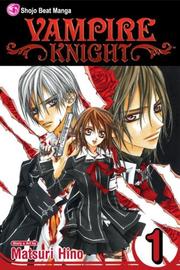
Vampire Knight, Vol. 1
2,106-word summary 9 min read 200 pages in the book
- First published
- 2005
- Publisher
- Viz Media
- Pages
- 200
- ISBN
- 9781421508221
- Series
- Vampire Knight (#1)
Reading options
What's inside (7 sections)
I borrowed Vampire Knight Vol 1 expecting pretty vampires and found a boarding school mystery with real bite about coexistence that fails. Matsuri Hino's 2005 opener, 200 pages in Viz Shojo Beat edition, introduces Cross Academy with Day Class humans unaware that Night Class beauties are vampires, guarded by Yuki and Zero. At nineteen volumes total, this start is all promise and sharp teeth barely hidden behind smiles.
Cross Academy day and night
Cross Academy sits in pretty isolation with a headmaster who believes vampires and humans can share school. Day Class girls in uniforms giggle and chase. Night Class elites in white uniforms arrive at dusk to sighs, all pale beauty and good grades. Yuki Cross, adopted daughter of headmaster Kaien, and Zero Kiryu, scarred boy with a gun called Bloody Rose, patrol as Guardians with armbands, stopping Day girls from mobbing Night boys at the gates. The setup reads as Hogwarts meets host club with fangs, and Hino draws it gorgeously. Gates, moons, uniforms fluttering, eyes glowing in shadow.
Yuki has no memory before age five when Kaname Kuran, pureblood prince, saved her from a vampire attack in snow. She loves Kaien as father, Zero as brotherish friend, Kaname as distant savior who visits with cold kindness. She believes in coexistence because headmaster preaches it and because she is kind. Zero hates vampires because they killed his family, leaving him and twin brother Ichiru orphaned under hunter care. He takes hunter training to kill, not to guard, and hides growing thirst that marks him as turning. Their partnership works through bickering about duty rosters and shared childhood of nightmares. He scolds her for napping on duty. She sneaks him sweets though sugar is bad for his hunger. Care expressed as nagging is shojo at its most comfortable.
What works is how Hino uses school rules to talk about segregation. Separate dorms, separate classes, curfews, punishments for crossing. Headmaster calls it experiment in peace. Students experience it as erotic mystery that makes Night Class more desirable for being forbidden. Day girls trade photos like idols. Night vampires sneer at human noise. Guardians enforce a peace neither side fully wants while adults watch from towers. Replace vampire with any feared minority and the allegory holds without preaching. Fear plus fascination equals fetish that helps no one. Yuki, who likes individuals on both sides, sees the flaw before she can name it. Liking is not structure. Smiles at gates do not change blood law.
Art carries much of the load in volume one with limited plot. Hino draws eyes huge and detailed, hair flowing across panels, uniforms crisp, roses symbolic. Action is minimal. A chase, a bite averted, a gun raised and lowered. Mood does the work through screentone nights and close ups on necks. Readers wanting fights should wait for later volumes. Readers who like atmosphere and love triangles will settle in fast. My reread noticed how often Yuki is framed small between tall boys, a visual thesis about being protected that later volumes will challenge when she claims power.
Zero hates, Kaname watches
Zero Kiryu is the book's wound walking. Silver haired, violet eyed, angry at vampires and at himself for needing blood tablets that taste like ash. He trains with hunter Yagari, takes night shifts though hunger spikes near Night Class scents, and pushes Yuki away when she offers wrist though both know hunter code forbids. His hatred is specific. A pureblood woman killed his parents and bit his twin, leaving him with trauma and a slow turning that will make him what he hates unless cured. He tells Yuki he will ask her to kill him if he falls, a promise she refuses to make. That refusal defines their bond more than any flirtation. I will not give up on you even if you ask is love as stubbornness.
Kaname Kuran watches from Night dorm windows with千年? No, with centuries of calm. Pureblood who saved Yuki, who funds the Academy experiment, who bows to headmaster while ordering vampires with a glance. He touches Yuki's head like a brother and looks at her like more, a dynamic uncomfortable given age gap and power gap that shojo often romanticizes. Hino frames it as fated rather than predatory in volume one, with Kaname rescuing Yuki from a vampire teacher who loses control and from Zero's hunger spike. He is gentle in ways that still command. Kneel, he says softly, and Night Class kneels. Yuki feels safe and small at once. Readers should note the unease even while enjoying swoon. Later volumes complicate consent more directly. Here, take the beauty with a grain of salt about power.
The love triangle sets without resolving. Yuki likes Zero as family and Kaname as mystery. Zero needs Yuki as anchor to humanity. Kaname needs Yuki as memory of a past the book hints but does not reveal. No one confesses in volume one beyond blushes and interrupted almost kisses. Hino teases through doorways and dorm patrols rather than declarations. Fans will pick teams early. Zero's hurt puppy versus Kaname's prince. I leaned Zero for shared work versus Kaname's distance, but understood Kaname's pull as story engine. Mystery beats familiarity when you are fifteen and bored on patrol.
A fair note is pacing for new manga readers. Chapters originally serialized in LaLa assume familiarity with shojo beats. Long silences, flower interludes, school festivals that go nowhere yet. Western readers wanting plot may skim. Stick for Zero's gun Bloody Rose lore and for Yuki's forgotten past teased in snow dreams. Guns that only hunters can fire at vampires, blood tablets as methadone, headmaster's past as legendary hunter turned peacemaker. Worldbuilding arrives in asides that reward attention. Take notes on who turned whom. It will matter when Zero's twin returns and Yuki's bloodline surfaces.
Night Class and first bite
Night Class students get introductions as beautiful types with hints of hunger. Ruka, Akatsuki, Rima, Senri, Takuma, Hanabusa. Each gets a panel of allure and a line of menace. One teacher loses control and attacks a Day girl, forcing Yuki and Zero to intervene with Kaname's help. The incident proves coexistence fragile and Guardians necessary, which is headmaster's point and also his blind spot. If peace needs armed teens to hold nightly, is it peace or performance. The book asks without answering yet. Later volumes will test with deaths.
The volume ends with Zero's thirst spiking near Yuki after a fight, Kaname watching, and Yuki offering wrist though hunter law forbids. Zero refuses and flees to drink tablets alone in rain. That refusal is the cliffhanger more than any attack. Will he fall. Will she let him feed to save. Can love cross hunger without turning. Hino closes on rain and unsaid names rather than battle. Mood over plot again, and it works because thirst is puberty metaphor made literal. Bodies want what rules forbid. Teens understand instantly even without vampires.
Read Vol 1 as prologue, not meal. At 200 pages it sets pieces for nineteen volumes about bloodlines, hunter wars, and Yuki's choice between Zero and Kaname that will divide fandom for years. Art will improve, plot will thicken, consent questions will sharpen. Start here for pretty gloom and stay if Zero's gun interests more than Kaname's gaze. I stayed for Zero and for Yuki's stubborn kindness that refuses to pick a side just because boys ask. Guardians guard all, she says when scolded for helping a vampire. That ethic, naive in volume one, becomes radical later when war demands choosing. Remember her saying it here before choices cost.
Headmaster Kaien and hunter peace
Headmaster Kaien Cross, ex legendary vampire hunter turned pacifist educator, carries the book's most quixotic hope with open arms and hidden scars. Tall, silly with a clownish grin that annoys Zero, he founded Cross Academy to prove coexistence through schooling rather than stakes. He adopted Yuki after her family slaughter, took in Zero after his family murder, and begs both to believe peace is practice rather than nature. Students mock his peace speeches as naive while enjoying safety his reputation buys. Vampires sneer at his past kills while accepting his wards. That mockery wounds him more than old battle scars, but he persists with tea and jokes that defuse dorm fights. Hino gives him pratfalls to keep tone light, then drops hints of past ruthlessness in eyes that harden when Night Class oversteps. Clowns who were killers make uneasy peacemakers because they know costs both sides prefer to forget.
His experiment invites fair criticism the book only starts to explore. Can children consent to share dorms with predators who must drink. Are Day girls informed enough to swoon safely. Does Zero's presence as armed guard normalize threat rather than reduce. Kaien answers with trust in youth to choose better than elders, a hope that feels both inspiring and irresponsible when a teacher vampire attacks in volume one. The attack proves need for Guardians while also proving the school endangered Day students to test theory. Yuki defends headmaster as father, Zero calls him fool who uses orphans as shields. Both have points the series will debate for volumes. Read his smile here carefully. It hides grief for a hunter partner lost and for a wife? No, for a world where he killed what he now teaches. Peace built on personal penance is fragile when students pay tuition in risk.
Hunter lore through Yagari, Zero's teacher with an eyepatch and a past with Kaien, adds grit that pretty art softens. Hunters use anti vampire guns like Bloody Rose that only their bloodlines can fire, blood tablets as methadone, andassociation rules that forbid feeding even to save. Yagari trains Zero harshly because softness kills hunters faster than vampires. He warns Yuki to kill Zero if he falls, a charge she refuses that defines her ethic against his. Their triangle of teacher, student, and headmaster who was once hunter too maps debates about reform versus abolition onto vampire school. Can killers become guardians. Can guardians love those they guard against hunger. Volume one poses without answering, which is proper for opener. Stay for answers that complicate rather than comfort as hunter wars resume and Yuki learns her own blood is the most sought of all.
Day girls, Night boys, and doors
Day Class girls, with their giggles and photo trading, deserve more than dismissal as silly. They sense power in Night Class and want proximity to it though warnings say stay back. Their mobbing at gates looks foolish but expresses real hunger for beauty and mystery in a school that offers algebra. Hino draws them as chorus with individual faces if you look. A girl who sews, one who runs track, one who writes poems about Akatsuki. Guardians shoo them for safety while Night boys pose to be seen. Both sides use the gate ritual to feel wanted. That mutual use complicates predator prey binaries. Humans consume images while vampires crave blood. Who exploits whom when photos trade for smiles that hide thirst. Volume one lets the question hang behind pretty panels.
Night boys vary just enough to promise depth later. Akatsuki brash, Senri sleepy, Takuma gentle, Hanabusa flirtatious, Ruka aloof and pining for Kaname. Each gets a line that hints at past turning and present boredom with human fuss. They attend classes they mastered decades ago out of duty to Kaname's experiment. Their kindness to Yuki ranges from teasing to tender, always edged with hunger they manage through tablets and will. Hino does not yet reveal who feeds how often or on whom. Restraint is the point for volume one. Show control to prove coexistence possible, then let later volumes test what control costs when Yuki bleeds near Zero and Kaname watches with old thirst in new eyes.
Doors and gates structure the whole volume as symbols and plot devices. Academy gates that separate Day and Night, dorm doors that lock at dusk, classroom doors Guardians guard, Kaname's private door Yuki hesitates to knock. Every chapter involves someone at a threshold asking to enter or to be let out. Yuki stands between, literally holding gates against girls and holding doors for vampires. Her job is threshold keeping without belonging fully to either side. That liminal role mirrors her forgotten past between human and vampire bloodlines. Hino draws thresholds beautifully with light spilling through cracks. Pay attention to who crosses when invited versus who breaks through. Consent at doors predicts consent in blood later, a theme the series will make explicit when bites become choices rather than attacks. Learn the doors here to understand fangs later.
FAQ
When was Vampire Knight Vol 1 published?
Hakusensha collected volume one on July 10, 2005. Viz Media released the English edition on January 2, 2007 with 200 pages.
Is it part of a series?
Yes. It is Vampire Knight book one, opening Cross Academy Day and Night classes.
How does Cross Academy work?
Day Class humans unaware, Night Class vampires led by Kaname, guarded by Yuki and Zero for coexistence.
Similar books
More from Vampire Knight first, then related titles.

The Indigo Spell
Sydney Sage hunts an aging witch, learns forbidden magic, and finally admits she loves Adrian, while the Alchemist tattoo on her cheek may be controlling her.
2,604-word summary · 12 min read
Blue Bloods
At an elite Manhattan school, Schuyler Van Alen learns she is a forbidden half-vampire as someone starts killing her kind.
2,725-word summary · 12 min read
Burned
Zoey's soul hides in the Otherworld while Stark must die to fetch her and Stevie Rae burns secrets.
2,074-word summary · 9 min read

Bloodlines
Alchemist Sydney Sage hides Moroi princess Jill in Palm Springs, where tattoo shops and old vampires test every rule she was taught.
2,622-word summary · 12 min read
Chosen
Zoey juggles Erik, Heath and Loren as undead fledglings rise around Tulsa while Neferet schemes for full control of the school.
2,398-word summary · 11 min read
Midnight Sun
Twilight retold by Edward Cullen: a silent mind, singer blood in Forks, and restraint tested to the edge.
3,824-word summary · 17 min read

Shadow Kiss
Rose trains for field trials as Strigoi threaten and Mason dies haunting her.
2,386-word summary · 11 min read
Frostbite
Rose guards royals at ski lodge as Strigoi hunt Moroi during break.
2,584-word summary · 11 min read

City of Fallen Angels
Simon is turned and Jace dreams of killing Clary while Lilith plots to birth evil in New York.
2,249-word summary · 10 min read

New Moon
Twilight book 2 retold: Edward leaves, Jacob warms, the cliff dive, and Volterra.
2,403-word summary · 11 min read
Eclipse
Twilight book 3 retold: Bella caught between Edward and Jacob as Victoria builds an army in Seattle.
2,060-word summary · 9 min read
Breaking Dawn
Breaking Dawn retold: Bella and Edward marry, Renesmee arrives, the Volturi gather in Forks snow.
2,020-word summary · 9 min read
Twilight
Stephenie Meyer's Twilight in full: Bella and Edward's romance in Forks, the Cullens' rules and the nomad vampires, and what the novel's restraint does to its…
2,494-word summary · 11 min read
Six Scorched Roses
A dying scholar bargains with a reclusive vampire for blood, and six roses turn a transaction into a slow, dangerous romance.
2,663-word summary · 12 min read

Vow of Thieves
Kazi and Jase return to Tor's Watch to find it occupied, and their marriage is tested by captivity, betrayal, and a war for the town of Hell's Mouth.
2,059-word summary · 9 min read
The Lost Sisters
Taryn Duarte writes a letter to her twin, Jude, explaining how she fell for Locke and why she stayed silent while he used them both.
1,914-word summary · 9 min read
At Grave's End
Cat and Bones face Max, a zombie-raising ancient vampire, and a prophecy that ties their marriage to Patra's death in the third Night Huntress novel.
2,061-word summary · 9 min read

Masquerade
After Cordelia's death, Schuyler flies to Venice to find her exiled grandfather, then returns to the Blue Bloods as they prepare for a masked ball and a hidden…
2,543-word summary · 11 min read

Archenemies
Nova steals for the Anarchists while Adrian hides his Sentinel identity, and a serum that erases prodigy powers puts them both at risk.
2,485-word summary · 11 min read

The Siren
Saved from a shipwreck in 1930, Kahlen becomes a siren who sings men to their deaths for the Ocean, until a boy in a college library makes her want a life she…
2,369-word summary · 11 min read
The Awakening / The Struggle
A popular high school girl falls for a vampire, then discovers that his dangerous brother wants her too, in the first two books of the Vampire Diaries series.
2,660-word summary · 12 min read
Cruel Beauty
A girl raised to kill the demon prince who rules her cursed land instead falls in love with him, in a retelling that mixes Beauty and the Beast with Bluebeard…
2,669-word summary · 12 min read

Demonglass
Sophie Mercer spends the summer at the Council's English estate, where two new demons, a suspicious host, and Archer's return complicate her plan to remove her…
2,771-word summary · 12 min read
Born at Midnight
Kylie Galen is sent to a camp for troubled teens and discovers it is a haven for vampires, werewolves, and witches, and that she may be something stranger…
2,310-word summary · 10 min read
Lover Unleashed
Paralyzed vampire warrior Payne and surgeon Manny Manello collide in an adult paranormal romance, as Xcor's Band of Bastards arrives in Caldwell for revenge.
2,374-word summary · 11 min read

The Rose & the Dagger
Shahrzad is pulled from her Caliph husband and left in a desert camp of rebels, needing to break his curse and end a war before it ends her.
2,520-word summary · 11 min read

Origins
Stefan's diary of 1864 and 1888: how he and Damon fell for Katherine, became vampires, and went looking for a killer in London.
2,056-word summary · 9 min read

We Hunt the Flame
In a fractured Arabia-inspired world, a disguised huntress and a prince-assassin race to find a magic-restoring book and confront an ancient evil.
2,195-word summary · 10 min read