

Reading options
What's inside (8 sections)
I picked up White Nights because I wanted a short Dostoevsky that I could finish in an evening. Crime and Punishment had worn me out the month before, all heat and guilt and long police interviews. A friend told me this early story from 1848 was softer, almost sweet, and only 128 pages in the Penguin Little Black Classics edition I bought. That edition carries ISBN 9780241252086. The story first appeared in the journal Otechestvennye Zapiski. The Russian title is Белые ночи. I read it on a warm night with the windows open, which felt right, since the whole book happens during the pale summer nights of St Petersburg when the sky never quite goes dark.
The narrator has no name. He tells everything himself, in a rush, like someone who finally has a listener. He is young, poor, and alone. He has lived eight years in Petersburg and made almost no friends. He lives with an older maid named Matryona, who cleans and mutters and keeps him company without really talking to him. He walks the streets at night. He knows houses the way other men know people. He greets them in his head. When families leave town for summer villas in June, he feels left behind. Everyone has somewhere to go. He has only the embankments and canals.
That loneliness is the engine of the book. Dostoevsky does not explain it with backstory. There is no dead parent speech or lost job. The man is simply built for dreaming rather than living. He dreams whole lives at his desk. He imagines poets who will befriend him, winters where he sits by a fire with a wife who loves him, conversations where he is witty and brave. Then he steps outside and can barely speak to a stranger. I found that portrait painful and familiar. Anyone who has rehearsed talks in the shower and then gone quiet in a room will recognize him.
On the first night he meets her.
He is crossing a canal and sees a young woman leaning on the railing and crying. Her name is Nastenka, a short form of Anastasia. He wants to approach her and cannot. He walks on. A minute later he hears her cry out. A drunk man is bothering her. The narrator finds courage he did not know he had. He steps in with his stick, drives the man off, and offers his arm. She takes it. She is shaking. She thanks him and lets him walk her home, on one condition. He must not fall in love with her. He laughs and agrees, though the reader already knows he will fail.
They agree to meet the next night at the same spot. He goes home unable to sleep. He tells us he walked all night. He felt happy in a way he had never felt. For once a dream seemed to touch real life.
That first meeting sets the pattern for the whole story. Short encounters, long talk, a promise to return. Dostoevsky divides the book into nights. First Night, Second Night, Nastenka history, Third Night, Fourth Night, Morning. You can feel the clock ticking. Summer nights are brief. So is this friendship.
The second night and the man who dreams
The second night is mostly talk. Nastenka wants to know who this strange kind helper is. She says she likes timid men. She says she is lonely too. That gives him permission to speak.
He warns her that his story will sound odd. Then he describes himself in the third person, as if talking about someone else. He calls this figure the dreamer.
The dreamer passage runs long. Ten pages or so in my edition. He describes hours spent imagining ideal friendships, ideal loves, ideal winters in cottages with geraniums on the sills. He says ordinary life feels gray beside those pictures. He says dreams let him arrange the world as it should be. He admits the cost. Time passes. He ages. Real people remain distant. He calls himself a ridiculous figure, half funny, half sad.
I will be honest. This section dragged for me on first read. It repeats. He circles the same point about fantasy against routine. A modern editor would cut a third of it. But I also understood why Dostoevsky kept it. This was 1848. He was in his twenties. He was writing about his own crowd, clerks and students who lived in books because Petersburg felt cold and ranked and hard to enter. The speech is young in the way long diary entries are young. Too much, but sincere.
Nastenka listens with surprising patience. She does not mock him. She says she will be his friend. She says she needs a friend who will not press her for romance. She has her own trouble. That promise, friendship without love, becomes the sad joke of the book. Both of them agree to it. Neither can keep it.
What I liked here is how gently Dostoevsky writes the listening. Nastenka asks small questions. She laughs at the right places. The narrator, starved for attention, blooms. You can see why he will love her by tomorrow. Someone finally stayed.
Nastenka history with the pinned shawl
The middle of the book belongs to Nastenka. She tells her life in one go while they sit together, and it is the clearest writing in the story.
She lives with her blind grandmother. The old woman keeps a strict house. Her pension is small, so they rent out a room. To keep Nastenka from slipping away into mischief, the grandmother pins Nastenka skirt to her own dress with a safety pin during the day. They sit pinned together. They sew. They receive rare visitors. It is funny for a sentence and then it feels airless. You picture a bright seventeen year old tied by cloth to a chair.
Their first lodger dies. The next lodger is younger, quieter, and kind. He lends Nastenka books. He invites both women to see a play, Rossini Barber of Seville. He speaks little but looks at her with care. Nastenka, who has never been courted, falls hard. She makes a fool of herself and then recovers. She learns to talk to him through books and small favors.
When the lodger must leave for Moscow, Nastenka does the brave thing. She goes to his room and says she will marry him. She offers to leave her grandmother and follow him. He refuses immediate marriage. He says he has no money to support a household. He says give him a year to arrange work and lodging. He will return and marry her then. If she still wants him.
A year passes. No letter. No return.
That is where Nastenka stands when she meets the narrator. The year is up. She has heard the lodger is back in Petersburg. She has written him a letter and received no answer. She waits by the canal because waiting at home feels worse. She asks the narrator, as a new friend, to post another letter for her and to wait with her the next nights for a reply.
The pin detail stayed with me. A safety pin as a leash. It tells you everything about control that claims to be love. Dostoevsky does not lecture about it. He just shows the old woman fumbling with the clasp each morning. Later, when Nastenka breaks free for a few nights to meet the narrator, you feel the small thrill of unpinned cloth. She can walk without tugging someone along.
I also liked that Nastenka tells her story plainly, without the dreamer fog. Her sentences are short. Her facts are concrete. Rent money. Books borrowed. Dates missed. Against the narrator haze, she sounds like daylight. That contrast carries the book.
The third night and the letter that gets no answer
On the third night they meet full of hope. The narrator has posted the letter. Nastenka is sure the lodger will answer or appear. They walk. They joke. He tries to hide that he has started to love her.
Dostoevsky handles this waiting very well. Anyone who has waited for a message knows the rhythm. Early confidence. Checking the time. Making excuses for silence. Growing quiet. Nastenka laughs too loudly, then goes silent. The narrator tells stories to fill gaps. He fetches her news that is not news. They return to the same railing. They look down the street. Nobody comes.
The narrator writes in retrospect, so he admits what he hid then. He loved her already. He felt sick with jealousy toward a man he had never met. Yet he helped her. He posted the letter. He waited beside her. He told himself friendship was enough. It was not, and he knew it.
Nastenka says something that cuts him. She says she loves him because he has not fallen in love with her. She means it as praise. He hears it as a sentence. He smiles and says nothing. I winced at that line. It is the kind of kind cruelty people manage when they need a friend to stay in a fixed shape.
They part with a plan to meet again the next night. He goes home and cannot settle. Matryona finds him restless. He tries to read. He cannot. The city glows outside. White nights make sleep hard anyway. Light presses through thin curtains. For a lonely man in love, that light feels like exposure.
If you read this in one sitting, as I recommend, the third night feels like the hinge. Hope is still alive but thinner. The narrator could step back. He could invent an errand and spare himself. He does not. He returns. That choice, to keep showing up for someone who loves another man, is the moral center of the book. Dostoevsky treats it with respect rather than pity.
The fourth night and the man on the bridge
The fourth night starts in rain and gloom, which fits. Nastenka is nearly frantic. She knows her lodger is in town. Why has he not written? Did the letter miss him? Does he avoid her? She clutches the narrator arm. She begs him to think of reasons that are not rejection.
He comforts her as best he can. He says the letter may have gone astray. He says pride may keep the man away. He talks longer than he should because talking keeps her beside him a little more. Then he breaks.
He tells her he loves her.
It is not a grand speech. He apologizes as he says it. He says he knows about the other man. He says he tried to stay a friend and failed. He says he will leave her alone after tonight and never trouble her again. He expects anger. Instead Nastenka is moved and confused. She cries. She says she had begun to think a future with him might be possible. She says if her lover does not come, perhaps she and the narrator could be happy. She asks him not to leave yet. She holds his hand tighter.
For a few pages Dostoevsky lets happiness seem possible. They walk together. They plan small things. They laugh with relief. The narrator dares to hope. I hoped with him, though I knew how these stories usually end.
Then the other man appears.
They are passing under a streetlamp or near a bridge, depending on translation, when a young man stops, looks hard at Nastenka, and calls her name. She screams. She breaks from the narrator. She runs into the stranger arms. The narrator stands aside. The couple clings together, whispers, apologizes, laughs. Nastenka turns back for a second. She kisses the narrator quickly. She begs forgiveness. Then she leaves with her lover into the night.
The narrator is left alone on the pavement. Dostoevsky does not stretch the scene. No fight. No chase. The dreamer steps back because reality has arrived and he knows his place in it. I found that restraint admirable. A lesser writer would force a quarrel. Dostoevsky lets the street do the work. Two figures walk away. One remains.
He goes home through the pale night. The city that had seemed full of promise looks empty again. Houses he greeted as friends stare back blankly. That image, houses as lost friends, hit me harder than any confession. Loneliness returns not as an idea but as architecture.
Morning and the letter of thanks
The last section is short and titled Morning. It consists mostly of a letter from Nastenka, delivered after the night.
She apologizes. She thanks him. She says she will marry within a week. She asks him to come to the wedding. She says she will always remember his kindness. She says he made a hard week bearable. She asks him not to be angry. She signs with affection.
The narrator reads it in his room while Matryona cleans cobwebs around him. He cries. He tells us he feels no bitterness, or tries to feel none. He blesses her future. He repeats her famous question back to himself. Was a single minute of bliss so little for a whole life? He answers that even that minute can sustain a man.
Endings like this can feel false. Here it felt earned and slightly self deceiving at once. He claims gratitude. He also clearly aches. Dostoevsky lets both be true. The narrator chooses a generous story about his pain because the alternative, resentment, would poison the only bright memory he has. I believed his tears more than his blessing. That seems human.
Matryona detail matters. She tells him she has cleared the cobwebs. He looks at her and thinks she seems older. He wonders if his own future will be solitary rooms and small routines. The book closes on that fear, softened by the memory of four nights when he mattered to someone.
I sat quiet after finishing. The story is slight in plot. Man meets woman, helps her, loses her. Yet the feeling stayed. It reminded me of summers in my twenties when a brief friendship felt larger than months of routine. Dostoevsky caught that scale exactly. Small events, huge inner weather.
What works and what creaks
What works first is Nastenka. She is vivid, funny, and direct. She cries, laughs, scolds, and apologizes without posing. Against the narrator mist, she is solid. Her pinned childhood, her bold proposal to the lodger, her restless waiting, all feel specific rather than symbolic. I believed her.
What works second is place. Petersburg in June, with its canals, bridges, empty streets, and light that never fully leaves, becomes a second character. Dostoevsky knew those walks. He gives smells, sounds, and the odd hour quiet that makes confession easier. Reading at night in summer doubles the effect. You hear the city hum.
What works third is brevity. At 128 pages in this Penguin edition, the book does not overstay. You can read it in two or three hours. The section breaks help. Each night has its own mood. The morning lands like a door closing softly.
What creaks is the middle. The dreamer speech in the second night runs too long and repeats its point about fantasy against dull life. Young Dostoevsky loved lists of imagined scenes. Modern readers may skim. I did in places, then went back. The book survives the sag because Nastenka soon takes over and steadies it.
Another creak is the lodger. He remains blank. We never learn his work, his reasons for silence, or why he returns exactly that night. He functions as a plot device rather than a person. That is probably intentional. The story is not about him. Still, Nastenka devotion to such a thin figure can frustrate. Why wait a year for a man who sent no word? Love at seventeen explains much, but not all.
Readers should also know the romance is one sided and old fashioned in its manners. The narrator idealizes Nastenka quickly. He calls her angel in his heart if not on the page. He accepts the friend role while hoping it will change. Some will find that sweet. Others will find it passive. I found it sad rather than objectionable. He never pressures her. He helps her write to her rival. That decency separates him from pushier heroes.
Translation matters here. I read the Ronald Meyer translation in the Little Black Classics. It moves quickly and keeps the talk natural. Older Constance Garnett versions are more formal and also fine. If you try one and stall in the dreamer speech, try another. The story is sturdy enough to survive different voices.
Who should read it? Anyone curious about Dostoevsky but afraid of 700 page novels. Anyone who likes Chekhov or Turgenev short work. Anyone who has waited on a street for someone who did not come. It pairs well with a walk after finishing. I took one. The streets were ordinary. They looked kinder for an hour.
I shelved my copy beside Crime and Punishment, which also first ran in a journal, that one in The Russian Messenger in 1866. The two books share a city and a sympathy for lonely young men, but White Nights forgives where the later novel punishes. No murder here. No detective. Only a kind act that costs the giver his brief happiness and leaves him, strangely, grateful. That gratitude may be illusion. It may be wisdom. Dostoevsky leaves the choice to you, which is why people still argue about those four nights almost 180 years later.
FAQ
When was White Nights first published?
It first appeared in 1848 in the journal Otechestvennye Zapiski. The edition cited here is the 128-page Penguin Little Black Classics paperback with ISBN 9780241252086.
Is White Nights a full novel?
No. It is a short story that reads in one sitting. The 128-page Penguin edition is complete and uses the Ronald Meyer translation.
Who is the man Nastenka waits for?
A young lodger who promised to marry Nastenka after a year away. She waits for him through all four nights, and he returns at the end.
Similar books
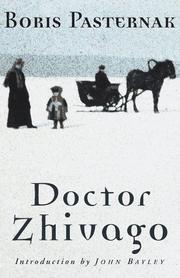
Doctor Zhivago
A doctor and poet lives through revolution, war, and love in Pasternak's novel of private life under the pressure of Russian history.
2,213-word summary · 10 min read
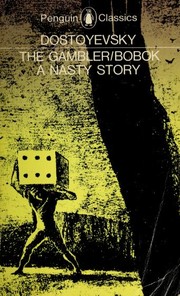
The Gambler
Dostoevsky's roulette novella: Alexei loses Polina, wins a fortune, loses everything, and promises himself one more bet tomorrow.
2,022-word summary · 9 min read
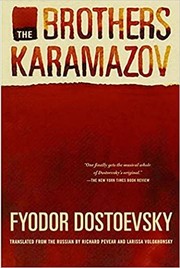
The Karamazov Brothers
Dmitri, Ivan, and Alyosha Karamazov face their father, murder, faith, and doubt in Dostoevsky's final novel.
2,512-word summary · 11 min read
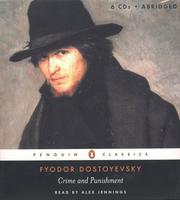
Crime and Punishment
Raskolnikov kills a pawnbroker to prove he is beyond morals, then unravels under Porfiry and Sonya.
3,206-word summary · 14 min read
The Lottery
In Jackson's 1948 story, a village draws lots to keep the corn heavy, and the chosen person is stoned by her neighbors.
3,080-word summary · 14 min read

Ivanhoe
A disinherited Saxon knight, a great tournament, a besieged castle and a trial by combat. Scott's most famous novel, set in England in 1194.
2,834-word summary · 13 min read

This Is How You Lose Her
Yunior cycles through love affairs and betrayals in nine linked stories, tracing the damage he does and the family history behind it.
2,195-word summary · 10 min read

The Gift of the Magi
A young couple with almost no money each sells the thing they treasure most to buy a Christmas present for the other.
1,978-word summary · 9 min read

Stars Above: A Lunar Chronicles Collection
Nine Lunar Chronicles stories fill in the histories of Cinder, Wolf, Thorne, Cress, Winter, and Jacin, and end with a wedding after the war.
2,230-word summary · 10 min read
We
In a city of glass ruled by the Benefactor, a state engineer building a spaceship falls for a woman who wants to tear the One State down.
2,247-word summary · 10 min read
The Memoirs of Sherlock Holmes
Doyle's second Holmes collection gathers twelve Strand stories, including the early case of the Gloria Scott and the confrontation with Moriarty at Reichenbach…
2,390-word summary · 11 min read

The Illustrated Man
A tattooed drifter's moving pictures retell eighteen Bradbury stories of children, rockets, Mars and the last night of the world.
2,791-word summary · 12 min read
Anne of Windy Poplars
Anne spends three letter-filled years as principal of Summerside High, outlasts the Pringle clan, and warms a lonely vice-principal and a dreaming little girl…
2,599-word summary · 12 min read
The Exception to the Rule
A typoed Valentine's email turns into yearly notes between two strangers who wonder if they should meet.
2,226-word summary · 10 min read
The Complete Fairy Tales
Mermaids, snow queens and tin soldiers in the full Andersen collection.
2,414-word summary · 11 min read
I Capture the Castle
Cassandra journals six months of love and money trouble in a castle.
2,402-word summary · 11 min read
Anne's House of Dreams
Newlyweds Anne and Gilbert start in a seaside house with kind neighbors.
2,465-word summary · 11 min read
The Heart is a Lonely Hunter
A deaf man becomes the quiet center for lonely souls in a small Georgia mill town.
2,000-word summary · 9 min read
The Call of Cthulhu and Other Weird Stories
Seventeen tales from Dagon to Innsmouth, led by Cthulhu, the Colour, and the Whisperer, in S. T. Joshi careful Penguin edition with notes and corrected texts.
2,593-word summary · 12 min read
The Call of Cthulhu
A professor's papers link a sculptor's dreams, a Louisiana cult raid, and a sailor's voyage to a sleeping god under the sea.
2,530-word summary · 11 min read
The Tenant of Wildfell Hall
Helen flees a cruel marriage, hides as Helen Graham at Wildfell Hall, and tells her full story through a long diary young Gilbert Markham must read before…
2,838-word summary · 13 min read

One Day in the Life of Ivan Denisovich
One freezing day with prisoner Shch-854 in a Soviet camp: roll call, bricklaying in the cold, bread rations, and small wins that let Shukhov call the day…
2,668-word summary · 12 min read
The Jungle Book
Mowgli, raised by wolves in the Seeonee Hills, learns the Law from Baloo and Bagheera while Shere Khan circles. Kipling's 1894 story collection.
2,799-word summary · 12 min read
Lady Chatterley's Lover
A baronet's wife, starved in a marriage the war broke, takes the gamekeeper as her lover. Lawrence's banned 1928 novel of class and touch.
2,566-word summary · 11 min read
Aesop's Fables
Short animal tales of hares, foxes, ants, and wolves that still sting: old fables in plain modern English.
2,916-word summary · 13 min read
The Scarlet Pimpernel
A foppish baronet rescues aristocrats from the guillotine while his French wife hunts the hero she scorns.
2,980-word summary · 13 min read
The Legend of Sleepy Hollow
A lanky schoolmaster courts a farmer's daughter in a haunted Dutch valley until a midnight ride by the Headless Horseman ends at the bridge.
2,968-word summary · 13 min read
Nine Stories
Bananafish, Esme, and Teddy anchor Salinger's postwar Glass stories.
2,348-word summary · 10 min read
Far from the Madding Crowd
Bathsheba inherits a farm and chooses badly among three loves before seeing clearly.
1,988-word summary · 9 min read

Dubliners
Fifteen Dublin stories from boyhood priests to Gabriel's snow, mapping paralysis that still moves readers.
2,111-word summary · 9 min read