
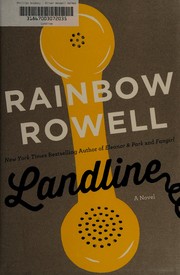
Landline
3,042-word summary 14 min read 320 pages in the book
- First published
- 2014
- Publisher
- St. Martin's Press
- Pages
- 320
- ISBN
- 9781250049377
Reading options
What's inside (8 sections)
I grabbed this one after a rough December when every marriage book on the shelf seemed to end in either divorce or a vow renewal on a beach. A friend told me this was different, sadder and funnier, with a phone that should not work. She was right. Landline by Rainbow Rowell was first published in 2014 by St. Martin's Press, a 320 page hardcover with ISBN 9781250049377. It follows Georgie McCool, a 37 year old TV comedy writer in Los Angeles, through one bad Christmas week when her husband takes their two little girls to Omaha without her and an old yellow rotary phone in her mom's guest room starts connecting her to that same husband fifteen years earlier. I read most of it on the couch with cold coffee, pausing a lot to stare at the wall.
The setup lands fast because it feels ordinary before it turns strange. Georgie writes sitcoms with her best friend Seth Pryor. They have known each other since college, they finish each other's jokes, and they just got the kind of break that ruins holidays. Their show needs them. Scripts, rewrites, network notes, the whole machine. Two days before the family is supposed to fly to Omaha to spend Christmas with Neal's mom, Georgie tells Neal she cannot go. She assumes he will be mad for a day and then they will sort it out. Instead Neal goes quiet in the way that scares you more than yelling. He packs for himself and for Alice and Noomi, he takes the cab to the airport, and he barely says goodbye.
Neal is the opposite of show business. He was a cartoonist with big plans once, now he stays home with the kids while Georgie works long hours. He loves her, that part is never really in doubt, but he is tired of feeling like a scheduling problem. Georgie loves him too, but she shows it by working harder to keep them all afloat and then missing dinner again. When the house goes silent after they leave, she does what she always does. She calls. Neal does not pick up his cell. She tries again. Nothing. So she drives to her mom's house because her own place feels too empty, flops in the guest room, and dials his number from the old landline on the nightstand out of habit.
A young man answers. He sounds like Neal, only lighter, quicker to laugh, quicker to snap. He has no idea who Georgie is. Within a few calls she pieces it together. This is Neal in 1998, weeks before he proposed, living with roommates, drawing, working some dead end job, still deciding whether this funny loud girl who hangs around with Seth is worth the trouble. The calls only work from that specific phone to Neal's cell number, and only for a few minutes before the line crackles out. There is no explanation and no instruction manual. It just happens.
The worst Christmas week
Rowell is good at making work feel like work. The Los Angeles part of the book is all fluorescent writers rooms, cold takeout, and Seth talking a mile a minute to keep everyone loose. Seth is charming in the way that makes rooms lean toward him. He loves Georgie, but as a friend and partner, the kind of love built on shared jokes and late nights, not dishes and fevers. He keeps telling her the marriage panic is normal, that Neal will get over it, that they have a show to save. Part of you believes him because he is fun. Part of you wants to throw a pillow at him because fun is exactly the problem.
Georgie stays in town to punch up scripts while Neal and the girls settle in Omaha. She pictures it constantly. Neal's mom fussing over the girls, Alice asking where Mama is, Noomi too little to track the tension but old enough to feel it. Neal answering polite questions about his wife the workaholic. Every unanswered text from Georgie sits on that picture like a stain. She keeps telling herself she stayed for the family, for money, for the future, which is true and also not the whole truth. She stayed because work is where she feels competent. Home is where she feels behind.
Her mom's house gives the book its second stage. It smells like laundry and old carpet. There are photo albums, a fridge covered in kid drawings, a mom who asks careful questions and then backs off. Georgie sleeps in her old room, or the guest room depending on the night, and keeps circling back to that yellow phone. It is heavy, with a real dial and a cord that tangles. She first assumes she misdialed. Then she assumes someone is pranking her. Then she calls again on purpose, heart hammering, and asks the young Neal what day it is. When he says December 1998, she has to sit down.
What I liked here is how unglamorous the crisis is. No affair, no big betrayal, no secret bank account. Just years of small choices. Georgie took the late meeting. Neal did bedtime alone. Georgie promised to leave early. Neal stopped believing her. Now one missed flight has turned a slow drift into something that looks like an ending. Rowell lets Georgie be successful and exhausted and wrong without turning her into a villain. She is the person who keeps saying family comes first while checking email under the table.
The yellow phone
The magic in this book is stubbornly small. Georgie cannot travel. She cannot see 1998. She can only talk, and only to Neal, and only when he picks up that particular stretch of past. Sometimes he is at his apartment. Sometimes he is out and misses her. Sometimes the connection is clear. Sometimes it buzzes and dies mid sentence.
At first she treats it like a prank call she cannot stop making. She hangs up, she redials, she pretends to be someone else. Young Neal is wary but curious. He tells her she has a nice voice. He tells her she sounds old. He asks how she got his number. She lies badly, which is funny and painful, because Georgie is a professional joke writer and she cannot invent a cover story under pressure. She settles on half truths. She is a friend. She needs advice. She knows a girl a lot like her.
Rowell never explains the phone, and I went back and forth on whether that bothered me. On the one hand, the lack of rules keeps the focus on the marriage instead of mechanics. There is no scientist, no glowing manual, no test montage. On the other hand, if you are someone who needs systems, this will itch. Why that phone. Why now. Why only Neal. The book shrugs. It happened because Georgie needed it to happen, the same way dreams pick their topics. I decided to accept it around page eighty, but I know readers who never do.
The calls have a texture I enjoyed. Georgie has to shout a little. The cord stretches only so far, so she paces the small room. Her mom knocks and asks who she is talking to, and Georgie says work, which is almost true. When the line drops, it drops without warning. She stares at the receiver, then immediately dials again.
A small detail that stuck with me: she cannot call the future or anyone else. She tries her own old number once and gets nothing useful. She thinks about calling Seth in the past and stops herself, which tells you a lot. This is not about fixing everything. It is about Neal.
Neal in 1998
Young Neal is the best character in the book, which is a little unfair to present day Neal, who mostly appears through silence and short texts. In 1998 Neal is 22, prickly, funny in a dry way, serious about comics, unsure whether Los Angeles people like Georgie and Seth are people he wants to stay around. He likes Georgie already, that much is clear, but he is also annoyed by her. She is loud. She travels in a pack with Seth. She treats everything like material.
Their old courtship unspools in pieces. They met through college circles in Nebraska, stayed tangled through graduation, moved west with big plans that tilted. Georgie chased TV. Neal drew and temped and then drew less. Seth was always there, third point of the triangle, never a real threat but always a contrast. Seth wants the room to laugh. Neal wants one person to stay. Georgie, young and hungry, wanted both the room and the person and assumed she could have them without choosing.
Talking to 1998 Neal lets present day Georgie hear what she stopped hearing. How he laughs when he is surprised. How he goes quiet when he is hurt instead of arguing. How he asks direct questions that she dodges with jokes. In one call he asks why this strange woman keeps asking about his girlfriend. In another he admits he is thinking of proposing but is scared he will always feel like Georgie's sidekick. Georgie, sitting on her mom's guest bed in yoga pants with mascara from yesterday, has to answer as a stranger. She tells him the girlfriend loves him. She tells him sidekicks matter. She sounds wise and feels like a fraud.
I found these scenes tender without being soft. Rowell writes young love well, the part before bills and kids when everything is potential and irritation in equal measure. There is a night drive, a bad party, a morning after with cold pizza that felt true to being 22. None of it is grand. That is why it hurts.
There is also jealousy, and the book does not flinch from it. Georgie finds herself jealous of her younger self. Young Georgie gets Neal's full attention, his long letters, his nervous hope. Present Georgie gets one word replies. She wants to warn him off herself. Stay away, she thinks, find someone who comes home for dinner. Then he says something kind about that loud girl, how she makes bad days better, and Georgie cries because she forgot she could do that.
Seth, scripts, and the ledger
If Neal is the heart of the book, Seth is the test. Seth and Georgie have a rhythm built over fifteen years. They pitch, they riff, they rescue each other's bad drafts. In the writers room they are excellent. Outside it Seth is still single, still up for anything, still a little careless with other people's schedules. He does not mean to be the other man. He would be horrified at the phrase. But he is the life Georgie chose over and over when she stayed late.
Rowell handles this without turning Seth into a cartoon. He is loyal. He drives Georgie to the airport once. He brings soup. He tells her when a joke is weak and when she is being weak, though he is gentler with the second. He also does not really see the marriage. To him Neal is the nice quiet guy who does not get the business. He keeps saying Neal knew what he signed up for, which is the kind of line that sounds supportive until you hear how often Georgie repeats it to herself.
The work plot matters more than I expected. Georgie and Seth are not just busy. They are on the edge of making something that is theirs, a show built from their dynamic, after years of writing other people's voices. For Georgie, walking away for Christmas could mean losing momentum she spent a decade building. For Neal, that is exactly the sentence he is tired of hearing. My show needs me becomes my wife does not. Rowell lets both be right. Money is real. Ambition is real. So is a kid asking why Mama missed the pageant.
My favorite work scenes are small. Georgie fixing a cold open by acting both parts in an empty room. Seth laughing so hard he snorts, then immediately spotting the structural flaw. You understand why Georgie loves it. You also understand why Neal stopped waiting up.
The ledger scene, if I can call it that without spoiling much, hit me hard. Georgie starts adding up, almost without meaning to, all the times she picked work. Late pilots, location shoots, punch up weekends. Against that, Neal's list: middle of the night fevers, school pickups, birthday cakes, drives to Omaha alone with two car sick girls. It is not that Georgie never showed up. She did, often, with gifts and stories and real love. It is that Neal showed up every time, and invisibility built up. Love is there in both columns. Trust is thinner on her side.
What the phone can and cannot fix
Midway through, Georgie shifts from amazed to strategic. If she can talk to 1998 Neal, maybe she can steer him. Maybe she can make young Neal braver, or make young Georgie less selfish by proxy, or convince him not to marry her at all if marriage will only make him unhappy. She tries different tacks. Advice friend. Big sister. Warning voice. Once, after a bad day, she nearly tells him everything.
None of it works cleanly, which is the point and also the frustration. Young Neal listens, but he is still 22. He hears what he wants. He thinks this mystery woman is flirting. He thinks she is lonely. He is right on both counts and wrong about what to do. When Georgie tries to describe the future without sounding insane, she sounds insane. When she tries to be vague and wise, she sounds like a greeting card. The past does not take notes.
There is a strong stretch where she stops trying to fix and just listens. She asks about his drawings. She asks what he wants from the next year. She lets him complain about money and roommates and Georgie, the girl, who stood him up for an improv show. She laughs at his jokes instead of topping them. Present day Georgie, who talks for a living, learns to shut up on the phone. Those calls are short, often under five minutes, and they carry more weight than the longer plotting ones. You can feel her remembering why she picked him. Not because he was convenient. Because he was steady in a way that let her be wild.
She also starts telling the truth sideways to people in the present. She admits to her mom that she is scared, not just busy. She admits to Seth that she is not sure the show is worth what it costs, which terrifies them both. A call from Omaha where Alice chatters about snow and then goes quiet when Georgie asks for Daddy made my chest hurt.
If there is a moral here, it is not phone based. It is attention based. Georgie cannot edit 1998. She can only notice 2014. She starts noticing the daily Neal she stopped seeing, and what she would actually lose.
The ending and what bugged me
I will keep the last fifty pages light, but you deserve to know the shape. Georgie has to decide whether to keep using the phone as a hideout or to risk the present. The phone offers a fantasy where she is still chosen, still fascinating to Neal, still at the start before she disappointed him. Real life offers a tired husband in Omaha who may already be done. Rowell pushes her toward the harder choice without making it tidy. There is a drive, a missed connection, a Christmas Eve that does not go the way holiday movies go, and a conversation that finally says the unsaid things. It surprised me and satisfied me, though I argued with it for a day after.
What works best is voice. Georgie sounds like a real funny person, not a joke delivery system. Her inner monologue spirals, backtracks, lands a punchline, then feels guilty about the punchline. Neal in both eras sounds like himself, dry and direct, allergic to spin. Even small parts, Georgie's mom, Neal's mom on speaker, a tired airline agent, feel observed rather than placed.
Fair criticism belongs here too. The middle repeats. Call, hope, drop, redial. Call, hope, drop, redial. After the fourth or fifth cut off I started skimming the dialing and waiting for the talk. A trim of thirty pages would have tightened the tension. Georgie can also wear you down. She is self focused for long stretches, funny about it but still self focused, and if you need heroines to be likable from page one, you will struggle until late. Present day Neal stays blurry by design, since he is mostly absent, but that means the choice at the end rests on a Neal we hear more than see. I wanted one more present tense scene of them being good together before the crisis, just to anchor what she is fighting for.
The phone logic will bother some readers more than it bothered me. No origin, no cost, no limits except plot convenience. If you want science fiction, this is not that. It is a romance using one impossible thing to force attention, closer to a Christmas story than to time travel. Go in expecting feeling over physics and you will be fine. Go in wanting diagrams and you will be annoyed by chapter three.
Who should pick it up. If you like Rowell from Eleanor and Park or Fangirl, this is older, married, tired in a good way, still warm. If you want a Christmas book that is not syrupy, this fits. Omaha snow, bad flights, family couches, that specific holiday loneliness even in a full house.
I closed it thinking about my own phone habits, which is probably what Rowell wanted. How often I half listen while typing. How easy it is to be in the room and elsewhere. Georgie gets a literal line to the past and learns she should have been paying attention in the present. I still think about that yellow phone when mine buzzes at dinner, and I put it face down a little faster now.
FAQ
When was Landline published?
St. Martin's Press published the hardcover on July 8, 2014. It runs 320 pages and the hardcover ISBN is 9781250049377.
Can Georgie travel through time in Landline?
No. Only Georgie can reach 1998 Neal, and only by dialing his number from her mom's yellow rotary landline, for a few minutes at a time.
Is Landline worth reading if I liked Eleanor and Park?
Yes, if you want a marriage story with humor and a light supernatural twist. Readers who need hard time travel rules or a tidy heroine may find the middle slow.
Similar books

Marriage for One
Rose marries a cold lawyer to save her coffee shop, then discovers the arrangement was never only business.
2,032-word summary · 9 min read

Dash & Lily's Book of Dares
Two lonely New York teenagers trade dares in a red notebook left at the Strand, falling for each other on the page before they meet.
2,228-word summary · 10 min read
The Rosie Effect
Married in New York, Don Tillman turns Rosie's pregnancy into research and nearly loses her, until a crisis forces him to listen.
2,869-word summary · 13 min read

The Wedding
Wilson Lewis courts his own wife again with Noah's help as daughter Anna plans her wedding.
2,076-word summary · 9 min read

The Seven Year Slip
A grieving publicist inherits a time slipping Manhattan apartment and falls for a chef living seven years in the past.
2,601-word summary · 12 min read

One Day in December
Laurie spots her dream man from a London bus, then meets him again as her best friend Sarah's new boyfriend.
2,513-word summary · 11 min read

Fifty Shades Freed
Married Ana and Christian face Hyde, Elena and a pregnancy neither planned.
3,213-word summary · 14 min read
Attachments
In 1999 Omaha, a shy night shift IT man reads two coworkers flagged emails and falls for one before ever saying hello.
3,210-word summary · 14 min read

What Happened to Goodbye
Mclean has reinvented herself in four towns since her parents divorced. In Lakeview she uses her real name, and for the first time staying put becomes a choice.
2,796-word summary · 12 min read

Size 12 Is Not Fat
Former teen pop star Heather Wells investigates two dorm elevator deaths while juggling her ex, her crush, and a size-12 wardrobe.
2,805-word summary · 12 min read

Alone With You in the Ether
Two people in Chicago agree to six conversations, and the experiment becomes a love affair that is also a study of bipolar disorder, obsession, and the shape…
2,713-word summary · 12 min read

Dumplin'
Willowdean Dickson enters her town's beauty pageant as a protest and discovers that confidence is harder to keep once she lets someone close.
1,922-word summary · 9 min read

The Unmaking of June Farrow
A woman in a North Carolina flower-farming family walks through a red door into 1951, where she must solve her mother's disappearance and decide whether to…
2,701-word summary · 12 min read

Shopaholic and Sister
Becky Brandon returns from a ten-month honeymoon to meet the half-sister she always wanted, then discovers that Jess is thrifty, prickly, and nothing like the…
2,591-word summary · 12 min read

Devil in Winter
A shy heiress with a stammer proposes a marriage of convenience to London's most notorious rake, then makes him prove he can be faithful.
2,548-word summary · 11 min read

Sam's Letters to Jennifer
A grieving journalist reads her grandmother's letters and finds a decades-long love affair that changes how she sees her family.
2,310-word summary · 10 min read

Mr. Maybe
Libby Mason wants a rich husband, but the wealthy man who proposes is dull and the broke writer she cannot forget is not offering forever.
2,322-word summary · 10 min read

I Kissed Shara Wheeler
Shara Wheeler kisses her rival Chloe Green at prom and disappears, leaving a scavenger hunt that forces Chloe to rethink everything she knew about her.
2,083-word summary · 9 min read

Fantasy Lover
A New Orleans sex therapist summons a cursed Spartan general from an ancient book and gets one month to break his spell.
2,315-word summary · 10 min read

Amy & Roger's Epic Detour
Amy Curry has not driven since the crash that killed her father. With Roger at the wheel and a box of maps between them, a cross-country trip becomes a slow…
3,034-word summary · 13 min read

Two by Two
Sparks's twentieth novel turns from first love to a marriage breaking up: Russell Green loses his wife and his job, then rebuilds his life around his…
2,192-word summary · 10 min read

One to Watch
A plus-size fashion blogger takes the lead role on a reality dating show to prove she belongs on television, and finds she might want what the cameras offer.
2,478-word summary · 11 min read

Between Sisters
Estranged sisters Meghann and Claire reunite in Washington when Claire announces a rushed wedding, then face their mother's desertion and a medical crisis.
2,467-word summary · 11 min read

On Chesil Beach
Two newlyweds spend one terrible night on Chesil Beach in 1962, and the rest of their lives is decided by it.
2,456-word summary · 11 min read

Eligible
Austen's Bennet sisters move to modern Cincinnati, where marriage is a reality show and the house is losing its value.
2,293-word summary · 10 min read

Big Swiss
A transcriptionist for a sex coach falls for one of his clients, the tall Swiss gynecologist she calls Big Swiss, in a funny novel about work and secrets.
2,523-word summary · 11 min read

At First Sight
Jeremy and Lexie are married and expecting a baby when anonymous emails tell him the child may not be his.
2,317-word summary · 10 min read

A Spool of Blue Thread
Four generations of the Whitshank family in Baltimore, and the silences, resentments and quiet love they hand down without ever saying so.
2,408-word summary · 11 min read

2 States: The Story of My Marriage
A Punjabi boy from Delhi and a Tamil Brahmin girl from Chennai meet at IIM Ahmedabad, and turn a love marriage into a campaign to convince two families.
2,634-word summary · 12 min read

What the Wind Knows
Annie scatters her grandfather's ashes on Lough Gill and is pulled into 1921 Ireland, where she becomes the missing Anne Gallagher and falls for Dr. Thomas…
2,056-word summary · 9 min read