

Evidence of the Affair
3,000-word summary 13 min read 88 pages in the book
- First published
- 2018
- Publisher
- Amazon Original Stories
- Pages
- 88
- ISBN
- 9781542044516
Reading options
What's inside (8 sections)
I picked this one up because a friend kept telling me it was the fastest cry she ever had from a book under a hundred pages. Evidence of the Affair by Taylor Jenkins Reid was first published September 20, 2018 by Amazon Original Stories, 88 pages in the Kindle edition, ISBN 9781542044516. It is a short story, really a novella, told entirely through letters. I read it in one sitting on a weeknight, expecting something slight, and then I sat on the couch for a while afterward thinking about two people I had only ever met on paper.
The setup is simple and awful. It is December 1976 in Southern California. Carrie Allsop finds love letters in her husband's briefcase. They are from another woman, Janet, and they are unmistakable. Not flirty notes. Real letters, with plans and longing in them. Carrie does the bravest and strangest thing she can think of. She writes to Janet's husband, a man named David Mayer whom she has never met, and asks for his help. She wants to know if he has found anything similar, letters from her husband to his wife, and she offers a trade. If he wants to read what Janet wrote to her husband, she will send those along. She apologizes for writing out of nowhere. She says she understands if he never answers.
That first letter sets the tone. Carrie is polite to the point of pain, trying to hold her manners together while her floor has dropped out. I liked her immediately, not because she is strong in some showy way, but because she is practical. She has evidence and she wants the rest of the file. She also wants, though she would never say it that way, one person on earth who knows exactly how this feels.
David writes back. He is shocked but not exactly surprised, which is a horrible thing to admit about your own marriage. He and his wife have been thin with each other for a while. He agrees to look, agrees to share, and apologizes for how stunned his letter sounds. What got me was how quickly the two of them fall into a kind of care for each other. Not romance. Care. He asks if she is sleeping. She tells him to eat something real and not just toast. When your spouse is lying to you, kindness from a stranger lands harder than it should.
The letter Carrie never wanted to send
Let me lay out the situation plainly, since the book gives it to you in pieces. Carrie is married to Ken, a busy doctor who is gone a lot. Carrie keeps the house and keeps up appearances and has built a life around being the steady one. Janet is married to David, and that marriage has been fraying for a while, the way couples fray when money is tight and attention goes elsewhere and nobody names it. Ken and Janet are having the affair. The letters Carrie found are Janet's letters to Ken, hidden in his briefcase, which tells you plenty about how careful Ken was not being.
Carrie reads those letters the way anyone would, which is to say too many times. She memorizes phrases she wishes she could forget. She notices how Janet writes to Ken with a freedom she apparently does not use with David. She notices pet names, jokes, plans for meeting. What I found true here is that Carrie does not start by hating Janet. She starts by studying her. She wants to know what Janet offers that she does not. That curiosity is more painful than anger, and Reid lets it sit there without rushing Carrie to some cleaner emotion.
Writing to David costs Carrie a lot. She says sorry several times in that first letter. Sorry for contacting him, sorry for asking, sorry for what she is putting in his head if by some chance he did not know. There is a practical request buried in all the apology. Have you seen letters from my husband. Will you send them if you find them. I will send you what I have. It reads like a business proposal written by someone with shaking hands. People in crisis get formal. Formality is a life jacket.
Underneath is another question. Carrie wants context. She wants to know if Ken sounds like the same man in his letters to Janet that he sounds like at home. She wants to know how long this has been going on and whether she missed signs or whether Ken is simply good at hiding. David is the only person who could help her answer that, because he is the only other person with access to the other half of the paper trail. Strangers sharing a filing cabinet of betrayal. That is the whole engine of the book.
Reid sets all this in 1976 without making a big show of it. The period matters because letters matter. There is no texting or email. If you want to reach a stranger, you write, you stamp, you wait. Carrie mails something and lives with it for days. That slowness forces both of them to feel everything twice, once when writing and once when the answer comes.
Carrie and David, as they sound on paper
Since we only ever get these people through what they write, their voices have to do a lot of work, and they do. Carrie writes carefully. Her sentences are neat. She asks permission a lot. Over time her letters loosen. She admits she rehearses conversations with Ken and then says none of them, that she stands in rooms of her own house feeling like a guest. Her humor shows up sideways, dry and brief, and then she apologizes for the humor.
David is blunter. He writes shorter letters at first, plain sentences, a man trying not to fall apart in ink. He admits his marriage was already struggling, which does not make the affair hurt less. As the exchange goes on, he gets more open about work pressure, about feeling invisible at home, about the shame of being the husband who did not notice.
Their friendship builds the way real long distance friendships build. They develop routines. They comment on the mail, on small domestic details. Carrie mentions cooking and then not feeling like eating it. David mentions late nights and the particular quiet of a house where two people have stopped asking each other questions. They start to look forward to letters. That is presented without fanfare and it is devastating. The best thing in each of their weeks becomes mail from the one person who understands the worst thing in their weeks.
These two get intense fast. Within a few exchanges they are telling each other they do not know what they would do without the other. Trauma bonds people quickly, and who else can they say any of this to. Still, a few passages felt gushy, the kind of praise that goes around in a circle. I forgave it, because lonely people talk like that. But if you dislike sentimental stretches, you will notice them here.
What saves the friendship from feeling like a device is that they disagree sometimes. Carrie wants to confront sooner. David wants to wait. Carrie thinks knowing everything will help her decide. David thinks each new letter just gives him new things to picture at three in the morning. They argue gently about whether reading the affair letters is helping or harming. Those disagreements made them feel like actual adults to me rather than two mouthpieces for heartbreak.
The other stack of letters
Partway through, the book widens. We start seeing the affair itself through the letters Ken and Janet wrote to each other. This is a clever move and also a cruel one. Until then we have only Carrie's and David's accounts, which are wounded and careful. Now we get the lovers' version, and the lovers sound like different people than the spouses described. Ken is playful and sure of himself. Janet is vivid and hungry for attention. Together they are flirtatious, dramatic, full of plans. Reading them right after a Carrie letter feels like walking from a dim room into bright sun. You squint.
Reid does something smart here. She does not make Ken and Janet monsters. That would be easier and less interesting. Ken writes about feeling admired in a way he no longer feels at home. Janet writes about feeling seen in a way she no longer feels in her marriage. Neither writes much about the damage they are doing, which is its own indictment. They are wrapped up in the private weather of the affair. If you have ever been the person waiting at home while someone else gets the charming version of your partner, those letters will make your stomach turn. They did mine.
The affair letters give Carrie and David new problems. Before, they could imagine the affair in vague terms. Now they have specifics. Carrie fixates on certain lines and copies them out for David, asking what he makes of them. Every new letter answers one question and opens three more. Knowledge here does not bring power. It mostly brings insomnia.
The four voices stay distinct, and in a book that is only letters, that separation is everything. Carrie is careful and warm. David is plain and tired. Ken performs a little, even on paper, like a man used to being liked. Janet runs hot, romantic one minute and fretful the next. You could cover the signatures and still tell who wrote what after a while. I never felt lost about who was speaking.
Fair warning, some readers find the Ken and Janet letters too much like young crush notes for grown married people. I partly agree. But I also thought that was the point. Affairs often run on that regressed thrill. The immaturity of those letters is part of what hurts Carrie and David. Their spouses are not having some grand passion. They are having a recess romance while two households quietly come apart.
Months pass, and the friendship gets complicated
The middle stretch covers many months, and the mail keeps coming. Carrie and David settle into each other's lives without ever meeting. They know each other's schedules, moods, tells. Carrie can tell when David is holding back. David can tell when Carrie is performing okay for his benefit. They call each other out with increasing tenderness. Stop doing that. Tell me the true thing. You do not have to be brave in a letter to me.
Life around them keeps moving. Holidays force performances. Carrie describes getting through a family gathering with Ken acting normal, his hand on her back, and feeling like she is watching her marriage from outside her body. David describes a stretch where Janet is suddenly attentive, and how that attention feels worse than distance because he knows where the glow is coming from. These passages are the strongest writing in the book for my money. Reid is good at the social acting required by marriage trouble, the smiling in photos while doing math in your head about what you know.
They also have to decide what to do, and here the book resists easy answers. Confront now or gather more proof. Tell the spouses they know, or keep watching. Carrie leans toward action. She wants to lay the letters on a table and hear Ken explain himself. David leans toward delay, partly from fear and partly from a sadder calculation. If he confronts Janet and she leaves, then what. If she stays, can he stand it. There is never a good day to detonate your life, and their debates about timing felt real to me.
One thread I liked is how they start examining their own marriages honestly, not just the affairs. Carrie admits she and Ken had gone quiet long before Janet. She had stopped telling him things because he stopped asking, and then she told herself not minding was the same as being fine. David admits he had checked out too, working late, assuming Janet's unhappiness was a phase. Neither of them excuses what their spouses did. Cheating is still cheating. But they stop pretending their marriages were perfect before the affair walked in. That honesty keeps the book from becoming a simple villains and victims story.
The letters also show the pressures of the period without lecturing about it. Carrie does not have an obvious independent income or an easy exit. Divorce in her circle carries a smell. David faces a different pressure, the embarrassment of being the man who did not know. Reid never stops the story for a history lesson. She just lets those constraints press on every decision.
What happens at the end, and why people argue about it
I am going to talk about the ending without spelling out every beat, because this is a short book and you should feel it yourself. The correspondence reaches a point where something has to give. Carrie and David cannot write forever. The affair cannot stay hidden forever. Choices get made about confronting, about staying, about leaving. And then Reid adds a turn that reframes what you thought this story was.
Readers split on that turn. Some find it satisfying and even hopeful. Some find it frustrating. I landed in between, leaning warm. The ending asks you to look back at the friendship and decide what it was for. Was it a bridge to something new. Was it the real love story, just not the kind with kisses. I liked that the book trusts you to sit with those questions instead of tying a bow.
Carrie and David end up in different places, and not in symmetrical ways. One of them grows in a direction that surprised me. The other patches the old life and calls it peace. Both choices are understandable. Only one felt like growth to me, and I think that unevenness is intentional.
The last letters are quiet. The fever of the middle months cools. You feel two people stepping back and seeing the whole shape of what happened. There is gratitude mixed with grief. They will always be the people who went through this together, and they will also always be a reminder of it to each other. That double truth, comfort tangled with pain, is the most honest note in the book.
If you need to know whether this is secretly a romance where the two betrayed spouses run off together, I will only say that Reid is more clear eyed than that. The fantasy version writes itself. What Carrie and David have is intimate and real, but intimacy is not the same as a future. The ending respects that difference, even if part of you, the part that wants payback joy, wishes it did not.
What works, what nags, and who should read it
The form is perfect for the subject. Letters are evidence, and this is a book called Evidence of the Affair, so every page reminds you that love leaves paper. The voices hold. The pacing is quick without feeling rushed. I finished in under an hour and did not check the time once. Reid can make a domestic detail carry feeling, a dinner going cold, a bedside lamp left on, and she does it here over and over.
This could have been a revenge fantasy or a misery parade. Instead it is a study of how people narrate their own marriages to themselves. Carrie tells herself stories to survive. David tells himself different ones. The affair letters tell a third kind of story. None of them are fully true. Watching all four accounts rub against each other taught me something about the parts I polish and the parts I skip in my own accounts. For 88 pages, that is a lot of freight.
Now the nags, stated fairly. First, the length cuts both ways. I wanted at least one moment of seeing Carrie and David in their actual rooms rather than describing those rooms. I understand why Reid stayed strict with the form, but by the end I felt I knew their handwriting better than their faces.
Second, the sentimentality. Carrie and David praise each other constantly. You are brave. You are kind. You saved me. After many exchanges of mutual rescue, the language starts to repeat. Reid is showing how starved they are for affirmation, and that reads true. But as prose it gets a touch samey. I found myself skimming a few of the comfort passages to get to the harder parts where they disagree or admit ugly feelings.
Third, Ken and Janet never quite become full people for me. We see them through their own love letters and through their spouses' descriptions, which means we see them at their most performative and at their most resented. That is a narrow window. A few more signs of their ordinary selves would have made the final decisions land harder.
Who should read it. Anyone who likes Reid and wants the shortest possible test of her skills. Anyone who likes stories told through documents and messages. Anyone going through a rough patch who wants to feel less alone without being told what to do. This is not a manual and it does not preach. If you want something you can finish in an evening that will stay with you for a week, this fits.
Facts held while reading. First published in 2018 by Amazon Original Stories in the United States, 88 pages in the Kindle edition, ISBN 9781542044516, author Taylor Jenkins Reid. The story follows Carrie Allsop and David Mayer as they correspond after discovering the affair between Ken and Janet. Told only in letters, starting in December 1976 and running through the months after. If you want Reid at her most distilled, start here, then go argue with a friend about the ending.
FAQ
When was Evidence of the Affair published?
It was first published September 20, 2018 by Amazon Original Stories as a Kindle short story and novella. The Kindle edition runs 88 pages with ISBN 9781542044516.
Who are the main people in Evidence of the Affair?
Carrie Allsop and David Mayer, the two betrayed spouses who write to each other, plus Ken and Janet, the husband and wife having the affair.
Is Evidence of the Affair part of a series?
No. It is a standalone Amazon Original Story told entirely through letters, not part of a series.
Similar books
Loving Frank
Mamah Borthwick Cheney leaves her family for Frank Lloyd Wright, and their affair becomes a public scandal that ends in tragedy at Taliesin.
2,034-word summary · 9 min read
The Seven Husbands of Evelyn Hugo
Taylor Jenkins Reid's The Seven Husbands of Evelyn Hugo explained: the seven marriages, old Hollywood, Celia and John, and the twist in Monique's story.
2,239-word summary · 10 min read
The Stationery Shop
Two teenagers fall in love in a Tehran stationery shop in 1953, are separated by the coup and a family deception, and meet again sixty years later.
2,024-word summary · 9 min read

The Japanese Lover
A Polish refugee and the son of a Japanese gardener fall in love in San Francisco in 1939, then keep the affair secret for nearly seventy years.
2,286-word summary · 10 min read

Anatomy: A Love Story
In 1817 Edinburgh, a noblewoman who wants to be a surgeon disguises herself to study anatomy and falls for the grave robber who supplies her with bodies.
2,031-word summary · 9 min read

The Shadow Sister
Star D'Apliese steps out of her sister's shadow and follows a bookshop clue into the Edwardian life of Flora MacNichol, a woman who gave up love for duty.
2,260-word summary · 10 min read

The Valley of Horses
Exiled from the Clan, Ayla survives alone in a hidden valley, tames a horse and a cave lion, and nurses a wounded stranger back to life.
2,311-word summary · 10 min read
The Boleyn Inheritance
Three women narrate Henry VIII's fourth and fifth marriages: a foreign bride who survives, a teenage queen who does not, and the widow who opens the door.
2,391-word summary · 11 min read
Devil in Winter
A shy heiress with a stammer proposes a marriage of convenience to London's most notorious rake, then makes him prove he can be faithful.
2,548-word summary · 11 min read
Two by Two
Sparks's twentieth novel turns from first love to a marriage breaking up: Russell Green loses his wife and his job, then rebuilds his life around his…
2,192-word summary · 10 min read

Origins
Stefan's diary of 1864 and 1888: how he and Damon fell for Katherine, became vampires, and went looking for a killer in London.
2,056-word summary · 9 min read
On Chesil Beach
Two newlyweds spend one terrible night on Chesil Beach in 1962, and the rest of their lives is decided by it.
2,456-word summary · 11 min read

Last Night at the Telegraph Club
The 2021 National Book Award winner follows Lily Hu, a Chinese American teenager in 1954 San Francisco, as she falls for Kath and learns what it costs to be…
2,336-word summary · 10 min read

Ivanhoe
A disinherited Saxon knight, a great tournament, a besieged castle and a trial by combat. Scott's most famous novel, set in England in 1194.
2,834-word summary · 13 min read
Euphoria
Three anthropologists in 1930s New Guinea turn fieldwork into a love triangle, and a real history breathes behind them.
2,048-word summary · 9 min read

At First Sight
Jeremy and Lexie are married and expecting a baby when anonymous emails tell him the child may not be his.
2,317-word summary · 10 min read

2 States: The Story of My Marriage
A Punjabi boy from Delhi and a Tamil Brahmin girl from Chennai meet at IIM Ahmedabad, and turn a love marriage into a campaign to convince two families.
2,634-word summary · 12 min read
What the Wind Knows
Annie scatters her grandfather's ashes on Lough Gill and is pulled into 1921 Ireland, where she becomes the missing Anne Gallagher and falls for Dr. Thomas…
2,056-word summary · 9 min read

This Is How You Lose Her
Yunior cycles through love affairs and betrayals in nine linked stories, tracing the damage he does and the family history behind it.
2,195-word summary · 10 min read
The Gift of the Magi
A young couple with almost no money each sells the thing they treasure most to buy a Christmas present for the other.
1,978-word summary · 9 min read

Stars Above: A Lunar Chronicles Collection
Nine Lunar Chronicles stories fill in the histories of Cinder, Wolf, Thorne, Cress, Winter, and Jacin, and end with a wedding after the war.
2,230-word summary · 10 min read
Marriage for One
Rose marries a cold lawyer to save her coffee shop, then discovers the arrangement was never only business.
2,032-word summary · 9 min read

Doctor Zhivago
A doctor and poet lives through revolution, war, and love in Pasternak's novel of private life under the pressure of Russian history.
2,213-word summary · 10 min read
A Voice in the Wind
A young Christian slave in Rome serves a spoiled patrician daughter and catches the eye of her brother, while a captured German gladiator fights for freedom.
2,322-word summary · 10 min read
The Storm Sister
Ally D'Aplièse loses her father and her lover within weeks, then follows a brass frog and a Norwegian biography into Anna Landvik's music and the world of…
2,376-word summary · 11 min read
The Bridges of Madison County
A four-day affair between an Iowa farm wife and a photographer asks what a brief happiness is worth against family duty.
2,487-word summary · 11 min read
The Keeper of Happy Endings
Barbara Davis's 2021 standalone braids a Paris dressmaker's wartime losses with a grieving Boston artist who unlocks her family's secrets through an old row…
2,437-word summary · 11 min read
The Marriage Bargain
A bookstore owner marries a billionaire friend's brother for a year to save home and company.
2,092-word summary · 9 min read
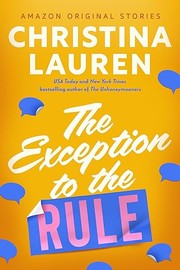
The Exception to the Rule
A typoed Valentine's email turns into yearly notes between two strangers who wonder if they should meet.
2,226-word summary · 10 min read
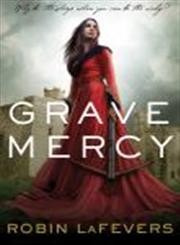
Grave Mercy
Convent assassin Ismae spares Gavriel and hunts traitors in Brittany.
2,357-word summary · 10 min read