
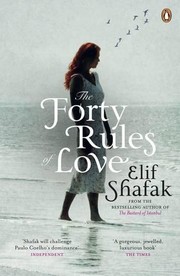
The Forty Rules of Love
2,070-word summary 9 min read 354 pages in the book
- First published
- 2009
- Publisher
- Penguin Books
- Pages
- 354
- ISBN
- 9780141047188
Reading options
What's inside (8 sections)
I came to this book sideways, through a friend who keeps Rumi on her kitchen shelf and swears one poem got her through a hard year. She told me Shafak builds a story around him that reads fast and stays with you. She was right on both counts. Elif Shafak published the novel in March 2009 with Penguin Books, and that edition runs 354 pages. It tells two stories at once, one set now and one set in the thirteenth century, and the seam between them is where the book does its best work.
The modern half belongs to Ella Rubinstein. She is forty, living in Northampton, Massachusetts, married to a dentist, mother to three teenagers who need her less and less. Her days are full of errands and empty of anything she would call her own. When a literary agent offers her freelance work as a reader, she takes it. Her first manuscript is a novel called Sweet Blasphemy, written by an unknown man named Aziz Zahara. It is about the meeting of the scholar Rumi and the wandering dervish Shams of Tabriz. Ella opens it expecting a chore. Within pages she is reading with a pencil in her hand.
The housewife and the manuscript
Ella's life is drawn with a patience I liked. Shafak does not make her miserable for effect. The house is comfortable. The husband is not cruel. The children are simply growing away, as teenagers do. What eats at Ella is the sense that she chose safety over aliveness somewhere back in her twenties and has been paying in small coins ever since. She cooks, drives, volunteers, remembers birthdays. Nobody asks what she thinks about when the kitchen is clean.
Sweet Blasphemy arrives like a draft through a shut room. The manuscript is rough in places, earnest everywhere, and full of claims about love that sound strange against Ella's tidy calendar. She starts emailing Aziz with editorial questions. He answers at odd hours from wherever his photography takes him. His messages are warm, direct, a little odd. He writes about cheap hotels and long bus rides and meals shared with strangers, a life as far from Ella's as imagining. Slowly the professional exchange turns personal. Ella, who has not been truly curious about a stranger in years, finds herself waiting for his replies. She rereads them the way teenagers reread notes, then feels embarrassed at herself, then rereads them again.
This half of the book could have felt like scaffolding for the historical half. For me it became the reason to keep reading. Ella's small rebellions, reading late, taking a walk alone, asking her family an awkward question at dinner, carry real weight precisely because they are small. Anyone who has remade a life from inside a busy household will recognize the scale.
Konya and the scholar who had everything
The manuscript's story opens in Konya, in what is now Turkey, in the 1200s. Jalaluddin Rumi is the town's respected preacher and scholar. He has learning, followers, a household, a reputation polished over years. He also has an ache he cannot name, the sense that knowledge has carried him to the edge of something and stopped. His sermons are correct. His heart is restless.
Then Shams of Tabriz walks in. Shams is a wandering dervish, unkempt, blunt, unimpressed by rank. He has spent years looking for a companion strong enough to bear the kind of friendship he has in mind, a bond that strips away comfort and leaves truth. When he finds Rumi, he recognizes the man at once, and he sets to work with the tact of a man knocking down a wall.
Their meetings are the liveliest scenes in the book. Shams asks rude questions. Rumi gives careful answers. Shams brushes the answers aside and asks again, harder. Slowly Rumi stops performing wisdom and starts receiving it. He begins to write, to whirl, to weep in public, to say things that alarm his students. The scholar becomes a lover in the older sense of the word, someone mastered by devotion rather than by argument.
Shafak peoples Konya well. There is Kerra, Rumi's wife, watchful and tired, running a household while her husband drifts into ecstasy. There are his sons, proud of their father and humiliated by the gossip, caught between loyalty and embarrassment in a way that feels true to every family with a parent who changed late. There is the community of scholars and merchants who decide Shams is a bad influence and say so louder and louder, at first in concerned tones and later without bothering. And there are the outcasts Shams keeps seeking out, a drunk, a beggar, a woman from the tavern, because his view of holiness has room for people the town has written off. The market scenes carry cumin and leather and noise. The winter scenes carry real cold. You get a full small city here, not a backdrop.
How the forty rules arrive
The title promises rules, and Shafak threads them through Shams rather than dumping them in a list. A rule surfaces in conversation, or at the end of a scene, or inside one of Shams's blunt little speeches. They concern love set against calculation, presence set against pride, patience with the blows life deals. I am paraphrasing on purpose. The rules read like sayings to sit with, and flattening them into slogans would do them no favors.
Two structural choices shape how you meet them. The novel is divided into five parts named for earth, water, wind, fire, and void, and each part carries the mood of its element. The early sections feel grounded and domestic. The later ones move faster and burn hotter. And every chapter in the book begins with the letter b, a nod to the opening of the Bismillah and the Sufi idea that great things hide in small marks. Once you notice it, you start reading chapter openings with extra care, which seems to be the point.
This design has a cost. Because the rules arrive steadily, some land while others slide past. A few sound so much alike that I had to flip back to tell them apart. Readers who want a system to carry away may feel frustrated. The book is less interested in building an argument than in wearing down your defenses through return and rhythm.
Attention is really the subject here, more than romance or history. Who do you listen to. What do you let in. How long can you sit with an idea that flatters nothing in you.
When the town turns
Friendships that change people rarely leave everyone else unchanged, and Konya pushes back. Rumi's elder son takes Shams's hold on his father as a personal insult. Students drift away. Rumors sharpen into threats. Shams, who never sought approval, finds himself the target of open hate. Rumi, caught between love for his friend and duty to his family and flock, wavers in ways that feel painfully human.
Shafak handles the tightening pressure in short scenes that alternate between households. A dinner goes cold. A sermon is interrupted. A warning is delivered as concern and received as menace. The pace picks up without turning into melodrama. You can see where this is heading if you know even a little about Rumi and Shams, and the book does not pretend otherwise. The interest lies in how each person meets what is coming.
The bond itself stays strange and tender to the end. Shams refuses to soften his edges to make Rumi's life easier. Rumi refuses to give up a friendship that has remade him, even as it costs him standing. There are scenes of real sweetness between them, shared food, night walks, laughter that surprises them both. There are also scenes where Shams overreaches and Rumi looks away, and Shafak lets those failures stand. A lesser book would sand the great mystic and his friend into saints. This one leaves them rough.
I should note, for readers who care about history, that this is a story built on old bones rather than a reconstruction. Rumi and Shams were real. Konya was real. The shape of their meeting and parting follows the traditional accounts. But the dialogue, the household detail, the inner thoughts, all of that is imagined. Shafak is retelling a legend to ask present questions, not settling scholarly debates. Take it that way and it satisfies. Take it as biography and you will trip.
Ella reads herself into motion
Back in Massachusetts, Ella's reading starts changing her conduct. She asks Aziz sharper questions about his life, his travels, his own grasp of the rules he writes about. He answers with stories about working among the poor, about illness in his past, about learning to hold things lightly. Their emails grow longer. Her family notices she is elsewhere even when she is at the table.
The parallel is deliberate and Shafak does not hide it. Rumi had comfort and standing and a quiet ache. Ella has comfort and standing and a quiet ache. Shams arrived as a disturbance that proved to be a gift. Aziz arrives the same way, at least in Ella's telling. Whether Aziz is really a Shams figure or simply a kind man who writes well at the right moment is a question the book lets hang. I liked that restraint. Ella is a reliable witness to her own hunger and a shaky judge of what will feed it, and the narration knows the difference.
Her choices gather speed in the last third. She confronts her husband about the state of their marriage, a conversation years overdue that goes about as badly as such talks do and still needed to happen. She talks honestly with her daughters, or tries to, and learns they see more than she assumed. She looks at her house, her car, her committee lists, and asks which of them she actually wants. Without spelling out the ending, I will say Shafak gives Ella a changed life rather than a fairy tale. Some threads resolve. One loss lands hard and reframes everything before it. The final pages return to love as practice, daily and unglamorous, which suits a book that spent three hundred pages arguing that love is work.
What sings and what strains
There is much to admire. The double structure holds across a long book without either half going slack. Konya feels inhabited. Ella feels true. The rules, at their best, stop you mid page and send you staring out the window. And the prose, in the historical sections especially, has color without turning purple, all markets and kitchens and cold nights and dust.
Still, a fair accounting needs the strains. The book repeats itself. Ideas about letting go, about loving without owning, about the limits of mere intellect return so often that the middle sags under them. A few minor characters exist only to voice one attitude each, the jealous son, the scolding cleric, the tolerant wife, and they thin out on a second meeting. The modern emails sometimes tell what the scenes already showed. And readers allergic to sweetness will find stretches here too mild for their taste. Shafak believes in love as a cure with an intensity that can feel innocent about power, money, and the facts of family life.
None of that stopped me. I finished the book in three sittings and thought about Ella on the drive home. She is the kind of character who follows you into your own kitchen and watches what you do there. A week later it was Shams I remembered, his rudeness and his mercy mixed together, the way he refused every comfortable answer. That staying power matters more to me than tidiness. I have pressed this book on two friends since, one who reads mystics and one who reads nothing but thrillers, and both wrote back within the month.
Who should read it. Anyone curious about Rumi who wants a door in rather than a textbook. Anyone midlife and restless who would like company without being lectured. Anyone who enjoys stories inside stories and does not mind being asked to feel. Who should skip it. Readers who want hard history, or irony on every page, or romance without sermons. This is a warm book with a teacher's heart. Meet it on those terms and it gives plenty back.
FAQ
When was The Forty Rules of Love published and who published it?
It was published in March 2009 by Penguin Books in a 354 page edition. The summary follows that text and keeps its facts aligned.
What are the two narratives in the book?
They are two linked stories: Ella Rubinstein reading a manuscript in the present, and the tale of Rumi meeting Shams in thirteenth century Konya. The rules surface through Shams across both.
Are the characters based on real people?
No. Ella, Aziz, the agent, and the modern family are fictional. Rumi and Shams were real historical figures, but their conversations and many scenes here are imagined.
Similar books

Revolutionary Road
A Connecticut couple who believe they are too good for the suburbs plan to move to Paris, and the plan slowly exposes everything they cannot say to each other.
2,085-word summary · 9 min read
Lisey's Story
Two years after her novelist husband dies, Lisey Landon follows a trail of clues into his childhood and the other world that made him a writer.
1,998-word summary · 9 min read
Alone With You in the Ether
Two people in Chicago agree to six conversations, and the experiment becomes a love affair that is also a study of bipolar disorder, obsession, and the shape…
2,713-word summary · 12 min read

Memories of My Melancholy Whores
A ninety-year-old journalist pays for a night with a teenage girl, cannot go through with it, and discovers love for the first time in García Márquez's late…
2,101-word summary · 9 min read

Howards End
Forster's 1910 novel follows two families, a house in Hertfordshire, and a burned note, asking whether money and feeling can ever be connected.
2,187-word summary · 10 min read
Peace Like a River
An asthmatic boy in the early 1960s narrates his family's search for his older brother, who is accused of two killings and has escaped custody.
1,969-word summary · 9 min read

The Chosen
A shattered pair of glasses in a 1944 Brooklyn softball game starts a friendship between a Hasidic boy and his Orthodox neighbor, and their fathers pull them…
2,443-word summary · 11 min read
On Chesil Beach
Two newlyweds spend one terrible night on Chesil Beach in 1962, and the rest of their lives is decided by it.
2,456-word summary · 11 min read

A Spool of Blue Thread
Four generations of the Whitshank family in Baltimore, and the silences, resentments and quiet love they hand down without ever saying so.
2,408-word summary · 11 min read
The Pilot's Wife
Kathryn Lyons's husband dies in a plane crash, and the investigation reveals a secret life that forces her to rethink their marriage.
2,006-word summary · 9 min read
The Gift of the Magi
A young couple with almost no money each sells the thing they treasure most to buy a Christmas present for the other.
1,978-word summary · 9 min read

The House of Mirth
Lily Bart, beautiful and penniless at twenty-nine, navigates New York's marriage market until a Dorset yacht scandal strips her of the only currency she has.
2,468-word summary · 11 min read

The Bridges of Madison County
A four-day affair between an Iowa farm wife and a photographer asks what a brief happiness is worth against family duty.
2,487-word summary · 11 min read
By the River Piedra I Sat Down and Wept
Pilar, 29, meets her childhood friend again in Madrid and finds a rumored miracle worker. One winter week through the Pyrenees to the river Piedra, and the…
2,845-word summary · 13 min read
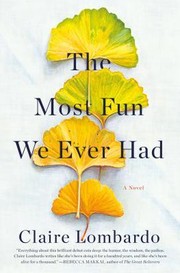
The Most Fun We Ever Had
Four Sorenson sisters orbit perfect parents hiding old cracks.
2,590-word summary · 12 min read

Burial Rites
Condemned for murder in 1829 Iceland, Agnes Magnusdottir spends her final winter on a crowded farm while a young priest listens to her story.
2,976-word summary · 13 min read
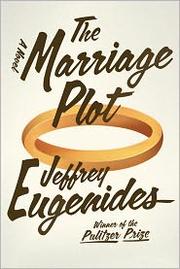
The Marriage Plot
At Brown in 1982, Madeleine loves Austen while torn between brilliant Leonard and steady Mitchell.
2,804-word summary · 12 min read
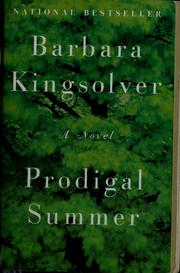
Prodigal Summer
Three lives in one Virginia mountain valley summer: a ranger watching coyotes, a widow learning moths and goats, and feuding elders guarding chestnuts, retold…
2,308-word summary · 10 min read
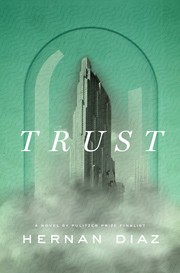
Trust
Four rival accounts of one Wall Street fortune collide: a 1930s novel, a tycoon's memoir, a secretary's story, and a wife's diary.
2,217-word summary · 10 min read
The Book of Longings
In first-century Galilee, Ana marries Jesus of Nazareth and fights to write women's stories in a world set against her voice.
2,368-word summary · 11 min read

Lady Chatterley's Lover
A baronet's wife, starved in a marriage the war broke, takes the gamekeeper as her lover. Lawrence's banned 1928 novel of class and touch.
2,566-word summary · 11 min read
Ethan Frome
In snowy Starkfield, farmer Ethan Frome falls for his wife's young cousin Mattie, and one sled ride ends any hope of escape.
2,558-word summary · 11 min read

The History of Love
An elderly locksmith and a grieving teenage girl in New York are joined by a lost manuscript published in Spanish under another man's name.
2,805-word summary · 12 min read
The Case for Christ
An atheist journalist cross-examines scholars on the Gospels, the tomb, and the resurrection to test the evidence for Jesus.
2,882-word summary · 13 min read

Tender Is the Night
Dick Diver marries his patient Nicole, and their Riviera marriage slowly breaks apart in Fitzgerald's 1934 novel of money, care, and drinking.
2,607-word summary · 12 min read
South of the Border, West of the Sun
A married Tokyo bar owner reunites with his lost childhood sweetheart and must choose between steady family life and a haunting first love.
2,844-word summary · 13 min read
Fates and Furies
Lauren Groff tells one 24 year marriage twice, first through Lotto's bright luck, then through Mathilde's hidden past and quiet control.
2,992-word summary · 13 min read
Cleopatra and Frankenstein
A British painter and an older ad man marry on impulse in New York, then face depression, drinking, and tangled friends.
2,168-word summary · 10 min read
Middlemarch
Idealistic Dorothea marries dry scholar Casaubon while ambitious doctor Lydgate marries Rosamond, and a Midlands town watches both marriages strain.
2,883-word summary · 13 min read
Freedom
A St. Paul couple and their grown children strain marriage, loyalty, and ideals in 2000s America.
2,678-word summary · 12 min read