
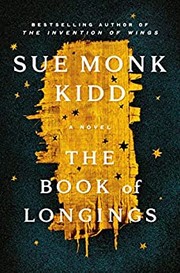
The Book of Longings
2,368-word summary 11 min read 432 pages in the book
- First published
- 2020
- Publisher
- Viking
- Pages
- 432
- ISBN
- 9780525429760
Reading options
What's inside (7 sections)
The first line of this novel stopped me cold. "I am Ana. I was the wife of Jesus ben Joseph of Nazareth." It is printed right on the opening page, no buildup, no apology. I had picked up the book knowing the premise from the cover copy, and still those words landed hard. Sue Monk Kidd, the author of The Secret Life of Bees and The Invention of Wings, spent years researching first-century Galilee to imagine a wife for Jesus and then tell the story from her side. Published by Viking on April 21, 2020, the hardcover runs 432 pages, ISBN 9780525429760. It became an instant New York Times bestseller and a number one IndieBound bestseller, and it was nominated for the Goodreads Choice Award for historical fiction. I finished it in four days and argued with it in my head for two weeks after.
Ana is fourteen when her account begins, living in her father's grand house in Sepphoris, a Greek-flavored city in Galilee. Her father Matthias is the chief scribe and counselor to Herod Antipas, which makes the family wealthy and watched. Her mother is cold and status-minded, already planning Ana's marriage. Into this house comes Yaltha, her father's sister, arriving from Alexandria under a cloud nobody will explain. Yaltha is educated, blunt, and gloriously improper. She takes Ana up to the flat roof at night and tells her about Jewish women in Alexandria who lead synagogues, study with philosophers, write poetry, and own houses. For a bright girl who has been told her mind is a liability, it is like being handed a lamp in a dark room.
The household politics deserve attention because Kidd builds them so carefully. Matthias spends his days counseling Herod Antipas on how to keep Galilee quiet while staying loyal to Rome, a balancing act that requires him to be Jewish at home and Roman at the palace, switching faces by the hour. Ana watches him do it and learns contempt for the performance. Her mother enforces the rules of the house, forbids the rooftop meetings, and treats Yaltha like an embarrassment to be hidden in a servant's room off the upper courtyard. Yaltha herself arrives with nothing: a plain undyed tunic, knotted hands, one drooping eye, and a mouth full of thrilling and improper opinions. Ana, who can already compose stories, work through other languages, and hold two opposing ideas in her head at once, finally has someone who treats all that as a gift instead of a defect.
The Cedar Chest
Ana has been able to read and write since childhood, and she hides the evidence in a carved cedar chest in her room: reed pens, ink, pigments, and scrolls on which she has begun writing down the stories of the women of Scripture, the ones the old accounts pass over in a sentence. When Yaltha sees the chest, she does not scold. She gives Ana an incantation bowl, a real custom of the time, a clay bowl inscribed with prayers, and encourages her to keep writing. The two of them become conspirators, and some of the warmest scenes in the book are just the two of them on the roof, talking about Goddesses, queens, and the right of a girl to have a voice.
Her parents find out, and their reaction tells you everything about the stakes. They try to burn her scrolls. Ana smuggles them out and buries them in a cave outside the city. Hiding in that cave, she meets a young man grieving for his father Joseph. It is Jesus, eighteen years old, in town for stonework. Their meeting is awkward and charged and completely unmystical, which I liked. He is a craftsman with dusty hands, not a halo.
The betrothal plot is worth spelling out because it drives everything. Nathaniel is old, repulsive to Ana, and approved by her parents, which is exactly the problem. Paraded at the market for his inspection, Ana instead keeps colliding with Jesus, and the contrast does the arguing for her: one man wants to own her, the other wants to hear her. When her parents move to burn her scrolls, she gets them out of the house and buried in the cave beforehand, saving years of work in a night of quiet disobedience. I held my breath through that scene. A girl choosing her hidden pages over her family's approval felt more dangerous than any sword fight, because the cost was total: discovery would have meant ruin.
Meanwhile the marriage trap is closing. Ana is betrothed to Nathaniel, an older widower her parents favor, a match that horrifies her. Taken to the market for Nathaniel's inspection, she instead crosses paths with Jesus again. And at a family feast, encouraged by wine and defiance, Ana performs a piece she composed on The Thunder: Perfect Mind, a genuine ancient poem, all paradox and female divine voice. The scene works because Kidd lets Ana be talented rather than just oppressed. People stare. Some are moved. Her parents are mortified. It is the kind of public risk that makes the rest of the plot believable.
A Stoning and a Wedding
The crisis comes fast. Ana is accused and dragged toward a stoning, caught in the machinery of shame that governed women's lives. Jesus intervenes, declaring that they are soon to be betrothed, and the crowd backs off. It is a deliberate echo of the gospel story of the woman caught in adultery, retold from inside the woman's skin, and it chilled me. Marriage follows, and Ana moves to Nazareth to live with Jesus, his mother Mary, and his brothers. Yaltha comes too. Jesus goes out seeking carpentry and building work. Ana keeps house and keeps writing.
Kidd makes their marriage tender and physical, with real arguments too. She calls him Beloved. He calls her Little Thunder, laughing, saying he hears rumblings inside her while she sleeps, like thunder from beyond the Jordan valley. They bless the largeness in each other, as Kidd puts it in interviews, and the phrase fits. He does not ask her to stop writing. She does not ask him to stop wrestling with his calling. Around them the politics darken. Rome's occupation grinds on. Ana's adoptive brother Judas burns with zealot anger and befriends Jesus while pulling toward violence, a friendship built on affection and doomed by disagreement about force. Ana's friend Tabitha is raped and then sold into slavery, a storyline Kidd handles without flinching and without spectacle. There is also Phasaelis, the shrewd wife of Herod Antipas, moving through the palace plots with her eyes open. The women's fates keep echoing one another: each one is hungry, and each one is punished for it.
Daily life in Nazareth gets full, textured treatment, and I appreciated how unsentimental it is. Mary runs a house crowded with sons and opinions. The brothers tease and bicker. Money is short between building jobs. Ana, used to a grand house with servants, learns to grind, carry, and manage, and Kidd lets her be bad at it before she gets good. Judas drifts in and out, full of fire about Rome, drawing Jesus into long arguments about whether force can ever free their people. The two young men clearly love each other, and clearly cannot agree, and Ana watches the disagreement curdle with a dread she cannot name. It gives the later history a personal weight no textbook ever managed for me.
The Flight to Alexandria
Shortly before Jesus's public ministry begins, Ana commits a brazen act of defiance that puts her life in danger. Kidd keeps the specifics of the act startling, and I will not spoil the mechanics here, except to say it grows directly out of everything Ana has written and witnessed. She has to run. She misses the wedding at Cana, which in this telling is the wedding of Jesus's sister Salome, and flees with Yaltha to Alexandria, the city of Yaltha's youth and disgrace.
Alexandria is where the novel's second half blooms. The city holds a large Jewish community, philosophers, libraries, and a group called the Therapeutae, a real contemplative community near the lake, whose protection matters to the plot. Ana finds refuge and work and purpose among unexpected people, including Diodora, her long-lost cousin, with whom old family wounds slowly heal. Her uncle Haran, powerful and vindictive, posts guards to catch Ana and Yaltha, and the danger stays real. And here Yaltha's secret finally surfaces: she left a baby daughter named Chaya behind in Alexandria years ago and hopes to find her. The revelation reframes everything Yaltha has done. Her fierceness about Ana's freedom was never abstract. It was a mother speaking across the years to a child she lost.
The Alexandria community deserves more than a passing mention. The Therapeutae, a real contemplative group living near the lake outside the city, offer a kind of protection that even Ana's uncle Haran hesitates to violate, though he posts guards and waits for his chance. Diodora, the cousin Ana has not seen since childhood, starts as a stranger and becomes something like a sister, and their slow reconciliation is one of the book's quiet pleasures. There are philosophers, copyists, market women, and widows with their own hard histories, and Ana starts writing them down, person by person. Her art stops being only rescue work for the biblical dead and becomes a census of the living. That shift is the book's real climax for me, more than any single escape or reunion.
I found the Alexandria chapters the strongest in the book. The politics of survival there feel concrete: where to sleep, whom to trust, how a woman without a husband's name gets fed. Ana's writing changes too. It stops being only rescue work for biblical women and becomes a record of the living women around her.
Longing as a Compass
The title is doing real work. Ana's longings are not decoration. They are the engine. She longs to write, to be heard, to love and be loved without shrinking, to find God in a form that has room for her. When she loses hope, Yaltha tells her, "Return to your longing. It will teach you everything." I copied that sentence into my notebook. It sounds like advice and acts like plot structure, because every major turn Ana takes comes from following a hunger rather than obeying a rule.
Kidd has said the idea came to her one October morning in 2014, and that she then spent over a year in research: the historical Jesus, Jewish betrothal and marriage customs, the politics of Antipas and Rome, biblical archaeology, Egypt. It shows in the texture. The food, the baths, the synagogue seating, the scribal work, the market noise, all of it feels handled rather than googled. She also wrote, by her own account, with a reverent approach to Jesus himself, interested in his humanity rather than in scoring points against faith. Believers and skeptics will read the book differently, but neither group will find it cheap. The headquarters of the story is Ana's mind, and Kidd stays there with discipline.
One early passage kept echoing for me. Praying over her own fear, Ana writes, "Bless the largeness inside me, no matter how I fear it," and adds the wish that when she is dust, they sing over her bones that she was a voice. That is the whole novel in two lines. Kidd has said she expected some controversy over a married Jesus, and accepted it, noting that novelists from Kazantzakis to Saramago walked the same ground. She was not trying to rewrite anyone's creed. She was asking what gets lost when only one group writes the history for everyone else, and letting one invented woman answer.
What Frustrated Me and Who Should Read It
Fair criticism, because the book is not flawless. Ana sometimes sounds more like a modern graduate student than a first-century Galilean girl. Her speeches about silencing land hard, and once or twice I felt the twenty-first century peeking through the costume. Jesus himself is almost too good: patient, funny, feminist before the word existed, supportive in every scene. A perfect husband is soothing to read about and slightly suspicious as characterization. Readers who want their historical fiction gritty and morally gray may find the novel's warmth too enveloping. And the premise itself, a secret wife of a famous man, follows a familiar device. What saves it is the specificity. The scrolls, the bowl, the cave, the roof, Chaya: these are not generic symbols. They are particular objects in particular hands.
Who is it for? Anyone who liked The Red Tent will recognize the project, giving sidelined biblical women a full inner life, though Kidd's prose is warmer and less severe than Anita Diamant's. Book clubs will find plenty to argue about: the Judas recasting, the Cana wedding, the ending's convergence with events every reader already knows. It pairs well with Kidd's earlier novels. The Invention of Wings was also about a woman finding a voice under slavery-era Charleston, and you can feel the same preoccupations deepening here.
A note on reading it. The opening chapters are dense with household politics. Push through to the feast scene and the stoning, and the pace takes off. Keep the family map straight: Matthias and Haran are the powerful men, Yaltha and Diodora the lifelines, Judas the fire, Tabitha the wound that never quite closes. And read the author's note at the end. Kidd explains what she invented, what she borrowed, and why, and it sent me back to reread three scenes with new eyes.
The publisher's reading guide runs to more than twenty discussion questions, which tells you what kind of book this is: one that keeps talking after it ends. My group spent half an evening on whether Ana could have existed, and the other half on whether it matters. I came down on the side that it matters less than Kidd's real question. Somewhere, in every century, there was a girl with a cedar chest, writing down the names nobody else bothered to record. This novel is her monument.
FAQ
When was The Book of Longings published?
Viking published it on April 21, 2020. The hardcover runs 432 pages and the ISBN is 9780525429760.
Is The Book of Longings part of a series?
No. It stands alone. Readers of The Secret Life of Bees and The Invention of Wings will recognize Kidd's interest in women finding their voices.
Is the book only for Christian readers?
No. Kidd wrote it as historical fiction centered on Ana's life and writing, and both believers and skeptics can read it as one woman's story.
Similar books
The Birth of Venus
A Florentine merchant's daughter trains as an artist, marries a man who hides a secret, and survives Savonarola's bonfire of the vanities.
2,404-word summary · 11 min read
The Invention of Wings
Sarah Grimke and enslaved Handful grow up bound in Charleston, then push toward freedom and abolition.
2,996-word summary · 13 min read
The Once and Future Witches
Three estranged sisters bring witchcraft back to an 1893 city where magic hides in nursery rhymes and the fight for the vote is also a fight for power.
2,132-word summary · 9 min read

Infidel
Ayaan Hirsi Ali's memoir of a Somali childhood, a forced marriage, a Dutch asylum claim, and the political fight that followed the murder of Theo van Gogh.
2,041-word summary · 9 min read
The Boleyn Inheritance
Three women narrate Henry VIII's fourth and fifth marriages: a foreign bride who survives, a teenage queen who does not, and the widow who opens the door.
2,391-word summary · 11 min read

The Chosen
A shattered pair of glasses in a 1944 Brooklyn softball game starts a friendship between a Hasidic boy and his Orthodox neighbor, and their fathers pull them…
2,443-word summary · 11 min read

Wide Sargasso Sea
Jean Rhys gives the first Mrs. Rochester a Caribbean childhood, a marriage built on money and suspicion, and a voice that Charlotte Bronte left in the attic.
2,021-word summary · 9 min read
The Silence of the Girls
Briseis, queen of Lyrnessus, is captured by Achilles and narrates the Trojan War from inside the Greek camp, where women are prizes and survival is its own…
2,098-word summary · 9 min read
The Queen's Fool
A young Jewish refugee with second sight becomes a court fool to Edward VI, Mary I, and Elizabeth, and learns what it costs to tell the truth.
2,412-word summary · 11 min read
Loving Frank
Mamah Borthwick Cheney leaves her family for Frank Lloyd Wright, and their affair becomes a public scandal that ends in tragedy at Taliesin.
2,034-word summary · 9 min read
A Voice in the Wind
A young Christian slave in Rome serves a spoiled patrician daughter and catches the eye of her brother, while a captured German gladiator fights for freedom.
2,322-word summary · 10 min read

Exodus
Leon Uris's sweeping 1958 novel follows Jewish refugees, Haganah fighters, and Holocaust survivors from Cyprus to the founding of Israel and the 1948 war.
2,529-word summary · 11 min read
God Is Not Great
Hitchens argues religion poisons life across history and texts.
2,545-word summary · 11 min read

Blue Like Jazz
Donald Miller leaves youth group faith in Texas for Portland and Reed College, where a confession booth and shared house life reshape his view of Christian…
2,366-word summary · 11 min read

A Column of Fire
Spies and lovers cross Tudor England as Mary and Elizabeth fight for the crown and faith.
2,029-word summary · 9 min read

Vanity Fair
Becky Sharp schemes her way up Regency society while loyal Amelia waits, in Thackeray's witty novel without a hero.
2,698-word summary · 12 min read
Trust
Four rival accounts of one Wall Street fortune collide: a 1930s novel, a tycoon's memoir, a secretary's story, and a wife's diary.
2,217-word summary · 10 min read

Lady Tan's Circle of Women
Ming physician Tan Yunxian treats bound feet and births with midwife Meiling, defying male medicine rules.
2,330-word summary · 10 min read
Ariadne
A Cretan princess helps Theseus kill the Minotaur, is abandoned on Naxos, and rebuilds her life while her sister faces tragedy in Athens.
2,350-word summary · 10 min read
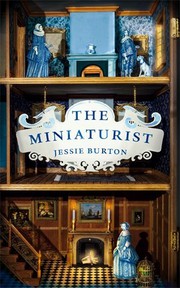
The Miniaturist
A new bride in 1686 Amsterdam gets a dollhouse replica of her home, and its tiny figures start to reveal what the Brandt family hides.
2,865-word summary · 13 min read
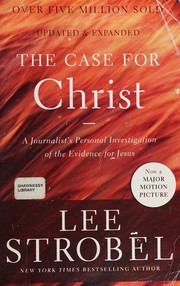
The Case for Christ
An atheist journalist cross-examines scholars on the Gospels, the tomb, and the resurrection to test the evidence for Jesus.
2,882-word summary · 13 min read
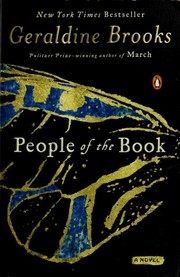
People of the Book
Conservator Hanna traces Sarajevo Haggadah stains back to 1480 Seville.
2,479-word summary · 11 min read
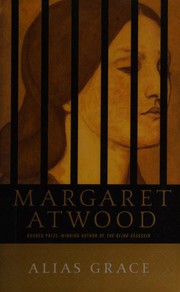
Alias Grace
A teenage maid convicted of a double murder in 1843 tells her story to a young doctor hired to decide whether she deserves a pardon.
2,788-word summary · 12 min read

A Doll's House
Nora forges a loan to save Torvald, then walks out on doll life at Christmas.
2,468-word summary · 11 min read

The Marriage Portrait
Fifteen year old Lucrezia Medici marries Ferrara's duke and sits for a portrait shadowed by menace.
2,031-word summary · 9 min read
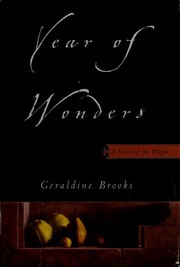
Year of Wonders
A maid in plague-hit Eyam nurses neighbors, loses her sons, and finds skill and doubt in 1666.
2,563-word summary · 11 min read
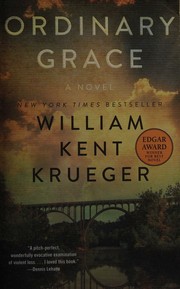
Ordinary Grace
In 1961 Minnesota, thirteen-year-old Frank Drum faces a summer of deaths that tests his minister family and forces him to weigh truth, guilt, and mercy.
2,948-word summary · 13 min read
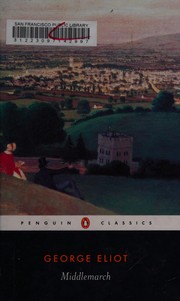
Middlemarch
Idealistic Dorothea marries dry scholar Casaubon while ambitious doctor Lydgate marries Rosamond, and a Midlands town watches both marriages strain.
2,883-word summary · 13 min read

Evidence of the Affair
Two strangers trade letters after learning their spouses are having an affair in 1970s California.
3,000-word summary · 13 min read

The Story of a New Name
Married Lila and student Elena grow apart and collide again across shops, Ischia, and Pisa.
2,523-word summary · 11 min read