
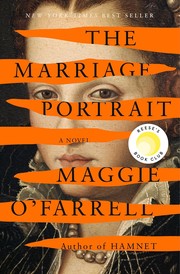
The Marriage Portrait
2,031-word summary 9 min read 352 pages in the book
- First published
- 2022
- Publisher
- Knopf
- Pages
- 352
- ISBN
- 9780593320624
Reading options
What's inside (10 sections)
I read The Marriage Portrait because Hamnet made O'Farrell essential for me. Maggie O'Farrell published it in 2022 with Knopf in the US and Tinder Press in the UK. My reading follows the 352 page hardcover. Lucrezia di Cosimo de Medici, fifteen and married to Alfonso, Duke of Ferrara, navigates a court where art masks menace. It is lush, tense, and sadder than its beautiful sentences first suggest.
Florence in the 1550s holds the Medici at their peak. Cosimo, Grand Duke, rules with calculation. Eleonora, his wife, manages children like alliances. Maria, eldest daughter, is promised to Alfonso d'Este, ruler of Ferrara, Modena, and Reggio. Then Maria dies on the eve of wedding, and Lucrezia, third daughter, obscure and observant, is thrust into the match. Her father accepts quickly. The duke requests quickly. No one asks the girl who loved wondering at palazzo treasures and sketching animals.
A girl married to power
Lucrezia is fifteen, bright in the way of overlooked children who watch. She loves art, animals, and silence. She speaks plainly when courts require flattery. Married and moved to Ferrara, she finds customs opaque and welcome uneven. Alfonso himself mystifies most. Playful sophisticate among artists and musicians in one hour. Ruthless politician before whom even his formidable sisters tremble in the next. Which husband did she marry. The book keeps that question open like a door in draft.
O'Farrell structures the novel with dread from page one. The opening suggests Lucrezia may die in this marriage, by sickness or by her husband's hand. Reading with that shadow changes every banquet. A hand on her back guides or pushes. A physician's tonic heals or harms. A portrait sitting preserves or warns. That menace hums under beauty without turning the book into cheap thriller. Meals glitter. Conversations cut. You keep waiting for the turn.
Alfonso's court gets full texture. Formidable sisters who test the new duchess. Artists who flatter and observe. Musicians who play through tension. Servants who see everything and say little. Lucrezia, used to Medici scale, finds Ferrara smaller and sharper. Her rank is higher and her safety lower. As the new duchess she has one duty in court eyes. Provide the heir who shores the dynasty. Until then her future hangs entirely. That conditional worth chills more than any single threat. She is treasured furniture until proven vessel.
Her youth matters and O'Farrell never lets you forget. Fifteen, barely past girlhood, negotiating a grown man's moods. She misses her nurse. She draws in margins. She misunderstands jokes that are warnings. Those details keep sympathy from curdling into mere pity. Lucrezia thinks. She connects Alfonso's temper to his sisters' fear. She notes which doors lock. Her intelligence is observational rather than political, which suits a girl trained to look at paintings, not plots. Looking saves her in ways scheming could not.
Art, portrait, and Browning's shadow
The portrait of the title carries the book's themes. Alfonso commissions a painting to preserve Lucrezia's image for centuries. She sits in constricting finery while the painter studies her. O'Farrell was inspired by Robert Browning's poem My Last Duchess, where a duke shows a portrait of his dead wife with chilling pride. Knowing the poem adds dread. Is this duke that duke. Will this portrait outlive its subject by murder. The novel plays with that expectation without becoming mere prequel to a poem. Art here is power, memory, and evidence at once.
Lucrezia's own artistry threads through. She sketches animals with quick truth. She notices color the way courtiers notice rank. Those habits, dismissed as girlish, become survival tools. A face that lies poorly. A hand that shakes. A smile that does not reach eyes. She reads people like compositions. That visual intelligence, feminine and devalued, proves sharper than council talk. O'Farrell, who writes about seeing in Hamnet too, returns to her great subject. Attention as love and as shield.
The Medici backdrop adds scale without overwhelming. Cosimo's ambition. Eleonora's management. Sibling grief for Maria, whose death enabled this match and whose memory haunts Lucrezia with survivor guilt. Was Maria luckier to die free. That dark thought visits Lucrezia in church and shames her. O'Farrell lets it sit without resolving. Grief for a sister and relief at life mix in ways the pious can not confess. The book's honesty about such mixtures is its strength.
Alfonso remains deliberately double. Generous patron who discusses poetry. Cold husband who counts cycles and rages at delay. O'Farrell draws on history, Lucrezia died at sixteen after a year of marriage, likely of illness though contemporaries whispered poison, and keeps both possibilities alive. Doctors bleed and dose. Alfonso watches. Whether he orders death or merely benefits from it stays ambiguous in ways that frustrate readers wanting verdicts. The ambiguity is the point about women's history. Records kept by men rarely clarify what happened to girls in locked rooms.
What glows and what strains
What glows is prose, dread, and a heroine who sees. O'Farrell writes sentences that feel painted. Light on stone. Silk weight. Paint smell. Those textures never slow the European plot because menace pulls forward. Short chapters cut between Florence memory and Ferrara present. The Reese's Book Club selection brought deserved wide readership, and the Women's Prize shortlisting honored craft. Fans of Hamnet will find the same gifts turned to Italy. Grief, mothers, and children under power.
What strains is pace for thriller seekers and certainty for history sticklers. The middle third lingers on court routine, fittings, and meals while dread simmers. Some readers will want the plot to sharpen sooner. Historians will note O'Farrell chooses the poisoning reading's shadows over documented illness, and compresses timelines for effect. Those are novelist's rights, but readers wanting biography should pair with histories of the Este and Medici. Also note Dwight Garner's NYT review found it overwrought. I understand the charge in a few fevered passages and still preferred lush to spare for this story. A girl's short life deserves abundance.
Length at 352 pages suits the arc from obscure daughter to duchess in danger. No bloat, though two chapters of travel could trim. The ending, which I will not detail beyond saying it reframes the portrait as both memorial and accusation, lands with quiet force rather than courtroom proof. You will close the book wanting to look up Lucrezia's real portrait. Do. Then reread Browning. The triangle of poem, painting, and novel enriches all three.
Sisters, servants, and witnesses
Alfonso's sisters deserve attention as the court's immune system. Formidable, watchful, and loyal to blood over bride, they test Lucrezia with etiquette traps and veiled questions. One befriends briefly, then reports. Another sneers openly. Their hostility is not personal spite so much as dynastic defense. An outsider bride with Medici pride threatens their influence over a brother they manage. Watching them circle teaches Lucrezia more about power than any council. Women fight with seating charts and silences. Learn the chart. Hear the silence.
Servants see everything and say little, which makes them Lucrezia's best teachers when she bothers to ask. A maid who dresses her hair reports which sister visited Alfonso late. A cook notes what dishes return uneaten when tempers sour. A guard mentions doors barred early. Those scraps, gathered without bribes through simple kindness, assemble into warnings no official would voice. O'Farrell honors service sight throughout. The palazzo runs on invisible labor that notices all. Brides who tip and thank learn faster than those who command. Lucrezia, raised among Medici servants she knew by name, understands this instinctively. It saves her more than once.
The portrait painter himself becomes crucial witness. Hired to fix her image for centuries, he studies her face longer than any husband does. His gaze is professional rather than possessive, which lets Lucrezia breathe during sittings. She talks to him about color while he mixes skin tones. Those conversations, about art's truth versus flattery, mirror the book's own project. How to paint a girl truly when patrons want icon. The finished portrait, beautiful and slightly frightened, testifies better than chronicles. Look at her eyes, O'Farrell suggests. Fear kept company with grace. That doubleness is the real likeness.
Browning's poem hovers over all of it without hijacking plot. Readers who know My Last Duchess will hear the duke's voice behind Alfonso's polished lines. Never to stoop. A heart too soon made glad. O'Farrell plants echoes deliberately, a curtain, a glance, a command, then diverges where history demands. Her Alfonso is younger, more changeable, less coldly certain than Browning's collector. That youth makes him scarier in some ways. A mature monster plans. A boyish one improvises with power. Lucrezia must read moods that shift hourly. No poem prepares her fully. Only attention does.
History, poem, and portrait together
Readers who follow the triangle of sources will get most from the book. Start with Browning's My Last Duchess, a duke showing a portrait with pride that chills. Then look up Lucrezia de Medici's actual portrait, young, auburn, and watchful. Then read O'Farrell's novel as bridge between artifact and imagination. Each changes the others. The poem sounds crueler after the novel's tenderness. The portrait looks warier after the poem's menace. The novel reads braver beside both. That triangulation is rare pleasure historical fiction offers at best. Three centuries talking through one girl's face.
What history says plainly is this. Lucrezia di Cosimo de Medici married Alfonso II d'Este, Duke of Ferrara, and died at sixteen within a year. Contemporaries whispered poison. Modern scholars lean toward illness, possibly tuberculosis, while admitting evidence is thin. O'Farrell chooses menace without certainty, letting doctors, husbands, and courts all seem capable. That choice honors both archives and imagination. Records kept by powerful men rarely clarify girls' deaths. Fiction may ask what files omit. Ask loudly, the book suggests, while admitting answers stay partial. Verdicts belong to courts. Questions belong to novels.
A girl who looks back
Lucrezia's gaze is the book's final subject and worth naming directly. Trained to be looked at, she learns to look back with artist's precision. At animals first, then servants, then sisters, then husband. Each look gathers data that flattery misses. Fear in eyes. Hands that shake. Smiles that stop short. Those observations accumulate into survival sense no tutor taught. Courts educate girls in being seen. Lucrezia educates herself in seeing. That reversal drives every escape she manages, social or physical. Watchers who are watched lose advantage. The book demonstrates it scene by scene until the portrait sitting, where painter and duchess truly see each other across class and craft. Two workers with eyes. That mutual sight redeems gazes elsewhere in the book that consumed. Look well. It may save you.
O'Farrell's women across books
Readers who know Hamnet will feel continuities worth naming. Both novels center young mothers under lethal patriarchy, one in plague Stratford and one in Renaissance Ferrara. Both use art, Agnes's healing herbs and Lucrezia's sketches, as women's knowledge that courts dismiss. Both end with portraits that outlive bodies, Hamnet's name in plays and Lucrezia's face in paint. O'Farrell writes across centuries the same question. What survives of girls men bury. Her answer, attention preserved in work, comforts without lying about odds. Most girls vanish unrecorded. Fiction can not retrieve them all. It can honor one fully enough to stand for many. Lucrezia stands.
Who should sit
Give The Marriage Portrait to historical fiction readers who loved Hamnet and The Other Boleyn Girl, to art lovers who enjoy paintings as plots, to book clubs that like arguing about what happened in locked rooms. It suits readers comfortable with slow dread and lush sentences. Do not give it to readers who need fast twists or documented certainty. Pair it with Browning's My Last Duchess and a search for Lucrezia's portrait. Look long. Then discuss.
At 352 pages I read it across four evenings, Googling details as Reese promised readers would. Lucrezia starts free to wonder at treasures and ends sitting for an image that may outlive her by murder or illness. That sitting, still and watched, is why the book aches. Girls become wives become portraits while men decide. O'Farrell gives one girl back her gaze. Hold it.
FAQ
When was The Marriage Portrait published?
Knopf published it in September 2022. The hardcover runs 352 pages and the ISBN is 9780593320624.
Is it part of a series?
No. It stands alone after Hamnet, turning from Shakespeare's son to Lucrezia de Medici.
Who is Lucrezia?
Lucrezia di Cosimo de Medici, third daughter, married to Alfonso II d'Este, Duke of Ferrara.
Similar books
The Boleyn Inheritance
Three women narrate Henry VIII's fourth and fifth marriages: a foreign bride who survives, a teenage queen who does not, and the widow who opens the door.
2,391-word summary · 11 min read
The Agony and the Ecstasy
Irving Stone turns Michelangelo's seventy years of carving, painting, and arguing with popes into a novel about the cost of making something that outlives you.
2,260-word summary · 10 min read
The Birth of Venus
A Florentine merchant's daughter trains as an artist, marries a man who hides a secret, and survives Savonarola's bonfire of the vanities.
2,404-word summary · 11 min read
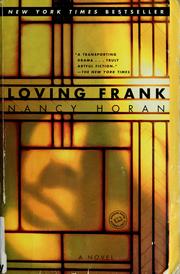
Loving Frank
Mamah Borthwick Cheney leaves her family for Frank Lloyd Wright, and their affair becomes a public scandal that ends in tragedy at Taliesin.
2,034-word summary · 9 min read
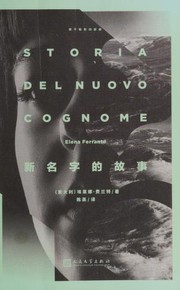
The Story of a New Name
Married Lila and student Elena grow apart and collide again across shops, Ischia, and Pisa.
2,523-word summary · 11 min read
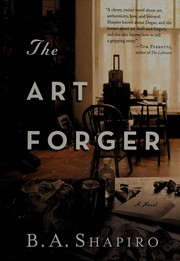
The Art Forger
A disgraced Boston painter agrees to copy a Degas stolen from the Gardner Museum, then begins to suspect the original she is copying is itself a forgery.
2,117-word summary · 9 min read
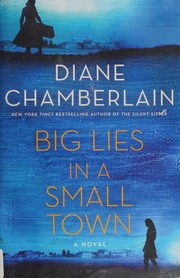
Big Lies in a Small Town
A 22-year-old woman leaves prison to restore a 1940 mural, and Edenton, North Carolina, starts talking.
2,187-word summary · 10 min read
The Tuscan Child
After her father's death, Joanna follows a returned letter to Tuscany and uncovers his wartime love, a hidden painting and a village secret. A dual-timeline…
2,095-word summary · 9 min read
The Queen's Fool
A young Jewish refugee with second sight becomes a court fool to Edward VI, Mary I, and Elizabeth, and learns what it costs to tell the truth.
2,412-word summary · 11 min read
A Voice in the Wind
A young Christian slave in Rome serves a spoiled patrician daughter and catches the eye of her brother, while a captured German gladiator fights for freedom.
2,322-word summary · 10 min read
The Clockmaker's Daughter
A London archivist finds a Victorian satchel holding a photograph, a sketchbook and a letter, then follows them to Birchwood Manor, where a young woman died in…
2,886-word summary · 13 min read
Vanity Fair
Becky Sharp schemes her way up Regency society while loyal Amelia waits, in Thackeray's witty novel without a hero.
2,698-word summary · 12 min read
Trust
Four rival accounts of one Wall Street fortune collide: a 1930s novel, a tycoon's memoir, a secretary's story, and a wife's diary.
2,217-word summary · 10 min read
The Book of Longings
In first-century Galilee, Ana marries Jesus of Nazareth and fights to write women's stories in a world set against her voice.
2,368-word summary · 11 min read
The Miniaturist
A new bride in 1686 Amsterdam gets a dollhouse replica of her home, and its tiny figures start to reveal what the Brandt family hides.
2,865-word summary · 13 min read
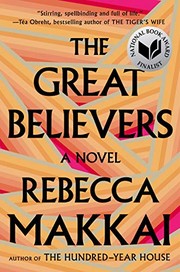
The Great Believers
Yale builds a Chicago art collection as AIDS takes his friends, and Fiona searches Paris for her daughter thirty years later.
2,742-word summary · 12 min read
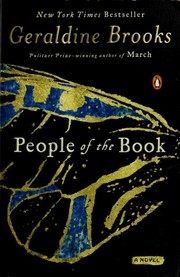
People of the Book
Conservator Hanna traces Sarajevo Haggadah stains back to 1480 Seville.
2,479-word summary · 11 min read
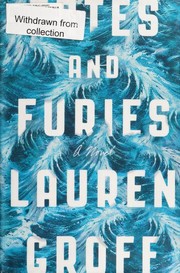
Fates and Furies
Lauren Groff tells one 24 year marriage twice, first through Lotto's bright luck, then through Mathilde's hidden past and quiet control.
2,992-word summary · 13 min read
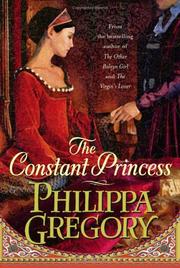
The Constant Princess
Catalina of Spain becomes Katherine, outlasts poverty and spies, and wins Flodden as Henry's queen.
2,065-word summary · 9 min read
The White Queen
Elizabeth Woodville secretly marries Edward IV and fights to keep her children safe as earls turn and kings fall. Told in her voice, it mixes court politics…
2,926-word summary · 13 min read
The Girl You Left Behind
Two women a century apart fight for what they love, joined by a portrait painted in wartime France and claimed in modern London.
2,613-word summary · 12 min read
Middlemarch
Idealistic Dorothea marries dry scholar Casaubon while ambitious doctor Lydgate marries Rosamond, and a Midlands town watches both marriages strain.
2,883-word summary · 13 min read

Evidence of the Affair
Two strangers trade letters after learning their spouses are having an affair in 1970s California.
3,000-word summary · 13 min read
The Paris Wife
Hadley Richardson marries young Ernest Hemingway and follows him to 1920s Paris, fame, and heartbreak.
2,493-word summary · 11 min read
My Brilliant Friend
Elena and Lila grow up in 1950s Naples bound by rivalry and love.
2,584-word summary · 11 min read
Beneath a Scarlet Sky
Pino Lella guides Jews over Alps then drives for Nazis in Milan.
2,271-word summary · 10 min read
The Invisible Life of Addie LaRue
Addie trades her soul for freedom in 1714 France and lives forgotten for 300 years, until a Brooklyn bookseller remembers her name.
3,480-word summary · 15 min read
Hamnet
Agnes Hathaway holds her Stratford family together while her husband works in London, until plague takes eleven-year-old Hamnet in 1596.
3,164-word summary · 14 min read

Violeta
A woman born in 1920 writes her life story to her grandson, from one pandemic to another, through wealth, ruin, passion, and dictatorship in South America.
2,555-word summary · 11 min read
The Stationery Shop
Two teenagers fall in love in a Tehran stationery shop in 1953, are separated by the coup and a family deception, and meet again sixty years later.
2,024-word summary · 9 min read