
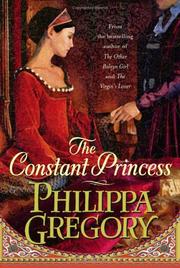
The Constant Princess
2,065-word summary 9 min read 393 pages in the book
- First published
- 2005
- Publisher
- Touchstone
- Pages
- 393
- ISBN
- 9780743272483
- Series
- The Plantagenet and Tudor Novels (#6)
Reading options
What's inside (9 sections)
I picked up The Constant Princess to understand Katherine of Aragon beyond the barren wife cliché. Philippa Gregory published it in 2005 with Touchstone. My reading follows the 393 page hardcover. It is part of The Plantagenet and Tudor Novels. Catalina of Spain becomes Katherine, survives Arthur's death, poverty, and spies to marry Henry. It is lush, political, and more romantic than strictly true, and it made me respect a queen I had dismissed.
Catalina, youngest daughter of Isabella and Ferdinand, is promised at three to Arthur Tudor, Prince of Wales. Raised in the Alhambra with faith, pride, and stories of warrior mother, she believes destiny is England. She arrives in 1501 to rain, strange food, and a boy husband who is studious and frail. Gregory writes their brief marriage with tenderness. They like each other. They plan an England together. Then Arthur dies at fifteen, and Catalina, sixteen, must make a future from a deathbed promise.
Widow in a cold court
Widowed and foreign, Catalina becomes Katherine, a pawn who refuses pawnhood. Henry VII wants her dowry but not her cost. He keeps her poor, spied on, half engaged to his younger son Henry. Her parents in Spain prove little use, demanding and distant. She learns to lie about consummation, to insist her marriage to Arthur was unconsummated so she can marry Henry without obstacle. That lie, the book's moral center, is told as necessity and faith combined. She believes God wants her queen. She acts to make it true.
Gregory excels at Tudor court texture. Damp palaces. Itchy wool. Letters that take months. Spies who smile. Katherine shares rooms with a duenna, counts coins, mends gowns, and waits seven years. Those waiting chapters could drag, but they show endurance as power. She outlasts Henry VII's greed, her father-in-law's desire for her, and Europe's laughter by simply remaining, Catholic and certain, while others shift.
Her mother Isabella's shadow looms. Warrior queen who funded Columbus and fought Moors, Isabella taught Catalina that queens ride to battle. Letters between them, proud and strained, show two strong women misunderstanding each other across distance. When Isabella dies, Katherine loses protector and gains model. She will be her mother's daughter in England, even if England mocks Spanish pride.
Arthur's ghost lingers sweetly. Katherine loved the boy, not just the prince. She keeps his books, remembers his laugh, and uses his promise to justify pursuing Henry. That use feels both loyal and calculating. Gregory lets both sit. Grief and ambition mix. To survive, Katherine must marry Arthur's brother and convince all it is God's will. She does.
Marrying Henry and winning
Young Henry, sunny, athletic, spoilt, adores Katherine at first. She is older, beautiful, devout, and kind to a boy who lost brother and mother. Their courtship, with jousts, dances, and theology debates, glitters. Gregory writes Henry as charming and shallow, hungry for praise, eager to be great. Katherine mothers and desires him at once. That maternal erotic charge, odd to modern eyes, fits Tudor age gaps and power.
Marriage brings triumph. Coronation. Pregnancy. War with Scotland while Henry fights in France. Katherine, like her mother, rides north, rallies troops, and helps win Flodden. Gregory ends the novel at this peak, a queen militant, rather than following to divorce and disgrace. That choice is wise. We leave Katherine victorious, not discarded. Readers who know history will feel dramatic irony ache. She won everything, then lost to Anne Boleyn years later. The book lets victory stand before fall.
The battle chapters surprise with vigor. Katherine in armor, pregnant recently, addressing soldiers in accented English, praying loudly. Those scenes balance bedroom politics with field action. Gregory researched Granada and English archives, traveled to Alhambra, and it shows in food, clothes, and prayer. You smell oranges and wet wool. You hear Latin and Spanish lullabies.
Henry's father and grandmother, Margaret Beaufort, scheme against Katherine throughout. They call her proud, foreign, and barren before she proves fertility. Katherine answers with patience and paperwork. She writes to her father, to the Pope, to merchants for loans. Those letters, quoted at length, show queenship as administration. Boring and vital. Gregory respects that labor.
Isabella's daughter in England
Isabella of Castile haunts every choice Katherine makes. Warrior queen who rode pregnant, funded voyages, and enforced faith with fire, she taught Catalina that queenship is action, not ornament. Letters between mother and daughter mix pride and reproach. Isabella demands dowry payments and obedience. Catalina demands help and recognition. Both love through politics. When Isabella dies, Katherine mourns a mother she rarely pleased and inherits a model she must adapt. England is not Granada. A queen militant here must smile more and threaten less, at least at first.
The Alhambra childhood chapters glow with sensory memory. Orange trees. Fountains. Silk. Priests and scholars debating while girls listen behind screens. Catalina learns languages, riding, and prayer as statecraft. She also learns that faith can justify cruelty, as her parents expel Jews and Muslims while praising God. Gregory does not hide this shadow. Katherine's piety coexists with blind spots she never examines. That complexity keeps her from saintliness. She is devout and limited, brave and biased, like her age.
Her duenna and confessors shape her English years. One advises patience. Another urges bold lies. Katherine chooses among counselors the way she chooses gowns, for fit and occasion. She keeps a Spanish confessor for conscience and an English lady for manners. Those divided loyalties mirror her divided self. Spanish infanta plus English princess. Virgin widow plus wife in waiting. She performs each as needed without feeling false. Survival requires fluency.
Margaret Beaufort, Henry VII's mother, serves as foil. Pious, shrewd, and controlling, she respects Katherine's faith while blocking her power. Their interviews crackle with polite steel. Who kneels first. Who prays longer. Who controls access to Henry. Katherine learns to yield small points to win large ones. Let Margaret arrange chapel seating. Insist on marriage treaty wording. Those negotiations teach queenship as patience, a lesson Flodden later tests in public.
Young Henry's affection also needs context. He is a boy who lost brother and mother, hungry for warmth. Katherine offers mothering and mystery together. She tells Spanish stories, nurses his fevers, and laughs at his music. He adores her as safe and exotic at once. That adoration will curdle years later when novelty fades and sons die. Gregory hints at that future through Henry's restlessness even in joy. He loves praise more than people. Katherine sees it and hopes love will steady him. Hope, not blindness, drives her. That distinction matters.
Court as classroom
What Gregory teaches best is how Tudor courts ran on access. Who stands near the king at chapel. Who hands the queen her glove. Who carries messages after supper. Katherine learns English court by watching Margaret Beaufort control doors. She counters by being unfailingly polite to servants who report kindness upward. Grooms, laundresses, and cooks become her spies because she remembers names and pays promptly even when poor. Those alliances, built on respect rather than bribes, save her more than once when official channels close.
Language itself is power. Katherine arrives speaking Spanish and Latin, learns English with an accent courtiers mock, and turns accent into asset by using it to seem humble while negotiating sharply. She writes letters in three tongues, choosing each for audience. Spanish to her father for duty. Latin to the Pope for law. English to Henry for love. That trilingual statecraft shows education as survival. A princess trained for queenship uses every lesson.
Food and clothes do politics too. Spanish olives and oranges mark her foreignness. English wool marks her adaptation. She wears both by turns, signaling loyalty without surrender. A feast scene where she serves Spanish dishes at an English table while wearing English cut gown captures her strategy. Honor both. Belong to England. Those sartorial choices sound trivial and decide reputations in courts where eyes never rest.
Prayer structures days and decisions. Katherine hears Mass daily, confesses weekly, and consults confessors before treaties. Gregory presents faith as genuine force, not cover. It comforts Katherine in poverty and steels her in battle. It also blinds her to reform currents and to Henry's later doubts. That blindness, seeded here in devout youth, will bear bitter fruit after the novel ends. Readers who know the divorce will see warnings in her certainty that God guarantees her crown. Faith sustains and narrows at once.
Flodden and triumph
The Flodden chapters give Katherine the battlefield her mother knew. With Henry in France, Scots invade. Katherine, regent and pregnant recently, rides north in armor, addresses troops in accented English, and prays aloud. Gregory stages the muster with mud, banners, and nervous lords who doubt a Spanish woman. Katherine answers doubt with presence. She sleeps little, writes orders, and visits wounded. Those pages balance earlier bedroom politics with public command.
Victory at Flodden belongs to soldiers and luck as much as queen, and Gregory is fair about that. Commanders plan. Archers shoot. Weather holds. But Katherine's role as rallying figure matters because symbols move men. Her letters after, proud and pious, claim God's favor for England. That claim strengthens her position at court more than any dowry payment. She proved herself English in war after years of being called foreign in peace.
Gregory ends here deliberately at triumph rather than following to divorce. We leave Katherine crowned, praised, and loved, before Anne Boleyn's shadow. Readers who know history will feel irony ache. She won everything, then lost to a younger woman and a king's impatience years later. Letting victory stand before fall is mercy and craft. Remember her this way first. Then mourn what came.
That ending choice shapes the book's meaning. It is not tragedy of discarded wife. It is epic of young woman who claimed destiny through poverty, lies, and battle. Later tragedy belongs to another book. Here, a girl promised at three becomes queen militant. That arc satisfies even as history whispers what follows. Hold the triumph. It was real.
What shines and what strains
What shines is Katherine reclaimed as active, faithful, and political. No longer the old wife set aside, she is a young warrior who learned statecraft in poverty. Gregory's sympathy is clear and earned through detail. The Alhambra childhood, the sea voyage, the first English winter, all live. The romance with Arthur is sweet. The partnership with young Henry is heady. The Flodden climax satisfies.
What strains is romantic license. Historians debate consummation, Katherine's age, and Arthur's health. Gregory chooses the version that favors her heroine, passionately chaste marriage, a lie told for destiny. That choice powers plot but simplifies. Henry VII becomes miserly villain. Ferdinand becomes cold. Those flattenings serve story over nuance. Readers who want academic balance should pair with biography. Readers who want narrative drive will forgive.
The prose is rich, flowing, with present tense immediacy in places and letters inset. Sensory detail abounds. Food, fabric, prayer beads. Some passages repeat faith and destiny language until it mantras. Katherine's certainty, compelling early, can feel rigid late. Gregory knows this and uses other voices, duenna, priest, Margaret, to question. Those questions keep the book from hagiography, barely.
Length at 393 pages suits the arc from 1491 to 1513. No bloat, though middle waiting years circle with spies and debts. Push through. The reward is a queen who earns her crown twice, by marriage and by battle, before history takes it.
Who should kneel
Give The Constant Princess to Tudor fans who love The Other Boleyn Girl and The White Queen, to readers who want women's history with romance, to book clubs that like arguing about lies for God. It suits those who know Katherine only as first wife and want more. Do not give it to readers who need strict history or fast battles. Pair it with a biography of Katherine for balance, then return to Gregory for heart.
At 393 pages I read it across five nights, admiring and questioning. Catalina starts promised at three and ends crowned and victorious on a battlefield, holding to a lie she believes is truth. That hold, faithful and fierce, is the whole portrait. Behind the familiar face of a discarded queen lies a girl who rode through rain to claim destiny. Gregory proves it again. Women warriors shape Europe, even when Europe forgets.
FAQ
When was The Constant Princess published?
Touchstone published it in 2005. The hardcover runs 393 pages and the ISBN is 9780743272483.
Is it part of a series?
Yes. It belongs to The Plantagenet and Tudor Novels, listed as book six, ending at Flodden before the divorce years.
Who is the constant princess?
Katherine of Aragon, youngest daughter of Isabella and Ferdinand, first wife of Henry VIII.
Similar books
More from The Plantagenet and Tudor Novels first, then related titles.
The White Queen
Elizabeth Woodville secretly marries Edward IV and fights to keep her children safe as earls turn and kings fall. Told in her voice, it mixes court politics…
2,926-word summary · 13 min read
The Boleyn Inheritance
Three women narrate Henry VIII's fourth and fifth marriages: a foreign bride who survives, a teenage queen who does not, and the widow who opens the door.
2,391-word summary · 11 min read
The Queen's Fool
A young Jewish refugee with second sight becomes a court fool to Edward VI, Mary I, and Elizabeth, and learns what it costs to tell the truth.
2,412-word summary · 11 min read

The Shadow Sister
Star D'Apliese steps out of her sister's shadow and follows a bookshop clue into the Edwardian life of Flora MacNichol, a woman who gave up love for duty.
2,260-word summary · 10 min read
The Stationery Shop
Two teenagers fall in love in a Tehran stationery shop in 1953, are separated by the coup and a family deception, and meet again sixty years later.
2,024-word summary · 9 min read

The Japanese Lover
A Polish refugee and the son of a Japanese gardener fall in love in San Francisco in 1939, then keep the affair secret for nearly seventy years.
2,286-word summary · 10 min read
Austenland
A New York graphic designer obsessed with Mr. Darcy inherits a trip to a Jane Austen theme park, where the fantasy of Regency romance collides with the men…
2,030-word summary · 9 min read

Anatomy: A Love Story
In 1817 Edinburgh, a noblewoman who wants to be a surgeon disguises herself to study anatomy and falls for the grave robber who supplies her with bodies.
2,031-word summary · 9 min read

Vow of Thieves
Kazi and Jase return to Tor's Watch to find it occupied, and their marriage is tested by captivity, betrayal, and a war for the town of Hell's Mouth.
2,059-word summary · 9 min read

The Valley of Horses
Exiled from the Clan, Ayla survives alone in a hidden valley, tames a horse and a cave lion, and nurses a wounded stranger back to life.
2,311-word summary · 10 min read
Only Time Will Tell
A Bristol dockworker's son wins a scholarship, falls in love with the daughter of the family that owns the shipyard, and learns that his father's death was not…
2,082-word summary · 9 min read

The Rose & the Dagger
Shahrzad is pulled from her Caliph husband and left in a desert camp of rebels, needing to break his curse and end a war before it ends her.
2,520-word summary · 11 min read

Origins
Stefan's diary of 1864 and 1888: how he and Damon fell for Katherine, became vampires, and went looking for a killer in London.
2,056-word summary · 9 min read

On Chesil Beach
Two newlyweds spend one terrible night on Chesil Beach in 1962, and the rest of their lives is decided by it.
2,456-word summary · 11 min read

Last Night at the Telegraph Club
The 2021 National Book Award winner follows Lily Hu, a Chinese American teenager in 1954 San Francisco, as she falls for Kath and learns what it costs to be…
2,336-word summary · 10 min read

Ivanhoe
A disinherited Saxon knight, a great tournament, a besieged castle and a trial by combat. Scott's most famous novel, set in England in 1194.
2,834-word summary · 13 min read
Euphoria
Three anthropologists in 1930s New Guinea turn fieldwork into a love triangle, and a real history breathes behind them.
2,048-word summary · 9 min read

What the Wind Knows
Annie scatters her grandfather's ashes on Lough Gill and is pulled into 1921 Ireland, where she becomes the missing Anne Gallagher and falls for Dr. Thomas…
2,056-word summary · 9 min read

Loving Frank
Mamah Borthwick Cheney leaves her family for Frank Lloyd Wright, and their affair becomes a public scandal that ends in tragedy at Taliesin.
2,034-word summary · 9 min read

Doctor Zhivago
A doctor and poet lives through revolution, war, and love in Pasternak's novel of private life under the pressure of Russian history.
2,213-word summary · 10 min read
Bring Up the Bodies
Thomas Cromwell sets out to destroy Anne Boleyn, building a case from rumor and revenge while Henry VIII waits to marry Jane Seymour.
2,066-word summary · 9 min read
A Voice in the Wind
A young Christian slave in Rome serves a spoiled patrician daughter and catches the eye of her brother, while a captured German gladiator fights for freedom.
2,322-word summary · 10 min read

The Storm Sister
Ally D'Aplièse loses her father and her lover within weeks, then follows a brass frog and a Norwegian biography into Anna Landvik's music and the world of…
2,376-word summary · 11 min read

Death Comes to Pemberley
P.D. James drops a murder onto the Pemberley estate and sends Wickham to trial, reading Austen's most famous marriage through the machinery of Georgian justice.
2,318-word summary · 10 min read
The War That Saved My Life
Ten-year-old Ada has never left her London flat, hidden away because of her clubfoot. Wartime evacuation sends her to Kent, where a reluctant guardian and a…
2,252-word summary · 10 min read
The Last Kingdom
Kidnapped by Danish raiders as a boy and raised in their halls, Uhtred of Bebbanburg must choose what he is when the fight for England begins.
1,997-word summary · 9 min read
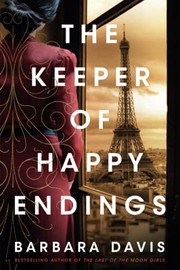
The Keeper of Happy Endings
Barbara Davis's 2021 standalone braids a Paris dressmaker's wartime losses with a grieving Boston artist who unlocks her family's secrets through an old row…
2,437-word summary · 11 min read
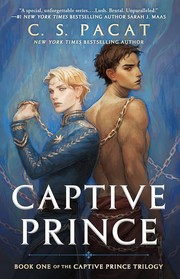
Captive Prince
Betrayed by his half-brother and sold to the enemy kingdom as a pleasure slave, Prince Damianos must survive in the court of Vere without revealing who he…
2,063-word summary · 9 min read
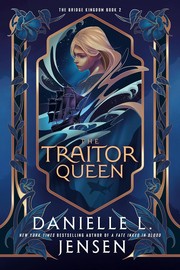
The Traitor Queen
Exiled Lara returns to free Aren and break her father hold.
2,328-word summary · 10 min read
Grave Mercy
Convent assassin Ismae spares Gavriel and hunts traitors in Brittany.
2,357-word summary · 10 min read