
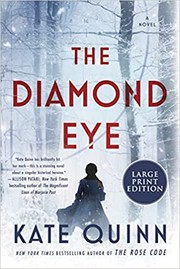
The Diamond Eye
2,048-word summary 9 min read 400 pages in the book
- First published
- 2022
- Publisher
- William Morrow
- Pages
- 400
- ISBN
- 9780062943521
Reading options
What's inside (3 sections)
I had loved The Huntress for its women pilots and was ready for Quinn's next Second World War novel. The Diamond Eye, first published in 2022, HarperCollins edition running 400 pages, ISBN 9780062943521, tells the story of Lyudmila Pavlichenko, real Soviet sniper credited with over 300 kills, who tours America in 1942 and befriends Eleanor Roosevelt. Quinn mixes documented history with invented thriller plot about an enemy sniper hunting her. It is propulsive, research heavy, feminist without speeches, and it understands that war stories about women must include both shooting and being looked at.
Mila, as friends call her, starts as a single mother and history student in Kyiv who enlists after invasion, partly from patriotism, partly to prove herself to a family that doubts. Soviet training is brutal and practical. Dig, crawl, shoot, move. She is good because she is calm, patient, good at math for wind, willing to wait hours in mud. Quinn writes sniper work with specific detail that never feels like manual. Breath control, scope fog, partner spotting, counting seconds between shots to avoid detection. Early kills sicken her. Later kills sicken differently, as routine. A scene where she vomits after her first confirmed kill, then cleans her rifle before eating, tells you war splits body from mind. She functions while feeling, which is the book's definition of courage.
Missions and a partner
Mila's spotter and friend, Lyonya? Actually a fellow soldier who becomes lover, gives the war chapters heart. They share dugouts, jokes about rations, arguments about books. He covers her while she shoots. She covers him while he sleeps. Their romance is quiet inside noise, built on trust that the other will stay awake. When he dies, and I will not detail how because it lands hard, Mila's grief turns cold rather than loud. She shoots better and feels less. Quinn does not romanticize that numbness as strength. She shows it as cost. Later, in America, Mila flinches at fireworks while smiling for cameras. The body keeps score after medals.
The enemy sniper plot, a German ace sent to kill her specifically, is invented or at least dramatized beyond record, and it gives the middle its thriller drive. He leaves notes, kills her friends to draw her, studies her patterns. Their duel across ruined cities, Sevastopol and Odessa, involves counter sniping that reads like chess with Core? Actually with wind and light. Quinn stages one three day stalk where neither eats, both hallucinate a little, Mila wins by remembering a detail about birds her partner taught. That win feels earned because we watched her learn patience in earlier chapters. Some historians will object to inventing a nemesis for a real woman. I understood the choice for narrative, though I wished author's note separated fact from fiction more clearly on this thread. Quinn does include a note, but it hedges.
The America tour second half shifts tone from mud to cameras. Mila, with interpreter and handlers, travels to Washington to ask for aid, meets Roosevelt, stays at the White House, gives speeches about women in war while American press asks about makeup and motherhood. Those chapters are infuriating in the best way. Reporters ask if she uses lipstick in trenches. Generals pat her head. Society ladies invite her to teas to show a real Soviet woman like a curiosity. Mila, who killed to protect Kyiv, must smile while being trivialized to get guns for comrades. Quinn writes these humiliations with dry humor that barely covers anger. A scene where Mila answers a lipstick question with her kill count, politely, stills a room. Facts as weapons when charm fails.
Eleanor Roosevelt emerges as genuine ally rather than photo op. She listens, asks about children left behind, arranges private talks without press. Their friendship, documented in letters, anchors the American half. Two first ladies in all but title, one by marriage, one by war, recognizing each other across language. A late night talk about grief, Eleanor's dead husband? Actually Franklin alive then? No, 1942 Franklin alive. They talk about sons in danger, about being watched as women. Those quiet talks matter more than speeches. When Eleanor later writes about Mila, you believe it because you saw listening, not just posing.
For craft, Quinn balances research and pace well for 400 pages. Short chapters alternating war past and tour present for long stretches, then converging. Battle scenes are clear about space. Who is uphill, where sun glares, how far to exfil. Tour scenes are clear about rooms. Who sits where, who interrupts. If you like history with maps, you will follow easily. If you want literary interior, dialogue carries more than reflection. Mila thinks in practical lists. Ammo, food, letters to son. That practicality is character, not thinness. She survives by counting what she can control.
For criticism, the invented nemesis sometimes crowds real history. A real woman with 309 confirmed kills does not need a fictional Moriarty to be interesting. Two duel chapters in a row follow similar beats. Wait, breathe, remember partner advice, shoot. I skimmed the second setup because pattern was clear. Also, Mila's son, left with grandmother, appears mostly in letters. Given motherhood motivates much, I wanted one more scene of them together before war to feel loss sharper. As is, love is stated more than shown early. And American press characters blur. Three reporters ask variants of lipstick question. One would do.
Still, I finished and looked up Pavlichenko's actual 1942 speech at length. Quinn quotes the famous line about gentlemen knowing women can shoot and includes context that makes it land harder. That send to sources is what good historical fiction should do. Teach enough to make you learn more. The author's note, with photos and records, is worth reading. It separates confirmed kills from dramatized duels and explains why Quinn invented. I appreciated the honesty after enjoying the invention.
For who this is for. If you liked The Huntress or The Alice Network, this is quieter and more Soviet, less ensemble. If you want romance, there is some, but war dominates. If sniper detail bothers you, the kills are described without lingering gore but without hiding. Mila's first kill nausea, later calm, will stay. I closed it thinking about women asked to be symbols while doing work. Mila as sniper, as mother, as diplomat in a dress she hates. She does all three competently while grieving. That competence under gaze is the book's tribute. Remember the 309, but remember the waiting between shots more.
Mila's son Slavik as absence that shapes every decision needs emphasis because motherhood here is not background. She leaves him with grandmother to enlist, writes letters she censors for fear, dreams about his hands while awake in dugouts. When she returns on leave and he barely knows her, the pain exceeds any battle wound. She must reintroduce herself as mother after becoming killer, and he prefers grandmother's softness to her vigilance. Those scenes, where a hero is a stranger to her child, hurt more than sniper duels because they have no enemy to shoot. War takes time that cannot be aimed at. Later, in America, she buys him sweets she cannot deliver and carries them until they melt. That melted chocolate in a coat pocket says more about working mothers at war than speeches about sacrifice. Quinn includes it in one line and moves on, trusting readers to feel weight. I did, as a child of working parents who brought home melted treats as love.
The translator and handler figures in America also reveal how allies use heroes. An interpreter who softens Mila's bluntness for press, a general's aide who schedules her between fundraisers, a society hostess who dresses her for cameras while ignoring requests for rifles. Each means well and each edits. Mila learns to speak through edits without surrendering point. She thanks hostesses sincerely for beds while repeating that beds do not win wars, guns do. That repetition, polite and unyielding, is diplomacy as sniper patience. Wait for opening, breathe, state need, do not waste shot on applause. When Eleanor finally arranges a private meeting with power, Mila uses it well because she practiced on hostesses. Small rooms prepare for big ones. That is another kind of training the book honors alongside marksmanship.
Mila's rifle as relationship deserves a paragraph because Quinn writes objects with care that reveals character. Her first rifle is heavy, borrowed, ill fitting. She learns its quirks the way others learn horses. Later, issued a scoped Mosin, she names parts privately, cleans even when exhausted, sleeps with it close not from fetish but from responsibility. When the stock cracks, she mourns like injury to partner. That attachment worries commanders who want interchangeable weapons. Mila insists each rifle shoots differently in wind. She is right, which is why she survives duels. Attention to tools as individuals mirrors attention to people. Lyonya's laugh, Eleanor's gloves, son's drawings kept in scope case. Details carried into dugouts keep humanity inside war math. A scene where Mila refuses a new rifle before a mission because hers is sighted to her eye, risking discipline, shows professionalism over obedience. She knows her zero. That knowledge saves more lives than following orders blindly. Snipers live by such stubbornness. Armies punish it until it works, then medal it.
The American press tour's fashion pressure also reveals more on reflection. Mila arrives in uniform that fits badly after weight loss, is given dresses for teas that itch, asked to smile with lipstick that tastes wrong. She complies strategically, wearing dresses to get headlines that mention aid, then changing back to uniform for meetings that matter. Those costume changes are performances she resents and uses. Quinn shows her studying American women's magazines not for vanity but for camouflage. What will make them listen. Pearls open wallets that medals do not. That calculation, learned under fire about decoys, applies to diplomacy. Appear harmless to get close, then state need plainly when attention peaks. When Mila finally speaks bluntly at a rally, dropping script to ask for guns not applause, the crowd stills because dress and directness clash. She weaponizes femininity she did not choose, which is both victory and theft. War forces such thefts daily. She notes cost without refusing tool.
The White House visit as theater deserves a final beat because Quinn stages rooms as battlefields with manners. Mila enters in a dress that pinches, sits where placed, answers lipstick questions with kill counts delivered sweetly. Eleanor watches and intervenes with questions about children that let Mila speak as mother rather than marvel. Those redirects matter more than speeches. They give Mila language besides shooting to prove worth. Later, alone with Eleanor, Mila asks about fear. Eleanor admits fears for sons, for husband's health, for being dismissed as wife. That shared fear across language and rank bonds more than alliance paperwork. Two women who are symbols learning to use symbol status without being used up. When Mila leaves Washington with promises of aid that may or may not arrive, she carries Eleanor's letters as armor stronger than medals. Paper that says you were heard. For a sniper used to spotting, being spotted kindly may be the rarest support. Quinn ends the tour not with triumph but with tired hope, which suits war better than parade. Aid comes slowly. Friendship stays.
Mila's return to the front after America as coda deserves mention because Quinn resists triumphant homecoming. She lands to news of losses, finds her unit changed, must requalify on range to prove she still shoots after months of speeches. That requalification, watched by young recruits who know her from papers, humbles more than any press tea. She misses twice before grouping tight. The girls watching learn that heroes practice, not just pose. Later, back in a dugout, she cleans her rifle while others sleep and thinks about Eleanor's letters versus orders. Paper versus command. She keeps both in her pack, one for heart and one for duty. That image, letters and cleaning kit side by side, closes her arc better than medals. She fights with love carried, not just skill. Remembering who taught waiting, Lyonya with birds, Eleanor with questions, son with small hands, she breathes, counts wind, and does the work once more.
FAQ
Who is Mila?
Lyudmila Pavlichenko, real Soviet sniper credited with over 300 kills, single mother turned diplomat in 1942 America with Eleanor Roosevelt.
When was The Diamond Eye published?
William Morrow published it in 2022. The edition cited runs 400 pages with ISBN 9780062943521.
Similar books
City of Thieves
Two boys cross siege Leningrad to find eggs for a colonel's cake.
1,985-word summary · 9 min read
The Silence of the Girls
Briseis, queen of Lyrnessus, is captured by Achilles and narrates the Trojan War from inside the Greek camp, where women are prizes and survival is its own…
2,098-word summary · 9 min read

Doctor Zhivago
A doctor and poet lives through revolution, war, and love in Pasternak's novel of private life under the pressure of Russian history.
2,213-word summary · 10 min read
The Girl in the Tower
Vasya rides out disguised as a boy, rescues kidnapped girls, and rejoins her siblings in Moscow, where a hidden sorcerer and the Grand Prince's court close in.
2,801-word summary · 12 min read

The Tenant of Wildfell Hall
Helen flees a cruel marriage, hides as Helen Graham at Wildfell Hall, and tells her full story through a long diary young Gilbert Markham must read before…
2,838-word summary · 13 min read

One Day in the Life of Ivan Denisovich
One freezing day with prisoner Shch-854 in a Soviet camp: roll call, bricklaying in the cold, bread rations, and small wins that let Shukhov call the day…
2,668-word summary · 12 min read
Code Name Verity
In 1943 France, captured agent Verity writes a confession for von Linden to buy time. Her pilot friend Maddie survives the crash and searches for her by…
2,690-word summary · 12 min read
The Sympathizer
Double agent captain spies in Saigon fall and LA exile while confessing to commandant.
2,169-word summary · 10 min read
The Island of Sea Women
On Jeju island, haenyeo divers Young-sook and Mi-ja share decades of friendship strained by war and massacre.
2,204-word summary · 10 min read

Lady Tan's Circle of Women
Ming physician Tan Yunxian treats bound feet and births with midwife Meiling, defying male medicine rules.
2,330-word summary · 10 min read
Nonesuch
A London secretary finds real angels and a fascist plot to erase Churchill in the Blitz.
2,197-word summary · 10 min read
The Dictionary of Lost Words
A girl raised in the Oxford Scriptorium collects words the dictionary men leave out.
2,036-word summary · 9 min read
The Blind Assassin
An old woman writes her sisters story while a novel inside the novel retells it as pulp science fiction.
1,963-word summary · 9 min read
The Beekeeper of Aleppo
A beekeeper guides his blind wife from Aleppo through camps toward Britain.
1,992-word summary · 9 min read
An Echo in the Bone
Jamie and Claire endure Revolution war while Brianna reads their letters at home.
1,945-word summary · 9 min read

The Mists of Avalon
Morgaine tells Arthur story from Avalon side, where goddess worship fades before priests.
1,944-word summary · 9 min read
The Bear and the Nightingale
Wild girl Vasya sees household spirits in medieval Russia while a priest calls them demons.
1,907-word summary · 8 min read
War and Peace
Pierre, Natasha, and Andrei search for meaning amid the Napoleonic wars.
2,536-word summary · 11 min read
Fall of Giants
Five families from Wales to Russia live through World War I, the Russian Revolution, and the fight for women's votes.
2,255-word summary · 10 min read
The Women
Nurse Frankie McGrath serves in Vietnam and fights to be seen at home.
1,980-word summary · 9 min read
The Guernsey Literary and Potato Peel Pie Society
A London writer trades letters with Guernsey islanders after the war.
1,979-word summary · 9 min read

The Color Purple
Celie writes letters to God and to her sister, surviving abuse in the rural South to find her own voice.
2,053-word summary · 9 min read
The Boy in the Striped Pajamas
Bruno moves to Out-With and befriends Shmuel through a camp fence without understanding it.
3,101-word summary · 14 min read
The Zookeeper's Wife: A War Story
The directors of the Warsaw Zoo hid roughly three hundred Jews in empty cages and outbuildings after the German invasion, while Jan worked for the resistance.
2,065-word summary · 9 min read
The Orphan's Tale
A Dutch teenager rescues a Jewish baby from a death train and joins a German circus, where a Jewish aerialist teaches her to fly.
2,943-word summary · 13 min read
The Blinding Knife
Kip trains to join the Blackguard while the Prism hides his true identity, loses his colors, and fights a war against a rogue drafter who wants to birth a god.
2,049-word summary · 9 min read
The Once and Future Witches
Three estranged sisters bring witchcraft back to an 1893 city where magic hides in nursery rhymes and the fight for the vote is also a fight for power.
2,132-word summary · 9 min read
Iron Widow
Wu Zetian enlists to avenge her sister, kills her pilot, and becomes an Iron Widow in a mecha Huaxia where the machines are built to kill women.
2,444-word summary · 11 min read

Infidel
Ayaan Hirsi Ali's memoir of a Somali childhood, a forced marriage, a Dutch asylum claim, and the political fight that followed the murder of Theo van Gogh.
2,041-word summary · 9 min read

Sophie's Choice
A young Southern writer in 1947 Brooklyn befriends a brilliant, unstable couple and slowly learns the story of the Polish Catholic woman at the center of their…
2,798-word summary · 12 min read