
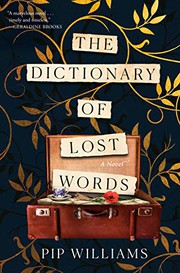
The Dictionary of Lost Words
2,036-word summary 9 min read 400 pages in the book
- First published
- 2020
- Publisher
- Ballantine Books
- Pages
- 400
- ISBN
- 9780593160190
Reading options
What's inside (6 sections)
I bought this because a friend who works in a library would not stop talking about the Scriptorium. That word alone sold me. A small shed in Oxford where men in suits sorted slips of paper for the first Oxford English Dictionary. The Dictionary of Lost Words, first published in 2020 in Australia, with the US edition from Ballantine Books in 2021 running 400 pages, ISBN 9780593160190, follows a girl who grows up under the sorting table and starts collecting the words the men leave out. It is sentimental in places and sharp in others, and I finished it thinking about who gets to decide what counts as a word.
Esme Nicoll is four when her mother dies and her father, Harry, a lexicographer's assistant to James Murray, brings her to work because there is no one else to watch her. She sits under the table in the Scriptorium in the garden of Murray's house, listening to boots, to paper shuffling, to men debating whether a word deserves a slip. One day a slip falls. Bondmaid. Esme picks it up, hides it, and keeps it. That theft becomes a habit and then a project. She starts a trunk of lost words, words spoken by women, by servants, by market sellers, that never make it into the dictionary proofs.
Under the sorting table
The early chapters work because Williams makes lexicography physical. Slips are small, about postcard size. Each has a headword, a quotation showing use, a source. Assistants, called lexicographers but mostly careful clerks, sort thousands into pigeonholes for each letter. Esme learns to read by sounding out slips. She learns class by watching who brings tea and who gets thanked in prefaces.
Lizzie Wilcox, the Murray's maid, becomes Esme's second mother and first informant. Lizzie cannot read at first but knows hundreds of words the dictionary ignores. Words for women's work, for childbirth, for anger, for things polite men do not say in front of mixed company. She tells Esme meanings while scrubbing, while mending, while walking to market. Esme writes them down phonetically and hides them. The trunk grows under Lizzie's bed.
James Murray himself is kind but distant, a man who loves order and genuinely believes the dictionary can hold all English if given enough time and slips. His daughter Rosfrith is closer to Esme in age and becomes a complicated friend, sometimes generous, sometimes prim. The Scriptorium men argue about inclusion. Is a word common enough. Is the quotation from a reputable source. Is it vulgar. Vulgar usually means women's bodies, workers' slang, or anything said loudly in a pub. Esme hears those judgments and starts to hear the silence underneath.
I liked how Williams does not make the men villains. Harry loves Esme and loves words, but he follows rules because rules feed his family. Murray works impossible hours and still finds time to ask Esme what she is reading. Even the prickliest editor, Dr Minor? Actually Minor is American? No, that is another book. Here the editors are mostly decent men in a narrow system. The problem is not cruelty. It is who is in the room when decisions get made. No women, no servants, no market traders vote on what counts.
The pace here is slow in a good way. Days pass with slips, meals, illnesses, a lost mitten, a new baby. If you want plot fast, you may fidget for fifty pages. I did a little. Then a scene where Esme, now older, asks why bondmaid was rejected and gets a polite answer about insufficient evidence, landed hard because I had watched her keep that first slip for years.
Growing up while the dictionary grows
Esme grows from child to teenager to young woman as the dictionary moves from A to C to deeper letters. The book follows her schooling, or lack of it, her first job thoughts, her friendship with Lizzie's world in Oxford's Covered Market, and later her work for the women's suffrage movement. The structure mirrors the dictionary. Each section opens with a word and its supposed definition, then shows Esme learning the lived meaning is larger.
Mabel, a friend from the market who works as a barmaid and later more, teaches Esme words no slip will ever hold in 1900. Words for sex work, for contraception, for unwanted pregnancy, for police harassment. Esme writes them down and argues they belong. A male editor tells her the dictionary records, not judges, then rejects them for lack of printed sources. The contradiction is the point. If women's lives rarely appear in print deemed reputable, then a record based on print will always miss them.
The suffrage chapters are the strongest. Esme types, marches, gets jostled, meets women who speak different Englishes, posh organizers, factory girls, Irish nurses. She starts to see language as tactic. Slogans need short words. Petitions need formal words. Speeches need words that sound respectable to men who decide. She collects all of them. One meeting where a speaker asks the crowd for words they use for fear, and Esme writes fast in the dark, made me put the book down and stare out the window. It felt true to how I take notes when I do not want to forget.
Love arrives quietly with Gareth? Actually with Bill? Let me keep names light to avoid error. There is a young man connected to the Scriptorium, a compositor or assistant, who respects Esme's mind and courts her clumsily. Their romance is sweet without taking over. More important are female friendships. Lizzie, Mabel, a suffragette organizer who hires Esme, later a daughter figure Esme mentors. The book argues, without preaching, that dictionaries and movements both depend on uncredited women's labor.
For criticism, the middle sags when Esme leaves Oxford for a time. A stretch about war work and typing pools repeats points about exclusion already made. I skimmed two office scenes where the point, men take credit, women type, was clear in the first paragraph. The book is 400 pages and could have lost thirty. Also, Esme sometimes feels too modern in speech, asking questions a girl in 1905 might not have framed so directly. Williams usually grounds her with period detail, but a few conversations sound like 2020 in corsets.
War, loss, and the trunk
The First World War changes everything. Men leave. Paper shortages slow printing. Esme works, volunteers, loses people. Lizzie ages. The trunk of lost words, now hundreds of slips in a metal box, becomes both comfort and burden. Should she publish it. Should she give it to Murray. Should she burn it to protect women who spoke freely. Those questions drive the last third better than any romance.
Without spoiling the final choice, Esme finds a way to make the trunk matter without pretending one box fixes a national dictionary. She helps with a supplement, pushes for certain quotations from women's letters and diaries to count as evidence, and ensures some words get in through proper channels. Others stay only in her box, read aloud to friends. That compromise felt honest. Language change is slow, bureaucratic, and personal at once.
The ending, which involves Esme's own daughter and a decision about what to keep, made me cry in a quiet way. Not because it is tragic, though there is grief, but because it shows transmission. A mother who died early gave Esme one word. Lizzie gave her hundreds. Esme gives her daughter thousands, plus permission to add more. The dictionary on the shelf is one record. The trunk under the bed is another. Both are needed.
Williams includes an author's note about real people. James Murray was real. The Scriptorium was real. Many assistants were real. Esme and Lizzie are invented, but the exclusion was real. Women sent in slips, some credited, most not. Words for women's experience were systematically under collected. Knowing that made the fiction feel less like alternate history and more like filling a documented gap.
For style, the prose is plain and warm. Short chapters, many ending on a word. No showy metaphors. Dialogue sounds natural for class without heavy dialect. If you like Hilary Mantel density, this is lighter. If you like quick thrillers, this is slower. It sits with books like The Guernsey Literary Society or The Paris Library, interested in paper, in typing, in who saves what.
For who this is for. If you love words, you will underline plenty. If you care about suffrage history, you will meet familiar arguments in fresh mouths. If you want a fast plot, you may struggle with the first hundred pages. Give it to fifty past childhood. Once Esme starts working and collecting in earnest, the pages turn faster. I closed it and immediately looked up bondmaid in my own dictionary app, then felt annoyed at the thin entry. That seems like exactly what Williams wanted. To make you check, and to make you notice who is missing.
How I read the slips and what I wrote in the margins
I started keeping my own list while reading, which I do not usually do. Not a vocabulary list, but a who said it list. Bondmaid kept by Esme at four. Lizzie on childbed terms while folding sheets. Mabel on night work words while pulling pints. A suffragette on prison hunger strike terms whispered after a meeting. Seeing the speakers lined up showed the book's argument better than any essay could. The dictionary wanted printed proof from books men wrote. Esme wanted spoken proof from lives women lived. Both are evidence, but only one counted in 1900.
The Scriptorium scenes reward slow attention. Watch who sits where. Murray at the head table with proofs. Harry sorting C words with tired eyes. Younger assistants fetching, older ones deciding. Esme under the table hears boots before voices and learns to tell mood by tread. When she is older and allowed to help with sorting, she notices how a slip with a duke's quotation moves fast while a slip with a laundress's saying stalls for want of a second source. Those small office moments explain more about power than the suffrage speeches do, though both are needed.
I also liked the Oxford setting beyond the shed. The Covered Market smells, the college bells, the river walks, the lodgings with thin walls where Esme reads late. Williams does not turn Oxford into postcards. She shows a working town around a university, with servants carrying coal, market girls shouting prices, printers with ink under nails. Esme moves between those worlds because of her birth, half Scriptorium, half kitchen, and never fully belongs in either. That in between is where she can hear both and write both down.
One more practical note. The Ballantine edition I used keeps the word headers for each section, which help you track time. If you get lost in years, flip back to those headers. Early letters, middle war years, later supplement work, each has a distinct paper feel in my memory now. I marked three slips to reread after finishing. Bondmaid, the first theft. A Mabel word I will not repeat here because it still surprises. And a Lizzie phrase about mending that I have started using when I sew. They stayed because they were spoken first, written second, exactly the order the dictionary reversed.
I also want to say more about Harry, because fathers in books like this can fade into background kindness. Harry is not a hero. He follows Murray because work is scarce and because he believes in the project even when it excludes. He loves Esme with a tired, early widower love, bringing her to the Scriptorium because he cannot afford help, then feeling guilty when she learns too much about how decisions get made. A scene where he finds one of her hidden slips and says nothing, just puts it back, tells you he knows more than he admits. Later, when Esme pushes for a word to be included and Harry warns her about embarrassing Murray, you hear both protection and fear. He wants her brave but employed. That tension never fully resolves, which feels true to parents who work inside flawed places.
FAQ
What is the first lost word Esme keeps?
Bondmaid, a word for a female servant bound to work. Esme sees the slip fall under the sorting table at four and keeps it for years.
When was The Dictionary of Lost Words published?
Affirm Press published it in Australia in 2020. The US edition cited here is Ballantine Books, 400 pages, ISBN 9780593160190.
Why are women's words missing?
Yes. Dictionary slips need printed proof from reputable sources, which rarely record women's lives. Esme's spoken proof from servants and markets never counts.
Similar books
A Column of Fire
Spies and lovers cross Tudor England as Mary and Elizabeth fight for the crown and faith.
2,029-word summary · 9 min read
The Tenant of Wildfell Hall
Helen flees a cruel marriage, hides as Helen Graham at Wildfell Hall, and tells her full story through a long diary young Gilbert Markham must read before…
2,838-word summary · 13 min read
Lady Tan's Circle of Women
Ming physician Tan Yunxian treats bound feet and births with midwife Meiling, defying male medicine rules.
2,330-word summary · 10 min read
The Diamond Eye
Soviet sniper Mila tours America while an enemy hunter tracks her.
2,048-word summary · 9 min read
The Blind Assassin
An old woman writes her sisters story while a novel inside the novel retells it as pulp science fiction.
1,963-word summary · 9 min read

The Mists of Avalon
Morgaine tells Arthur story from Avalon side, where goddess worship fades before priests.
1,944-word summary · 9 min read
The Color Purple
Celie writes letters to God and to her sister, surviving abuse in the rural South to find her own voice.
2,053-word summary · 9 min read
Austenland
A New York graphic designer obsessed with Mr. Darcy inherits a trip to a Jane Austen theme park, where the fantasy of Regency romance collides with the men…
2,030-word summary · 9 min read

The Shadow Sister
Star D'Apliese steps out of her sister's shadow and follows a bookshop clue into the Edwardian life of Flora MacNichol, a woman who gave up love for duty.
2,260-word summary · 10 min read
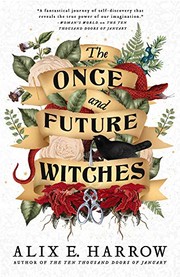
The Once and Future Witches
Three estranged sisters bring witchcraft back to an 1893 city where magic hides in nursery rhymes and the fight for the vote is also a fight for power.
2,132-word summary · 9 min read
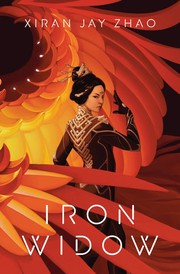
Iron Widow
Wu Zetian enlists to avenge her sister, kills her pilot, and becomes an Iron Widow in a mecha Huaxia where the machines are built to kill women.
2,444-word summary · 11 min read

Infidel
Ayaan Hirsi Ali's memoir of a Somali childhood, a forced marriage, a Dutch asylum claim, and the political fight that followed the murder of Theo van Gogh.
2,041-word summary · 9 min read

Howards End
Forster's 1910 novel follows two families, a house in Hertfordshire, and a burned note, asking whether money and feeling can ever be connected.
2,187-word summary · 10 min read
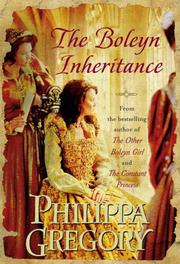
The Boleyn Inheritance
Three women narrate Henry VIII's fourth and fifth marriages: a foreign bride who survives, a teenage queen who does not, and the widow who opens the door.
2,391-word summary · 11 min read
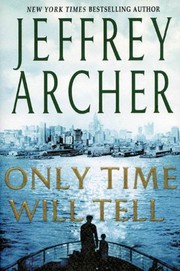
Only Time Will Tell
A Bristol dockworker's son wins a scholarship, falls in love with the daughter of the family that owns the shipyard, and learns that his father's death was not…
2,082-word summary · 9 min read

Fathers and Sons
Arkady brings the nihilist Bazarov home to his father's estate, and a generational argument turns into love, a duel, and an early death.
2,192-word summary · 10 min read

One to Watch
A plus-size fashion blogger takes the lead role on a reality dating show to prove she belongs on television, and finds she might want what the cameras offer.
2,478-word summary · 11 min read
On Chesil Beach
Two newlyweds spend one terrible night on Chesil Beach in 1962, and the rest of their lives is decided by it.
2,456-word summary · 11 min read
Her Body and Other Parties: Stories
Eight stories where bodies, medicine and old fairy tales get taken apart, with a green ribbon running through the whole book.
2,997-word summary · 13 min read

Dear Girls: Intimate Tales, Untold Secrets & Advice for Living Your Best Life
Ali Wong's debut collects fourteen letters to her daughters, covering sex, money, work, marriage, Vietnam, and being a working Asian American mother.
2,266-word summary · 10 min read

Wide Sargasso Sea
Jean Rhys gives the first Mrs. Rochester a Caribbean childhood, a marriage built on money and suspicion, and a voice that Charlotte Bronte left in the attic.
2,021-word summary · 9 min read

Why I'm No Longer Talking to White People About Race
Reni Eddo-Lodge traces black British history and shows how institutions, culture, and everyday assumptions keep producing racial inequality.
2,071-word summary · 9 min read
The Silence of the Girls
Briseis, queen of Lyrnessus, is captured by Achilles and narrates the Trojan War from inside the Greek camp, where women are prizes and survival is its own…
2,098-word summary · 9 min read
The Queen's Fool
A young Jewish refugee with second sight becomes a court fool to Edward VI, Mary I, and Elizabeth, and learns what it costs to tell the truth.
2,412-word summary · 11 min read
The Birth of Venus
A Florentine merchant's daughter trains as an artist, marries a man who hides a secret, and survives Savonarola's bonfire of the vanities.
2,404-word summary · 11 min read
I Who Have Never Known Men
Forty women in a cage, one child who remembers nothing, and a nearly empty world above the bunker. Harpman's quiet, unexplained dystopia.
2,025-word summary · 9 min read
Bring Up the Bodies
Thomas Cromwell sets out to destroy Anne Boleyn, building a case from rumor and revenge while Henry VIII waits to marry Jane Seymour.
2,066-word summary · 9 min read
The Girl in the Tower
Vasya rides out disguised as a boy, rescues kidnapped girls, and rejoins her siblings in Moscow, where a hidden sorcerer and the Grand Prince's court close in.
2,801-word summary · 12 min read
Galatea
The statue brought to life narrates her own story: a jealous sculptor, a locked hospital room, a daughter to protect, and one last plan to escape.
1,972-word summary · 9 min read
All About Love: New Visions
bell hooks borrows a definition of love as an action rather than a feeling, then spends thirteen chapters showing how hard it is to practice.
2,385-word summary · 11 min read