
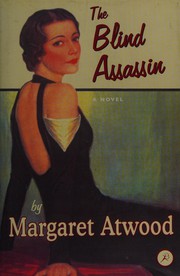
The Blind Assassin
1,963-word summary 9 min read 544 pages in the book
- First published
- 2000
- Publisher
- Bloomsbury
- Pages
- 544
- ISBN
- 9781408802786
Reading options
What's inside (7 sections)
I had put off this book for years because it looked heavy. It won the Booker in 2000, it runs over five hundred pages in most editions, and friends described it as a novel inside a novel inside a memoir with newspaper clippings glued in. That sounded like homework. It is not. I read the Bloomsbury edition, 544 pages, ISBN 9781408802786, first published in 2000 by McClelland and Stewart in Canada, and I finished it faster than books half its length. The structure looks tricky on paper and feels natural once you are inside it.
The outer voice is Iris Chase Griffen. She is in her eighties, living in Port Ticonderoga, Ontario, writing down what happened to her family while her heart gives out. Her sister Laura died in 1945, at twenty five, driving a car off a bridge. The official story says suicide. Iris starts there and then steps back to their childhood in Avilion, the big house their grandfather built with money from Chase and Sons, the button factory that employed half the town.
Avilion, the factory, and the two sisters
The Chase childhood is the part I did not expect to love so much. Their mother dies young. Their father, Norval Chase, comes back from the First World War damaged and tries to keep the factory going through the Depression. Reenie, the housekeeper, more or less raises the girls. Iris is the older, responsible one, told to look after Laura. Laura is odd, blunt, religious in a private way, prone to saying exactly what she thinks at the worst moment.
Atwood writes small town Ontario in the 1920s and 30s with a lot of texture. Button designs, church socials, tennis parties, charity drives, the smell of the river, the weight of being the Chase girls when the money starts to thin. Norval drinks. The factory slips. A clever industrialist named Richard Griffen starts circling, first as a business savior, then as a suitor. Iris is eighteen when the family more or less hands her to him. She understands the trade even then. Her marriage will save the factory and the town jobs. Laura, still a teenager, watches and judges.
I found these early chapters painful in a quiet way. No one shouts. People say things like it is for the best and Iris irons a dress and agrees. Reenie fusses. Winifred Griffen Prior, Richard's sister, arrives with plans for Iris, clothes, committees, lessons in how to be a wife who helps. Winifred is one of those characters you dislike immediately and then dislike more precisely as you see how she works. She is not cruel in public. She is efficient.
Richard, Winifred, and Toronto
The middle of Iris's memoir moves to Toronto, to parties, to a house where Iris is decorative and lonely. Richard is cold, controlling, and politically ambitious. He wants a wife who hosts well and asks nothing. Winifred manages Iris the way she manages seating charts. Iris learns to smile, to pour, to keep small notebooks of what she really thinks.
Into this comes Alex Thomas. He is young, poor, sharp, a labour organizer and would be writer who hides in the Chase attic at one point after being accused over a fire and later over other trouble. He argues with Norval and Richard about workers, about the On to Ottawa Trek, about the Communist rally at Maple Leaf Gardens in 1934, all real events Atwood threads through invented newspaper clippings. Laura is drawn to him. Iris is drawn to him too, though she admits it slowly and sideways in her old age narration.
The clippings are doing a lot of work. Between memoir chapters Atwood inserts society pages, political reports, and later war news. At first they feel like background. Then you notice what they leave out. A marriage announcement smooths over a fight. A factory story praises Richard and erases Norval. Reading the memoir against the clippings becomes part of the pleasure. You learn to distrust the public record and to watch Iris for what she does not say.
My one complaint about this stretch is pace. There are three or four dinner parties in a row that follow a similar shape. Winifred corrects, Richard lectures, Iris observes, Laura says something startling, silence follows. I started skimming dialogue tags on the third one. Then a short brutal scene, Richard and Iris alone after guests leave, would snap me back. Atwood does not linger on violence. She shows control through money, through who signs what, through who is allowed to leave a room.
The novel inside: the blind assassin on Zycron
Laura becomes famous after her death for a novel called The Blind Assassin, published posthumously. Inside Atwood's real book, we get long passages from that invented novel. It is a strange pulp science fiction story told by a nameless man on the run to a woman he meets in cheap rooms. He tells her installments about a city called Sakiel Norn, possibly on a distant planet, ruled by priests and a mouth god who demands virgin sacrifices, where a blind assassin falls in love with a mute girl marked for sacrifice.
The lovers in the frame story meet secretly, drink, argue about politics, make love, and trade stories. He is wanted. She is rich and trapped in a marriage. He spins the Sakiel Norn tale to entertain her and to say things he cannot say directly about power, about being used, about watching and being watched. The language shifts. Iris's memoir is dry and cutting. The inner novel is lush and erotic and a little overwrought on purpose, like 1930s magazines.
I loved these sections more than I expected, though they slow the main plot. The blind assassin, trained from childhood to kill without seeing, hired to kill the very girl he loves, who has cut out her own tongue or been silenced, depending on which telling you trust, is pure melodrama. But the questions underneath are the same as in Avilion. Who gets to speak. Who gets to see. What stories do the powerful pay for. The mute girl and the blind killer are Iris and Laura and Alex and Richard rearranged into myth.
If you get impatient here, you are not alone. I set the book down twice during the middle Zycron chapters and read something short before coming back. It helps to treat them as letters between lovers rather than as a separate novel to solve. The details about Lizard Men, carpet merchants, and temple politics matter less than the rhythm. He talks to keep her in the room a little longer. She listens because no one else tells her the truth sideways.
What Iris finally tells about Laura and Alex
I will keep the late twists light because they land better if you feel them coming rather than know them cold. Iris in old age is writing for her granddaughter Sabrina, who has cut contact after a bitter fight with her mother Aimee. Aimee, Iris's daughter, died young and troubled. Sabrina was raised partly by Winifred's world. Iris wants Sabrina to have a different record than the newspapers.
What emerges is that Laura did not write the famous novel, or not in the way everyone thinks. Iris did. Or Iris shaped it from stories Alex told, from things Laura wrote down, from her own life with Richard, and then let it go out under Laura's name after Laura's death. The book inside the book is not a confession by Laura. It is a cover and a message by Iris, a way to tell the truth about Richard without being sued or disbelieved in 1940s Toronto.
The love triangle also looks different at the end. Laura loved Alex in an idealistic, absolute way. Iris loved him in a bodily, adult way and had an affair with him in those rented rooms. The she and he in the inner novel are composites. Atwood plays fair. If you reread the early attic scenes after finishing, the glances line up. I admired how she lets Iris be both protective sister and rival without turning either sister into a symbol.
There is also money and power at the end. Richard's factories made uniforms and parts during the war. He and Winifred used influence to hound Alex, to lock Iris in, to shape what papers printed. When Richard dies, reportedly by suicide after exposure, and when Laura's book becomes a cult success, Iris is left with a strange freedom. She is rich, widowed, disgraced in polite circles, and finally able to write plainly. The last pages, where she describes her failing body and her plan to finish before she goes, are among the best things Atwood has written. Dry, unsentimental, funny about doctors and lawyers, tender about Reenie and about Port Ticonderoga.
Style, patience, and who should try it
Atwood's sentences here are at their best when Iris is older. Short judgments, then a long memory that undercuts the judgment. She is very good on how rich women police each other through clothes, food, and charity work. She is very good on how men like Richard use boredom as a weapon, making meetings long, making wives wait, making desire feel like paperwork.
The book asks for patience in two places. The 1930s politics can feel dense if you do not know Canadian history. You do not need to know it. Treat the Trek and the Gardens rally as signs that the country is scared of workers while Richard is scared of losing control. And the Zycron middle can feel long. Skim the temple ranks if you must, but do not skip the lovers' arguments in rooms. That is where the real information lives.
For balance, a few things did not fully work for me. Aimee as an adult is mostly reported rather than seen, so her tragedy feels summarized. The present day neighbor and the lawyer who helps Iris are thin. And one newspaper trick near the end, where a clipping contradicts a memoir claim so neatly, felt a little too tidy after so much careful ambiguity.
Still, the whole holds. It is a ghost story without ghosts, a detective story where the detective is eighty three and the clues are her own lies by omission. If you like Atonement or A S Byatt's Possession but want something colder and funnier about sisters, try it. If you tried Atwood only through The Handmaid's Tale, this shows another side, less slogan ready, more interested in how women survive marriages and how stories survive their authors. I closed it thinking about Iris paying for a tombstone and choosing what to carve, which is as good an image for writing as I have found.
I should add how I actually read the last hundred pages. I stopped underlining clues and started listening for tone. Iris tells you when she is lying by how smooth the sentence gets. Smooth means rehearsed, often a story she told lawyers or Winifred years ago. Rough means new, still costing her something to say. Once I heard that difference, the book sped up. The Zycron ending, the motel rooms, the final drive to the bridge, all clicked into a sad order.
One more practical note. The Bloomsbury text I used keeps the clippings in a smaller typeface that is easy to skim. Do not skim them the first time. Read each one right where it sits, even if it looks dull. A birth notice or a charity list later turns into an alibi or a proof of absence. Atwood plants very little that does not return. When I went back to check two dates after finishing, both had been given exactly once, quietly, in places I had almost skipped.
FAQ
Did Laura really write The Blind Assassin novel?
No. Iris wrote and shaped it from stories Alex told and her own marriage, then let it appear under Laura's name after 1945. The inner lovers are composites of Iris, Laura and Alex.
When was The Blind Assassin published?
McClelland and Stewart published it in Canada on September 2, 2000. The edition cited here is Bloomsbury, 544 pages, ISBN 9781408802786.
How should I handle the newspaper clippings?
Read the clippings where they sit and listen for smooth versus rough sentences in Iris's voice. Smooth often means an old rehearsed story, rough means new truth.
Similar books
Alias Grace
A teenage maid convicted of a double murder in 1843 tells her story to a young doctor hired to decide whether she deserves a pardon.
2,788-word summary · 12 min read
How the Light Gets In
Gamache investigates the murder of the last Ouellet quintuplet while the Sûreté he served is dismantled from inside by the man who took his protégé.
2,279-word summary · 10 min read
Bury Your Dead
Recovering from a failed raid that killed his officers, Gamache investigates a murder in a Quebec City library while Beauvoir reopens a case in Three Pines.
2,022-word summary · 9 min read
Only Time Will Tell
A Bristol dockworker's son wins a scholarship, falls in love with the daughter of the family that owns the shipyard, and learns that his father's death was not…
2,082-word summary · 9 min read
A Rule Against Murder
Gamache's anniversary at a remote lodge turns into a closed-circle murder when the family statue kills Julia, and everyone at the Manoir had a reason.
2,201-word summary · 10 min read
The Cruelest Month
Gamache returns to Three Pines where a seance ends in murder.
2,529-word summary · 11 min read
Notes on an Execution
Ansel waits on death row while three women carry what he broke.
2,527-word summary · 11 min read
The Tenant of Wildfell Hall
Helen flees a cruel marriage, hides as Helen Graham at Wildfell Hall, and tells her full story through a long diary young Gilbert Markham must read before…
2,838-word summary · 13 min read

Lady Tan's Circle of Women
Ming physician Tan Yunxian treats bound feet and births with midwife Meiling, defying male medicine rules.
2,330-word summary · 10 min read
A Fatal Grace
Gamache returns to Three Pines for Christmas where hated CC de Poitiers is electrocuted on a frozen lake.
2,339-word summary · 10 min read
The Dictionary of Lost Words
A girl raised in the Oxford Scriptorium collects words the dictionary men leave out.
2,036-word summary · 9 min read
The Diamond Eye
Soviet sniper Mila tours America while an enemy hunter tracks her.
2,048-word summary · 9 min read

Shanghai Girls
Two Shanghai sisters flee war and face Angel Island to start over in Los Angeles.
1,914-word summary · 9 min read

The Alienist
In 1896 New York, alienist Laszlo Kreizler, reporter John Moore and Sara Howard hunt a killer of boy prostitutes while police commissioner Roosevelt backs…
3,099-word summary · 14 min read
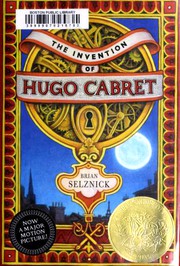
The Invention of Hugo Cabret
A Paris station orphan tends clocks, steals parts, and wakes a drawing machine that points to filmmaker Georges Melies.
2,946-word summary · 13 min read

The Mists of Avalon
Morgaine tells Arthur story from Avalon side, where goddess worship fades before priests.
1,944-word summary · 9 min read

Still Life
A beloved teacher found with an arrow in Three Pines looks like hunting accident until Gamache looks closer.
1,996-word summary · 9 min read

The Color Purple
Celie writes letters to God and to her sister, surviving abuse in the rural South to find her own voice.
2,053-word summary · 9 min read
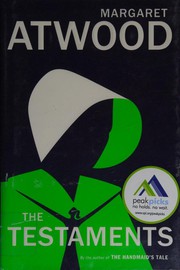
The Testaments
Aunt Lydia, Agnes and Nicole conspire to bring down Gilead fifteen years later.
2,516-word summary · 11 min read
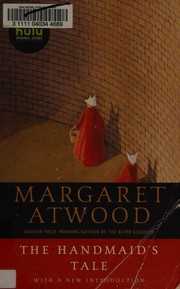
The Handmaid's Tale
Atwood's The Handmaid's Tale retold: Offred in Gilead, the Commander, Serena Joy, Mayday, and the van.
2,369-word summary · 11 min read

What She Knew
Rachel lets her eight-year-old son run ahead in a Bristol park, and the nine-day search turns her into a suspect in the public eye.
2,952-word summary · 13 min read
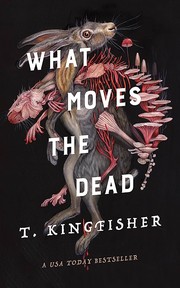
What Moves the Dead
Alex Easton arrives at the Usher house to find Madeline dying, the tarn full of fungus, and the local hares refusing to stay dead.
2,586-word summary · 11 min read

Violeta
A woman born in 1920 writes her life story to her grandson, from one pandemic to another, through wealth, ruin, passion, and dictatorship in South America.
2,555-word summary · 11 min read
The Stationery Shop
Two teenagers fall in love in a Tehran stationery shop in 1953, are separated by the coup and a family deception, and meet again sixty years later.
2,024-word summary · 9 min read

The Crying of Lot 49
A California woman named executor of her ex-lover's estate follows a muted post horn into a possible centuries-old postal conspiracy, and Pynchon refuses to…
2,003-word summary · 9 min read

The Beach House
A young valet is beaten to death at a Hamptons party, and his law-student brother spends a year building a case against the family that covered it up.
2,049-word summary · 9 min read
The Art Forger
A disgraced Boston painter agrees to copy a Degas stolen from the Gardner Museum, then begins to suspect the original she is copying is itself a forgery.
2,117-word summary · 9 min read

Size 12 Is Not Fat
Former teen pop star Heather Wells investigates two dorm elevator deaths while juggling her ex, her crush, and a size-12 wardrobe.
2,805-word summary · 12 min read

Six Years
A professor who promised to forget the woman he loved sees her husband's obituary and discovers that the wedding, the marriage, and the woman herself may never…
2,076-word summary · 9 min read
First Grave on the Right
Charley Davidson is a private investigator in Albuquerque and the grim reaper. When three murdered lawyers come back as ghosts, her two jobs collide.
2,770-word summary · 12 min read