
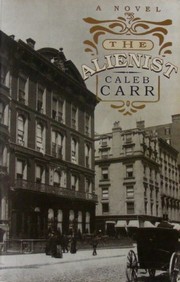
The Alienist
3,099-word summary 14 min read 532 pages in the book
- First published
- 1994
- Publisher
- Little, Brown and Company
- Pages
- 532
- ISBN
- 9780316914772
- Series
- Dr. Laszlo Kreizler (#1)
Reading options
What's inside (8 sections)
I bought The Alienist on a rainy weekend because I wanted a murder story with old streets and long coats, not a textbook. I got that, plus a lot more talk about the mind than I expected. Caleb Carr published it with Little, Brown and Company in 1994. It runs 532 pages in the standard hardcover. It is book 1 in the Dr. Laszlo Kreizler series. The setting is New York in 1896. A killer is hunting boy prostitutes. A small and odd team tries to catch him by building a profile of his habits and past. The narrator is John Moore, a reporter who knows everyone involved and who writes the whole thing down years later.
The book opens with Moore looking back. He is older now and uneasy about what he saw. That frame helps, because the crimes are ugly and the city around them is rough. Moore warns you that this is not a neat puzzle where clues line up. It is a hunt that wore them down and changed how they saw people.
New York here feels crowded and split in two. Upstairs there are clubs and opera and wide avenues. Downstairs there are tenements and saloons and kids with no safety net. Carr loves the detail of food and clothes and horse traffic and new inventions like the telephone that barely works. At times the detail slows the chase. At times it makes the fear feel closer, because you can smell the street where a body was left.
1896 New York and boys found on rooftops and bridges
The murders start before the team forms. Boys who sell themselves near bars and dance halls are found dead in high or hidden places. The bodies show anger and ritual. Hands tied. Eyes and parts cut. Clothes arranged in ways that seem meant to send a message. Police on the beat want to call it vice killing vice and move on. Papers either ignore it or scream about it, depending on the week.
The choice of victims matters. These boys lived outside polite notice. Many had left home or had been thrown out. They slept where they could and took risks to eat. When they vanished, few people with power asked questions. The killer seems to know this and to count on it. He picks places that force the city to look, like a roof edge or near a bridge, as if he wants shock and also wants to show scorn for the life the boy led.
Moore describes the first crime scenes with a reporter eye for small facts. A stairwell that smells of beer. A crowd that gathers too fast. A policeman who keeps touching his club because he does not know what else to do. The gore is plain and hard to read. Carr does not turn away. This is one place where modern readers may pause. The violence against young victims is graphic and repeated. It is not there for fun, since it feeds the profile, but it still lands heavy page after page.
Theodore Roosevelt enters here, and he is fun to read even if you know nothing about presidents. In 1896 he is police commissioner, loud and driven and frustrated by bribes and lazy habits inside his own force. He wants honest work and modern methods. He cannot openly spend force funds on a secret hunt for boys most voters prefer not to think about, so he backs a quiet group on the side. He gives cover and cash and access when he can. He also warns them that if they fail in public, he will have to cut them loose.
That deal sets the shape of the book. Official police keep walking their beats. The real hunt happens off the books, in a house with maps and photos and long night talks.
Kreizler and Moore and Sara Howard
Laszlo Kreizler is the alienist. The word sounds strange now. In those years it meant a doctor who studied mental illness, often with children and with people the courts called insane. Kreizler is Hungarian by birth, American by life, sharp tongued and lame in one leg from a childhood injury. He runs an institute for troubled kids upstate and believes behavior grows from early harm and from patterns laid down young. He is not warm in a cozy way, but he is loyal to his friends and fierce with kids others have written off.
John Moore is his friend from good society and our guide. Moore writes for the papers, drinks too much, jokes when he should listen, and notices clothes and rooms the way only a society reporter would. He is not brave at first. He gets sick at scenes. He flinches. Over time he steadies, partly because Sara shames him into it and partly because Kreizler trusts him to write things down right.
Sara Howard is the third core mind. She is young, smart, stubborn, and tired of being handed typing and tea while men do the work. She comes from a respected family and works as a secretary at police headquarters, which gives the team a link to files and to Roosevelt. On the page she often feels like the most modern person in the room. She pushes back when talk turns crude. She spots lies in interviews because she watches faces while the men argue theory. Carr gives her room to act, not just to scold. She visits shelters. She questions madams. She walks into rooms where a lone woman draws stares and holds her ground.
The team fills out with helpers who keep the machine running. There are two police detectives with very different gifts, one good at doors and streets and one good at numbers and records. There are servants in Kreizler house who type and cook and guard the door. I will keep names for the inner circle here and leave the rest general, since the heart of the book stays with Kreizler and Moore and Sara and Roosevelt. That focus helps in a long book with many doors knocked.
What makes the group work on the page is friction. Kreizler theorizes. Moore doubts. Sara tests. Roosevelt demands results. They eat together, argue late, sleep on couches, wake to new photos pinned on the wall. The house at 808 Broadway becomes a kind of office and club and shelter. You can feel the cigar smoke and the coffee going cold while someone moves a pin on a map.
How they build a profile from wounds and stairs
Once Roosevelt gives the nod, the team starts like reporters and doctors at once. They visit scenes again and again. They measure stairs and roofs and sight lines. They ask where a body could have been carried without notice. They note what was cut and what was left alone. They ask what the killer needed close at hand, water or cloth or quiet, and what he took away as keepsake.
Kreizler pushes a method that was new for fiction set in that year. Do not just ask who had reason to hate this one boy. Ask what kind of man needs to do this again and again in this same way. Build the person from the pattern. Age and build from how bodies were lifted. Job skill from how cuts were made. Childhood from the rage aimed at eyes and at manhood. Home life from the need for a private place with no questions asked.
They also study the city around the murders. Which saloons let boys work the back rooms. Which dance halls look away for a cut. Which cops take pay to stay blind. Which priests or charity workers actually know names and faces. Sara is strong here. She gets women who run houses to talk when a badge would freeze them. Moore is useful too, since he knows night life and can blend in without looking like law.
A big part of their work is paper. Old complaints. Hospital notes. School records. Court files for assaults that went nowhere. They spread timelines on a table and mark each killing with color and string. They argue about gaps. Why months quiet, then two close together. Did the killer leave town. Was he sick. Was he locked up for something small. This is slow reading if you want chases. I liked it in doses. It feels like real case work, dull and then suddenly sharp when two dates line up.
They also interview people who knew the boys, gently when they can. Pimps who lie. Friends who cry and then shut down. Landladies who remember a coat or a limp. A doctor who saw something odd and said nothing at the time. Kreizler listens for how people describe feeling unsafe as kids, since he thinks the killer is acting out an old injury on new bodies. Some of this talk will sound dated now. Some of it will sound too neat, as if a few bad years must make a monster by rule. Carr lets Kreizler state his views hard, then lets facts push back a little, which keeps it from feeling like a lecture all the way through.
One habit I enjoyed was their use of maps and time. They walk a route at the same hour to see light and traffic. They test how long it takes to carry weight up narrow stairs. They learn that a roof that looks wild in a photo is actually easy to reach from a back hall. Those small tests narrow the hunt more than any grand speech.
Going undercover in bars and shelters
The middle of the book moves from table work to street work. Moore and Sara spend nights in places where the boys worked. Moore hates it at first. He is recognized. He drinks to cover nerves. He writes notes in alleys. Sara handles it better, though danger follows her too. They learn slang. They learn which bartenders warn kids and which sell them out for coins.
Kreizler stays back more, thinking and steering, but he also meets people face to face when he needs to read them. He has a way of asking about childhood that starts calm and then presses. Some parents lie. Some break down. A few show a flash of temper that tells him more than words. His limp makes strangers drop their guard, then his stare brings it back up. Moore notes this with a mix of awe and worry. His friend can be kind with patients and cold with fools, sometimes in the same hour.
Roosevelt pops in with pressure and help by turns. He slips them files. He warns them when chiefs sniff around. He begs for speed when papers print a new rumor. His scenes add pace because he talks fast and moves fast. You can see the future president in the restless reformer who cannot stand dirt or delay.
The team also tries to think like the killer about lairs. He needs a place where he can bring or keep a victim without noise carrying. A house with thick walls. A work space with tools. A job that explains stains and late hours and travel. They list butchers and surgeons and hunters and others used to blood, then cut the list by habit and by where the men lived as boys. I am keeping this general because the book piles up many names and false leads, and the fun is in watching the list shrink, not in memorizing each wrong turn.
There is a long stretch here where leads fail and tempers fray. Money runs low. Moore fights with Sara about risk. Kreizler broods and stops eating right. The house fills with smoke and unwashed cups. I felt the drag in these pages. Carr repeats the same loop, new witness, new hope, dead end, late night recap, more than once. The city detail that charmed me early starts to feel like padding when the case stalls. A tighter middle would have helped.
Still, a few scenes cut through. A boy who trusts Sara enough to describe a man with soft hands and hard eyes. A madam who remembers a carriage and a blanket. A hospital clerk who finds a file that should have been burned. Each small fact clicks into the profile and shifts the map. The killer stops being a shadow and starts being a person with a past, which is scarier.
The past that made him and the house where it ends
Kreizler view of the killer hardens as they learn more. He argues the man was hurt young in ways tied to shame and to control, likely in a house where love came with rules and pain. The man learned to link manhood with disgust. He sought out boys who reminded him of himself at the helpless age, then punished them for the very traits he hated in himself. He stages scenes to speak to a mother figure or to a cold parent who is gone or dead. He keeps tokens because they prove he had power at least once.
This is where some readers will object, and I think the objection is fair. The psychology can feel too tidy and too modern for 1896. Kreizler talks at times like a man who read books from decades later. Terms and frames slip in that feel placed back in time rather than grown from it. Carr did a lot of research, and the notes show it, but research can still bend toward story needs. Real minds are messier than profiles. The book mostly admits this through Moore doubts, yet it still leans on childhood harm as a near rule. Take the theory as a lens the team uses, not as fact about all violence, and it reads better.
The hunt narrows to a suspect with means and with a history that fits the wounds. I will not name him flatly here or lay out each proof, since the book earns its reveal through steps and you may want them fresh. What matters is how Carr handles the close. The team must prove enough to act without setting off the brass who want the whole thing buried. They watch a house. They wait through cold nights. They argue about whether to go in early and risk losing him in court later.
The final movement moves from streets to stairs to rooms that feel too small. Without giving the last turns away, I can say the chase uses place well. A dark hall. A locked door. Water and stone and old smells. The killer use of height from earlier returns, since he likes high spots where the city spreads below him like something he owns. Moore, who started as a watcher, has to act. Sara refuses to stay back. Kreizler faces a man who mirrors his own interest in broken childhood, but twisted into cruelty.
Carr writes action plainly, without fancy moves. Men slip. Guns jam or go unfired because a hand shakes. Someone shouts the wrong name. It feels clumsy in a true way. After so much talk, the blunt mess of the end lands. No one walks away clean. Even success feels stained because the boys are still dead and the papers will still lie about them tomorrow.
What wears thin and what holds up
Length is the first cost. At 532 pages the book takes its time with meals and suits and club gossip and building histories. Much of it charmed me. Some of it made me skim. A dinner that teaches manners could lose five pages and keep its point. A tour of a new invention could be shorter and still show how fast the city was changing. When the case heats up, Carr still pauses for side tours. Readers who want a lean thriller may fidget.
The second cost is gore placed close together. The early murders need detail to feed the profile. Later repeats add less and hurt more. I found myself reading those passages fast, not from fear but from fatigue. Carr wants you to feel anger at a city that let boys die unseen. He succeeds. He also risks numbing you before the end, which needs your anger fresh.
The third cost is the retrofitted mind science I noted. Kreizler at his best sounds like a sharp observer of habit. At his weakest he sounds like a lecturer who already knows the answer and bends each fact to fit. Moore sometimes calls this out, which helps. Sara does too, in her blunt way. Yet the book rarely lets the profile truly fail. When facts wobble, a new file arrives to steady it. That luck feels plotted rather than earned in one or two spots.
So why did I finish happy and why did I order the next book. Because the center holds. The friendship feels lived in. Moore voice grows on you, vain and kind and funny when fear loosens him. Sara earns her place scene by scene, not by speech but by work. Roosevelt bursts in like weather. Kreizler, for all his cold talk, shows a soft core with damaged kids that never feels fake. The house scenes, with photos and maps covering the walls, gave me the old team around a table feeling I always like.
The city holds too. Carr shows a New York that is both grand and cruel, full of new light and old rot. Electric signs over mud. Fine dining a block from hunger. A police force trying to clean itself while taking cash in back rooms. That split feeds the theme without a speech. Who gets protected tells you who counts. The boys did not count until four stubborn people decided they did.
If you like historical mysteries with weight, start here and give it room. Read for the streets and the slow build of motive and habit, not for speed. Take breaks when the detail piles up. Come back for Sara interviews and Roosevelt storms and Moore late night notes, which carry the human pull. Skip or save it if graphic harm to kids will stay with you too long, or if you need psychology that feels fully of its time. For me, despite the long middle and the neat profile, the team and the town made the hours worth it. I closed it thinking less about the killer name and more about the house lights on late, with maps on the wall and four people refusing to let the dead stay nameless.
FAQ
When was The Alienist published?
Little, Brown and Company published it in 1994. It is book 1 in the Dr. Laszlo Kreizler series and runs 532 pages in the standard hardcover.
Who are the main characters in The Alienist?
Dr. Laszlo Kreizler, the alienist, John Moore, a reporter who narrates the story, Sara Howard, a police secretary, and Theodore Roosevelt, then police commissioner.
Is The Alienist science fiction?
No. It is a historical mystery set in 1896 New York and follows a team using early psychology to profile a killer of boy prostitutes.
Similar books
More from Dr. Laszlo Kreizler first, then related titles.

What She Knew
Rachel lets her eight-year-old son run ahead in a Bristol park, and the nine-day search turns her into a suspect in the public eye.
2,952-word summary · 13 min read

The Beach House
A young valet is beaten to death at a Hamptons party, and his law-student brother spends a year building a case against the family that covered it up.
2,049-word summary · 9 min read
The Art Forger
A disgraced Boston painter agrees to copy a Degas stolen from the Gardner Museum, then begins to suspect the original she is copying is itself a forgery.
2,117-word summary · 9 min read

Six Years
A professor who promised to forget the woman he loved sees her husband's obituary and discovers that the wedding, the marriage, and the woman herself may never…
2,076-word summary · 9 min read

How the Light Gets In
Gamache investigates the murder of the last Ouellet quintuplet while the Sûreté he served is dismantled from inside by the man who took his protégé.
2,279-word summary · 10 min read
Bury Your Dead
Recovering from a failed raid that killed his officers, Gamache investigates a murder in a Quebec City library while Beauvoir reopens a case in Three Pines.
2,022-word summary · 9 min read

The Trespasser
A Dublin Murder Squad detective investigates a staged dinner-party killing and finds a cover-up that reaches into her own department.
2,051-word summary · 9 min read

Rules of Prey
Minneapolis detective Lucas Davenport hunts a killer who leaves a new rule at every scene and treats murder as a game of wits.
1,914-word summary · 9 min read

The Late Show
Exiled to the LAPD night shift after accusing her supervisor, Renée Ballard keeps two cases that were meant to be handed off at dawn: a brutal assault and a…
2,563-word summary · 11 min read
The Black Dahlia
James Ellroy builds a fiction around the real Black Dahlia murder, following two Los Angeles cops whose partnership and obsessions destroy them.
2,533-word summary · 11 min read

Night Film
A disgraced journalist investigates the death of a reclusive horror director's daughter, following a red coat through hospitals, secret clubs, and a family…
2,690-word summary · 12 min read
Finger Lickin' Fifteen
Lula sees a celebrity chef decapitated and talks Stephanie into entering a barbecue contest to lure the killers, while Ranger hires her to find a security leak…
2,248-word summary · 10 min read

4th of July
Lindsay Boxer shoots two armed teenagers in self-defense, faces a wrongful-death trial, and spends her leave chasing a string of throat-slashing murders in…
2,192-word summary · 10 min read

The Camel Club
Four Washington misfits witness a murder on Roosevelt Island and stumble into a conspiracy that reaches the Oval Office, with a hostage president and a nuclear…
2,354-word summary · 10 min read

61 Hours
A bus crash strands Jack Reacher in a snowbound South Dakota town where a drug gang, a corrupt police force, and a single witness are on a collision course.
2,227-word summary · 10 min read
The Last Mile
Melvin Mars is hours from execution for his parents' murder when another man confesses, and FBI cold case detective Amos Decker goes looking for the trap.
2,746-word summary · 12 min read

Still Missing
A realtor is abducted at a Vancouver Island open house and held for more than a year. Told through therapy sessions, the novel follows her escape and the hunt…
2,466-word summary · 11 min read

Fearless Fourteen
Bounty hunter Stephanie Plum babysits a teenager, guards a fading singer, and hunts nine stolen million dollars under her boyfriend's basement.
2,466-word summary · 11 min read

Bad Luck and Trouble
A deposit of $1,030 summons Jack Reacher back to his old army unit, which is being picked off one name at a time.
2,366-word summary · 11 min read

3rd Degree
The third Women's Murder Club novel follows a San Francisco terror cell and a three-day killing schedule, and it costs the club a member.
2,685-word summary · 12 min read

Worth Dying For
Reacher stops for one night in rural Nebraska and finds a family that runs the county, a missing girl and a shipment worth killing for.
2,021-word summary · 9 min read

The Diviners
In 1920s New York, Evie O'Neill's ability to read objects pulls her into an occult investigation that awakens something far older and more dangerous.
2,045-word summary · 9 min read

Say You're Sorry
A widowed prosecutor defends the teenager accused of killing her babysitter, uncovering a small town's secrets and a killer hiding in plain sight.
2,116-word summary · 9 min read
Lean Mean Thirteen
Stephanie Plum's ex-husband disappears after she attacks him, leaving her suspected of murder and chasing a forty-million-dollar secret through Trenton.
2,100-word summary · 9 min read
Finlay Donovan Knocks 'Em Dead
Someone has put a contract on Finlay Donovan's ex-husband, and the novelist and her nanny have to find the hitman before the school pickup.
1,990-word summary · 9 min read

Echo Burning
Reacher hitches a ride with a Texas woman who wants her abusive husband killed, then has to prove she did not murder him when he comes home.
2,209-word summary · 10 min read
A Rule Against Murder
Gamache's anniversary at a remote lodge turns into a closed-circle murder when the family statue kills Julia, and everyone at the Manoir had a reason.
2,201-word summary · 10 min read
The Survivors
Kieran Elliott returns to Evelyn Bay twelve years after a storm killed his brother, and a young woman's murder forces the town to face what it has concealed.
2,571-word summary · 11 min read
The Memoirs of Sherlock Holmes
Doyle's second Holmes collection gathers twelve Strand stories, including the early case of the Gloria Scott and the confrontation with Moriarty at Reichenbach…
2,390-word summary · 11 min read

Girl, Forgotten
A rookie US marshal guards a judge with a stalker and ends up reopening the 1982 prom-night murder of the judge's pregnant daughter.
2,111-word summary · 9 min read