
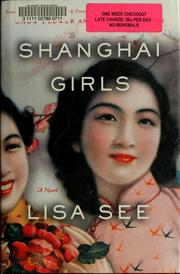
Shanghai Girls
1,914-word summary 9 min read 314 pages in the book
- First published
- 2009
- Publisher
- Random House
- Pages
- 314
- ISBN
- 9781400067114
- Series
- Shanghai Girls (#1)
Reading options
What's inside (6 sections)
I picked up Shanghai Girls because I had loved Snow Flower and the Secret Fan years ago and wanted more of Lisa See's way of writing sisters. This one, first published in 2009 by Random House, 314 pages in the first edition, ISBN 9781400067114, starts in 1937 Shanghai and ends in Los Angeles Chinatown in the 1950s. It follows Pearl and May Chin, beautiful modern girls whose father gambles away the family money and sells them as wives to Gold Mountain men from America. It is historical, romantic in places, brutal in others, and it never lets you forget that survival often means keeping a secret for decades.
Pearl is the older, Dragon sign, strong and stubborn, the narrator. May is younger, Sheep, adorable and placid on the surface, tougher underneath than people think. They are inseparable in Shanghai, modeling for calendar posters, going to nightclubs, thinking they are modern until Japanese bombs start falling and their father tells them about the debts. The marriages are arranged to two brothers, Sam and Vern Louie, who run a curio shop in Los Angeles. The girls do not love them. They barely know them. But there is no choice that keeps the family alive in Shanghai.
Leaving Shanghai in war
The first third is a flight novel. Pearl and May leave Shanghai as the Japanese invade, travel through villages in southern China, dodge soldiers both Japanese and Chinese warlord types, ride trucks, walk, bribe, hide. See writes travel with specific costs. Feet blister, money runs out, papers matter more than kindness. A rickshaw driver helps, then cannot help further. A missionary offers shelter with strings. A cousin promises connection and disappears.
What stuck with me is how See shows sisters negotiating. Pearl wants to protect May by deciding. May wants to protect Pearl by charming. Both habits helped in Shanghai and hurt on the road. When May gets pregnant by a man she loves, not her assigned husband, Pearl makes a choice that shapes the rest of the book. She claims the baby as her own to save May from shame and to give the child a safer story for immigration. That lie, told in a village with bombs audible, becomes the engine for twenty years in America.
The war details are blunt without being gratuitous. Rape, murder, abandonment happen at the edges and sometimes center. See does not linger on gore. She lingers on what people do right after. Who shares rice. Who carries a child an extra mile. Who lies to soldiers to buy time. Those small decisions felt more devastating than battle scenes because you see the price immediately in hunger and feet and fever.
I liked the Shanghai opening for its texture. Calendar girls, Art Deco apartments, jazz, rickshaws, mothers playing mahjong while fathers gamble in back rooms. Pearl and May are not peasants. They are bourgeois, educated, a little spoiled. Losing that status hurts in a particular way. They know how to order, how to dress, how to flirt, none of which helps when you need to run. Watching them learn to carry water and to keep quiet was painful and compelling.
Angel Island and paper daughters
The middle section on Angel Island is the best sustained part. To enter America under the Chinese Exclusion laws and paper son systems, the sisters must prove they are wives of Gold Mountain men, memorize coaching books with tiny village details, endure interrogations that last weeks, and survive detention in crowded barracks. See based this on real histories, and it shows. Questions about how many steps to your house, where the rice jar sits, which way the door faces. One wrong answer means deportation.
Pearl narrates this with dry anger. She is pregnant, or pretending to be, seasick, scared, and forced to perform gratitude. May copes by being likable, which works until it does not. An official fixates on inconsistencies. A matron is kind in small ways that do not change outcomes. The sisters learn to answer as one person with two voices. The secret about the baby's true mother must hold through every interview. I held my breath through three interrogation scenes even though I knew from the jacket they get in. The process is designed to humiliate, and See lets it humiliate without making the women seem small.
Los Angeles Chinatown after arrival is not freedom. It is Sam and Vern's world. Sam, Pearl's assigned husband, is decent but disappointed. He wanted a wife, got a traumatized stranger with a secret. Vern, May's husband, is weaker, fond of gambling like the sisters' father. They all live and work around the curio shop, selling to tourists, facing racism from customers, police, and later FBI men hunting Communists. The shop details, jade real and fake, postcards, tea sets, are well done. You see how much performance immigrant shops require. Smile, explain, do not argue when someone calls you names.
May finds work as an extra in Hollywood, using her beauty as she did in Shanghai but for less money and more shame. Pearl works in the shop, raises Joy, the daughter everyone thinks is hers, and tries to love Sam enough to make it true. Sam tries too. Some chapters where they learn to run the shop together, arguing about prices and display, are unexpectedly tender. They will never be a love match, but they become partners in a way that matters more for survival.
Joy, secrets, and the 1950s
Joy, American born, grows up loved and lied to. She believes Pearl is her mother and Sam is her father. She loves May as a fun aunt. She chafes at Chinatown rules, wants American teenage life, dates, school clubs, and later gets drawn to college idealism and to China itself in ways that terrify Pearl. The secret about her birth, kept to protect May and to get through Angel Island, becomes a wall between mother and daughter even though Joy does not know the wall exists.
This is where the book frustrated me in a good way. Pearl's choice was understandable in 1937 and corrosive by 1957. Every time Joy asks about her baby photos, about why Pearl flinches at certain questions, about why May looks sad when Joy succeeds, Pearl deflects. May, who gave up her daughter to save her, watches someone else get called Mom and smiles until she cannot. I wanted to shake both sisters and also hug them. See does not let either be right. Keeping the secret once saved lives. Keeping it for twenty years wounds everyone.
The 1950s Red Scare pressure makes it worse. FBI men visit the shop, ask about associations, about money sent to China, about Joy's college friends. Chinese Americans, already marked by Exclusion, must prove loyalty constantly. Sam and Vern argue about whether to keep heads down or to speak. Pearl wants invisibility. May wants visibility. Joy, young and idealistic, wants to see Mao's China for herself, which horrifies her parents who fled war. The generational clash feels specific, not generic teen rebellion. Joy has an American passport and an American confidence her mothers never had.
For pacing, the Chinatown years sometimes blur. Shop days, festival days, Joy school years pass in summaries. Two New Year celebrations in a row follow similar beats. I skimmed one banquet scene because I could guess who would toast and who would leave early. Then a short scene, Joy asking Pearl why she never talks about Shanghai, would snap me back. See is better at interrogations than at parties. When people must answer, she shines. When they celebrate, she coasts.
What works and what strains
See's strength is research worn lightly. Foot binding's end, calendar art, Angel Island coaching, paper daughter systems, Confession programs in the 1950s, all appear through action rather than lectures. I learned a lot without feeling taught. The author's note at the end, which explains what was real, is worth reading. It sent me to look up Angel Island poems carved into walls, which are heartbreaking.
The sisters' voices are distinct. Pearl is careful, resentful, responsible. May is bright, impulsive, generous and selfish in turns. Even when I disliked May for risking the family for a night out or a screen test, I believed her. She survived by being seen. Pearl survived by watching. Both strategies made sense in Shanghai and both misfire in Los Angeles. That symmetry gives the book shape without forcing moral.
For criticism, some male characters stay thin. Sam gets depth, Vern less so. Joy's boyfriend and college friends are types. A white social worker who helps appears to explain American law and then vanishes. And the ending, which sets up the sequel Dreams of Joy, stops rather than concludes. Joy makes a choice about China that Pearl cannot stop, and the book closes on fear rather than resolution. I understand why, series logic, but after 300 pages I wanted one more chapter of Pearl and May speaking plainly. They come close, then the plot pulls Joy forward.
Still, I read it in four days and thought about it for longer. The secret at the center, who is Joy's mother, is not a twist for shock. It is a lens on how immigration forces lies that outlive their reasons. Pearl's narration, looking back from older age, knows this and still cannot fix it with words alone. That helplessness feels honest.
For who this is for. If you like historical sister stories with immigration detail, this sits with Snow Flower but is tougher and more American. If you want romance, there is some, but it is married compromise more than first love. If you dislike long secrets kept from children, you may find the middle painful, which is fair. I closed it thinking about Angel Island walls and about my own family's entry stories, which ones we tell and which we skip. See wants you to ask what your papers would have said, and what you would have memorized to get through.
One more layer worth naming is how See writes Chinatown work as performance that never stops. The Louie curio shop must look exotic enough for tourists but respectable enough for white suppliers. Pearl learns to smile while translating prices, to wrap jade while answering questions about China she finds insulting, to keep the back room for family arguments and the front for customers. May, working as an extra, learns a different performance. Be beautiful, be quiet, be available for background shots that pay little and ask you to wear costumes that mix every Asian culture together. Both sisters understand they are selling a version of themselves. They hate it and they get good at it because rent requires it.
Sam deserves more attention than summaries give him. He married a stranger, got a daughter who may not be his, worked long hours in a shop that barely profits, and stayed. His disappointment curdles into gambling and distance for stretches, which the book does not excuse. But his decision to stay and to try again after fights, to learn Pearl's moods, to teach Joy how to ride a bike when Pearl is too tired, gives the middle its few steady beats. When he finally asks Pearl directly about Joy's birth, not with accusation but with exhaustion, I put the book down for a while. He deserved an answer years earlier. Pearl knows it. That lateness is part of the tragedy, not a twist to solve.
FAQ
Whose baby is Joy really?
Pearl claims May's baby as her own in China to save May from shame and ease immigration. The lie protects them at Angel Island then wounds them for twenty years.
When was Shanghai Girls published?
Random House published it in 2009. The first edition runs 314 pages with ISBN 9781400067114.
Is Shanghai Girls part of a series?
Yes. It is book 1 in the Shanghai Girls series, followed by Dreams of Joy, which follows Joy to China.
Similar books
More from Shanghai Girls first, then related titles.
The Lowland
Two brothers grow up beside a marshy lowland in Calcutta, and the choices of the younger one draw the older into a life of duty, distance, and quiet grief that…
2,213-word summary · 10 min read
The Island of Sea Women
On Jeju island, haenyeo divers Young-sook and Mi-ja share decades of friendship strained by war and massacre.
2,204-word summary · 10 min read
Lady Tan's Circle of Women
Ming physician Tan Yunxian treats bound feet and births with midwife Meiling, defying male medicine rules.
2,330-word summary · 10 min read
The Stationery Shop
Two teenagers fall in love in a Tehran stationery shop in 1953, are separated by the coup and a family deception, and meet again sixty years later.
2,024-word summary · 9 min read

The Shadow Sister
Star D'Apliese steps out of her sister's shadow and follows a bookshop clue into the Edwardian life of Flora MacNichol, a woman who gave up love for duty.
2,260-word summary · 10 min read
Mrs. Everything
Two Jewish sisters in Detroit grow up, apart and together, across seven decades of American life, from the 1950s to the 2016 election.
2,362-word summary · 10 min read
Clap When You Land
Two half sisters, one in Sosúa and one in Queens, discover each other after their father dies in a plane crash, in Elizabeth Acevedo's novel in verse.
2,890-word summary · 13 min read

A Long Petal of the Sea
A pregnant widow and her brother-in-law marry for passage on a ship of Spanish exiles bound for Chile, then spend decades building and losing homes together.
2,016-word summary · 9 min read
Brooklyn
Eilis Lacey leaves Enniscorthy for Brooklyn boarding house work, love with Tony, then a home death forces divided choice.
2,143-word summary · 10 min read
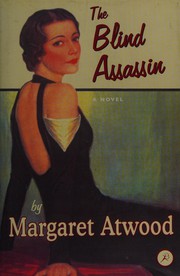
The Blind Assassin
An old woman writes her sisters story while a novel inside the novel retells it as pulp science fiction.
1,963-word summary · 9 min read
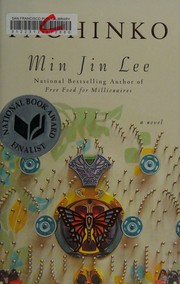
Pachinko
Four generations of a Korean family in Japan, from Sunja's fall and brave marriage to pachinko parlors, discrimination, and sons who choose different ways to…
2,210-word summary · 10 min read
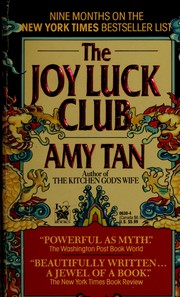
The Joy Luck Club
Four Chinese mothers and four American daughters trade sixteen stories across the mahjong table.
1,941-word summary · 9 min read
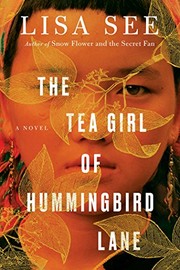
The Tea Girl of Hummingbird Lane
A Chinese tea farming mother gives up a daughter who later seeks roots.
2,607-word summary · 12 min read
Snow Flower and the Secret Fan
Footbound Lily and Snow Flower share laotong bond through 19th century Hunan hardship.
2,557-word summary · 11 min read
Violeta
A woman born in 1920 writes her life story to her grandson, from one pandemic to another, through wealth, ruin, passion, and dictatorship in South America.
2,555-word summary · 11 min read

Little Town on the Prairie
In the spring after the Long Winter, fifteen-year-old Laura sews shirts, studies for a teaching certificate, and helps send her blind sister Mary to college.
2,071-word summary · 9 min read

In Order to Live: A North Korean Girl's Journey to Freedom
A young North Korean girl crosses the Yalu, survives trafficking in China, and rebuilds her life in Seoul in this unsparing memoir.
2,027-word summary · 9 min read
The Once and Future Witches
Three estranged sisters bring witchcraft back to an 1893 city where magic hides in nursery rhymes and the fight for the vote is also a fight for power.
2,132-word summary · 9 min read

Infidel
Ayaan Hirsi Ali's memoir of a Somali childhood, a forced marriage, a Dutch asylum claim, and the political fight that followed the murder of Theo van Gogh.
2,041-word summary · 9 min read
Shopaholic and Sister
Becky Brandon returns from a ten-month honeymoon to meet the half-sister she always wanted, then discovers that Jess is thrifty, prickly, and nothing like the…
2,591-word summary · 12 min read
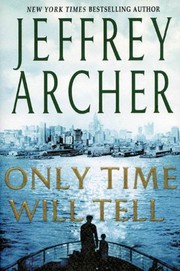
Only Time Will Tell
A Bristol dockworker's son wins a scholarship, falls in love with the daughter of the family that owns the shipyard, and learns that his father's death was not…
2,082-word summary · 9 min read

Fathers and Sons
Arkady brings the nihilist Bazarov home to his father's estate, and a generational argument turns into love, a duel, and an early death.
2,192-word summary · 10 min read
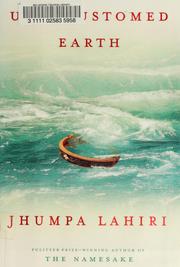
Unaccustomed Earth
Lahiri’s second story collection follows Bengali families in America and abroad, tracing the quiet distances between parents and children, spouses, and the…
2,333-word summary · 10 min read
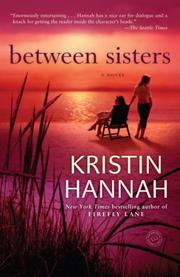
Between Sisters
Estranged sisters Meghann and Claire reunite in Washington when Claire announces a rushed wedding, then face their mother's desertion and a medical crisis.
2,467-word summary · 11 min read
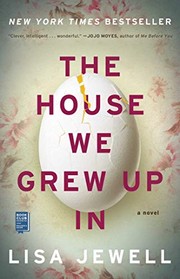
The House We Grew Up In
The Bird family of the Cotswolds breaks apart after a suicide and spends twenty years not talking about what happened.
2,198-word summary · 10 min read
Stones from the River
Trudi Montag is born a dwarf in a small German river town in 1915 and grows up to keep the town's library and its secrets, from the First World War to the…
2,818-word summary · 13 min read
Eligible
Austen's Bennet sisters move to modern Cincinnati, where marriage is a reality show and the house is losing its value.
2,293-word summary · 10 min read

A Spool of Blue Thread
Four generations of the Whitshank family in Baltimore, and the silences, resentments and quiet love they hand down without ever saying so.
2,408-word summary · 11 min read
Troubles in Paradise
In the final Paradise novel, Irene Steele rebuilds her life on St. John while the truth about Russ's death and Todd Croft's criminal empire finally surfaces.
2,471-word summary · 11 min read
This Is How You Lose Her
Yunior cycles through love affairs and betrayals in nine linked stories, tracing the damage he does and the family history behind it.
2,195-word summary · 10 min read