
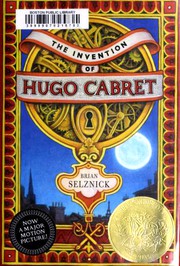
The Invention of Hugo Cabret
2,946-word summary 13 min read 544 pages in the book
- First published
- 2007
- Publisher
- Scholastic Press
- Pages
- 544
- ISBN
- 9780439813785
Reading options
What's inside (9 sections)
I came to The Invention of Hugo Cabret by Brian Selznick sideways, through the movie first. I saw Hugo on a rainy afternoon and liked the station and the sad old toy seller, then learned the book was stranger. It is 544 pages in the Scholastic Press hardcover, ISBN 9780439813785, published January 30, 2007, and more than half of it is pictures. Not pictures beside the story. Pictures as the story. Selznick drew 284 pages of pencil art in sequence, so you read for a while, then you turn and turn and turn through silent images, then words return. I had never read a novel that cut like film before.
That form is the whole gamble. Selznick has said it is not quite a novel, not quite a picture book, not quite a graphic novel, but a mix. You feel that on page one. A moon stares. Smoke curls. Gears turn. Then a boy runs. No captions explain. You learn to read faces and hands and light the way you learn to read sentences.
The facts help anchor it. Paris, early 1930s. Hugo Cabret is twelve. Orphan, clock keeper, thief. He lives in the walls of a busy train station and keeps the clocks running. He tries to repair an automaton his father left behind. He meets a bookish girl named Isabelle, a bitter old man called Papa Georges who runs a toy booth, a station inspector with a bad leg, a cinema friend named Etienne, a film writer named Rene Tabard, a kind godmother called Mama Jeanne, and two sandwich sellers, Monsieur Frick and Miss Emily, who keep losing croissants. Behind them stands a real person, filmmaker Georges Melies, maker of A Trip to the Moon from 1902. The book won the 2008 Caldecott Medal, the first novel to do so, and was a National Book Award finalist in 2007. Scorsese adapted it as Hugo in 2011.
I read it in two sittings because the pictures pull you. That pull is worth slowing down for.
The boy in the walls
Hugo starts with loss piled on loss.
His father worked in a museum in Paris and loved clockwork and old machines. In a back room they found a broken automaton, a tall mechanical figure that should be able to write or draw when wound. Father and son carried it home in pieces, with a notebook full of sketches and plans. Then fire took the museum and took his father. No mother appears in the story. Hugo is passed to his uncle Claude, who keeps time for the clocks at the train station.
Uncle Claude is no savior. He drinks, smokes, shouts when Hugo missets a gear, makes him sleep on the floor and quit school. He teaches him the clocks, though. High ladders, narrow passages behind walls, oil cans, the exact weight of each winding. Then Claude vanishes. The book later tells us he was found dead at the bottom of water. Hugo tells no one. If officials learn he is alone, he will go to an orphanage or jail. So he stays, winding, hiding, stealing.
Selznick shows this stretch mostly in drawings. A long opening with almost no words moves from a moonlit Paris roofline down to smoke over chimneys, to the station clock face glowing, to gears, to a small hand with an oil can, to Hugo eyes watching through a vent. It reads like a camera move. Wide, closer, closer still, until you are inside the wall with him.
I love how physical this part feels. Hugo times his exits to crowds. He lifts milk and bread from Frick and Emily stalls when backs turn. He washes in basins. He counts minutes because clocks that run fast or slow by seconds will betray him. The station inspector notices anyway. He wears a neat blue uniform and cap, smells faintly of vegetables, walks with a leg brace that clicks. He was an orphan himself, which the book saves for later, but even early he watches Hugo with a mix of suspicion and recognition.
The words here are spare. Short chapters. Hugo thinks about machines. People, he feels, are like machines too, with purposes, except his purpose broke when his father died. He keeps the automaton hidden in his room behind the walls because fixing it feels like finishing his father sentence.
The toy booth and the stolen notebook
Hugo steals to live and steals to fix. He lifts cogs and screws from a toy booth in the station run by Papa Georges.
One day Georges catches his wrist. The old man is cold, precise, angry in a tired way. He empties Hugo pockets, takes his tools, and takes the notebook with his father drawings of the automaton. Hugo begs. Georges says the book is gone, burned. Hugo follows him home to a flat above streets and sees a girl about his age watching from a window.
That girl is Isabelle. She is quick, well read, lonely in a different way from Hugo. She lives with Papa Georges and Mama Jeanne as her godparents after her parents died in a car crash. Georges forbids films in the house, which tells you something is buried. Isabelle promises Hugo she will keep the notebook safe. She has not burned it, whatever Georges said.
Work becomes Hugo punishment and door in. Georges makes him sweep and mend at the booth. Hugo hates the delay because unwound clocks drift, but the booth puts him near Isabelle and near his notebook. He follows her to a bookshop where her friend Etienne works. Etienne sneaks kids into the cinema and loses that job for it, then lands at a film academy library. He shows easy kindness. He gives Hugo a coin from behind an eye patch trick and tells him to buy a small book on magic. Hugo studies it to learn a pickpocket move. That detail charmed me. A boy learning sleight of hand from a library book in order to steal back his own key to his own past.
Isabelle wants to know Hugo truth. Hugo runs. He fears any adult who learns he lives alone will lock him up. In the chase she trips and a key on a ribbon slips out. Heart shaped. With a heart shaped hole. Hugo has seen that hole before. It is in the back of the automaton.
Selznick draws this reveal with no words for pages. Isabelle running, Hugo running, the key swinging, close on the metal heart, close on Hugo eyes widening. When I turned those pages I felt the click he must have felt. Two separate hurts lining up like gears.
The automaton wakes and draws the moon
Back in the wall room, Hugo and Isabelle fit key to machine.
I want to pause on how Selznick stages machines, because the art does work the prose cannot. The automaton is drawn tall and scarred from fire, fingers jointed, head bowed. Screws and springs show at the shoulder. Hugo oils joints with the care of a nurse. Isabelle holds the lamp. The key turns across several images: hand, key, hole, teeth catching, slight shudder. Then the hand lifts. A pencil fits in its grip. It starts to move.
What comes out is slow across wordless spreads. Lines gather into a curve, then a disc, then a face in the moon with a rocket lodged in its eye. Anyone who knows early film knows that image. It is from A Trip to the Moon, the 1902 Melies film where a capsule lands in the grinning moon face. The automaton signs the sheet. Not with Hugo father name. With the name Georges Melies.
Isabelle runs home upset, sure Hugo stole the machine. Hugo follows, crushes his hand in her heavy front door by accident, gets pulled inside bleeding. There he sees a high drawer that stays locked. Isabelle picks it with a bobby pin trick, drops the heavy box inside, sprains her foot, papers spill. Georges walks in, sees the papers, tears drawings in rage. Mama Jeanne sends everyone to bed. Hugo pockets the toy booth key and slips back to the station in the dark.
This middle run shows why the hybrid form matters. The prose tells you Hugo is scared and Isabelle is stubborn. The drawings tell you how rooms feel, how old paper looks when torn, how a boy holds a hurt hand to his chest while trying not to cry. Faces carry pages here. Selznick draws Hugo with tousled dirty hair and wide watchful eyes, Isabelle with large dark eyes and a chin that lifts when she argues, Georges with deep lines and a mouth set hard. You could follow the fight without a single sentence.
The next morning they regroup. They buy medicine for Georges with booth money. Hugo goes with Etienne to the film library and finds a thick book called The Invention of Dreams by Rene Tabard. Inside is a photo of the same automaton. The caption ties it to Melies, the pioneer who built cameras when the Lumiere brothers would not sell him one, who made hundreds of trick films full of smoke and stars, who collected wind up figures. Hugo invites Tabard and Etienne to Isabelle house for a screening. He wants Georges to face his own past with witnesses who admire it.
Papa Georges and the burned films
The heart of the book is not Hugo clock theft. It is Georges grief.
Tabard screens A Trip to the Moon in the flat. Light flickers on faces. Georges, who banned movies, watches his younger self invent joy frame by frame. Then he talks, and the talk hurts.
He was once Georges Melies, celebrated magician turned filmmaker, builder of glass studios, inventor of dissolves and double exposures, maker of fantasies that filled theaters. War came. Tastes changed. His films were melted for shoe heels or burned. His brother health failed. Isabelle parents died. He sank into depression, burned what was left in anger and shame, and started over selling wind up toys in a station where no one knew his name. He built or kept automata before, sold or lost them, tried to forget.
Selznick does not lecture this history. He lets Tabard show stills, lets Mama Jeanne hold Georges hand, lets Isabelle learn that her godfather forbade cinema because cinema broke him. Hugo listens and understands something about machines and people. A machine can be repaired if you find the missing part. A person is harder. Shame jams more than gears.
I found this section moving and a little long. Tabard and Etienne turn into guides who explain Melies career while Hugo and Isabelle listen. Younger readers may fidget. I did not mind much because the payoff is earned, but the pacing dips. The book stops being a chase and becomes a lesson for thirty pages. Selznick tries to keep pictures active, cutting between film frames and small reactions, a hand tightening, a cup set down, but exposition is exposition.
One grace note saves it. Georges asks to see the automaton. Not to own it. To see that something he made survived fire and neglect and still draws. For a man who burned his work, proof that work can outlast despair lands hard.
Clocks, chase, and a new family
While Hugo plays detective, his cover frays.
He misses windings to work the booth. Clocks run off by seconds. The inspector, already alert, writes to Uncle Claude and gets no answer. He starts checking passages. Hugo, rattled by news that Claude body was found, drops a milk bottle in front of Frick and Emily, runs with the automaton in a sack, and gets cornered near tracks.
Selznick draws the chase as pure cinema. No words for many pages. Hugo feet on stone, inspector brace clicking, crowd blurring, a train rushing in with light blooming across the page, Hugo stumbling toward the edge, the inspector grabbing his coat and hauling him back as the train screams past. It made my chest tight even though I knew Hugo would live. The pictures speed up by cutting closer: wheel, hand, eye, whistle, arm. Then white space. Then Hugo fainting.
He wakes in a small cell. He tells everything. For once telling saves him instead of damning him. The inspector, who knows orphan fear from inside, listens. Mama Jeanne and Georges come. They take him in. Isabelle gains a brother in practice if not in law. The automaton gets repaired by Hugo and Georges together, old maker and young keeper turning screws side by side.
Six months later the book closes with a concert honoring Melies. Surviving films play to applause. Tabard names Hugo, Isabelle, and Etienne from the stage. Hugo has begun building his own automaton. The last reveal lands softly. The book we just read, words and pictures both, was drawn and written by that machine, which is to say by Hugo himself. He has turned his life into a book that moves like film.
Sentimental? A little. Earned? I thought so. After so many thefts, Hugo makes something and gives it away.
How the pictures really work
A longer note on craft, since the pictures are half the page count and deserve half the talk.
Selznick works in soft pencil, gray and black, with strong light sources. Lamps, moon, projector beams, station windows. He favors sequence over single splash. A typical run might show a station crowd from high above, then the same crowd tighter, then one boy cap among heads, then the cap closer, then eyes. That is film grammar: establishing shot, medium, close. Kids who have never heard those terms still feel the push in.
He also uses double spreads for motion that words would slow. Smoke is a good example. Early pages show smoke rising from chimneys in curl after curl. No text says time passes. Your hand turning pages makes time pass. Same with the moon rocket drawing. Line by line, the image builds. You experience duration instead of being told about it.
Wordless stretches change how you hear the text when it returns. After twenty silent pages, a single sentence sounds loud. Selznick knows this. He places short prose chapters like dialogue scenes between long visual passages. The prose itself is plain, sometimes flat. Hugo narrates in simple past, notices food and cold and fear more than ideas. Isabelle gets livelier lines about books and adventure. Adults speak in longer memories. None of it calls attention to style, which lets pictures hold style duties.
What do the drawings add that words could not? Scale. The station feels huge in pictures in a way description struggles to match. Crowds press. Clocks loom. The automaton towers over Hugo in a way that makes his devotion touching and slightly foolish. Smallness matters here. Hugo is small in a big system, just as Melies is small after history moved on. Pictures keep saying: look how large the world is around these two fixers.
There are limits. Faces sometimes repeat. Hugo worried looks like Hugo scared looks like Hugo hopeful. Isabelle determination can read as pout. Backgrounds carry more variety than expressions. And because pictures must be clear enough for children to follow without words, Selznick avoids murk. Night scenes stay readable. That clarity suits mystery but softens dread. A darker inker might have made the wall passages more frightening.
Still, the achievement stands. The book asks children to sustain attention across silent pages, to track cause without dialogue, to feel speed through still images. That is sophisticated reading. Teachers who use it for visual literacy are right to do so.
What sags and who will love it
Fair criticism belongs here, because the medal shine can blind.
The prose sags when history enters. Tabard explanations of Melies innovations, the Lumiere refusal, the war slump, the toy booth exile, all needed, all a touch stiff. Etienne exists mostly to open doors and carry books. Frick and Emily are sweet but thin. The inspector turn from hunter to father figure happens fast, helped by his own orphan past, but one kind conversation does a lot of work. Readers who want deep interior life may find Hugo a little opaque. He acts, watches, fixes. He rarely reflects beyond machines-as-people thoughts.
Length is another question. At 544 pages the book looks daunting on a shelf. In practice it reads fast because pictures flip by. Some parents feel tricked by that. Some kids feel proud to finish a brick. I land on the proud side, but libraries should warn slow readers that the page count misleads in a kind way.
Who will love it? Kids around nine to twelve who like mystery, building, Paris, old movies, or silent comics. Adults who love film history and want Melies honored without a textbook. Anyone who likes objects with pasts, keys, notebooks, wind up toys, film cans. Readers who need constant dialogue should sample first. If twenty wordless pages sound boring, this is not your book, and that is fine.
I closed it thinking about repair. Hugo repairs clocks he did not break, an automaton he did not build, a family he did not expect. Georges learns to let old work be seen again. Isabelle learns that books point outward to living people. Even the inspector learns to catch in order to hold rather than to punish.
It is a kind book about broken things, told in a form that was itself an experiment. Experiments do not always win top prizes. This one did, and flipping through those gray pages at midnight, moon first and gears last, I understood why.
FAQ
When was The Invention of Hugo Cabret published?
Scholastic Press published the hardcover on January 30, 2007. This summary follows that edition, 544 pages, ISBN 9780439813785.
Is it really a picture book?
Yes, in the sense that pictures carry half the plot. Selznick drew 284 pages of pencil art in sequence, so long stretches read without words like a silent film.
Did it win awards?
It won the 2008 Caldecott Medal, the first novel to do so, and was a 2007 National Book Award finalist. Martin Scorsese adapted it as Hugo in 2011.
Similar books
When You Reach Me
A sixth grader in 1970s New York gets strange notes that seem to predict the future.
2,456-word summary · 11 min read
The Penultimate Peril
Baudelaires as concierges in a hotel sort friends from foes before the end.
2,234-word summary · 10 min read
The End
Baudelaires wash on an island where others decide what safe means.
2,320-word summary · 10 min read
The Prince and the Pauper
Tom Canty and Prince Edward swap clothes in Tudor London and live each other's lives, from palace dinners to prison cells, until a hidden seal decides the…
2,979-word summary · 13 min read
The Hostile Hospital
The Baudelaires hide in half-built Heimlich Hospital, uncover a thirteen-page file hinting a parent survived, and flee Olaf's surgery trap through fire.
2,658-word summary · 12 min read
The Grim Grotto
Snicket eleventh Baudelaire book, Sept 2004 HarperCollins, 323 pages: the Queequeg crew, Gorgonian Grotto fungus, Fiona choice, and Sunny wasabi cure that…
2,789-word summary · 12 min read
The Slippery Slope
Violet and Klaus climb icy peaks to rescue Sunny while Quigley and V.F.D. ruins change what they know.
2,678-word summary · 12 min read
The Carnivorous Carnival
Baudelaires hide as carnival freaks to find V.F.D. clues, facing lions, Olaf, and a fateful cliff split.
2,027-word summary · 9 min read
Cabin Fever
Greg Heffley gets snowed in with his family before Christmas while dodging blame for school property damage.
2,221-word summary · 10 min read
The Ugly Truth
Greg faces puberty, a school lock-in and Uncle Gary's wedding while Mom returns to college in Wimpy Kid book five.
2,766-word summary · 12 min read
The Boxcar Children
Four Alden orphans run from a bakery, settle in an old boxcar in the woods, and learn to live on work, berries, and each other.
2,892-word summary · 13 min read
The Mysterious Benedict Society
Four gifted children pass strange tests and go undercover at a school hiding a mind control machine.
2,130-word summary · 9 min read
The Ersatz Elevator
Orphans climb endless stairs while a stylish guardian sides with Olaf.
1,961-word summary · 9 min read
The Blind Assassin
An old woman writes her sisters story while a novel inside the novel retells it as pulp science fiction.
1,963-word summary · 9 min read
The Austere Academy
The Baudelaires endure Prufrock Prep, meet the Quagmires, and face Olaf as Coach Genghis in book five.
2,175-word summary · 10 min read
Dog Days
Greg wastes summer perfectly through pools, dogs and dad fishing trips.
2,127-word summary · 9 min read
The Miserable Mill
Sent to work at the Lucky Smells Lumbermill, the Baudelaires face harsh labor, strange hypnotism, and a familiar villain in a new disguise.
2,662-word summary · 12 min read
The Alienist
In 1896 New York, alienist Laszlo Kreizler, reporter John Moore and Sara Howard hunt a killer of boy prostitutes while police commissioner Roosevelt backs…
3,099-word summary · 14 min read
The Wide Window
The Baudelaires brave Aunt Josephine, Captain Sham and leech-filled Lake Lachrymose.
2,459-word summary · 11 min read
Madeline
Ludwig Bemelmans's 1939 Madeline: the twelve girls in Paris, Miss Clavel, the midnight appendix scare, and why the smallest girl became a classic.
2,944-word summary · 13 min read
From the Mixed-Up Files of Mrs. Basil E. Frankweiler
Claudia and Jamie run away to the Met, chase whether a 225 dollar Angel is a Michelangelo, and trade secrets with Mrs. Frankweiler.
2,774-word summary · 12 min read
The Reptile Room
Baudelaires find kind Uncle Monty until Olaf returns as assistant Stephano.
2,005-word summary · 9 min read
The Phantom of the Opera
A masked Erik haunts the Paris Opera, coaching Christine Daae while rivaling Raoul for her. Chandelier crash, cellar lake, and unmasking follow.
2,307-word summary · 10 min read
The Paris Apartment
Jess finds her brother missing in Paris where every neighbor hides something.
2,040-word summary · 9 min read
The Bad Beginning
After a fire kills their parents, the Baudelaire orphans are sent to Count Olaf, who plots to steal their fortune.
2,759-word summary · 12 min read
Diary of a Wimpy Kid
Greg Heffley records middle school survival in his journal, dodging the Cheese Touch and Rowley's popularity.
1,912-word summary · 8 min read
The Boy in the Striped Pajamas
Bruno moves to Out-With and befriends Shmuel through a camp fence without understanding it.
3,101-word summary · 14 min read
Where the Sidewalk Ends
Sidewalk Ends retold: poems and drawings, Sarah Cynthia, unicorns, homework and giants.
1,952-word summary · 9 min read

What She Knew
Rachel lets her eight-year-old son run ahead in a Bristol park, and the nine-day search turns her into a suspect in the public eye.
2,952-word summary · 13 min read
What Moves the Dead
Alex Easton arrives at the Usher house to find Madeline dying, the tarn full of fungus, and the local hares refusing to stay dead.
2,586-word summary · 11 min read