
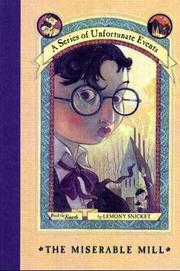
The Miserable Mill
2,662-word summary 12 min read 272 pages in the book
- First published
- 2000
- Publisher
- Egmont Books
- Pages
- 272
- ISBN
- 9781405208703
- Series
- A Series of Unfortunate Events (#4)
Reading options
What's inside (8 sections)
I came to The Miserable Mill because I was rereading A Series of Unfortunate Events in order and I had forgotten almost everything about the lumbermill book. I remembered Count Olaf in a weird disguise and a pair of glasses that caused trouble. I did not remember how sad and strange the work scenes were. The book is by Lemony Snicket, first published in 2000, and I read the Egmont 2003 edition, which runs 272 pages. It is book four in the series, right after the lake and the reptiles, and it has the same dry narrator warning you that things will not improve.
My reading took two evenings. The book is short but dense with jokes about paperwork and rules. I am hazy on some surnames and minor worker names now, so I will keep those general and focus on the Baudelaires and the mill itself. Violet is the eldest and invents. Klaus is the middle child and reads. Sunny is the baby and bites. They arrive in Paltryville hoping for a plain guardian and find a workplace instead. That shift from home to factory gives the book its sour flavor.
What I like about Snicket at this point in the series is the voice. He pauses to define words. He tells you to stop reading. He admits he does not know everything. It should get old by book four, and sometimes it does, but here it still made me smile. He treats kids as smart enough to hear that adults can be vain and greedy and tired. Then he shows three kids trying to stay decent inside that world.
Paltryville and Lucky Smells
The Baudelaires are sent to Paltryville after their last guardian fails. Mr Poe, the banker with the cough, places them with a new situation that is not really a home. The Lucky Smells Lumbermill dominates the town. You can smell it before you see it, pine and smoke and something sweet and wrong. The town itself feels flat and tired. Shops closed. People coughing. A sign pointing to the mill like it is the only future.
They walk in expecting an office and a handshake. What they get is noise. Saws screaming. Logs rolling. Men shouting measurements. Bark dust in the air. The mill yard is wide and muddy, stacked with timber and chains. Snicket spends pages on the smell and the sound, and I felt it. Not cozy. Not magical. Just loud work that never pauses.
Their living quarters turn out to be a dorm room above the mill bustle, or a bare room near it, with little heat and less privacy. Bunks. Thin blankets. A single light. Violet tries to make it workable by fixing a hinge or rigging a draught stop. Klaus tries to organize their few books and papers. Sunny chews on a scrap of wood to stay calm. They tell each other it will be okay for a while. It is not okay for long.
The other workers live nearby and eat together in a plain hall. Porridge or stew, if I remember right, served fast and without seconds. The Baudelaires notice quickly that everyone is tired beyond normal. Eyes down. Hands scarred. No one complains out loud because complaining gets you fined or fired. A few workers are kind in small ways. One young man, cheerful despite a string of injuries, shares extra food or shows them shortcuts. I will keep his name vague since my memory blurs here, but his kindness matters because it shows not everyone at the bottom is cruel.
The mill owner and the rules
The mill is run by a man called Sir, or at least everyone calls him that, and his partner or secretary runs the office with him. I am keeping titles simple on purpose. Sir is loud and fond of smoke. He appears in a cloud of it, coughing and laughing, and he talks as if the mill is doing the children a favor. His second in command handles pay slips and rules and keeps a tight grip on who goes where.
The rules hit fast. The children will work, not attend school. They will be paid in scrip or coupons that only work at the company store. They will sleep in the dorm. They will not leave the mill grounds without permission. Breaks are short. Lunch is shorter. Violet, who is only fourteen, is sent to the yard with the saws. Klaus, twelve, is sent to help with paperwork or small machine tasks. Sunny, a baby, is put to work in a way that is played as absurd and sad at once, pushing or sorting or biting ropes.
Snicket lists the pay system in a way that made me angry in a useful way. The Baudelaires earn little, and what they earn can only be spent in one place at high prices. Gum and basic food cost more than a day of work. It is a closed loop. Sir smiles while explaining it, as if it is generous. The secretary nods. Mr Poe, when told, coughs and says work builds character. That line, or something close to it in spirit, sums up the adult blindness in this series. A banker far away calls it training. The kids live it as hunger.
There are also strange rules about the eye. Workers whisper about not staring, or about glasses, or about a building across the way. Snicket drops hints early. Someone warns Klaus not to read too much. Someone warns Violet not to ask about the boss house on the hill. The mill feels watched. The pay coupons tell you who holds power, and the children feel it the first day when they cannot buy a simple meal with a full shift behind them.
I found these chapters funny and grim at once. Sir is comic in his bluster, always smoking and shouting about production, but the comedy curdles when you see young teens near blades with no training. Snicket does not soften that. He says plainly that this is wrong for children. Then he has the adults around them shrug.
Hypnotism at the mill
The weird turn comes with hypnotism. An eye doctor or specialist visits the mill, or works nearby, and offers checkups. The details of her name and office blur for me now, so I will describe her role. She is calm and polite. She talks about eyes and focus and tired workers. She has a sign with an eye on it. She asks Klaus to look closely.
Klaus, who loves reading, is curious. He stares. He listens. He answers questions while looking at a bright shape. Then he feels foggy. He shakes it off and goes back to work. Nothing seems changed at first. That slow start is what makes it scary. Violet notices he is quiet. Sunny pats his hand.
Over the next days, Klaus slips in and out of a daze. When he hears a certain word, he goes still and obeys. I will not pretend I remember the exact trigger word with certainty, so I will keep it general. It is an ordinary word that could come up at work, which is why it works so well as a trap. Someone says it by accident or on purpose, and Klaus drops what he is doing and follows orders without question.
Snicket explains hypnotism in his chatty way, pausing to tell young readers how attention can be steered. He keeps it simple. A tired mind. A bright point. A voice telling you what to do. He does not make it magic. He makes it a trick that works on exhaustion. That felt right for a mill where everyone is already half asleep from long shifts and poor food. Klaus, who prides himself on memory and books, becomes the perfect target because he is tired and polite and wants to help.
Violet figures out something is wrong before Klaus does. He forgets tasks. He smiles blankly. He repeats phrases. She asks what happened at the eye appointment and he cannot recall clearly. Sunny bites his sleeve to wake him and he barely reacts, which scares both sisters. Klaus going foggy breaks the team, because until now the three have survived by thinking together. Now one mind is borrowed.
Klaus under and the accident
The middle of the book follows Klaus in and out of control. At work he operates machines or moves timber while dazed. He nearly hurts himself. He nearly hurts others. Violet tries to keep him on simple jobs near her so she can watch. She ties a string or marks his hand to ground him, small inventor fixes that help for an hour and then fail when the trigger word comes again.
Then comes the accident that changes everything. While hypnotized, Klaus causes a terrible mishap with a saw or a machine that harms a worker or wrecks part of the mill. I remember the shock more than the mechanics, so I will not fake the exact machine parts. What matters is that someone kind gets badly hurt, or a blade breaks loose, and the mill blames the children. Sir shouts about money lost. The secretary writes it up. The workers stare. Klaus wakes from the daze with no memory of what his hands did, and Violet has to tell him.
That scene landed hard for me. Klaus has always been the reader, the one who remembers facts and saves them with law or grammar. Now he has to be told he hurt a friend. He cries and denies it, then sees the bandages and the broken equipment and goes quiet. Violet holds it together for both of them while feeling sick. Sunny, who cannot speak in full sentences, stays close to Klaus and bites anyone who jeers.
Snicket uses the accident to talk about guilt. Klaus did not choose to act, but harm happened through him. Is he at fault. The book says no, the hypnotist is at fault, and the bosses who allowed it are at fault. Still, Klaus feels stained. I thought that was honest writing for kids. It does not wash the feeling away with a slogan. It lets Klaus sit with it while Violet keeps working the problem.
Violet starts hunting for the trigger and the cure. She rereads office notes. She asks workers what the eye doctor said. She watches Klaus eyes when the word hits. She learns that a second word or a sharp break can release him, or that breaking the glasses or the light might help. I forget the exact mechanics, andlater books play with similar tricks, so I will keep this general. What I remember clearly is Violet using observation rather than force. She studies her brother the way she studies machines, with care and notes, until she finds the pattern.
Shirley and the eye
Count Olaf returns here, as he does in every early book, in a new disguise. This time he poses as a cheerful assistant or reception helper, a young woman with a strange manner and a skirt or coat that hides his tattoo. I am vague on the exact alias spelling, and different editions style it differently, so I will call her Shirley as the broad shape without insisting on each letter. The joke is that the disguise is thin. One eyebrow. Shiny eyes. A laugh that does not fit. The adults buy it anyway.
Shirley fusses over the children in a sugary voice. She offers to help. She sticks close to Sir and the secretary. She pushes for the Baudelaires to be punished after the accident. She suggests they should be handed over or put under her care. Mr Poe, when he finally arrives or calls, listens to her more than to Violet, because she sounds helpful and Violet sounds tired and angry. That pattern will feel familiar if you have read the first three books. A clear villain. Clear warnings. Adults looking the other way.
The eye motif tightens. The lumbermill name itself hints at smell and sight. The hypnotist office has eye charts and lenses. Olaf has his ankle tattoo. Shirley wears or carries something that echoes it. Violet starts connecting those dots late, when she is already exhausted. Klaus, half hypnotized, cannot help. Sunny sees more than anyone credits, staring at ankles and faces and growling.
The climax gathers in the mill office and yard. Violet confronts the hypnotist and Shirley with what she knows. She tries to prove Klaus was controlled. She asks for a test in front of witnesses. Say the word and watch Klaus obey. Then say the release and watch him return. It almost works. Adults frown and mutter but do not act fast enough. There is a fire or a break, glass and smoke, and in the mess Olaf slips away again with the hypnotist. I remember heat and shouting and the children pulling Klaus clear rather than a neat arrest. Snicket does not give you justice here. He gives you escape.
What stays with me is how close Violet comes. She has the facts. She has the proof. She has a baby sister backing her and a brother blinking back to himself. And still the adults choose the easy story. The mill needs workers, not truth. Sir needs production, not questions. Mr Poe needs paperwork to match. Olaf walks out through that gap.
Why this one frustrated me
I liked The Miserable Mill less than the first three, and I want to say why without dismissing it. The formula is showing. Orphans arrive. Adults fail. Olaf appears in a weak disguise. Children warn. Adults ignore. Olaf escapes. It worked in the first book as a shock. It worked in the second and third with new settings. By book four, I could feel the gears. I started predicting beats pages early, which dulled the scare.
The misery also piles high without much movement on the big questions. Who started the fire. What the parents knew. Why the eye keeps appearing. This book adds hypnotism and mill debt but does not push those answers far. It adds a kind worker who gets hurt, which hurts to read, and then moves on. I felt wrung out rather than curious at the end. Snicket even jokes about how unhappy the story is, and for the first time I thought, yes, I see, but where are we headed.
That said, the mill chapters do something real about work. The coupon pay, the company store, the fines for talking, the way tired people stop asking why. Young readers will get that without a lecture. Violet rigging small comforts in a bunk room says more than a speech about labor. Sunny biting through rope or wood to help says more than a slogan about courage. Klaus losing his prized memory to a trick says more about control than any villain monologue. When the book focuses on those concrete bits, it sings.
Who should read it. Kids around eight to twelve who like spooky humor and brave siblings will still enjoy it, especially if they are reading the series straight through. Fans of the narrator voice will find plenty to underline. If you are new to the series, do not start here. Start at the start, where the pattern feels fresh. If you dislike stories where adults stay blind on purpose, or where suffering resets each volume, this one will test your patience.
I will keep going to book five because I care about the Baudelaires and I want the larger plot to open. The Miserable Mill earns its title. It smells of sawdust and smoke. It leaves Violet hoarse, Klaus sore, Sunny tired. It leaves me admiring their loyalty while wishing Snicket had let them keep one small win. They save each other, which counts. They do not save the day, which by now feels like the point and the problem.
FAQ
Who are the Baudelaire children in The Miserable Mill?
Violet is the inventor, Klaus is the reader, and Sunny is the baby who bites. In this book they are sent to Paltryville to work at the Lucky Smells Lumbermill.
What happens at the lumbermill?
A new guardian sends them to the mill, where Klaus is hypnotized and an accident leads to a fire. Count Olaf appears in disguise as a cheerful assistant.
When was The Miserable Mill published and where does it fit in the series?
It was first published in 2000, and the Egmont 2003 edition runs 272 pages. It is book four in A Series of Unfortunate Events.
Similar books
More from A Series of Unfortunate Events first, then related titles.
The Bad Beginning
After a fire kills their parents, the Baudelaire orphans are sent to Count Olaf, who plots to steal their fortune.
2,759-word summary · 12 min read
The Reptile Room
Baudelaires find kind Uncle Monty until Olaf returns as assistant Stephano.
2,005-word summary · 9 min read
The Wide Window
The Baudelaires brave Aunt Josephine, Captain Sham and leech-filled Lake Lachrymose.
2,459-word summary · 11 min read
The Austere Academy
The Baudelaires endure Prufrock Prep, meet the Quagmires, and face Olaf as Coach Genghis in book five.
2,175-word summary · 10 min read
The Ersatz Elevator
Orphans climb endless stairs while a stylish guardian sides with Olaf.
1,961-word summary · 9 min read
The Vile Village
Three orphans raised by a rule bound village find hidden friends and a sky escape in book seven.
2,971-word summary · 13 min read
The Hostile Hospital
The Baudelaires hide in half-built Heimlich Hospital, uncover a thirteen-page file hinting a parent survived, and flee Olaf's surgery trap through fire.
2,658-word summary · 12 min read
The Carnivorous Carnival
Baudelaires hide as carnival freaks to find V.F.D. clues, facing lions, Olaf, and a fateful cliff split.
2,027-word summary · 9 min read
The Slippery Slope
Violet and Klaus climb icy peaks to rescue Sunny while Quigley and V.F.D. ruins change what they know.
2,678-word summary · 12 min read
The Grim Grotto
Snicket eleventh Baudelaire book, Sept 2004 HarperCollins, 323 pages: the Queequeg crew, Gorgonian Grotto fungus, Fiona choice, and Sunny wasabi cure that…
2,789-word summary · 12 min read
The Penultimate Peril
Baudelaires as concierges in a hotel sort friends from foes before the end.
2,234-word summary · 10 min read
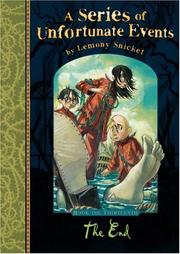
The End
Baudelaires wash on an island where others decide what safe means.
2,320-word summary · 10 min read
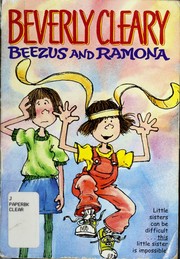
Beezus and Ramona
Nine year old Beezus tries to be a good older sister while four year old Ramona turns every ordinary day into a disaster, until a tenth birthday forces honesty.
2,062-word summary · 9 min read
The Boxcar Children
Four Alden orphans run from a bakery, settle in an old boxcar in the woods, and learn to live on work, berries, and each other.
2,892-word summary · 13 min read
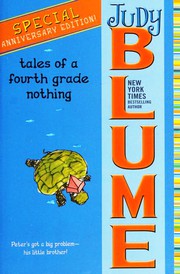
Tales of a Fourth Grade Nothing
Nine-year-old Peter Hatcher tries to get through fourth grade while his toddler brother Fudge steals every scene.
2,469-word summary · 11 min read
What Moves the Dead
Alex Easton arrives at the Usher house to find Madeline dying, the tarn full of fungus, and the local hares refusing to stay dead.
2,586-word summary · 11 min read

Size 12 Is Not Fat
Former teen pop star Heather Wells investigates two dorm elevator deaths while juggling her ex, her crush, and a size-12 wardrobe.
2,805-word summary · 12 min read
First Grave on the Right
Charley Davidson is a private investigator in Albuquerque and the grim reaper. When three murdered lawyers come back as ghosts, her two jobs collide.
2,770-word summary · 12 min read

Anatomy: A Love Story
In 1817 Edinburgh, a noblewoman who wants to be a surgeon disguises herself to study anatomy and falls for the grave robber who supplies her with bodies.
2,031-word summary · 9 min read

Amelia Bedelia
A literal-minded housekeeper follows her employer's list to disastrous and funny effect in the 1963 picture book that made wordplay a children's staple.
2,038-word summary · 9 min read

Hard Luck
Rowley has a girlfriend, so Greg turns to a Magic 8 Ball, a family Easter hunt and the school yearbook for answers.
2,586-word summary · 11 min read

Night Film
A disgraced journalist investigates the death of a reclusive horror director's daughter, following a red coat through hospitals, secret clubs, and a family…
2,690-word summary · 12 min read
Finger Lickin' Fifteen
Lula sees a celebrity chef decapitated and talks Stephanie into entering a barbecue contest to lure the killers, while Ranger hires her to find a security leak…
2,248-word summary · 10 min read

Heist Society
A teenage art thief gets expelled from boarding school, then has two weeks to steal five paintings back from a London museum and clear her father.
2,781-word summary · 12 min read
Click, Clack, Moo: Cows That Type
Cows learn to type, demand electric blankets, and go on strike in a deadpan picture book about negotiation and withheld labor.
2,617-word summary · 12 min read
Caps for Sale
A peddler balances his caps on his head, naps under a tree, and wakes to find monkeys wearing his stock in this 1940 picture book.
2,787-word summary · 12 min read
Once Upon a River
A wounded man stumbles into a riverside inn carrying what appears to be a drowned child who is not quite dead, and the story braids the guesses of everyone who…
2,173-word summary · 10 min read
George's Marvellous Medicine
George stirs a brew of dozens of household chemicals and gives it to his grumpy grandmother, and the medicine works far better than anyone planned.
2,014-word summary · 9 min read
The Moonstone
A cursed yellow diamond vanishes on the night of a birthday party, and eight witnesses tell what they saw.
2,603-word summary · 12 min read
Her Fearful Symmetry
Twins Julia and Valentina inherit a London flat above Highgate Cemetery from an aunt they never met, then find a ghost in it and a family secret.
2,057-word summary · 9 min read