
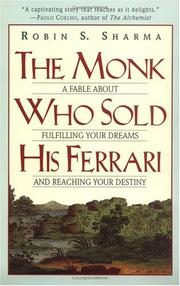
The Monk Who Sold His Ferrari
2,881-word summary 13 min read 198 pages in the book
- First published
- 1997
- Publisher
- HarperSanFrancisco
- Pages
- 198
- ISBN
- 9780062515674
Reading options
What's inside (8 sections)
I picked this one up after a month where work had eaten everything else. A friend who knows my habit of reading late with a laptop open said, try the Ferrari book, it is short and it will annoy you in a useful way. She was half right. The Monk Who Sold His Ferrari first came out in Canada in 1997 from HarperCollins, and the edition most Americans know is the HarperSanFrancisco paperback with 198 pages. You can read it in an evening. I finished it in two sittings, once on a train and once at the kitchen table, and I kept arguing with it in the margins.
Robin S. Sharma was a litigation lawyer before he became a writer and speaker. That matters because this is a lawyer book in monk clothes. It is structured as a conversation between two lawyers, it loves rules and rituals, and it treats a good life like a case you can prepare for.
A heart attack in a courtroom
The story opens with Julian Mantle, and Sharma wants you to feel how big Julian was before the fall.
Julian is a star trial lawyer, rich and famous in his city. Big house, private plane habits, expensive suits, and the red Ferrari that gives the book its title. He works eighteen hour days, eats on the run, drinks too much coffee, loses his temper, and looks old for his age. His only real friend at the firm is John, the narrator, a younger lawyer who admires him and also sees the cracks.
Then Julian collapses in the middle of a packed courtroom. One minute he is objecting and pacing, the next he is on the floor clutching his chest. The man who never stopped finally has to stop.
What happens next is the turn the whole book depends on. Julian does not go back to the office after he recovers. He sells the mansion. He sells the Ferrari. He disappears. John hears rumors that he died, or moved to an island, or had a breakdown. Three years pass.
Then there is a knock on John's office door, late in the day. A young looking man in robes walks in, smiling, calm, almost glowing. John thinks he is a visitor. It takes him a minute to see it is Julian, transformed. He looks decades younger, lean and still, laughing easily. Julian says he went to India, traveled on foot, and ended up high in the Himalayas with a group called the Sages of Sivana. Their teacher, Yogi Raman, took him in.
The rest of the book is Julian telling John what he learned, over one long night in John's living room. John asks questions, pushes back a little, takes notes. Julian talks. If you want twists, there are none.
I liked this setup more than I thought I would. It lets Sharma put the lessons in plain speech. Julian is not lecturing a crowd. He is trying to convince one tired friend not to end up on a courtroom floor.
The strange garden story
Julian tells John that Yogi Raman refused to hand him a plain list. Raman made him promise something first. Learn this, live it, then go back and teach it. The Sages believe wisdom rots if you keep it to yourself.
Then Raman gave Julian a fable to hold all seven lessons at once. Julian repeats it to John, almost word for word, and John thinks it sounds silly. I did too, on first read. Here it is in short form, because everything later refers back to it.
Picture a lush green garden, quiet and full of flowers. In the middle stands a tall red lighthouse, six stories high, solid and bright. The door swings open and out steps a nine foot tall sumo wrestler, over 900 pounds, wearing nothing but a pink wire cable to cover himself. He lumbers around the garden, finds a shiny gold stopwatch lying on the path, straps it on, and drops to the ground unconscious. He lies there until the smell of yellow roses drifts over. The scent wakes him. He jumps up, full of energy, looks to his left, and sees a long path paved with diamonds stretching ahead. He walks that path and it leads him to lasting joy.
That is it. Garden, lighthouse, sumo, cable, stopwatch, roses, diamonds.
Yogi Raman meant each object to stand for one virtue in what the Sages call the Sivana System. Julian spends the rest of the night unpacking them for John. I found myself remembering the silly images at odd moments later, while doing dishes or walking to the store, which I suppose is the point.
The seven virtues, as Julian names them, are these. Master your mind. Follow your purpose. Practice constant improvement. Live with discipline. Respect your time. Serve others without counting. Live in the present.
The names sound like posters. The chapters work a bit harder than the names suggest, so I will walk through them the way Julian tells them, with the parts that felt concrete and the parts where I rolled my eyes.
Tend your mind and find your lighthouse
The garden is your mind, Raman says, and most of us let anyone dump trash in it.
Julian starts here because everything else fails if your thoughts run wild. He describes his old mind as a courtroom that never adjourned. Replays of lost arguments, worry about tomorrow, headlines, slights. The Sages taught him to act like a gardener. Pull weeds early. Plant better seed. Stand guard at the gate.
Sharma gives a few practices through Julian, and two are easy to picture. One is called the Heart of the Rose. You sit quietly and stare at a real rose, noticing shape, color, scent, texture, until stray thoughts settle. Another is opposition thinking. When a bleak thought arrives, you replace it with its opposite on purpose.
I tried the rose idea with a coffee mug because I had no roses. It felt awkward for three minutes and then oddly restful. My brain kept sliding toward email. Each time I pulled it back. That small pull, repeated, is the whole exercise.
The criticism writes itself here, and I will come back to it later. Telling an exhausted parent working nights to just guard their thoughts can sound glib. Sharma knows this a little, since Julian admits he needed weeks of practice in silence before it felt natural. Still, the core claim is modest and hard to dismiss. What you repeat in your head shapes what you notice during the day.
The lighthouse is purpose, or dharma, the Sanskrit word the Sages use for life work.
Julian asks John a plain question. What would you do if you knew you could not fail, and what would you regret never trying. John squirms. Most of us do. The Sages argue that without a clear aim, time leaks into other people's urgencies. A lighthouse does not chase ships. It holds steady and lets them find their way.
Raman teaches Julian a simple way to set aims. See the outcome clearly in your mind. Add some healthy pressure by telling someone you trust. Set a date. Then follow what Julian calls the Magic Rule of 21, the idea that a new act needs about 21 straight days to start feeling like a habit. Researchers today would say habit timing varies a lot, and 21 is more slogan than law.
Julian also pushes John to write down his goals and review them, to ask what his talents are, to stop confusing a busy calendar with a full life.
I found myself writing three sentences in the margin. What I want more of. What I want less of. One small step this month. That page is now more useful to me than most of the chapter.
Kaizen and the wire cable
The sumo wrestler is kaizen, a Japanese word Sharma uses to mean steady, endless improvement.
Julian explains that the Sages did not chase sudden change. They trusted small daily gains. A little more sleep. A little cleaner food. Ten pages of reading. A short walk. A fear faced in a low stakes way. Over months, those bits add up and change how you see yourself.
To make this practical, Julian lists what he calls the Ten Rituals of Radiant Living. Reading them felt like opening a very full toolbox. Some tools I wanted, some I left in the box.
They go roughly like this. Spend time alone in silence each day. Move your body hard, with stretching and breathing and walking. Eat living foods, mostly plants, instead of heavy processed meals. Keep learning, through books and talks and time with curious people. Look back each night and ask what you did well and where you slipped. Wake early and use the quiet hour before the world wakes. Listen to music that lifts you. Speak a personal mantra out loud. Act the same in private as you claim to be in public. And simplify, cutting clutter so attention goes to what matters.
That is a lot. Julian admits he started with two or three. He liked the early morning hour and the nightly review. Readers with medical needs, tight budgets, or night shifts will need to adapt rather than copy. I kept the morning pages and the walk, skipped the strict wake time, and did not feel guilty about it.
The pink wire cable is discipline, virtue four, and it pairs naturally with kaizen.
Raman points out that a cable looks thin strand by strand, but braided together it can hold great weight. Acts of self control work the same way. Each kept promise, however small, braids strength for the next one. Julian suggests starting with tiny vows. Keep silence for an afternoon. Finish a boring task without checking your phone. Do the workout you said you would do. Speak kindly when you feel rushed.
His favorite example is a vow of silence. In Sivana, Julian had to go without speaking for stretches, which forced him to listen and to notice how often speech fills space. John laughs at the thought of trying that in a law office. Julian says try it on a Sunday morning first. I tried half a Saturday and learned I narrate too much. My apartment was quieter, and my head was louder, then quieter again.
There is also talk of mantras, short phrases repeated to steady focus, and of building character by matching actions to stated values. If you say family comes first, the calendar should show it.
I respect this section even where it overreaches. Sharma can make discipline sound like a straight line. Real life bends. Still, the cable image helped me more than lectures about willpower. I started thinking in strands. Make the bed. Write the page. Call back when promised. Small wire, then another.
Time, roses and diamonds
The gold stopwatch is time, virtue five, and Julian turns grave here.
The Sages treat time as the only wealth that counts. Julian, who once billed his hours in six minute slices, has to admit he wasted years being busy. Raman teaches that mastery of time is mastery of life, and that remembering death clarifies choices. When the sumo puts on the watch and faints, it pictures how we freeze when we feel time running out.
The advice is plain and mostly familiar. Plan the night before. Guard the morning for important work. Say no more often. Ask before agreeing, would I spend my last day doing this.
Some of this reads dated now, from before phones took over, but the question still bites. I looked at my screen time after this chapter and did not love what I saw. I started leaving the phone in another room during dinner. That one change did more than any planner.
The yellow roses are service, virtue six.
Raman cites an old saying Julian repeats several times. The hand that gives roses keeps some of the scent. Helping others, done without keeping score, returns steadiness to the helper. Julian tells stories of the Sages sharing food, nursing travelers, teaching children, doing small tasks with care. He urges John to give an hour a week, to thank people by name, to listen fully, to leave places better than he found them.
John worries this is soft for a competitive firm. Julian answers that clients can tell when you actually care, and that teams work better when credit is shared. After a hard week, an evening spent helping a neighbor or cooking for a friend often restores me faster than scrolling.
The diamond path is the present, virtue seven, and it closes the fable.
The wrestler wakes to roses, sees diamonds underfoot, and walks toward joy. Raman means that happiness is not waiting at the end of a promotion or a mortgage. It is scattered along the way, if you look down. Julian begs John to stop postponing life until retirement, until the kids are older, until the firm quiets down. Taste food. Notice light. Play with your kids without filming it. Keep a gratitude list. Finish the day by naming three good moments.
Coming from a former Ferrari owner, it could feel staged. To me it felt like the truest page, because Sharma lets Julian admit he missed years of small hours while chasing big wins.
John agrees to try the system for a month and to pass it on if it helps. That promise matters to the Sages. Teaching locks learning. The book ends with Julian leaving again, lighter, and John starting his own early mornings, journal open, ready to practice rather than just admire.
What holds up and what wears thin
I want to be fair here, because this book helped me and irritated me in equal measure.
What holds up is the structure. Seven images are easier to carry than seven chapters of advice. I still remember garden, lighthouse, wrestler, cable, watch, roses, path without looking back. The nightly review, the planned morning hour, the phone in another room, the short walk, the written aims, these are small and testable. You can try one for a week and know if it fits. The service chapter also avoids cynicism in a way I needed. It does not argue that kindness pays in deals, only that a life built around giving feels less cramped.
What wears thin is the telling. John mostly asks setup questions and agrees. Yogi Raman speaks in perfect parables. The Sages live offstage in a hidden valley, ageless and serene, which turns India into a backdrop for a Western burnout story rather than a real place with real people. Sharma borrows freely from many traditions, Stoic style morning routines, Buddhist style attention practice, Japanese kaizen language, Hindu dharma language, Christian service language, without pausing over where they come from or how they differ. Readers who know those sources may wince.
Privilege hangs over the plot too. Julian can sell a mansion and a Ferrari and walk away. Most readers cannot. To his credit, Julian tells John to start where he is, with ten minutes and a notebook, not a plane ticket. If you feel trapped by shifts, debt, illness, or care duties, the Himalaya cure can feel distant. Take the portable parts and leave the mountain.
A few claims need a pinch of salt. Six hours of sleep is not enough for most adults, whatever the early rising chapter suggests. Twenty one days is a handy nudge, not a rule of habit science. Vegetarian food may help many people feel better, but it is not a moral cure on its own, and anyone with health conditions should talk with a clinician before making big changes. And the prose repeats itself. Julian restates each virtue several times, as if John, and we, might forget by the next page.
Who is this for. I would give it to a friend who works too much, feels stale, and wants a reset without jargon. I would not give it to someone wanting research, debate, or a clear eyed look at grief, poverty, or illness. Other books do that work better.
My own test came the week after I finished. A project slipped, email piled up, and I felt the old pull to fix it by staying up late and skipping lunch. Instead I did the unglamorous Sivana bits. I wrote three aims on a card. I planned the next day in ten minutes. I walked without headphones. I called my sister back when I said I would. I gave an hour to a neighbor moving boxes. None of it felt grand. The week still felt better, calmer at the edges, more mine.
That may be the fairest praise I can give. The fable is simple, the monks are too perfect, the dialogue creaks, and yet the garden image now sits in my head when I reach for my phone first thing. I tend the first ten minutes instead. Light, water, page, walk. Small strands, braided. If Julian knocked on my door tonight, thinner and smiling, I would make tea and ask him how his silence practice is going, and tell him the roses chapter was my favorite.
FAQ
Who are Julian Mantle, John, and Yogi Raman?
Julian Mantle is a star litigator who collapses in court, sells his Ferrari and mansion, and studies in the Himalayas. John is his former colleague and the narrator. Yogi Raman is the Sage of Sivana who teaches Julian the seven virtues.
What are the Seven Virtues of the Sivana System?
Master your mind, follow your purpose, practice constant improvement, live with discipline, respect time, serve others, and live in the present. Raman teaches them through a garden fable with a lighthouse, sumo wrestler, cable, stopwatch, roses, and diamond path.
Is the book only for wealthy readers who can walk away?
No. The fable setting is exotic and Julian starts rich, but the usable advice is small and portable: attention practice, written goals, planned mornings, service, and presence. Adapt sleep, diet, and schedule claims to your health and work.
Similar books

The Secret
Byrne argues like attracts like and teaches ask, believe, and receive for money, health, and love.
3,228-word summary · 14 min read

The 5 AM Club
A struggling entrepreneur and artist are mentored by a billionaire who teaches them to reclaim the first hour of the day.
2,205-word summary · 10 min read
The Purpose Driven Life
Rick Warren's 40-day guide to Christian purpose, from worship and fellowship to growth, service and mission.
2,846-word summary · 13 min read

The Four Agreements
Don Miguel Ruiz offers four Toltec agreements for personal freedom: impeccable word, detachment, curiosity, and effort.
2,289-word summary · 10 min read

The Courage to Be Disliked: The Japanese Phenomenon That Shows You How to Change Your Life and Achieve Real Happiness
A philosopher and an angry young man argue over five nights about Adlerian psychology, trauma, approval, and the freedom to be disliked.
2,054-word summary · 9 min read
Don't Sweat the Small Stuff ... and It's All Small Stuff: Simple Ways to Keep the Little Things from Taking Over Your Life
Richard Carlson’s 1997 bestseller offers one hundred short chapters on lowering the volume on daily irritations, and it is more pragmatic than its title…
2,502-word summary · 11 min read
Four Thousand Weeks: Time Management for Mortals
Oliver Burkeman turns the whole productivity project on its head, arguing that a human lifespan of roughly four thousand weeks is not a problem to optimize…
2,447-word summary · 11 min read
The Magic of Thinking Big
Schwartz's 1959 self-help classic argues that success follows from the size of your thinking, supported by sales anecdotes, vocabulary drills and goal setting.
2,579-word summary · 11 min read
The Road Less Traveled: A New Psychology of Love, Traditional Values and Spiritual Growth
M. Scott Peck argues that maturity begins with accepting difficulty, then builds discipline, love, and spiritual growth through honest, often painful work.
2,200-word summary · 10 min read
The Artist's Way: A Spiritual Path to Higher Creativity
A twelve week course with morning pages and artist dates to recover creativity.
2,345-word summary · 10 min read
10% Happier
An ABC newsman panics on air, then finds meditation without losing his edge.
2,590-word summary · 12 min read
Braving the Wilderness: The quest for true belonging and the courage to stand alone
Belonging to yourself first lets you stand alone and still stay close to others.
2,004-word summary · 9 min read

The Untethered Soul
Singer names the noisy inner voice and shows how watching thoughts, loosening old hurt, and keeping the heart open through surrender can ease daily suffering…
2,752-word summary · 12 min read
The Power of Positive Thinking
Peale's 1952 guide to faith, affirmations, picturing success, prayer, and worry control, retold chapter by chapter with stories, limits, and small daily habits…
2,742-word summary · 12 min read
The Art of Happiness
The Dalai Lama and psychiatrist Howard Cutler link lasting happiness to training the mind, human warmth, compassion, and basic spiritual values for daily life.
3,394-word summary · 15 min read
Grit
A psychologist argues sustained passion plus perseverance beats raw talent, and shows how grit can be grown.
2,432-word summary · 11 min read
The Gifts of Imperfection
Shame research turned into ten guideposts for dropping perfectionism and living with courage and connection.
2,799-word summary · 12 min read

A New Earth
Tolle maps ego pain and shows how presence can loosen roles, thoughts, and suffering.
1,909-word summary · 8 min read
You Are a Badass
Broke writer to coach shares money beliefs, rate raises, and daily actions with humor and homework.
2,000-word summary · 9 min read
Jonathan Livingston Seagull
A gull who loves flight over food is exiled, learns perfection, and returns to teach dawn lessons.
1,998-word summary · 9 min read
Think and Grow Rich
Hill teaches desire, faith and autosuggestion, distilling lessons from Carnegie interviews into thirteen principles for success.
2,458-word summary · 11 min read

The Power of Now
Tolle argues pain comes from mind chatter and peace from full attention to now.
2,354-word summary · 10 min read

Eat, Pray, Love
Eat, Pray, Love retold: divorce, Italy for pleasure, India for practice, Bali for balance.
1,962-word summary · 9 min read

What Happened to You?
Oprah Winfrey and psychiatrist Bruce Perry explain how early experience shapes the brain, and why asking what happened to someone works better than asking what…
2,238-word summary · 10 min read

Moonwalking with Einstein: The Art and Science of Remembering Everything
A journalist spends a year training for the U.S. Memory Championship and discovers that extraordinary memory is mostly technique, attention, and a lot of…
2,027-word summary · 9 min read

The Total Money Makeover: A Proven Plan for Financial Fitness
Dave Ramsey lays out seven Baby Steps, from a $1,000 starter fund to a paid-off house, with the debt snowball at the center.
2,663-word summary · 12 min read
Year of Yes: How to Dance It Out, Stand in the Sun and Be Your Own Person
Shonda Rhimes takes her sister’s accusation seriously and spends a year saying yes to the things that frighten her, from live television to her own reflection.
2,585-word summary · 11 min read
The Story of Ferdinand
A gentle Spanish bull would rather smell flowers than fight, and when he is taken to the bullring he simply sits down among the flowers in the ladies' hats.
2,135-word summary · 9 min read

Love Does
A lawyer and activist tells stories of saying yes, showing up, and loving people through ordinary, often ridiculous actions.
2,411-word summary · 11 min read

Made to Stick: Why Some Ideas Survive and Others Die
The Heath brothers break down why some ideas vanish on contact while others lodge in memory, tracing six traits that make a message stick.
2,527-word summary · 11 min read