
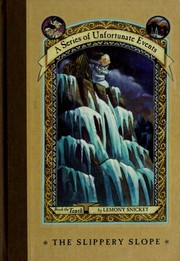
The Slippery Slope
2,678-word summary 12 min read 337 pages in the book
- First published
- 2003
- Publisher
- HarperCollins
- Pages
- 337
- ISBN
- 9780064410137
- Series
- A Series of Unfortunate Events (#10)
Reading options
What's inside (8 sections)
I came back to The Slippery Slope because book nine left the Baudelaires split apart and I could not leave them that way. This is book ten in A Series of Unfortunate Events, first put out in 2003 by HarperCollins, and my hardcover runs 337 pages. Lemony Snicket, the pen name for Daniel Handler, with pictures by Brett Helquist, picks up seconds after The Carnivorous Carnival. Violet and Klaus are tumbling down the Mortmain Mountains in a runaway caravan. Sunny is gone, taken up the mountain by Count Olaf. If you have followed the series this far, you know the pattern of bad guardians and blind adults. Here the mountains strip all that away. It is cold, steep, and mostly empty, and the kids have to think fast with almost nothing.
What I did not expect on reread was how much this one feels like a middle bridge. It answers one big question about the Quagmires, opens up the mystery of V.F.D., and still leaves the sugar bowl and the last safe place hanging. I read it in two sittings, mostly because the middle section in the ruined headquarters slowed me down in a good way. There are codes, strange phrases, a library full of half burned notes, and a lot of talk about what it means to be noble. It is also the book where Sunny says, plainly, I am not a baby. That line hit me harder than any chase.
The Baudelaires are older now in the way trouble makes you older. Violet is still the inventor who ties her hair back when she needs to focus. Klaus is still the reader who remembers what others skim. Sunny, who used to bite and babble, is starting to cook and speak in real sentences. Snicket keeps warning you to stop reading. I ignored him again.
The caravan off the cliff
The opening is pure panic. Violet and Klaus are inside a caravan that broke loose at the end of the last book. It is rolling down the Mortmain Mountains with no brakes and no driver. They have only what the carnival folk left behind. Blankets, some clothes, kitchen scraps, wire, bits of wood.
Violet does what she always does. She looks at materials and builds. She rigs a drag chute from curtains and rope to slow the fall, while Klaus mashes up sticky foods to pour on the tires for grip. Snicket walks through the steps without turning it into a manual. You get the sense of hands shaking, of Klaus slipping on fruit paste, of Violet shouting to wait before they jump.
They stop right at the edge. Then the caravan tips anyway once they step out. So they survive and lose everything at once. I thought that was honest. Most adventure books would let them keep a handy pack. Here they walk up the mountain with thin coats, sore feet, and damp socks.
They decide to go up, not down. Down would be easier and safer. Up is where Olaf took Sunny, up toward Mount Fraught where smoke has been seen. Klaus worries about frost and hunger. Violet worries about Sunny sleeping in a car trunk in the cold. They keep walking. The air gets thinner. The snow starts as flurries and then comes sideways.
This stretch has almost no dialogue for pages. Just breathing, crunching snow, and Snicket pausing to define words like frigid or to remind you that siblings argue when they are scared. My copy made me cold just reading it. I had to put on socks.
Snow gnats and the Snow Scouts
Then come the Snow Gnats, tiny biting insects that swarm in the mountains. The Baudelaires run for cover and find a cave. Inside is a whole troop of Snow Scouts, kids in uniforms on some kind of outdoor trip, led by a man named Bruce. If you remember The Reptile Room, Bruce is the fellow from the Herpetological Society who came to take Uncle Monty snakes away. He is cheerful, clueless in that adult way Snicket loves, and busy organizing songs and badges.
With them is Carmelita Spats. She was the rude, snobby classmate from The Austere Academy who called the Baudelaires cakesniffers and tattled for fun. Here she is set to be crowned Snow Queen, which mostly means she gets to boss others and sing loudly. She has not improved. She brags, she whines, she demands cocoa. The other scouts follow along because that is easier than arguing.
One scout stays masked and quiet. This scout slips Violet and Klaus notes using odd phrases built on the letters V.F.D. Things like very fun day or village of fowl devotees. The Baudelaires know those initials matter. Since book five they have seen V.F.D. on a spyglass, on a film strip, on letters. They do not know what it stands for yet. Is it a group of volunteers, a fire department, a secret club. The masked scout seems to know them and seems scared to be seen talking.
At night the masked scout wakes them. No big speech. Just a tap and a gesture to follow. What follows is one of my favorite passages in the series because it is weird and practical at once. They climb up through a chimney inside the cave, which the scout calls a Vertical Flame Diversion. At the top is a door with a lock that opens only if you answer three questions about literature, called a Vernacularly Fastened Door. Klaus, who has read widely, gets them through. I will not spoil the exact questions here because guessing along is half the fun, but they lean on poetry and basic logic more than deep trivia.
Bruce and the rest sleep on. Carmelita snores. The Baudelaires leave the relative warmth of the cave for freezing stone and wind again. It feels wrong to leave shelter, which is why I trusted the masked scout right away. No child would make that trade unless the reason was strong.
Sunny on Mount Fraught
While Violet and Klaus climb, Sunny is living a different book. She is prisoner on Mount Fraught with Count Olaf, Esme Squalor, and the troupe. She sleeps in a casserole dish inside the car trunk because there is no bed for her. She is put to work cooking for a crowd that insults her food.
Olaf is at his worst here, which is saying a lot. He is cold, hungry for power, and embarrassed that his plans keep failing. Esme is obsessed with what is in, what is out, and whether their camp looks chic. The troupe grumbles. The hook handed man, the bald man, the white faced women, all tired and short tempered.
Sunny cooks anyway. She mashes cold food, tries to season it, carries pots far too big for her. She is maybe three years old in story terms. Snicket never lets you forget how small her hands are. When Olaf complains the breakfast is cold, you want to shout through the page.
Two new villains arrive and the temperature drops further. They are called the man with a beard but no hair, and the woman with hair but no beard. Even Olaf looks nervous around them. They do not shout. They speak softly and everyone obeys. They tell Olaf they have burned down the nearby V.F.D. headquarters. They hand him a file called the Snicket File, missing its last page. They hand Esme a green tube called a Verdant Flammable Device, which can make bright green smoke when lit.
Sunny notices all of this while serving. She pockets bits of information the way Klaus pockets facts from books. She also gets hold of a Verdant Flammable Device herself and lights it, hoping her siblings will see green smoke against white snow. It is a brave move. Smoke gives away position. It also says I am still here.
I found these chapters hard to read because Sunny is alone. In earlier books the three faced trouble together. Here she has no translator, no big sister to tie back her hair, no brother to read instructions. She talks to herself, practices words, and tries to stay useful so she will not be hurt. When she burns the food a little on purpose to make more smoke, I felt proud and sick at the same time.
Quigley and the burned headquarters
The masked scout turns out to be Quigley Quagmire. That reveal stopped me cold the first time. Duncan and Isadora Quagmire, the triplets from the academy books, believed their brother Quigley died in the fire that killed their parents. He did not. His mother hid him in an underground passage during the fire. He came out far from home and ended up near Uncle Monty house after the Baudelaires had already left. There he met Jacques Snicket, who told him a little about V.F.D. and pointed him toward the mountains.
Quigley is kind, careful, and a little formal from months of hiding and reading. He is not a copy of Duncan or Isadora. He draws maps, keeps a commonplace book, and tries to finish tasks. He tells Violet and Klaus that the V.F.D. headquarters in the valley was a real place, full of books and tools, and that it is now ash. He leads them there anyway because ruins still hold clues.
The headquarters chapters are quiet after so much wind. Burned shelves, cracked lenses, scorched paper. Klaus finds a code book page that explains Verbal Fridge Dialogue, a way to hide messages in the contents of a refrigerator. It sounds silly until you see it work. By listing what food is left and what is missing, volunteers could pass meeting times and places. From a fridge still standing in the wreck, Klaus pieces together that there is a gathering at the last safe place on Thursday. He does not know where that is yet. Neither do I, fully, even after later books. But the idea that burnt soup cans can point to safety feels right for this series.
Violet and Quigley talk while Klaus reads. They compare notes on inventions and maps. Snicket skips describing one private moment on the ledge later, saying he wants to give them privacy. Readers have argued about whether they kiss. I think they almost do, or do briefly, and Snicket steps back out of respect. Violet has never had a friend her own age who builds and sketches like she does. Quigley has been alone a long time. Their ease feels earned, not forced.
The three see green smoke from above. Sunny smoke. Violet knows what it means at once. My sister is up there and she needs us to climb.
The frozen waterfall and the pit
Violet builds a way up a frozen waterfall using what is on hand. A ukulele, forks, rope, and other scraps become climbing tools. Quigley helps test each joint. Klaus stays below to keep reading because someone has to learn where to go next. The climb is slow and scary. Snicket describes the sound of ice, the spray of melt, the ache in fingers.
On a narrow ledge they find Sunny. She is thin, dirty, and determined. Violet wants to carry her straight down. Sunny refuses. She wants to stay close to Olaf a little longer to spy and to help from inside. It is the first time she speaks as someone making her own plan. She says she is not a baby. Violet cries a little. Quigley looks away to give them space. In the end Violet agrees, though it hurts. They head back down to Klaus with a promise to return.
Back in the library ruins, the four make a plan that shows how much they have changed. They will dig a pit in the snow, lure Esme toward it with a Verdant Flammable Device as bait, and trade her for Sunny. It is basically kidnapping, and they know it. They dig all night, hands blistered, arguing in whispers about whether good people can do a bad thing for a good reason.
The next morning they cannot go through with it. When Esme comes down the slope on a toboggan, chasing the green smoke signal they set, they call out and tell her to go around. She is furious, vain, still shouting about outfits and parties. But she lives. The Baudelaires stand in masks, shivering, watching their trap sit empty. I respected Snicket for letting them fail at being ruthless. Many series would let the heroes cross the line and then forgive them quickly. Here they step back before they cross it.
They take the toboggan Esme left behind. They put on masks to hide faces. They head back up the stream toward Olaf camp, planning a trade of information for Sunny. Klaus will pretend to be a volunteer with news about the sugar bowl, a mysterious object everyone seems to want and no one will explain. He hopes Olaf greed will buy time.
Eagles, escape and what bothered me
The ending piles on fast. Olaf and Esme argue about who is in charge. The Snow Scouts arrive for a ceremony, with Carmelita ready to be crowned False Spring Queen. She is thrilled to join Olaf troupe when invited, which tells you everything about her. The Baudelaires try to warn Bruce and the kids. Bruce smiles and talks about badges. Then eagles come down, huge trained birds, and snatch the scouts in a net and carry them off. It is absurd and terrifying. Snicket plays it straight, which makes it worse.
Olaf, angry that his hostage trade is slipping, orders Sunny thrown off the mountain. This is where his troupe breaks. The white faced women, who have followed him for books, refuse. They quit on the spot, even knowing what it costs to defy him. Olaf tries to do it himself. He looks in the casserole dish where Sunny is supposed to be sleeping. She is not there. She is hiding behind the car, as she planned with her siblings. The Baudelaires and Quigley pile onto the toboggan and push off down the Stricken Stream.
The ice is breaking. The frozen waterfall cracks and crashes behind them. The force splits the party. Quigley ends up on a separate raft, holding up his notebook, shouting. The Baudelaires cling together, soaked and freezing, heading toward whatever the last safe place turns out to be. No hug, no rest, no hot meal. Just motion.
So who should read this. If you like the early books for their cozy gothic houses and libraries, know this one is colder and more exposed. There are fewer jokes about real estate and more about frostbite, codes, and strange cafeteria food. Kids around nine to twelve who enjoy puzzles will love the V.F.D. phrases and the fridge code. Readers who need villains punished right away may get frustrated, because Olaf loses scouts and helpers but still walks free.
A few things nagged me. The middle sags a bit in the headquarters when Klaus reads and Violet fiddles and not much moves. Snicket repeats some warnings about choices and nobility until the point lands a little too hard. Carmelita is funny but very broad, almost a cartoon next to Quigley quiet grief. And the eagles, while memorable, come out of nowhere if you have not tracked V.F.D. animals closely.
Still, I think this is where the series grows up without losing its voice. The Baudelaires choose not to kidnap Esme. Sunny chooses to stay in danger to help. Violet lets her sister make that call. Those are adult choices made by children who should not have to make them. The snow, the smoke, the burned books, all of it points to the same idea Snicket has circled since book one. The world will not keep you safe. Friends and careful work might help you last until Thursday. I closed my 337 page HarperCollins copy feeling chilled and unwilling to stop, which is exactly why I went straight to The Grim Grotto next.
FAQ
Is Quigley Quagmire really alive in The Slippery Slope?
No. Quigley survived because his mother hid him in an underground passage during the fire. He met Jacques Snicket later and traveled to the Mortmain Mountains to find his siblings.
What is a Verdant Flammable Device?
A Verdant Flammable Device is a green tube that makes bright green smoke when lit. Sunny uses one to signal her siblings, and the Baudelaires later use one as bait.
Is The Slippery Slope good for middle grade readers?
Yes, for readers around nine and up who enjoy gothic humor, codes and brave siblings. It is book ten, so start with The Bad Beginning if you are new to the Baudelaires.
Similar books
More from A Series of Unfortunate Events first, then related titles.
The Bad Beginning
After a fire kills their parents, the Baudelaire orphans are sent to Count Olaf, who plots to steal their fortune.
2,759-word summary · 12 min read
The Reptile Room
Baudelaires find kind Uncle Monty until Olaf returns as assistant Stephano.
2,005-word summary · 9 min read
The Wide Window
The Baudelaires brave Aunt Josephine, Captain Sham and leech-filled Lake Lachrymose.
2,459-word summary · 11 min read
The Miserable Mill
Sent to work at the Lucky Smells Lumbermill, the Baudelaires face harsh labor, strange hypnotism, and a familiar villain in a new disguise.
2,662-word summary · 12 min read
The Austere Academy
The Baudelaires endure Prufrock Prep, meet the Quagmires, and face Olaf as Coach Genghis in book five.
2,175-word summary · 10 min read
The Ersatz Elevator
Orphans climb endless stairs while a stylish guardian sides with Olaf.
1,961-word summary · 9 min read
The Vile Village
Three orphans raised by a rule bound village find hidden friends and a sky escape in book seven.
2,971-word summary · 13 min read
The Hostile Hospital
The Baudelaires hide in half-built Heimlich Hospital, uncover a thirteen-page file hinting a parent survived, and flee Olaf's surgery trap through fire.
2,658-word summary · 12 min read
The Carnivorous Carnival
Baudelaires hide as carnival freaks to find V.F.D. clues, facing lions, Olaf, and a fateful cliff split.
2,027-word summary · 9 min read
The Grim Grotto
Snicket eleventh Baudelaire book, Sept 2004 HarperCollins, 323 pages: the Queequeg crew, Gorgonian Grotto fungus, Fiona choice, and Sunny wasabi cure that…
2,789-word summary · 12 min read
The Penultimate Peril
Baudelaires as concierges in a hotel sort friends from foes before the end.
2,234-word summary · 10 min read
The End
Baudelaires wash on an island where others decide what safe means.
2,320-word summary · 10 min read

Heist Society
A teenage art thief gets expelled from boarding school, then has two weeks to steal five paintings back from a London museum and clear her father.
2,781-word summary · 12 min read
Hoot
Roy tracks a shoeless boy to save burrowing owls from a pancake house.
2,290-word summary · 10 min read
An Absolutely Remarkable Thing
Hank Green's An Absolutely Remarkable Thing follows artist April May after she and Andy film a giant Carl robot in New York that appears in cities worldwide…
2,699-word summary · 12 min read
The Boxcar Children
Four Alden orphans run from a bakery, settle in an old boxcar in the woods, and learn to live on work, berries, and each other.
2,892-word summary · 13 min read
The Mysterious Benedict Society
Four gifted children pass strange tests and go undercover at a school hiding a mind control machine.
2,130-word summary · 9 min read
Pippi Longstocking
A super-strong nine-year-old lives alone in Villa Villekulla, upending school, circus and town rules with neighbors Tommy and Annika.
3,115-word summary · 14 min read
From the Mixed-Up Files of Mrs. Basil E. Frankweiler
Claudia and Jamie run away to the Met, chase whether a 225 dollar Angel is a Michelangelo, and trade secrets with Mrs. Frankweiler.
2,774-word summary · 12 min read
James and the Giant Peach
Lonely James escapes two cruel aunts inside a giant peach with huge insect friends, rolling to the sea and floating on gulls to New York City.
2,384-word summary · 11 min read

The Adventures of Tom Sawyer
Tom Sawyer skips school, chases Becky Thatcher and sees Injun Joe kill in a graveyard on the Mississippi.
3,439-word summary · 15 min read

Holes
Stanley Yelnats digs holes at Camp Green Lake while a broken promise, a buried outlaw, and a boy named Zero close in around him.
2,456-word summary · 11 min read

Size 12 Is Not Fat
Former teen pop star Heather Wells investigates two dorm elevator deaths while juggling her ex, her crush, and a size-12 wardrobe.
2,805-word summary · 12 min read

First Grave on the Right
Charley Davidson is a private investigator in Albuquerque and the grim reaper. When three murdered lawyers come back as ghosts, her two jobs collide.
2,770-word summary · 12 min read
Bone, Vol. 1: Out from Boneville
Three cartoon cousins are run out of Boneville, separated by locusts, and dropped into a valley where rat creatures and an old grudge are waiting.
2,155-word summary · 10 min read

The Icebound Land
Captured and enslaved in Skandia, Will fights a drug that erases him while Halt and Horace cut a bloody road through Gallica to bring him home.
2,088-word summary · 9 min read

The Field Guide
Three siblings move into a creepy Maine estate, anger a brownie, and find a forbidden guide to the fairy world in the first Spiderwick book.
2,033-word summary · 9 min read

The Beach
A young backpacker follows a dead man's map to a hidden island community, then discovers what the people there are willing to do to keep it secret.
2,067-word summary · 9 min read

Amelia Bedelia
A literal-minded housekeeper follows her employer's list to disastrous and funny effect in the 1963 picture book that made wordplay a children's staple.
2,038-word summary · 9 min read

Hard Luck
Rowley has a girlfriend, so Greg turns to a Magic 8 Ball, a family Easter hunt and the school yearbook for answers.
2,586-word summary · 11 min read