
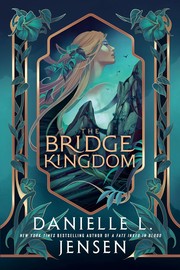
The Bridge Kingdom
2,044-word summary 9 min read 448 pages in the book
- First published
- 2018
- Publisher
- Del Rey
- Pages
- 448
- ISBN
- 9780593975183
- Series
- The Bridge Kingdom (#1)
Reading options
What's inside (8 sections)
- Picking up a romantasy with an actual political plot
- Lara of Maridrina and the sisters raised as weapons
- Aren, Ithicana, and the bridge that feeds an island
- Marriage, spying, and falling for the wrong king
- Betrayal, invasion, and the chapters I could not put down
- What shines, what strains, and how to read the series
- Key takeaways
- FAQ
Picking up a romantasy with an actual political plot
I picked up The Bridge Kingdom because I wanted romance with stakes beyond banter, and a bookseller said, This one has a bridge you will dream about. She was right. Danielle L. Jensen first published it in 2018, and the edition most stores carry now is the Del Rey 2024 paperback, 448 pages, ISBN 9780593975183, book one in the series. I read it on a train and missed my stop, because the opening chapters drop you into a mission with no safety net.
The premise is clean and brutal. The island kingdom of Ithicana controls the only bridge across a treacherous strait, and every ship must pay to pass. That toll made Ithicana rich and hated. Maridrina, a dry southern kingdom, has starved under that tax for years. King Silvio of Maridrina trains his daughter Lara as a weapon. She learns languages, poisons, blades, seduction, and Ithican customs, alongside her many half sisters, all raised to infiltrate. The plan is simple. Marry Lara to King Aren of Ithicana, learn the bridge secrets, then open the way for Maridrina to conquer.
Lara is not a soft princess. She can kill with a hidden knife, swim rough water, lie in four dialects. She arrives in Ithicana expecting a monster king and finds a young man who jokes with his guards, mends nets with fishermen, and knows every soldier by name. That gap between training and reality is the whole book. I loved hating her mission even as I admired her skill.
Lara of Maridrina and the sisters raised as weapons
Lara grew up in a compound with her sisters, daughters of different mothers, all taught by the same spymaster. Her closest sister bond is with her full sister? Actually her fiercest loyalty is to her sisters as a group, especially the younger ones she promised to protect. Their father visits to test them, not to hug them. He pits them against each other. Who can pick a lock fastest. Who can recite Ithican tide charts. Who can endure hunger longest. Lara wins often, which earns her the marriage slot and the title of queen, but also isolates her.
Jensen gives Lara specific memories that make her feel real. Scorpions in boots in the desert. Dates stolen from kitchens. A tutor who taught her Ithican ballads and was punished for kindness. A promise whispered on a rooftop. If I succeed, the rest of you will be free. That promise drives her early choices. Every report she smuggles to Maridrina is, in her mind, food for her sisters.
Her training includes seduction, and the book is frank about it. Lara was taught to use beauty as a tool, which left her both confident and wary. She knows how to enter a room, how to lower her voice, how to make a man feel chosen. She hates that her value was set by her father. When she meets Aren, she tries those tricks and finds they work less than honesty. That confuses her. If he is not fooled by performance, who is she without it.
My fair criticism is that Maridrina itself stays thin in book one. We get heat, sand, a cruel king, hungry markets, but little of daily life beyond the training house. Silvio feels more like a symbol of tyranny than a ruler with advisors and limits. I wanted one scene of Lara in a Maridrinian market as a teen, hearing ordinary people, to understand what she thinks she is saving. The lack makes her early loyalty feel programmed rather than chosen, which may be the point, but it still left me wanting texture.
Aren, Ithicana, and the bridge that feeds an island
Ithicana stole my heart. It is a chain of jungle islands linked by a massive bridge, with watchtowers, pulleys, and channels that only locals can read. Storms smash careless ships. Reefs wait. The Ithicani are lean, tattooed, practical people who farm terraces, fish, and guard. They revere the bridge because it is both wealth and target. Every child learns to swim, climb, and keep secrets.
Aren is twentyish, newly crowned after his parents deaths, carrying grief and duty. His sister Ahnna is his fiercest defender and funniest critic. His best guard Jor is loyal to the bone. His commander Taryn runs intelligence with sharp eyes. Aren jokes, but he notices everything. He knows Lara is hiding something from their first dinner, yet he chooses to court her openly. He shows her the lower markets, the storm shelters, the bridge mechanisms from a distance. He tells her Ithicana cannot feed itself without the tolls, a fact Lara was never taught.
Their early marriage scenes are my favorites. Awkward breakfasts. Language lessons where Lara corrects his Maridrinian and he laughs. A walk across a windy span where he ties her cloak and she realizes his hands are calloused like a sailor. A council meeting where she watches him refuse a bribe that would have filled coffers but betrayed an ally. Step by step, Lara sees a king, not a tyrant.
Jensen writes action clearly. An assassination attempt in a corridor. A storm crossing where Lara must trust Ithican ropes. A training yard bout where Ahnna tests Lara with wooden blades and Lara almost reveals elite Maridrinian forms. Aren leads by working beside his people, and that habit slowly rewrites what Lara believes about power. It is not subtle, but it is satisfying. I found myself rooting for Ithicana to keep its bridge even though I started the book expecting to root for Lara to destroy it.
Ithicana does not love the bridge because it is rich, Ahnna tells Lara, it loves the bridge because it is alive.
Marriage, spying, and falling for the wrong king
The middle of the book is a tense double life. By day Lara is queen, learning names, healing small rifts, charming elders. By night she maps guard rotations, copies tide tables, and leaves coded messages in dead drops for her Maridrinian handler. Every chapter tightens the knot. The more she likes Aren, the more her reports feel like betrayal. The more she reports, the more Maridrina moves ships into place.
Jensen handles the romance with patience. Lara and Aren do not fall instantly. They spar, they misunderstand, they apologize. Aren has been burned before and fears loving a spy. Lara fears softness because softness got her sisters punished. Their first kiss is not at a ball but after an argument about grain stores, which felt right. Their later love scenes are explicit but focused on consent and talk. Aren asks. Lara answers honestly for the first time in her life. That honesty scares her more than any blade.
The spy plot has great specifics. Lara uses a hollow hairpin for messages, lemon juice for ink, a laundry line signal. She meets a contact in a cove during a festival. She learns that Ithicana changes its bridge codes with the moon and that only Aren and a few others know the full mechanism. She steals a partial map and realizes Maridrina will kill thousands if it attacks during storm season. Her handler, a cold officer loyal to Silvio, tells her sisters will suffer if she hesitates. That threat freezes her.
My criticism here is pacing. The middle repeats the pattern of near discovery followed by rescue a few times too many. Lara is almost caught by Taryn, saved by a bell. Almost caught by Jor, saved by Ahnna's joke. After the third close call I wanted either capture or a bolder move. Still, the emotional build works. When Lara chooses to warn Aren about one small raid, saving Ithican lives but risking her sisters, I felt the cost. She is no longer just Maridrina's knife. She is becoming Ithicana's queen, and she hates herself for wanting it.
Betrayal, invasion, and the chapters I could not put down
The last hundred pages move fast and hurt. Lara's full betrayal is exposed. She gives Maridrina the key detail it needs, the timing of the bridge guard change during a storm, believing she can still protect both sides. She cannot. Maridrinian forces, aided by turncoat allies, storm the bridge. Ithican soldiers die. Jor is wounded. Ahnna is captured or separated in the chaos. Aren learns his wife is the spy he feared, and his grief turns to ice.
Jensen does not flinch. Lara watches ships she summoned burn villages she learned to love. She tries to stop the slaughter, killing a Maridrinian officer to save an Ithican child, which marks her as traitor to both sides. Aren confronts her on the bridge in rain, sword in hand, and chooses not to kill her but to imprison her. That mercy feels worse than execution to Lara, because she must live inside what she did.
There are standout action beats. A fight on a slick span with wind tearing cloaks. A tower collapse. A desperate swim through a channel with a rope around the waist. Lara using her sisters code against her own handler to buy minutes. Ahnna shouting orders while bleeding from a scalp wound. Aren carrying a wounded guard while shouting for retreat. The geography stays clear, which is rare in big battles. I could picture where everyone stood.
Spoilers are necessary to be honest about the ending. Lara escapes or is released into Maridrinian hands, and Aren vows to never trust her again. Her father praises her as if she were a dog who fetched well, which breaks her final illusion. She realizes Silvio never meant to free her sisters. He meant to use them all. The book ends with Lara alone between kingdoms, hated by Ithicana, owned by Maridrina, determined to fix what she broke. It is a proper tragic close that demands book two, The Traitor Queen.
What shines, what strains, and how to read the series
What shines is world building with purpose. The bridge is not decoration. It shapes diet, trade, war, and manners. Ithicana feels like a place that could exist, with engineers, fishermen, and spies all caring about tides. Aren and Ahnna feel like siblings, teasing and guarding in equal measure. Lara is a strong, flawed lead whose skills and guilt both feel specific. The romance earns its heat because trust is the real stakes, not just attraction.
What strains is moral framing. Lara commits treason that kills people who trusted her, yet the narration keeps her sympathetic throughout. Some readers will find Aren forgives too quickly in later books or that Lara excuses herself too easily here. I also wanted more of the sisters in present action, not just memory. They motivated everything, but they appear mostly in flashbacks. A few letters or smuggled notes from them during the middle would have raised pressure and made Silvio's threat more concrete.
Who should read it. If you like From Blood and Ash style romance but want cleaner politics and a competent heroine who actually spies, start here. If you dislike explicit scenes or betrayal arcs where the heroine causes real harm, know those are central. Read with book two nearby, because book one ends on pain. I finished angry at Lara, worried for Aren, and fond of Ahnna and Jor. That mix kept me thinking for days about tolls, hunger, and what a queen owes the people who did not choose her. For a 448 page Del Rey edition, it moves quickly, and the map in front helped me track islands during the battle. I will keep going, mostly for Lara's attempt to earn back a bridge she helped burn.
I kept thinking about the toll system after finishing, because Jensen makes it feel like a character. Every crossing pays, every delay costs food somewhere else, every storm season tests whether Ithicana can hold without cruelty. That economic pressure explains why Aren cannot simply forgive, and why Lara cannot simply apologize. Trust has to be rebuilt in shipments and guard shifts, not speeches. It is a useful lens for romance too. Love here is logistics as much as feeling, showing up, sharing maps, standing watch. That practical streak is why the book stayed with me beyond the kisses and battles.
FAQ
Should I read the series in order?
Start here, then The Traitor Queen. Book one ends on pain and needs book two nearby.
Is betrayal central or a twist?
Yes in language and threat, with explicit scenes and a heroine who causes real harm.
Similar books
More from The Bridge Kingdom first, then related titles.
The Traitor Queen
Exiled Lara returns to free Aren and break her father hold.
2,328-word summary · 10 min read
A Fate Inked in Blood
In Norse-inspired Skaland, a fish gutter hiding a goddess's blood is claimed by a jarl, bound by oath, and guarded by the son she cannot want.
1,971-word summary · 9 min read

Magic Burns
A magic flare hits Atlanta, and mercenary Kate Daniels must recover stolen maps, find a missing witch, and keep a teenage girl alive while Celtic gods try to…
2,021-word summary · 9 min read
Blood Bonds
Oleander is chained in a Resistance camp, and her five Bonds have to find her before Silas Davies finishes what he started in this third Bonds that Tie book.
2,018-word summary · 9 min read

The Siren
Saved from a shipwreck in 1930, Kahlen becomes a siren who sings men to their deaths for the Ocean, until a boy in a college library makes her want a life she…
2,369-word summary · 11 min read

The Rose & the Dagger
Shahrzad is pulled from her Caliph husband and left in a desert camp of rebels, needing to break his curse and end a war before it ends her.
2,520-word summary · 11 min read

We Hunt the Flame
In a fractured Arabia-inspired world, a disguised huntress and a prince-assassin race to find a magic-restoring book and confront an ancient evil.
2,195-word summary · 10 min read

Blue Moon
Ever Bloom tries to save her immortal boyfriend, Damen, from a mysterious illness while a new student named Roman quietly takes control of her school and her…
1,998-word summary · 9 min read
An Enchantment of Ravens
Isobel, a mortal artist in the fairy town of Whimsy, paints a portrait of the autumn prince and falls in love with him, breaking the laws of her craft.
2,087-word summary · 9 min read
Savage Bonds
Oli's deadly gift is out in the open, her Bond runs the show, and the Resistance is closer than ever in the second Bonds that Tie novel.
2,431-word summary · 11 min read

The Indigo Spell
Sydney Sage hunts an aging witch, learns forbidden magic, and finally admits she loves Adrian, while the Alchemist tattoo on her cheek may be controlling her.
2,604-word summary · 12 min read
A Deal with the Elf King
A village herbalist is exposed as the hidden Human Queen, married to a cold elf king, and given three months to save his dying kingdom or be bound to it…
2,094-word summary · 9 min read

When the Moon Hatched
An assassin who hears air takes a job that throws her to dragons and a hunter.
2,083-word summary · 9 min read

A Winter's Promise
Ophelia reads objects and is sent to marry Thorn on a cold ark.
2,502-word summary · 11 min read
Broken Bonds
Oleander returns after five years on the run to face the five men she is bonded to, in J. Bree's 2021 opener of resentment, training, and slow trust.
2,582-word summary · 11 min read
A Light in the Flame
Held by Nyktos in the Shadowlands, Sera faces trials, Kolis and the Rot while broken trust is tested.
2,577-word summary · 11 min read
The Rules of Magic
Franny, Jet, and Vincent Owens test strict family rules and a love curse in 1960s Manhattan and Massachusetts in Alice Hoffman's warm prequel about love, loss,…
2,686-word summary · 12 min read

The Golden Lily
Sydney Sage guards Jill at Amberwood Prep in Palm Springs, studies forbidden magic, favors Adrian over Brayden, and faces Alchemist custody in this second…
2,988-word summary · 13 min read
Daughter of No Worlds
A former slave with rare magic hires exiled warrior Max to train her for a daring rescue, sparking slow burn love and wider war in this big 520-page fantasy…
2,529-word summary · 11 min read
Strange the Dreamer
Orphan librarian Lazlo Strange joins a quest to the lost city of Weep, where blue-skinned godspawn haunt dreams.
2,221-word summary · 10 min read
Emily Wilde's Encyclopaedia of Faeries
Grumpy scholar Emily studies Hidden Ones in snowy Hrafnsvik with rival Bambleby.
2,153-word summary · 10 min read
Blood & Honey
Married witch Lou and hunter Reid flee church and coven while dark magic tempts Lou to save them.
2,280-word summary · 10 min read
The Young Elites
Adelina survives fever and execution to join a secret group of gifted malfettos plotting against the queen of Kenettra.
3,310-word summary · 15 min read
Sorcery of Thorns
An apprentice librarian framed for sabotage joins a sorcerer and his demon servant to stop attacks on the Great Libraries.
2,926-word summary · 13 min read

Agnes Aubert's Mystical Cat Shelter
A 1920s Montreal cat rescuer rents above a disgraced dark magician and must team up with him when a glamorous rival threatens both.
2,227-word summary · 10 min read
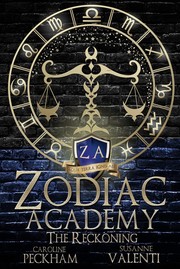
The Reckoning
Twin heirs survive trials and hazing at Zodiac Academy while the heirs start to split.
1,984-word summary · 9 min read
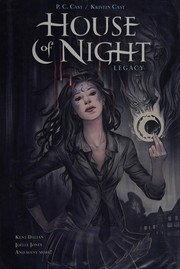
Burned
Zoey's soul hides in the Otherworld while Stark must die to fetch her and Stevie Rae burns secrets.
2,074-word summary · 9 min read

Poison Study
Sentenced to die, Yelena becomes the Commander's poison taster and learns survival in Ixia has a daily price.
2,501-word summary · 11 min read
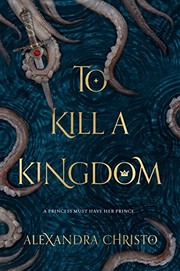
To Kill a Kingdom
A siren princess turned human must steal a siren-hunting prince's heart to win back the sea.
2,248-word summary · 10 min read
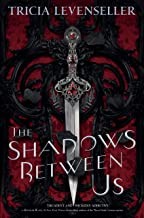
The Shadows Between Us
Alessandra plans to woo the Shadow King, marry him, and kill him for his throne, then finds someone else wants him dead first.
2,571-word summary · 11 min read