
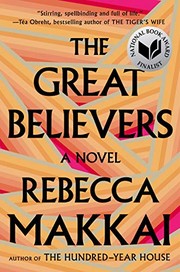
The Great Believers
2,742-word summary 12 min read 432 pages in the book
- First published
- 2018
- Publisher
- Viking
- Pages
- 432
- ISBN
- 9780735223523
Reading options
What's inside (8 sections)
I picked this one up because a friend kept telling me it wrecked her in the best way, and then she added, almost as an apology, that it is long. She was right on both counts. The Viking edition from 2018 runs 432 pages, and it moves between two times that feel very far apart until they start to rhyme. One thread follows a group of friends in Chicago in the 1980s as AIDS moves through their lives. The other follows one survivor of that group in Paris in 2015 as she tries to find her adult daughter. I went in expecting a sad book. What I did not expect was how much of it would be about work, rent, photos, paintings, and who gets to keep what after people die.
Chicago in 1985 after Nico dies
The book opens around a death. Nico Marcus, a young man in his early twenties, has died, and his friends gather for a kind of second memorial because the formal funeral did not really belong to them. Yale Tishman is there with his partner Charlie. Fiona is there too. She is Nico's younger sister, still in her early twenties herself, and she has basically grown up inside this circle of gay men in Boystown who treat her like a sister and a mascot and sometimes like a mother.
Richard Campo hosts the gathering. He is a photographer, and at this point he is already documenting the group without quite knowing that his photos will become a record of a vanishing world. Terrence is there, trying to hold himself together. He was Nico's partner, and now he is the widower in a time when that word was rarely offered to men like him. Teddy is there, good looking and restless, drifting through parties. Asher is loud and political. And Julian is there, very young and funny, an aspiring actor who wants to be loved by everyone in the room.
Makkai spends time on the small mechanics of this night. People bring food that no one eats. Richard puts on a slideshow of Nico. Yale gets overwhelmed and steps into another room to be alone for a minute. That minute gets misread. Charlie hears a rumor that Yale went off with Teddy, and jealousy flares fast. It matches how these friendships worked. Everyone knew everything about each other, and still got things wrong.
You should know going in that Nico stays present even though he is gone from the first pages. The others remember him in flashes. Fiona remembers growing up admiring him and resenting how easily he left their parents' world for this chosen family. Yale remembers him as the connective tissue. Terrence remembers the apartment they shared and the routines that now have no partner. The effect is cumulative. By the time you learn the details of Nico's illness, you already miss him.
If I have the order right, this opening also sets the pattern for the whole Chicago thread. Joy and dread sit next to each other. A joke gets a laugh, then someone mentions a cough or a test result or a friend who has stopped coming out. No one uses big speeches. They just keep showing up for each other while the ground shifts.
Yale at the Brigg and Nora's offer
Yale works in development for the Brigg Gallery at Northwestern University. His job is to raise money and build a permanent collection for a young gallery that wants to matter. He writes letters. He takes donors to lunch. He tries to sound confident about art he loves to people who mostly care about prestige.
Then Fiona helps open a door that could change his career. Her great aunt Nora, an elderly woman living up north in Door County, owns a collection of 1920s Paris work that almost no one has seen. We are talking sketches and paintings connected to that postwar Paris scene, pieces by known names and pieces by people who never got a fair shot. Nora knew some of those artists when she was young. One was a lover whose career never took off, and she has carried his work and his memory for decades.
Nora writes to Yale. She sends photos. Yale and his boss Bill get excited because the work looks real and important, the kind of gift that would put the Brigg on the map. Yale brings along Roman, his graduate intern, to help with research and logistics. They drive up to see the work in person, walk through a house crowded with paper and frames, and try to stay professional while feeling stunned.
What works here is how procedural Makkai lets it be, in a good way. There are questions about provenance. Frank, Nora's son, thinks his mother should not give the family valuables away. A trustee type, Chuck Donovan, tries to block the gift. Yale has to learn when to push and when to wait. He listens to Nora. He does not treat her like a sweet old lady. He treats her like a collector with judgment.
The parallel is quiet but clear. Nora watched a generation of young men go to war in Europe and then watched the survivors try to keep the dead visible through art. Yale is watching something similar happen around him, though he would not put it that way yet. Both of them are asking who keeps the work when the maker is gone, and what a museum owes the living.
For a while this plot gives the book air. Drives and awkward house visits break up the memorial scenes, and it rounds out Yale. He is a grieving friend and a striver who wants to do good work and be recognized for it.
The circle breaks apart
Then the middle of the Chicago story turns hard. Friends start getting sick in a way that can no longer be explained away. Terrence, who had seemed steady, declines. Others in the wider group get diagnoses or disappear from parties. Yale tries to keep track of who needs rides to the doctor, who needs food, who needs someone to sit through the night.
His own life frays at the same time. Charlie, who runs a gay paper called Out Loud Chicago, tests positive after an affair. The affair was with Julian, on the very night of Nico's memorial, when Charlie thought Yale had slipped away with Teddy. Charlie's jealousy and shame come out in the worst order. He accuses, then confesses, then wants comfort. Yale feels sick with fear about his own status and furious at being lied to. He moves out.
Yale couches it for a while, or rather he couch surfs. He stays with Terrence for a stretch, which is tender and awful because both of them are grieving Nico in different ways. He stays with friends like Cecily, then ends up in a spare place in the Marina Towers. He keeps going to work and keeps calling about Nora's paintings while sleeping on other people's sheets.
Roman becomes more important here than I expected. At first he reads as comic relief, eager and a little slick. Later Yale gets involved with him, partly from loneliness and partly from wanting to feel chosen after Charlie's betrayal. From what I could piece together, it is through Roman that Yale is exposed to the virus. Makkai does not stage this as punishment. She stages it as bad luck inside a period when information was thin and fear made people careless and brave by turns.
Julian keeps popping up at the edges. He is younger than the rest, still cracking jokes when rooms go quiet. Terrence tries to be generous even as his health fails. Fiona hovers, cooking and cleaning, making herself useful because she does not know what else to do. She is the straight younger sister who can walk into hospitals in a way her brother's lovers sometimes cannot, and she uses that access hard.
There is a passage where Yale lists, in his head, the ordinary future moments his friends will miss. Weddings that will not happen. Apartments they will never rent. I thought about that list for days. Makkai does not surround it with commentary. She lets it sit.
By the early 1990s in the book's timeline, the losses have piled past counting. Yale's health turns. The Nora gift, which once felt like his big break, becomes a promise he wants to keep before he runs out of time.
Paris in 2015 when Fiona looks for Claire
Thirty years later Fiona is in Paris. She is in her fifties now, divorced, tired in a way sleep does not fix. Her daughter Claire, grown and angry, has cut contact after falling in with a controlling boyfriend and a fringe group that reads, to Fiona, like a cult. A private investigator picks up a trail. Claire may be in Paris with the boyfriend. Fiona flies over with a blurry photo and a phone that keeps dying.
She stays with Richard Campo, who now lives on the Ile Saint Louis with his much younger partner Serge. Richard is famous by this point, with a big show coming up at the Centre Pompidou built around his early Chicago photos. Serge manages a lot of it. A stranger has just landed in their guest room during the busiest week of their year.
Fiona's days take on a pattern. She walks. She waits for calls from the investigator. She looks for Claire in cafes and outside apartment buildings. She meets Jake, an American journalist, and falls into a light affair that is more about company than passion. At night she replays Claire's childhood and asks where she went wrong.
Makkai is careful with Claire. Through Fiona's memories we see a girl raised inside a house crowded with ghosts. Fiona told stories about Yale and Nico and the others at the dinner table. Claire grew up hearing about dead men she never met as if they were siblings. When Claire finds a boyfriend who offers a clean break and a group that offers clear rules, she takes it.
The Paris chapters also bring back faces you assumed were gone. The biggest shock in the book was Julian's return. Fiona runs into him alive, older, living in Paris. He tells her, in his sideways joking way, that he held on until the better drugs arrived. It is one of the strongest scenes in the book because no one tries to make it mean too much.
The search itself moves in fits. A sighting. A wrong address. A text that goes unanswered. Kurt, the boyfriend, hovers at the edge of the story, polite in a way that reads as control. Fiona has to decide how far to push without driving Claire further away.
Late in this thread, outside events intrude. The 2015 attacks in Paris happen while Fiona is there, and the city locks down in fear. Phones fail. Plans cancel. For Fiona, who already lost one world to sudden death, the echo is almost unbearable. They meet briefly at the museum shop during Richard's show preview, and the conversation is raw. Claire says she grew up in the shadow of Yale's death and the whole lost circle. Whether they can build something new after that is left open on purpose.
Art, photos, and who keeps the dead visible
What ties the two times together is not plot mechanics so much as objects. Paintings. Sketches. Prints on a gallery wall. Nora's collection is the clearest example. She kept work by people the art world forgot, plus work by famous names from when they were young. She wants the Brigg to house it so students and strangers can see it. Frank wants to keep it in the family or sell it. Yale wants to honor Nora's judgment and give those artists a second chance at attention.
Richard's photos do similar work for the Chicago group. In the 1980s he shot parties and protests and lovers on couches. In 2015 those images are about to hang in a major museum. Fiona walks through the preview and sees her younger self beside people who died decades ago. Strangers will soon walk through and see style and composition. She sees in jokes and last summers.
The book asks what a keeper owes the kept. Nora puts it in plain terms when she talks to Yale about memory as duty. If you are the one who remembers, letting go can feel like a second death. Fiona kept scrapbooks and stories for Claire, thinking she was passing on love. Claire received it as weight. Richard kept negatives thinking he was making art. Decades later he learns he was also making evidence.
This thread holds, though it sometimes gets spelled out a little too neatly. Characters say the quiet part aloud about legacy and haunted cities. Once or twice I wished Makkai had trusted the objects to do the talking. A painting on a wall, a photo from 1986, a name on a checklist. That is enough.
Still, the art plot earns its place. Without it, the book would be only loss. With it, the book can show care as action, cataloging and framing, fundraising calls, arguments with a board, one more drive back for a last look. These chores give Yale dignity when his body and his love life fall apart.
What works and where I got impatient
The Chicago chapters are the reason to read this. Yale is specific and believable, anxious about money, proud of his taste, loyal past the point of sense. Fiona in her twenties is brisk and funny, the kind of sister who will fight a nurse for you and then lecture you on the ride home. Nico, even in absence, stays warm. Terrence holds dignity without being turned into a saint. Julian sounds alive on the page in a way that makes his later reappearance hit hard.
Makkai writes group scenes well. Parties feel crowded. Conversations overlap. The sickroom scenes avoid melodrama or distance. She tells you what friends do, shopping and cleaning, or just sitting through the night, without turning suffering into lessons. The office scenes at the gallery hold up too. Anyone who has worked in a nonprofit will recognize Bill's caution and Roman's ambition.
The Paris chapters are shakier. The premise is strong, a mother searching for a daughter in a foreign city while staying with an old friend, but the execution repeats. Fiona walks, worries, remembers Claire as a child, meets Jake for a drink, walks again. Kurt stays vague for a long stretch, which may be realistic, but it makes the middle of this thread sag.
Pacing is the other issue. At over four hundred pages, the book needs its length to hold two eras and a large cast. Even so, some stretches circle. A few revelations about Charlie and Roman and Claire arrive later than they should, after the reader has guessed the shape. Readers who want a tight mystery may get restless. This is a book that wants you to live in rooms for a while, not race through doors.
Who should skip it? If you need lightness right now, wait. Death is constant and the hospital scenes are direct. If you dislike alternating timelines, this structure will test you, since the cuts sometimes come just as one thread gathers steam. And if you want the art history to stay in the background, know that it does not.
I still recommend it, with those caveats. The best parts capture something I have rarely seen done this patiently, how a chosen family functions under pressure and how one woman carries that pressure into motherhood decades later. Fiona as an older woman is difficult and generous, often in the same afternoon. Watching her try to apologize to Claire without rewriting the past reads as honest. Watching Yale try to finish Nora's gift while his own future narrows reads as honorable without ever turning fake.
If you read it, give yourself time. Read the Chicago scenes slowly enough to learn who is who, because the names matter later. Let the Paris scenes be slower without checking out. The payoff is not a big reveal. It is a show opening, a wall of faces, a mother and daughter in a gift shop saying hard things plainly, and a collection of old paintings finally where people can see them.
FAQ
When was The Great Believers published?
Viking published it in 2018. The first US edition runs 432 pages and the ISBN is 9780735223523.
Who are Yale, Fiona, Nico, Julian, Terrence, and Claire?
Yale Tishman works in development for the Brigg gallery in Chicago. Fiona Marcus is the sister of his friend Nico, whose death opens the book. Terrence was Nico's partner, Julian is a younger friend in the circle, and Claire is Fiona's adult daughter.
Is The Great Believers part of a series?
No. It stands alone, with the Chicago chapters in the 1980s and early 1990s and the Paris chapters in 2015.
Similar books

We Are Okay
Marin fled San Francisco after her grandfather vanished and stopped answering anyone. When Mabel visits her college dorm, she has to say what happened.
2,253-word summary · 10 min read
The Storm Sister
Ally D'Aplièse loses her father and her lover within weeks, then follows a brass frog and a Norwegian biography into Anna Landvik's music and the world of…
2,376-word summary · 11 min read

Someone Like You
Halley and her best friend Scarlett face a summer of grief, a surprise pregnancy, and Halley's dangerous first romance in Sarah Dessen's 1998 young adult novel.
2,218-word summary · 10 min read
Sold on a Monday
A reporter hides a Depression photo of children for sale and must face the cost.
2,501-word summary · 11 min read
Tell the Wolves I'm Home
A grieving fourteen year old secretly befriends her late uncle's boyfriend in 1980s New York, testing family loyalty and love.
3,014-word summary · 13 min read
Fly Away
After Kate's death, Tully, Marah, and Dorothy face grief and addiction while trying to rebuild their lives.
2,940-word summary · 13 min read
Walk Two Moons
Sal rides west with her grandparents telling Phoebe's story while facing her own mother's absence in Idaho.
2,554-word summary · 11 min read
The Girl You Left Behind
Two women a century apart fight for what they love, joined by a portrait painted in wartime France and claimed in modern London.
2,613-word summary · 12 min read
When He Was Wicked
Widowed Francesca Bridgerton falls for her late husband cousin Michael, who loved her silently for years.
2,055-word summary · 9 min read
Hamnet
Agnes Hathaway holds her Stratford family together while her husband works in London, until plague takes eleven-year-old Hamnet in 1596.
3,164-word summary · 14 min read
Hello Beautiful
Four sisters in Chicago love, lose, and find each other again across thirty years.
2,144-word summary · 10 min read
Orphan Train
Foster teen Molly helps 91-year-old Vivian clear her attic and uncovers a hidden orphan-train childhood.
2,488-word summary · 11 min read
The Orphan's Tale
A Dutch teenager rescues a Jewish baby from a death train and joins a German circus, where a Jewish aerialist teaches her to fly.
2,943-word summary · 13 min read

The Long Winter
Dakota Territory, 1880: seven months of blizzards cut a town off from the railroad, and a family survives on twisted hay, ground wheat, and a dangerous wheat…
2,210-word summary · 10 min read

The Japanese Lover
A Polish refugee and the son of a Japanese gardener fall in love in San Francisco in 1939, then keep the affair secret for nearly seventy years.
2,286-word summary · 10 min read
The Art Forger
A disgraced Boston painter agrees to copy a Degas stolen from the Gardner Museum, then begins to suspect the original she is copying is itself a forgery.
2,117-word summary · 9 min read

The Shadow Sister
Star D'Apliese steps out of her sister's shadow and follows a bookshop clue into the Edwardian life of Flora MacNichol, a woman who gave up love for duty.
2,260-word summary · 10 min read
The Power of One
A boy in apartheid South Africa decides to become welterweight champion of the world, and the novel follows every mentor, fight, and loss that gets him there.
2,145-word summary · 10 min read

Little Town on the Prairie
In the spring after the Long Winter, fifteen-year-old Laura sews shirts, studies for a teaching certificate, and helps send her blind sister Mary to college.
2,071-word summary · 9 min read
Little Earthquakes
Four Philadelphia women meet during pregnancy and discover that new motherhood is nothing like the plan, while friendship becomes the thing that holds them…
1,997-word summary · 9 min read
Mrs. Everything
Two Jewish sisters in Detroit grow up, apart and together, across seven decades of American life, from the 1950s to the 2016 election.
2,362-word summary · 10 min read

Hard Luck
Rowley has a girlfriend, so Greg turns to a Magic 8 Ball, a family Easter hunt and the school yearbook for answers.
2,586-word summary · 11 min read
The Agony and the Ecstasy
Irving Stone turns Michelangelo's seventy years of carving, painting, and arguing with popes into a novel about the cost of making something that outlives you.
2,260-word summary · 10 min read

Sam's Letters to Jennifer
A grieving journalist reads her grandmother's letters and finds a decades-long love affair that changes how she sees her family.
2,310-word summary · 10 min read

Two by Two
Sparks's twentieth novel turns from first love to a marriage breaking up: Russell Green loses his wife and his job, then rebuilds his life around his…
2,192-word summary · 10 min read
The House We Grew Up In
The Bird family of the Cotswolds breaks apart after a suicide and spends twenty years not talking about what happened.
2,198-word summary · 10 min read

The First to Die at the End
On the night Death-Cast launches, a boy with a bad heart meets a model with everything ahead of him, and one of them gets the call.
2,908-word summary · 13 min read
Big Lies in a Small Town
A 22-year-old woman leaves prison to restore a 1940 mural, and Edenton, North Carolina, starts talking.
2,187-word summary · 10 min read

At First Sight
Jeremy and Lexie are married and expecting a baby when anonymous emails tell him the child may not be his.
2,317-word summary · 10 min read

A Spool of Blue Thread
Four generations of the Whitshank family in Baltimore, and the silences, resentments and quiet love they hand down without ever saying so.
2,408-word summary · 11 min read