
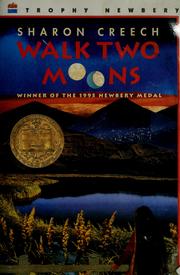
Walk Two Moons
2,554-word summary 11 min read 288 pages in the book
- First published
- 1994
- Publisher
- HarperCollins
- Pages
- 288
- ISBN
- 9780064405171
Reading options
What's inside (8 sections)
I picked up Walk Two Moons because someone told me it was a road trip book and a mystery book at the same time, and both things sounded right for a short week. It is a short book. Sharon Creech published it in 1994 with HarperCollins, and the standard edition runs 288 pages. It won the Newbery Medal in 1995. I read it in three sittings, mostly late at night, and I kept stopping to think about my own family stories. The voice pulled me in fast.
The narrator is Salamanca Tree Hiddle, called Sal. She is thirteen. She grew up on a farm in Bybanks, Kentucky, a made up town Creech based on a real river town. Sal loved that farm with a physical love. She knew the trees by feel. She knew where the blackberries grew thick. She swam where she wanted. She belonged. Then her mother left, and after that her father moved them to a rental house in Euclid, Ohio. Sal hates Euclid at first. The yard is small. The school is strange. The air smells wrong to her. She misses chickens and open sky and her grandparents close by.
Her mother is Chanhassen Pickford Hiddle, called Sugar. Her father is John Hiddle. Sugar grew up restless and tender, and she married John young. On the farm she began to feel she was failing him. Creech lets this out slowly. There was a pregnancy that ended in loss. There was grief that sat in the house. Sugar felt plain beside John, who could fix fences and calm animals and work long days without complaint. One April morning she left for Lewiston, Idaho, to visit a cousin and to clear her head. She promised to come back before the tulips bloomed. She did not come back.
Sal will not accept that her mother is gone. Her father tells her she is fishing in the air, which is his kind way of saying she is reaching for something that is not there. Sal holds tight anyway. She keeps her mother's clothes. She remembers exact meals. She replays small fights. When her father's parents offer to drive her west to Lewiston to see her mother, in time for her mother's birthday, she says yes at once. She thinks if she gets there fast enough, she can bring her mother home.
A car full of stories heading west
The grandparents are Gram and Gramps Hiddle, John's parents. They are the heart of the present tense chapters. Gram is round, talkative, funny, and shameless about kissing Gramps in public. Gramps strokes his beard and teases her and kisses her back. They call each other pet names. They bicker about rest stops. They get lost on purpose. Creech gives them odd habits that feel lived in. Gram cannot pass a wall without tapping it. Gramps cannot pass a river without wanting to stop and look.
They have known hard loss themselves. Long before this trip they buried three of John's brothers. Creech does not linger on those deaths, but she leaves them in the car like extra passengers. It explains why Gram and Gramps laugh loud and hold Sal close.
Sal agrees to entertain them on the long drive by telling them a story from Euclid. That story becomes most of the book. Every few chapters Creech cuts back to the car. We get gas stations and bad food and rivers that make Gramps quiet. The car talk is warm. Gram asks for more story. Gramps asks for the moral. Sal dodges the moral because she is not ready to say what her story means.
The trip turns hard near the Missouri River. Gram is bitten by a snake on the bank, a cottonmouth. They get her help, and she seems to rally, but she is not the same after. By the time they reach Coeur d'Alene, Idaho, Gram has a stroke and goes into the hospital. Gramps will not leave her side, yet he also knows Sal is almost out of time. He had taught Sal to drive back on the farm roads. He hands her the keys and lets her drive alone through mountain roads to Lewiston. It is reckless and it fits these people. They trust Sal with big things.
Bybanks and Euclid do not match
To follow Sal you have to hold two houses in your head.
Bybanks is the farm house with a barn and fields and a creek. Sal picks blackberries with Sugar. She watches John build fence and runs to surprise him. One morning John leaves flowers on the table. Another morning Sugar leaves bowls of blackberries. Sal ties those berries to love. Later, when she eats blackberry pie at a friend's house, the taste brings the whole farm back and her chest hurts.
Sugar's sadness also lives in Bybanks. She tells Sal she is not good enough for John. She cries after small kindnesses. After the lost baby, Sugar withdraws further. She smiles less. Then she leaves for Idaho.
Euclid is the rental house with thin walls and a strict school. John sells farm machinery now. He starts spending evenings with a neighbor woman, Margaret Cadaver, who is a nurse with bright red hair. Sal resents Margaret at once. To Sal, Margaret is proof that her father has stopped waiting.
School in Euclid is where Sal meets her two closest people. Mary Lou Finney is loud and warm and lives in a crowded house full of kids and noise. Phoebe Winterbottom is the opposite. Phoebe is neat, blond, round faced, and certain about rules. Her older sister Prudence bosses and sulks. Her father draws maps for work. Her mother keeps house with care and feels unseen.
Phoebe and the notes on the porch
Phoebe's story starts with small weirdness. Someone leaves anonymous notes on the Winterbottom porch. Sal and Phoebe find them tucked near the door. The notes are short sayings in plain handwriting. One says everyone has his own agenda. One says in the course of a lifetime, what does it matter. One says you cannot keep the birds of sadness from flying over your head, but you can keep them from nesting in your hair. And one says:
Don't judge a man until you've walked two moons in his moccasins.
Mr. Birkway, their English teacher, later uses some of these lines for class. He asks students to keep journals and to think about what the sayings could mean in real life. Sal loves that assignment. Phoebe treats it like evidence in a case.
Then a boy starts hanging around the Winterbottom house. Phoebe calls him the lunatic. He is young, maybe eighteen, and he knocks and asks strange questions and runs off. Phoebe decides he is dangerous. She decides Margaret Cadaver, who lives next door to the Winterbottoms with her blind mother, is in on something. Phoebe spins a theory that Margaret killed her husband and buried him out back. Sal knows this sounds wild, but she plays along because playing along is easier than sitting home thinking about Sugar.
Phoebe's mother, Norma Winterbottom, grows sadder through these chapters. She cooks and cleans and sews and talks at dinner, and her husband and daughters barely look up. Sal notices it before Phoebe does. Norma mentions feeling dull and small. She says she wants more. Then one day Norma does not come home. She leaves notes and a freezer full of labeled meals, which her husband points out, but Phoebe refuses the plain answer. She calls the police. Sergeant Bickle listens with patience and doubt. Phoebe insists her mother was taken. She blames the lunatic. She blames Margaret.
Creech lets Phoebe be both comic and painful here. Phoebe rings doorbells and demands answers. She drags Sal across town by bus to spy. Some scenes made me laugh out loud. Some made me wince, because you can see Phoebe copying her mother's fear of mess.
Ben Finney enters during this stretch. He is Mary Lou's cousin, staying with the Finneys while his own mother is ill in a hospital. He is shy and odd in a good way. Mr. Birkway reads student journals aloud in class without names, which mortifies everyone, and Ben's entries catch Sal's eye. They pass notes. Ben had eaten blackberries before their first kiss on the hospital grounds where his mother stays, and Sal connects that taste to Bybanks at once.
Margaret, Mrs. Partridge, and Mr. Birkway
Margaret Cadaver looks like trouble in Phoebe's telling and like sorrow in Creech's telling. She is a nurse. She lives with her mother, Mrs. Partridge, who is blind and old and sharp. Mrs. Partridge feels people's faces with her hands to guess age and mood. Mrs. Partridge leaves the porch notes. She means them as small gifts, not threats.
Margaret's past is rough. Years earlier, her husband and her mother were hit by a drunk driver. Margaret was the nurse on duty in the emergency room when they were brought in on stretchers. Her husband died. Her mother lived but lost her sight. Mr. Birkway, who turns out to be Margaret's twin brother, tells Sal and Phoebe this after he apologizes for reading their journals aloud.
Sal takes this story to bed with her. She pictures Margaret in the ER, trying to work on her own husband and mother. She thinks about the porch sayings. For the first time she tries to stand inside Margaret's skin instead of pushing her away. It does not fix everything. Sal still loves Sugar and still fears her father will replace Sugar. But she stops calling Margaret names in her head.
What Sal learns last about Margaret changes the road trip too. Margaret met Sugar on a bus heading west to Idaho. Sugar talked about John and Sal and the farm and her grief. When that bus went off the road near Lewiston, everyone aboard died except Margaret. That is where she met John, who had come west after the crash. Sal hears this and feels the floor shift.
What happened to Norma and what happened to Sugar
Phoebe's mother and Sal's mother both leave, but they leave for different reasons, and Creech wants you to feel the difference.
Norma Winterbottom leaves because she feels erased. She loves her daughters, but Prudence snaps at her and Phoebe corrects her, and her husband eats her food without tasting it. She had a secret she carried for years. Before she married Mr. Winterbottom, she had a son and gave him up for adoption. That son is Mike Bickle, raised by Sergeant Bickle's family. Mike is the so called lunatic. He was not stalking Phoebe. He was looking for his birth mother.
Norma comes home a few days later and tells the truth. She was afraid her family would think less of her. Mr. Winterbottom weeps, which shocks Phoebe more than shouting would. Phoebe, after a storm of crying, starts to make room for Mike. Her story ends with a door opening.
Sugar's story does not open that way. Sugar died in the bus crash with Margaret as the sole survivor. Sal has known this in some buried corner all along, but she has told herself a softer version where Sugar is waiting in Idaho. Her father never lied exactly. He said Sugar was resting peacefully. Sal heard what she needed to hear.
There are details that hurt to read. Sugar had felt she failed as a farm wife and as a mother after losing a baby. She thought John deserved someone stronger. None of that was true, but grief does not check facts. She went west hoping distance would clear her head.
I found this pairing brave and a little hard to take. One mother walks back through the front door. The other does not. Sal has to watch Phoebe get what she prayed for. That feels true to how loss works among friends.
Lewiston and the grave on the hill
The last part moves fast. Gram is in the hospital in Coeur d'Alene. Gramps stays with her. Sal takes the car and drives alone to Lewiston, a winding run that scares her and steadies her. She finds the spot where the bus left the road. A sheriff finds her by the car and means to scold her. Then he hears her story and softens. He drives her to the cemetery and waits while she stands at Sugar's grave.
Sal talks to her mother there. She says the things she could not say in Euclid. She admits she remembers the fights and the tears and the April morning. She admits she wanted Idaho to undo death. She lays something down. Creech does not dress this up with light or music. It is a girl at a stone, cold hands, cars passing far off. Sal cries and then stops crying because there is driving to do.
When Sal gets back to Coeur d'Alene, Gram has died. Gramps takes it with quiet grief that broke me more than loud grief would. They send Gram's body back to Bybanks for burial. Sal and Gramps and John return to the farm after. Margaret remains a friend, not a new mother. Ben remains a first love, not a rescue.
What stays with me is not a moral but a set of images. Blackberries in a white bowl. A blind woman's hands on a cheek. A teacher reading a journal he should not have read. A girl driving a big car down a narrow road because her grandfather trusted her.
I should say what did not work for me, because this book gets praised so much that faults get skipped. The middle sags in places. Phoebe's detective run goes on a chapter or two too long, with stakeouts and theories that repeat the same beat. The coincidences pile up near the end. Margaret turns out to be Birkway's sister and Sugar's bus seatmate and John's confidante. Norma's lost son turns out to be the lunatic and the sergeant's adopted son. One or two of those links would feel like life. Five at once feels arranged.
Sal's voice also wobbles for me. Most pages sound thirteen in a good way, blunt and funny and wrong. Then a line lands that sounds thirty, calm and rounded. I liked those lines, but they pulled me out. The handling of Sal's claim about native blood has aged awkwardly too. It is a small thread, not the core, yet it dates the book in a way worth naming.
If you read it, watch for how Creech hands out care. John Hiddle is not a big talker, but he shows love in labor. Gramps shows love in jokes and keys. Gram shows love in questions. Ask for the story. Tell it again. Margaret shows love in nursing and listening. Even Mrs. Winterbottom, before she leaves, shows love in labeled food.
I finished Lewiston with wet eyes and a clear head. I thought about calling my own grandparents. I thought about the friends whose mothers felt unseen at dinner tables while kids stared at plates. I did not feel instructed. I felt accompanied for a while by a girl who talks her way toward truth because silence hurt more. For a 288 page book from 1994, that company still holds.
FAQ
When was Walk Two Moons published and who published it?
It was first published in 1994 by HarperCollins. The standard edition runs 288 pages with ISBN 9780064405171.
Who is the lunatic in Phoebe's story?
Mike Bickle is Mrs. Winterbottom's son from before her marriage, given up for adoption and raised by Sergeant Bickle's family. He came to the Winterbottom house looking for his birth mother.
Is Walk Two Moons only for children?
It won the 1995 Newbery Medal and suits middle grade readers around age 10 and up. Its grief and empathy themes hold for teens and adults too.
Similar books

Hard Luck
Rowley has a girlfriend, so Greg turns to a Magic 8 Ball, a family Easter hunt and the school yearbook for answers.
2,586-word summary · 11 min read

We Are Okay
Marin fled San Francisco after her grandfather vanished and stopped answering anyone. When Mabel visits her college dorm, she has to say what happened.
2,253-word summary · 10 min read
Harriet the Spy
Eleven year old Harriet Welsch fills notebooks with honest, often cruel observations about her neighbors, until her classmates read one and turn her spy route…
2,510-word summary · 11 min read

Someone Like You
Halley and her best friend Scarlett face a summer of grief, a surprise pregnancy, and Halley's dangerous first romance in Sarah Dessen's 1998 young adult novel.
2,218-word summary · 10 min read

The Great Believers
Yale builds a Chicago art collection as AIDS takes his friends, and Fiona searches Paris for her daughter thirty years later.
2,742-word summary · 12 min read
Ghosts
Catrina moves to foggy Bahía de la Luna for her sister Maya's health and learns to face the town's ghosts.
2,946-word summary · 13 min read

Fly Away
After Kate's death, Tully, Marah, and Dorothy face grief and addiction while trying to rebuild their lives.
2,940-word summary · 13 min read

Out of My Mind
Eleven-year-old Melody Brooks has cerebral palsy and cannot speak, but she remembers everything and fights to be heard in fifth grade.
2,298-word summary · 10 min read

Heidi
Orphan Heidi blooms with her grandfather in the Swiss Alps, wilts in Frankfurt as a companion, then helps Klara walk.
2,952-word summary · 13 min read
Bridge to Terabithia
Katherine Paterson's Bridge to Terabithia retold: Jess Aarons and Leslie Burke build an imagined kingdom and face sudden loss.
2,673-word summary · 12 min read
Pet Sematary
Doctor Louis buries Church and then Gage in ground that returns them wrong, learning dead is better.
2,158-word summary · 10 min read
The Long Winter
Dakota Territory, 1880: seven months of blizzards cut a town off from the railroad, and a family survives on twisted hay, ground wheat, and a dangerous wheat…
2,210-word summary · 10 min read
Make Way for Ducklings
A pair of mallards raise eight ducklings on the Charles River and lead them across Boston to the Public Garden, with a little help from a friendly policeman.
2,044-word summary · 9 min read

Little Town on the Prairie
In the spring after the Long Winter, fifteen-year-old Laura sews shirts, studies for a teaching certificate, and helps send her blind sister Mary to college.
2,071-word summary · 9 min read

Little Earthquakes
Four Philadelphia women meet during pregnancy and discover that new motherhood is nothing like the plan, while friendship becomes the thing that holds them…
1,997-word summary · 9 min read

Howards End
Forster's 1910 novel follows two families, a house in Hertfordshire, and a burned note, asking whether money and feeling can ever be connected.
2,187-word summary · 10 min read

Fathers and Sons
Arkady brings the nihilist Bazarov home to his father's estate, and a generational argument turns into love, a duel, and an early death.
2,192-word summary · 10 min read

Clifford the Big Red Dog
Emily Elizabeth picks the smallest puppy in the litter, loves him as hard as she can, and wakes up to a dog the size of a house.
2,092-word summary · 9 min read

Sam's Letters to Jennifer
A grieving journalist reads her grandmother's letters and finds a decades-long love affair that changes how she sees her family.
2,310-word summary · 10 min read

Amy & Roger's Epic Detour
Amy Curry has not driven since the crash that killed her father. With Roger at the wheel and a box of maps between them, a cross-country trip becomes a slow…
3,034-word summary · 13 min read

Two by Two
Sparks's twentieth novel turns from first love to a marriage breaking up: Russell Green loses his wife and his job, then rebuilds his life around his…
2,192-word summary · 10 min read

The Chosen
A shattered pair of glasses in a 1944 Brooklyn softball game starts a friendship between a Hasidic boy and his Orthodox neighbor, and their fathers pull them…
2,443-word summary · 11 min read

Grip of the Shadow Plague
A plague turns Fablehaven's creatures of light into shadows while Kendra hunts an artifact in Arizona and Seth races to find the cause.
2,131-word summary · 9 min read
The House We Grew Up In
The Bird family of the Cotswolds breaks apart after a suicide and spends twenty years not talking about what happened.
2,198-word summary · 10 min read

The First to Die at the End
On the night Death-Cast launches, a boy with a bad heart meets a model with everything ahead of him, and one of them gets the call.
2,908-word summary · 13 min read

The Dharma Bums
Ray Smith rides freight trains, climbs Matterhorn Peak and argues about Zen with the poet Japhy Ryder in Kerouac's 1958 road novel.
2,729-word summary · 12 min read

At First Sight
Jeremy and Lexie are married and expecting a baby when anonymous emails tell him the child may not be his.
2,317-word summary · 10 min read

A Spool of Blue Thread
Four generations of the Whitshank family in Baltimore, and the silences, resentments and quiet love they hand down without ever saying so.
2,408-word summary · 11 min read
The Third Wheel
Greg tries to find a date for the Valentine's dance, ends up the third wheel in his own plan, and watches Rowley get the girl.
2,019-word summary · 9 min read

The Second Summer of the Sisterhood
Four friends share the traveling pants through a summer of grandmothers, first loves, and mothers who are learning to let go.
2,209-word summary · 10 min read