
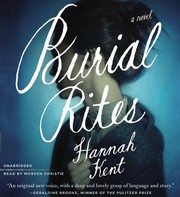
Burial Rites
2,976-word summary 13 min read 336 pages in the book
- First published
- 2013
- Publisher
- Little, Brown and Company
- Pages
- 336
- ISBN
- 9780316243902
Reading options
What's inside (8 sections)
I picked up Burial Rites after a friend kept pressing it on me with that particular urgency people reserve for sad books set in cold places. I had just finished a run of fast crime novels and I wanted something slower, something with weather in it. Kent gave me weather and then some. I read most of it across three nights in October with rain hitting the windows, which felt appropriate, and I finished it feeling wrung out in the way only a book rooted in a true story can manage.
What pulled me in first was learning that Agnes Magnusdottir was real. She was the last person executed in Iceland, beheaded in January 1830 for murder. Kent, an Australian writer, came across the story while on exchange in Iceland as a teenager and could not let it go. She went back, learned the language well enough to read trial papers and parish records, walked the ground in the north where the farms stood, and spent years turning fragments into a novel. Knowing that changed how I read every page. This was not a historical mystery assembled from Wikipedia. It felt like someone trying to give a voice back to a woman the records mostly describe as a servant, a pauper, and a prisoner.
Agnes Magnusdottir and Iceland in 1829
To follow this book you have to reset your sense of what Iceland was in 1829. This was not the Iceland of Reykjavik cafes and rental cars. It was a Danish dependency, poor, scattered, and ruled at a distance. People lived on isolated turf farms, long low houses built from stone and turf with wooden gables, smoke hanging in the single main room where everyone slept, ate, and worked. Winter brought near total darkness. Summer brought endless light and frantic haymaking. The Lutheran church ordered daily life. The district commissioner held real power over bodies and food and punishment.
Agnes was born in 1795 and never had a stable home. Her mother left her young. She was passed through foster placements, which in Iceland at the time often meant a child was taken in as extra labor rather than as a daughter. She worked as a maid across the northern districts, moving farm to farm as contracts ended. She could read, which set her apart a little. She knew ballads and verses by heart. She was, by several accounts, intelligent and sharp tongued, not meek in the way poor women were expected to be.
Kent opens with Agnes already condemned. The trial is over. The Danish authorities have confirmed the death sentence. There is no prison to hold her, so she is sent to wait out her final months on a farm. That fact alone tells you how thin the state was. Punishment was farmed out to ordinary families along with the cost of feeding the prisoner.
What I appreciated here is that Kent does not dress Agnes up as a heroine. In the early chapters Agnes is sullen, guarded, and sometimes rude. She answers questions with flat refusals. She spits on the floor of the church in memory. She steals food when she can. Kent lets her be difficult. It makes the later softening feel earned rather than sentimental.
One small complaint already: Kent loves the cold. Every chapter reminds you about ice on the water bucket, frost on the wool, breath smoking in the badstofa. After a while I started skimming weather paragraphs. I get it. Iceland is cold. But the repetition does slow the first third, and readers who want plot will fidget.
The Murders at Illugastadir: Natan Ketilsson and Petur Jonsson
The crime sits at the center of the book and Kent reveals it in pieces, the way Agnes herself releases memory. On the night of 13 March 1828, two men were killed at the farm of Illugastadir in Hunavatnssysla. One was Natan Ketilsson, a farmer with a local reputation as a healer and bloodletter, a man who doctored people and animals and kept beeswax and herbs and books. The other was Petur Jonsson, a guest spending the night. The farmhouse was set on fire after the killings. Bodies were found stabbed and burned.
Three people were arrested: Agnes Magnusdottir, who had been working for Natan as a maid and was also his lover; Fridrik Sigurdsson, a young farmer from a nearby valley; and Sigga Gudmundsdottir, sometimes called Sigridur, a teenage servant girl. The prosecution argued that Agnes and Fridrik committed the murders together, with Sigga present. All three were sentenced to death at first. The king in Copenhagen later commuted Sigga's sentence to prison labor in Denmark, while the death sentences for Agnes and Fridrik were confirmed.
Kent handles Natan with care. He is not a simple villain or a lost love. Through Agnes's remembered scenes we see a charismatic man, older, married to another woman, who took Agnes on as housekeeper and then as mistress. He taught her about herbs. He let her read. He also used her. He kept his wife Rosa at another farm, stringing both women along. He promised Agnes a household of her own and never delivered. He could be tender in the stillroom and cruel at the table, mocking her in front of visitors.
Fridrik remains blurrier, and that feels deliberate. He was younger, poor, resentful of Natan over money and over a woman. In Kent's telling he is hot tempered and easily led, the kind of man who drinks and then blames the drink. Sigga is the most shadowy of the three. She was sixteen or seventeen, frightened, eager to please, and her testimony shifted. Kent does not try to solve the case like a modern detective story. She is more interested in how poverty and dependence trapped all three around Natan.
The murder scenes, when they finally arrive, are brutal and plain. No stylized fight. Knives, panic, fire set to hide what knives did. I found these passages hard to read, not because they are gory for effect but because Kent keeps the focus on clumsiness. Killing with farm tools is messy work. The fire does not catch the way the killers hope. Smoke brings neighbors. That clumsiness makes it more believable than a clean thriller kill.
If you come to the book expecting a courtroom puzzle, adjust your hopes. The trial records appear as short official extracts between chapters, cold and formal, and they give you dates and verdicts. The human story is elsewhere. Some readers will find that frustrating. I did at first. I kept waiting for a twist that never comes. The power is in watching how a condemned woman remembers, not in catching a liar.
A Sentence With No Prison: The Commission to Jon Jonsson's Family
Because Iceland had no jail for long confinement, condemned prisoners were boarded out to farms at the district's expense. In May 1829 Agnes was delivered to Kornsa in Vatnsdalur, the farm of Jon Jonsson, a district officer of modest standing, his wife Margret, and their two daughters Steina and Lauga. They were ordered to house her, feed her, watch her, and put her to work until the execution order arrived. Fridrik was sent to a different farm. The arrangement lasted through summer, autumn, and into the killing winter.
Imagine being the Jon family. You have little enough for yourselves. Hay is short. Sheep must be brought through. And now an armed guard leaves a convicted murderess at your door with a paper saying you are responsible if she runs. Margret's fear is immediate and physical. She locks the food chest. She tells her daughters not to be alone with Agnes. Jon tries to be correct and obedient to his superiors while protecting his household. The girls swing between curiosity and horror.
Kent is very good on the economics of this. Agnes is another mouth, but she is also another pair of hands. She knows how to card wool, gut fish, tend lambs, scrub pots with sand. Slowly, usefulness forces contact. Margret watches Agnes work and has to revise the picture of a monster she carried from church gossip. That shift never becomes cozy. Margret does not forgive Agnes in some warm scene. She simply starts leaving the good knife out, then hates herself for noticing that she did.
The turf house itself becomes a character. Kent describes the badstofa where the family sleeps side by side on a raised platform, the dairy, the passageway slick with mud, the smell of wet wool and sour milk. Privacy does not exist. Agnes sleeps among people who fear her. She hears their prayers, their quarrels, Steina coughing in the night. There is no cell door to close. Shame has nowhere to hide.
I liked this section best because it shows a justice system that is both harsh and intimate. The state will cut off your head, but until then you will live in someone's living room and help with the washing. That closeness is what allows the story to move. Without it, Agnes would remain a file in Copenhagen. With it, she becomes a person the family must look at every day.
A fair criticism: district politics can drag here. Letters from Commissioner Bjorn Blondal about costs and responsibilities pile up, and while they are historically telling, two or three would have made the point. Kent includes enough paper to prove her research. I respect the work, but as a reader I wanted to stay in the house, not in the mailbag.
Toti, the Young Chaplain
Agnes is granted a spiritual attendant, as was custom for the condemned. She asks for Thorvardur Jonsson, called Toti, a young assistant reverend she met briefly years before. He is not the senior priest of the district. He is junior, poor, bookish, unsure of himself, recently out of school and assigned to a remote parish. When the order comes, he is terrified. He has never counseled a murderer. He barely knows how to talk to women.
Their meetings structure the book. At first Agnes refuses him. She sits silent while he reads psalms badly and sweats through his coat. He tries formal questions about repentance and gets nothing. Then, slowly, he changes tactics. He listens. He asks about her childhood, about work, about songs. He brings her news of the outside, small kindnesses like extra oil for her lamp. She tests him with fragments, a memory of a foster mother, a verse, a description of Natan's stillroom, and watches what he does with them.
Toti is the least showy character and, to be honest, sometimes the dullest on the page. He prays, he doubts, he writes earnest letters to his superior. He worries about his horse. Compared with Agnes and Margret, he can feel thin, a device for getting Agnes to talk. I felt Kent knew this and tried to fill him out with a sickly mother and a kind mentor, but those scenes never quite caught fire for me.
Still, he serves a real purpose. Because he has no authority to punish, Agnes can speak to him in a way she cannot speak to officials or even to the family. Their talks let Kent stage the past without resorting to a straight flashback dump. Agnes tells a story, Toti misunderstands part of it, she corrects him next visit. Memory arrives in layers. Anyone who has tried to get a guarded person to open up will recognize the rhythm.
There is a quiet tension in whether Toti believes her. He wants to believe she is innocent, or at least less guilty than the verdict says. Agnes will not give him that comfort directly. She insists on telling her life as she lived it, with bad choices included, and leaves judgment to him and to God. I found that restraint moving. Kent resists turning the priest into a savior. He cannot commute her sentence. He can only sit with her through winter and pray that his presence counts for something.
Readers who dislike religious material should know this thread is steady but not preachy. Psalms and catechism appear because they were part of daily speech then, not because Kent is making a point about faith now. Toti's doubt feels human rather than staged.
Winter Confinement at Kornsa
The heart of the novel is the long winter Agnes spends working and waiting at Kornsa. Daylight shrinks to a few pale hours. Storms lock the valley. The family cannot travel to church most Sundays. Hay runs low and sheep weaken. Agnes labors alongside the women: spinning, knitting, cleaning intestines for sausage, fetching water through ice, nursing a ewe through a bad birth. Her hands crack. Her back aches. The work steadies her even as the sentence hangs over every meal.
Kent uses this stretch to fill in Agnes's life before Illugastadir. We learn about foster homes where she was beaten for reading by rush light, about a foster mother who taught her ballads, about hunger years when she ate moss and seaweed to stay alive, about service with families who praised her work and still turned her out at moving season. We see how a bright girl with no kin ends up dependent on a man like Natan. He offered books and talk and a sense of being chosen. For someone who had never been chosen, that was enough to overlook the rest.
The relationship with the daughters deepens here in ways I did not expect. Steina, the older girl, is plain spoken and curious. She asks blunt questions about prison and about killing and then regrets them. Lauga, younger, is dreamy and afraid, prone to crying after nightmares. Both start by spying on Agnes and end by seeking her company. Agnes teaches them verses. She mends their clothes. She tells them which herbs help a cough. These small exchanges do more to humanize her than any speech about innocence could.
Margret's arc is slower and, to me, more convincing. She is a farmer's wife counting stores, not a sentimentalist. Her change comes through observation: Agnes rising first to fetch water, Agnes shielding a lamb with her own cloak, Agnes vomiting after trying to eat rotten fish rather than complain. Margret begins to ask her own questions about Natan, about Rosa, about what Sigga did that night. She does not become Agnes's friend. She becomes her witness, which is different and harder.
Kent's pacing in this middle stretch will test some readers. Days blur on purpose. Wool work, prayers, snow, soup, more snow. I marked pages where I thought, yes, I see the point, can we move on. But looking back, the blur is the point. Confinement is repetition. Dread grows because nothing happens. The execution order is delayed by weather and by slow post from Denmark. Hope keeps sprouting in that delay and then rotting. Kent makes you feel how cruel waiting can be when the outcome is fixed.
One note on style: Kent writes senses well without showing off. Sour whey, wet sheepskin, peat smoke, blood on snow. She rarely reaches for fancy images. When she does, they land because they are spare. A description of Agnes's hands as tools worn to the shape of work stayed with me longer than any speech.
The Execution at Husavik
The final movement covers the journey north to Husavik and the beheading on 12 January 1830. After months of delay, the order arrives. Agnes and Fridrik are to be executed together. The district must supply men, wood for the block, food for witnesses. People travel through brutal cold to watch because watching was expected, part duty and part warning. Kent does not sensationalize the crowd. Farmers stamp their feet. Children are told to be quiet. Officials read papers in voices flattened by wind.
Agnes's last days are rendered with restraint. She puts her affairs in order as far as a pauper can, giving away small belongings, asking Toti to take her few books. She worries about her clothes, wanting to die clean. She sings. That detail broke me a little. Singing was how she survived foster homes and long work nights, and she holds to it at the end. Fridrik's end is handled more briefly. Kent keeps the focus where the book has kept it all along, on Agnes, though she grants him a short dignity.
I will not describe the beheading in detail here. Kent does, plainly and briefly, and then looks away to the witnesses. What matters more is what follows: burial without church rites in unconsecrated ground, accounts settled, the valley returning to work. Life resumes with terrible speed. Sheep still need feeding. That speed feels obscene and also true.
Kent closes with an author's note about sources, and I recommend reading it. She names the archives, the letters from Blondal, the parish registers, the folk accounts that disagree on details. She is honest about where she filled gaps, especially around Agnes's inner life and the exact sequence in the farmhouse. That honesty raised my trust. She does not pretend the novel is a transcript. She claims only to have imagined a plausible soul inside documented facts.
My lasting judgment: this is a strong first novel with first novel flaws. The lyricism sometimes repeats itself. Toti and Fridrik feel less lived in than the women at Kornsa. The middle sags under weather and paperwork. But Agnes herself is unforgettable, proud and wounded and practical to the end, and the household that is forced to house her gives the book its moral weight. If you like historical fiction that moves slowly and stays close to work and bodies and weather, if you liked books like Alias Grace or The Miniaturist for atmosphere more than plot, you will likely stay with this to the last page. If you need pace and twists, this winter will feel very long.
FAQ
When was Burial Rites published?
Little, Brown and Company published it in 2013. The edition cited here runs 336 pages, ISBN 9780316243902.
Was Agnes Magnusdottir a real person?
Yes. Agnes Magnusdottir was a servant convicted for the 1828 murders at Illugastadir and beheaded in January 1830, the last execution in Iceland. Kent built the novel from trial papers, parish records, and letters.
Does Burial Rites work like a murder mystery?
No. The trial outcome is known from the start, and Kent reveals the killings through Agnes's memories. The focus is on her final months at Kornsa, not on finding a hidden killer.
Similar books
Perfume: The Story of a Murderer
Born with a perfect nose in 1738 Paris, Grenouille masters perfume craft then murders young women in Grasse to bottle the ultimate scent.
2,561-word summary · 11 min read

Violeta
A woman born in 1920 writes her life story to her grandson, from one pandemic to another, through wealth, ruin, passion, and dictatorship in South America.
2,555-word summary · 11 min read
The Art Forger
A disgraced Boston painter agrees to copy a Degas stolen from the Gardner Museum, then begins to suspect the original she is copying is itself a forgery.
2,117-word summary · 9 min read

The Black Dahlia
James Ellroy builds a fiction around the real Black Dahlia murder, following two Los Angeles cops whose partnership and obsessions destroy them.
2,533-word summary · 11 min read

Sophie's Choice
A young Southern writer in 1947 Brooklyn befriends a brilliant, unstable couple and slowly learns the story of the Polish Catholic woman at the center of their…
2,798-word summary · 12 min read

The Lowland
Two brothers grow up beside a marshy lowland in Calcutta, and the choices of the younger one draw the older into a life of duty, distance, and quiet grief that…
2,213-word summary · 10 min read

The Storyteller's Secret
A New York journalist goes to India to learn why her grandmother loved a British officer, and why a family servant kept the truth for forty years.
2,270-word summary · 10 min read
Stones from the River
Trudi Montag is born a dwarf in a small German river town in 1915 and grows up to keep the town's library and its secrets, from the First World War to the…
2,818-word summary · 13 min read

Ivanhoe
A disinherited Saxon knight, a great tournament, a besieged castle and a trial by combat. Scott's most famous novel, set in England in 1194.
2,834-word summary · 13 min read

Euphoria
Three anthropologists in 1930s New Guinea turn fieldwork into a love triangle, and a real history breathes behind them.
2,048-word summary · 9 min read

Wide Sargasso Sea
Jean Rhys gives the first Mrs. Rochester a Caribbean childhood, a marriage built on money and suspicion, and a voice that Charlotte Bronte left in the attic.
2,021-word summary · 9 min read

The Sisters Brothers
Two hired killers ride from Oregon to Gold Rush California to murder a prospector, and find their trade, their brotherhood, and the frontier myth coming apart.
2,095-word summary · 9 min read
The Silence of the Girls
Briseis, queen of Lyrnessus, is captured by Achilles and narrates the Trojan War from inside the Greek camp, where women are prizes and survival is its own…
2,098-word summary · 9 min read

The Birth of Venus
A Florentine merchant's daughter trains as an artist, marries a man who hides a secret, and survives Savonarola's bonfire of the vanities.
2,404-word summary · 11 min read
Mother Night
Howard W. Campbell Jr., a Nazi propagandist and American spy, tells the story of his double life from an Israeli prison cell while waiting to be tried for war…
1,988-word summary · 9 min read

Bring Up the Bodies
Thomas Cromwell sets out to destroy Anne Boleyn, building a case from rumor and revenge while Henry VIII waits to marry Jane Seymour.
2,066-word summary · 9 min read
A Painted House
In 1952 Arkansas, seven-year-old Luke Chandler picks cotton with his family and learns how quickly poverty, violence, and adult secrets can end a childhood.
2,060-word summary · 9 min read

Exodus
Leon Uris's sweeping 1958 novel follows Jewish refugees, Haganah fighters, and Holocaust survivors from Cyprus to the founding of Israel and the 1948 war.
2,529-word summary · 11 min read
Death Comes to Pemberley
P.D. James drops a murder onto the Pemberley estate and sends Wickham to trial, reading Austen's most famous marriage through the machinery of Georgian justice.
2,318-word summary · 10 min read
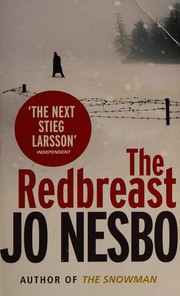
The Redbreast
Harry Hole chases an ageing sniper through modern Oslo while two Norwegian volunteers on the Eastern Front carry a fifty-year-old betrayal toward a royal…
2,453-word summary · 11 min read
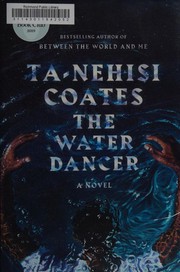
The Water Dancer
An enslaved man with a strange power for travel fights to free himself and rescue those he loves.
2,910-word summary · 13 min read
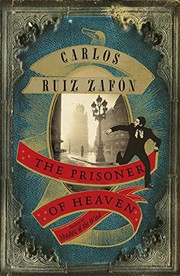
The Prisoner of Heaven
Fermin Christmas past returns with a stranger and a prison debt.
2,388-word summary · 11 min read

The Buried Giant
An old couple crosses a misty post Arthur Britain searching for a son.
2,593-word summary · 12 min read
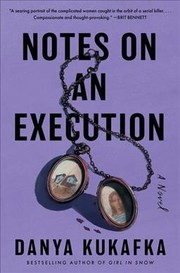
Notes on an Execution
Ansel waits on death row while three women carry what he broke.
2,527-word summary · 11 min read

Let the Great World Spin
A wire walker crosses the towers as Bronx lives collide below.
2,338-word summary · 10 min read

Fingersmith
A thief plots to cheat an heiress, then the scheme flips twice in Victorian London.
2,532-word summary · 11 min read

Eileen
A prison clerk in 1964 falls for a counselor before a violent break.
2,481-word summary · 11 min read

Edge of Eternity
Five families cross civil rights, Cold War and Berlin Wall to the eighties.
2,489-word summary · 11 min read
Case Histories
A Cambridge PI takes three cold cases that tangle with his own loss.
2,465-word summary · 11 min read

Bleak House
Jarndyce and Jarndyce grinds through Chancery while Esther finds her family.
2,480-word summary · 11 min read