
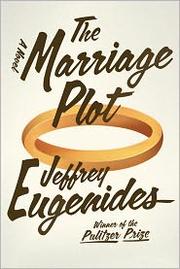
The Marriage Plot
2,804-word summary 12 min read 406 pages in the book
- First published
- 2011
- Publisher
- Farrar, Straus and Giroux
- Pages
- 406
- ISBN
- 9780374203054
Reading options
What's inside (8 sections)
I picked up The Marriage Plot because I wanted to see what Jeffrey Eugenides would do after Middlesex. That book had felt big and historical, full of Detroit and genes and time passing. This one felt smaller at first, closer to home. It came out in 2011 from Farrar, Straus and Giroux, about 406 pages, and it stays mostly in 1982 at Brown University around graduation. The title points straight at Jane Austen and George Eliot and all those nineteenth century novels where the plot ends when someone gets married. Madeleine Hanna, the central woman here, is writing her senior thesis on exactly that. She loves those books in a plain, unironic way, at a moment when her professors think that kind of love is a little embarrassing.
What surprised me was how much of the book is really about trying to live inside an old story when the world around you has stopped believing in it. Madeleine wants a grand love that means something. Leonard Bankhead wants to be brilliant even as his mind keeps pulling him apart. Mitchell Grammaticus wants faith to be real and wants Madeleine to love him back. None of them get what they want in a clean way. I liked that mess, even when parts of the book dragged for me.
Madeleine and the old books
Madeleine Hanna arrives at Brown as an English major who still reads for love. She grew up in a comfortable house in New Jersey, parents who stayed together, a sister who is more practical. She found Austen early and never let go. By senior spring she is writing a thesis on the marriage plot, the way Austen and Eliot and Henry James and Edith Wharton use courtship and marriage to sort out money, morals, character, and fate.
Her problem is that Brown in 1982 does not want that thesis. This is the time of semiotics and theory. Her classmates carry Barthes and Derrida and Foucault. In her semiotics seminar, led by a visiting professor type who treats love as a system of signs, Madeleine learns to talk about desire as text and codes and structures. She is good at it. She can play the game. But in private she thinks the game misses why she cries at the end of Middlemarch. Her thesis advisor is kind but skeptical. Friends tease her for being retro. One boyfriend before Leonard, a neat, ambitious guy, likes her but does not really get the reading life that matters most to her.
Eugenides gives us her reading lists, her marginal notes, her dorm room with books stacked on the floor. She rereads passages from The Portrait of a Lady and Daniel Deronda and tries to defend them in class without sounding naive. I liked these pages because they feel exact. At the same time, I can see why some readers find this part fusty. The theory debates already felt dated when the book came out in 2011, and they feel more dated now. Madeleine holds her ground. She does not want to give up the idea that a marriage choice in a novel can show who a person really is.
Her spring starts with uncertainty. Graduation is coming. She does not know what comes after. She applies for things halfheartedly. She watches friends lock in plans. And then Leonard walks into that semiotics class late and changes the shape of her year.
Leonard, brilliant and breaking
Leonard Bankhead is the kind of student people remember. Tall, loose, funny, from the Pacific Northwest with money troubles and a sharp mind for biology and philosophy. He reads hard, talks fast, smokes, drinks coffee by the pot, and can hold a room. Madeleine first notices him because he argues well in semiotics, not like a theory robot but like someone who actually thinks. He is skeptical of jargon. He likes her because she is serious about books without being phony. They start talking after class, then studying together, then falling fast.
What Madeleine does not know at first is that Leonard lives with manic depression, what we now most often call bipolar disorder. Eugenides shows this with care and a lot of concrete detail. Leonard has stretches of high energy when he sleeps three hours a night, writes twenty pages, makes big plans, charms everyone, spends money he does not have. Then the drop comes. He goes flat, slow, silent. He misses classes. He stops washing dishes. He lies in bed staring at the ceiling. He has been hospitalized before Brown. He takes Lithium, the salt that steadies many people with this condition but comes with thirst, shaking hands, stomach trouble, blood tests, and a narrow range between helping and harming.
Their courtship is intense and very physical and very talky. They argue about religion and science and whether literature tells the truth. Leonard, a biology student drawn to philosophy of mind, respects Madeleine mind without treating her like a project. He borrows her Austen and teases her and then actually reads. She visits his lab, meets his friends, sees how he can be the funniest person at a party one night and the most withdrawn the next morning. When he is high, he tells her she is the one, that they see the world the same way, that marriage plots are not silly because choosing a person is still the biggest choice. When he is low, he disappears and then apologizes in long letters.
The senior spring triangle really forms here, because Mitchell is already waiting in the background while Leonard takes center stage. Madeleine chooses Leonard, not after cool thought but with the rush of someone who finally feels chosen back by a person who seems larger than life. They sleep together, fight, make up, talk about summer. She starts to shape her post graduation plans around him. That choice will cost her a lot in the year after, and the book does not pretend otherwise.
I found Leonard the most alive character in the novel, and also the hardest to judge. It shows in small things, the way Leonard counts pills, the way he hates how Lithium dulls his thinking, the way he tries to adjust the dose on his own when he feels flat. A fair criticism is that the book sometimes romanticizes him a little, making his mania look like genius. But for long stretches it avoids that trap by showing the plain burden, missed appointments, a ruined trip, friends getting tired.
Mitchell, patient and pining
Mitchell Grammaticus has loved Madeleine since early in college, in the quiet, stubborn way that never quite turns into a relationship. He is a religious studies major, lanky, thoughtful, from a Greek Orthodox background that he both loves and questions. While Madeleine writes about Austen and Leonard runs gels in the lab, Mitchell reads William James and Teresa of Avila and wonders if God is real and if a modern person can still have a direct religious experience.
Mitchell is kind. He drives friends to the airport. He listens. He writes Madeleine long, careful letters she answers briefly. He waits after class to walk with her. He tells himself he is being noble by not pressing, but part of him is just afraid. Eugenides lets us see both sides. There are scenes where Mitchell helps Madeleine move books or fixes a radiator while Leonard is off being brilliant elsewhere, and you feel for him. There are other scenes where his pining gets airless, where he turns Madeleine into an idea of purity or home rather than a real person who is busy and tired and attracted to someone else.
Mitchell graduates without Madeleine. He does not have a job lined up that excites him. He has a small amount of money and a big idea. He will travel, work, and look for something holy. He keeps checking whether Madeleine and Leonard are still together, and they are, which stings.
I have mixed feelings about Mitchell as a point of view character. His seriousness about religion feels rare in campus novels and gives the book a third leg besides love and illness. Still, his long middle section slows the book a lot. When the story stays with Madeleine and Leonard, the pages turn fast because every scene has stakes. When it follows Mitchell alone with his thoughts, the pace drops. I also noticed sympathy gaps here. Mitchell sees himself as gentle, but he can be judgmental about Leonard illness and about Madeleine choices, in ways the book does not always call out right away.
Graduation and Cape Cod
Graduation at Brown in 1982 is all sun and folding chairs and parents with cameras. Madeleine parents come, proud and a little confused by her thesis topic. Leonard is shaky that week, coming off a rough patch. Mitchell hovers at the edges, hugging people goodbye. Everyone promises to stay in touch, knowing most will not.
After graduation, Madeleine and Leonard drift to Cape Cod for the summer. They housesit or take a cheap rental, the kind with sand in the rugs and a shower that scalds then freezes. They try to live like adults. Madeleine waitresses or does odd library work while she revises her thesis idea and thinks about graduate school. Leonard tries to keep a research assistant job or study for next steps, but his mood is unstable off the steady rhythm of school. Without classes, without friends nearby, the structure thins.
These chapters are strong on post grad drift, that strange summer when college ends and real life has not started. They shop badly, cook pasta too often, fight about money, make up on the beach. Leonard stops taking Lithium regularly because he hates feeling muted, or he takes it but drinks, which is dangerous. He has a manic flare where he stays up all night cleaning and planning a move, then crashes and cannot get out of bed for days.
Madeleine tries to help in the ways a twenty two year old knows how. She calls doctors, hides car keys when he is agitated, sits with him when he is silent. She also gets angry, which is honest. She did not sign up to be a nurse, she signed up to be a girlfriend, and the line between those roles blurs fast. Her parents worry on the phone and offer money and advice that does not quite fit.
Marriage, illness and care
By fall, Madeleine and Leonard marry, quickly and without much fanfare. It is not the Austen wedding with new dresses and wise parents. It is more like two scared kids signing papers because they want to prove love can hold. Madeleine thinks marriage will steady Leonard, that being chosen will help him stay on his pills and stay connected. Leonard thinks marriage will prove he is not broken, that he can be a husband despite hospital stays. Both beliefs are understandable and both are shaky.
They move, try graduate school paths, try to build a routine. Madeleine looks at PhD programs, works in libraries, keeps reading. Leonard aims for biology graduate work, does well when stable, then misses weeks when depressed or goes too fast when manic. Money is tight. The Lithium routine continues, blood draws, hand tremor that makes lab work hard, weight gain that embarrasses him. He experiments with stopping, feels bright for a week, then spins out. They fight about that more than anything.
Eugenides is good on the daily texture of care. Who calls the psychiatrist when Leonard will not get up. What to say to a landlord when rent is late because a manic spending spree drained the account. How to behave in an emergency room when Leonard is agitated and staff treat him like a problem. How to love someone and also feel trapped and guilty for feeling trapped. Madeleine compassion grows here, less romantic, more practical. She learns to set limits, to leave the apartment for a walk instead of screaming, to ask for help.
The breakup, when it comes, is not one clean cut but a slow fraying. Madeleine realizes she cannot save Leonard by loving him harder. Leonard realizes his illness is hurting the person he loves most, which feeds his shame and makes him push her away, then cling. There are separations, returns, a bad night that forces a hospital stay, a calm week where they almost believe they can go back to Brown spring. Friends take sides quietly. Her parents urge caution. His family does what they can from far away.
This is where the marriage plot idea turns. In Austen, marriage ends the story because it resolves money and status and character. Here marriage starts the hard part because love does not cure a chemical illness. Madeleine has to ask what faithfulness means when staying is breaking her and leaving feels like betrayal. I found these chapters painful and honest, the best sustained writing in the book. If there is a sympathy gap, it is that Madeleine sometimes reads as a little too good, while Leonard sometimes reads as only his diagnosis in these pages.
Calcutta and the letter
While Madeleine and Leonard are coming apart, Mitchell is in Calcutta, volunteering in a house for the sick and dying run by Mother Teresa order. This is the pilgrimage he imagined in college, service as a path to faith. The reality is hot, crowded, smelly, exhausting. He cleans bedsores, carries water, holds hands, gets sick himself, prays and feels nothing, then feels something small and unnameable while washing a man feet.
Eugenides researched this world closely. The dorms for volunteers, the early morning prayers, the sisters moving fast, the dying men who want tea or quiet or a joke. Mitchell rooms with other young seekers, some sincere, some touring pain. He writes in his journal, tries to meditate, reads the Gospels and gets angry at how far the institution feels from this room.
The famous Mitchell letter comes out of this time. After months of silence, or brief postcards, he writes Madeleine a long letter, not a love plea but an account. He tells her what he has seen, what he has done with his hands, how his ideas about religion have changed from wanting proof to wanting practice. He tells her he still loves her but understands she chose Leonard and that his love has to change shape. He does not ask her to leave her husband. He offers friendship, and a witness from far away that her struggles matter.
Madeleine reads that letter at a moment when her marriage is thin. It steadies her, not because Mitchell rescues her but because someone sees her clearly without needing her to be well. Leonard, to his credit, does not mock the letter. He is jealous in a tired way, then grateful that someone else cares about Madeleine. The three of them do not reunite in some neat triangle scene. Instead, the book lets each path stay separate, connected by memory and mail.
My criticism of the Calcutta section is twofold. First, it drags in the middle. The daily routine is powerful for thirty pages, then repeats. I get that repetition is the point of service, but as reading it sags. Second, there is a dated feel to a privileged American finding himself through poverty abroad. Eugenides tries to handle this by making Mitchell aware of his own tourism, but the frame still creaks a little. What saves it for me is that Mitchell does not come home enlightened. He comes home tired, kinder, less sure, which feels true.
In the last movement, Madeleine faces what her thesis only talked about. She loved the old novels where a woman chooses wisely and lives within that choice. Now she has chosen, married, cared, and found that wisdom looks more like knowing when to stay and when to step back. Leonard enters treatment again, more honestly this time. Madeleine considers graduate school on her own terms, not as Leonard partner but as a scholar who still believes books tell the truth about choosing a life. Mitchell returns to America different, ready to love in a less grasping way, whatever that brings. The book closes without a wedding, which is the point. The marriage plot, rewritten for 1982 and after, does not end with a ring. It ends with people learning how to care without owning each other, and how to keep reading old books while living a new life.
I would still recommend it, with caveats. If you love campus novels, books about books, and stories where illness is treated as daily fact rather than metaphor, there is a lot here. If you want fast plot or dislike long interior stretches, especially Mitchell alone chapters and seminar talk, you will need patience.
FAQ
When was The Marriage Plot published?
Farrar, Straus and Giroux published it in 2011. The first edition runs 406 pages and the ISBN is 9780374203054.
Who are the main characters?
Madeleine Hanna, Leonard Bankhead, and Mitchell Grammaticus, three Brown seniors caught in a love triangle.
Is it part of a series?
No, it stands alone after The Virgin Suicides and Middlesex.
Similar books

Alone With You in the Ether
Two people in Chicago agree to six conversations, and the experiment becomes a love affair that is also a study of bipolar disorder, obsession, and the shape…
2,713-word summary · 12 min read

Eligible
Austen's Bennet sisters move to modern Cincinnati, where marriage is a reality show and the house is losing its value.
2,293-word summary · 10 min read

Big Swiss
A transcriptionist for a sex coach falls for one of his clients, the tall Swiss gynecologist she calls Big Swiss, in a funny novel about work and secrets.
2,523-word summary · 11 min read
By the River Piedra I Sat Down and Wept
Pilar, 29, meets her childhood friend again in Madrid and finds a rumored miracle worker. One winter week through the Pyrenees to the river Piedra, and the…
2,845-word summary · 13 min read

The Coincidence of Callie & Kayden
Callie saved Kayden in an alley and meets him again in college, where both must face assault and abuse to learn trust.
2,578-word summary · 11 min read

Where Rainbows End
Told in letters and emails, Rosie Dunne and Alex Stewart grow from Dublin childhood to midlife, missing chances at love while raising Katie.
1,943-word summary · 9 min read
Thoughtless
Kiera follows her boyfriend to Seattle and falls for her roommate, rock singer Kellan Kyle, in a messy love triangle about loyalty and desire.
2,997-word summary · 13 min read

Wait for You
Avery flees Texas for college to bury her past, but patient Cam Hamilton refuses to stay a stranger.
2,866-word summary · 13 min read

Easy
A college freshman rebuilding after a breakup finds an unexpected bond with a tattooed classmate while facing a stalker.
2,364-word summary · 11 min read
Beautiful World, Where Are You
Two friends Alice and Eileen trade letters while navigating love with Felix and Simon.
2,872-word summary · 13 min read

Ugly Love
Colleen Hoover's Ugly Love retold: Tate and Miles, the rules, the past with Rachel, and the lake letter.
2,339-word summary · 10 min read
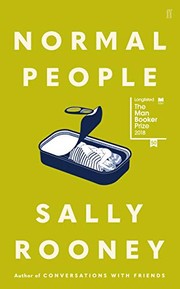
Normal People
Normal People retold: Connell and Marianne from Sligo school to Trinity, class and love.
2,066-word summary · 9 min read

Me Before You
Me Before You retold: Lou cares for Will in a Welsh annexe, trips and talks, choice and loss.
1,989-word summary · 9 min read

It Ends with Us
It Ends with Us from Lily's flower shop to her marriage: alternating past and present, Ryle's cycles of violence, and why the ending refuses a clean romantic…
2,381-word summary · 11 min read

What Happened to Goodbye
Mclean has reinvented herself in four towns since her parents divorced. In Lakeview she uses her real name, and for the first time staying put becomes a choice.
2,796-word summary · 12 min read

The Japanese Lover
A Polish refugee and the son of a Japanese gardener fall in love in San Francisco in 1939, then keep the affair secret for nearly seventy years.
2,286-word summary · 10 min read

The Idiot
A Turkish-American freshman at Harvard falls in love through email with a Hungarian math student and spends a summer in Hungary trying to turn correspondence…
2,019-word summary · 9 min read

Size 12 Is Not Fat
Former teen pop star Heather Wells investigates two dorm elevator deaths while juggling her ex, her crush, and a size-12 wardrobe.
2,805-word summary · 12 min read

Memories of My Melancholy Whores
A ninety-year-old journalist pays for a night with a teenage girl, cannot go through with it, and discovers love for the first time in García Márquez's late…
2,101-word summary · 9 min read

Dumplin'
Willowdean Dickson enters her town's beauty pageant as a protest and discovers that confidence is harder to keep once she lets someone close.
1,922-word summary · 9 min read
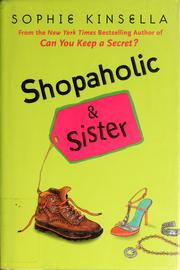
Shopaholic and Sister
Becky Brandon returns from a ten-month honeymoon to meet the half-sister she always wanted, then discovers that Jess is thrifty, prickly, and nothing like the…
2,591-word summary · 12 min read

Sam's Letters to Jennifer
A grieving journalist reads her grandmother's letters and finds a decades-long love affair that changes how she sees her family.
2,310-word summary · 10 min read

Mr. Maybe
Libby Mason wants a rich husband, but the wealthy man who proposes is dull and the broke writer she cannot forget is not offering forever.
2,322-word summary · 10 min read

I Kissed Shara Wheeler
Shara Wheeler kisses her rival Chloe Green at prom and disappears, leaving a scavenger hunt that forces Chloe to rethink everything she knew about her.
2,083-word summary · 9 min read

Amy & Roger's Epic Detour
Amy Curry has not driven since the crash that killed her father. With Roger at the wheel and a box of maps between them, a cross-country trip becomes a slow…
3,034-word summary · 13 min read

One to Watch
A plus-size fashion blogger takes the lead role on a reality dating show to prove she belongs on television, and finds she might want what the cameras offer.
2,478-word summary · 11 min read

Infinite Jest
A film that kills its viewers, a tennis academy, a halfway house for addicts, and a future America where corporations name the years, all tangled together.
2,084-word summary · 9 min read
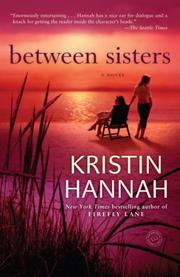
Between Sisters
Estranged sisters Meghann and Claire reunite in Washington when Claire announces a rushed wedding, then face their mother's desertion and a medical crisis.
2,467-word summary · 11 min read

On Chesil Beach
Two newlyweds spend one terrible night on Chesil Beach in 1962, and the rest of their lives is decided by it.
2,456-word summary · 11 min read

Ivanhoe
A disinherited Saxon knight, a great tournament, a besieged castle and a trial by combat. Scott's most famous novel, set in England in 1194.
2,834-word summary · 13 min read