
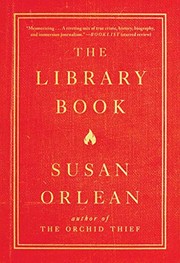
The Library Book
2,319-word summary 10 min read 336 pages in the book
- First published
- 2018
- Publisher
- Simon & Schuster
- Pages
- 336
- ISBN
- 9781476740201
Reading options
What's inside (7 sections)
My library card is one of the few cards I have kept through every move, and it still has that soft worn edge from years in a wallet. I picked up The Library Book because I wanted to know why a fire I had never heard of stuck in Susan Orlean's head for decades. The book was published on October 16, 2018 by Simon & Schuster and runs 336 pages. I expected a slim true crime story about arson. What I got was stranger and warmer than that, half investigation into a huge fire, half love letter to the branch libraries where Orlean grew up, with detours into the history of Los Angeles and the odd daily work of librarians.
Orlean opens with herself as a child in Ohio, taken to the library by her mother, allowed to pick as many books as she could carry, learning the particular quiet of the stacks. Her mother loved books and treated the library as a temple without admission. Years later, when Orlean's own son had a school assignment to interview a city worker and chose a librarian, she went with him to a branch in Studio City and felt the old pull return. That visit led her to ask about the biggest library disaster in American memory, a fire most people outside California never learned about. On the morning of April 29, 1986, smoke began pouring from the Los Angeles Central Library downtown. By the time it was out, around four hundred thousand books had been destroyed and hundreds of thousands more damaged by smoke and water. The same day, across the country, Chernobyl dominated the news, which is one reason the fire slipped from national attention. Orlean could not let it go. Who would burn a library, and why did so few people remember?
The morning the stacks burned
Orlean reconstructs the fire hour by hour, and these are the best pages for sheer tension. Librarians smelled smoke. Alarms sounded and then seemed to stop. Staff tried to move carts. Firefighters arrived to find a building designed like a maze, with closed stacks and narrow aisles and a roof that trapped heat. Temperatures rose past a thousand degrees in places. Books, which you think of as safe, burned and smoldered and fused. Water poured in and then had nowhere to go. Firefighters carried out armloads of charred volumes. Volunteers later formed human chains to pass wet books to freezers and drying areas.
The Central Library mattered because it was both a workplace and a civic symbol. The Goodhue building, with its pyramid roof and tiled mosaics and statue of a torchbearer, had opened in 1926 and grown by accretion. By the 1980s it was overcrowded, underfunded, full of deferred repairs, with books shelved double deep and aisles blocked. Orlean talks to retired librarians who remember the smell that morning, acrid and sweet, and the sight of pages curling like leaves. She talks to fire investigators who walked the blackened stacks with flashlights, marking burn patterns, pulling samples, trying to tell accident from arson in a building where paper was everywhere and wiring was old. The city at first spoke of accident. Then talk turned to a young man seen in the building acting oddly, leaving when the smoke started, boasting later that he had set it.
Harry Peak, the suspect who lied about everything
That young man was Harry Peak, and he is the true crime thread Orlean cannot resolve, however hard she tries. Peak was twenty eight in 1986, a part time actor and handyman with big stories and thin credits. He told friends he had been in commercials and films he had not been in. He said he knew famous people he did not know. He was charming in bursts and then grating. On the day of the fire he was in the library, by his own shifting accounts. He left around the time smoke appeared. In the days after, he told different people different things. He found the fire. He started the fire by accident with a cigarette. He started it on purpose because he was angry. He was nowhere near it. Each version came with detail and then collapsed.
Orlean tracks Peak the way a reporter tracks smoke. She interviews his friends, his former roommates, his family, lawyers, cops. She reads the arson file. She learns that investigators arrested Peak but never brought him to trial for arson, because the physical evidence was weak and Peak's own statements were so tangled no prosecutor wanted to build on them. Peak sued the city for false arrest. The city countersued or pushed back. The civil cases settled with money moving in ways that satisfied no one. Peak died in 1993 of complications from HIV/AIDS, still talking, still changing details. Orlean never gets a clean answer, and she admits it. She thinks he likely had something to do with the fire, perhaps carelessness turned to panic,perhaps a bid for attention that got out of hand, but she cannot prove it and she does not pretend otherwise.
I admired her restraint here and also felt the frustration she must have felt. A true crime book usually pays off with a charge or a confession that holds. This one pays off with a shrug that feels honest. Peak lied about his acting resume, about his military record, about where he lived, about small things with no reason to lie. A man who lies that easily can confess falsely as easily as he can deny truly. Orlean shows how that habit wrecked the case. Every admission came wrapped in invention. Every denial came with a new alibi that fell apart on checking. The police came to dislike him without being able to convict him. Librarians came to hate his name without knowing if he deserved it.
A history of Los Angeles told through branches
Between the fire chapters, Orlean steps back to tell the history of the Los Angeles Public Library, and this is where the book widens in ways I did not expect. She profiles Charles Lummis, the gruff city librarian in the early 1900s who preferred boots to suits and rebuilt the collection with western Americana. She follows through decades of women librarians who ran branches on tiny budgets, fought for funding, kept story hours going through earthquakes and budget cuts. She visits branches across the city now, from grand rooms downtown to small storefronts where kids do homework and homeless patrons charge phones and new immigrants study for citizenship tests.
She also gives space to the odd jobs libraries do that never make brochures. Librarians answer questions about tax forms and landlord disputes. They calm disturbances without calling police when they can. They weed collections, which is the quiet painful work of throwing away books no one reads to make room for ones people might. They run summer programs, teach computer use, lend tools and passes and sometimes ties for job interviews. Orlean spent months shadowing staff, riding with delivery drivers, sitting at reference desks, attending meetings about budgets and security. Those scenes are full of names and small exchanges. A librarian who remembers every regular's preferred newspaper. A guard who knows who needs a warning and who needs a seat. A manager who patches a leaking roof with promises until money arrives.
The worldwide detours fit here too, though they test patience. Orlean jumps to the destruction of ancient collections, to wartime librarians who saved books under bombing, to modern libraries in places like Singapore and Qatar that look more like malls or labs. The point is clear enough. Libraries keep being declared dead and keep refusing to die. Each new medium, radio, television, the internet, was supposed to finish them. Each time they bent and added the new thing. The Los Angeles fire becomes one instance of a longer pattern. Books burn. Buildings fall. People rebuild and recatalogue.
Rebuilding and the long afterlife of smoke
The rebuild of the Central Library takes up the back third, and Orlean makes bureaucratic work read like a rescue. After 1986, the library needed money, plans, and political will. Voters passed a bond. Architects, including Norman Pfeiffer, designed an expansion that kept the Goodhue core and added the Tom Bradley wing. Donors were courted. Books were dried, cleaned, rebound, replaced. Barcodes were added. The catalog went digital in fits and starts. Staff worked in temporary quarters for years. When the building reopened in 1993, it was both old and new, with light wells and atriums cut into stacks that had once been dark.
Orlean is good on what was lost beyond numbers. Ash does not only take titles. It takes marginalia, bindings, local pamphlets, photographs, maps that existed in single copies. Some losses were absolute. A collection of early Los Angeles histories. Files of menus and playbills that told how the city ate and played. Insurance could pay for replacements where replacements existed. It could not restore the particular copy a child had underlined or the note a librarian had slipped inside. Volunteers who helped salvage books describe opening wet volumes to find pages stuck like bricks, ink run into ghosts. Conservators describe choices that felt like triage. Save this. Let that go. Photocopy the rest.
She also follows the health effects and the paperwork. Firefighters who breathed that smoke. Staff who coughed for months. Investigators who wrote reports that hedged. Lawyers who argued about cause and responsibility while the building sat wrapped. The arson question never quite leaves, even in chapters about architecture. Every plan had to answer whether the new building would resist the next fire, whether sprinklers and compartment walls and better wiring could protect paper from itself. The answer is safer, not safe. A library is fuel by definition. You manage risk. You do not remove it.
What drags and what shines
I should say what annoyed me, because the book annoyed me in the same places it charmed me. Orlean meanders. A chapter that starts with Harry Peak will wander to the history of arson investigation, then to a funny story about a branch cat, then to her mother, then back to Peak three pages later. The jumps are often delightful in isolation and wearing in sequence. Around the two thirds mark I began to skim the world tour sections, the quick hits of famous library fires and far flung reading rooms, to get back to Los Angeles. The material is interesting, but it repeats the same moral. Libraries matter. People try to destroy them. People save them. After the fourth example, I got it.
The memoir thread also pads at times. Orlean writes beautifully about her mother, who developed dementia and died, and about taking her son to the library as a way to hand something on. Those passages are tender and specific. A particular book. A particular bench. A particular librarian's voice. Yet they return so often that they start to feel like glue holding disparate research together rather than a story in their own right. I wanted either more of that story, with its hard edges, or less, with the focus kept on the fire. As it stands, the personal sections sometimes arrive just when the investigation tightens, loosening it.
And Peak remains unresolved, which is honest but unsatisfying. Orlean does the right thing by refusing to convict a dead man in print on thin evidence. She lays out what points toward him and what points away. Still, a reader who came for an answer will close the book hungry. I did. I kept turning back to the timeline, hoping I had missed a lab report or a witness who would settle it. There is none. The fire has a suspect, not a cause, in any legal sense. Orlean's best guess is stated softly, almost reluctantly, which speaks well of her and leaves the central mystery open.
Against those complaints, the strengths are considerable. Orlean is a patient reporter who likes ordinary workers and lets them talk. The librarians in these 336 pages are not saints or jokes. They are tired, funny, stubborn people who know where everything is and who will help you find it even if you cannot spell it. I liked the pages where she simply sits at a reference desk and records the questions as they come, from genealogy puzzles to bus schedules to a child asking for scary stories that are not too scary. The Los Angeles history is well chosen, from oil money to earthquake retrofits to ballot measures, showing how a public institution survives by asking strangers to pay for strangers. The fire writing itself is vivid without turning disaster into spectacle. You smell it. You hear the roof creak. You feel the weight of wet books. The October 2018 Simon & Schuster edition carries photographs and notes that help, but the prose does most of the work.
I finished The Library Book with a clearer sense of why I keep that worn card. A library is one of the few places where you can be alone without paying and where someone will still help you if you ask. Orlean never states it that baldly. She shows it, branch by branch, box by box, through a fire that should have ended a building and instead revealed what the building was for. Harry Peak drifts out of focus at the end, as he did in life, a sad man who wanted to be seen. The library stays in focus, repaired and recatalogued, full on a weekday morning. That contrast, between a man who invented credits and an institution that lends them freely, is the quiet heart of the book. It stayed with me longer than any single fact about accelerants or alarms, and it sent me back to my own branch to return a book I had finished and find another.
FAQ
What happened at the Los Angeles Central Library in 1986?
On April 29, 1986 the Los Angeles Central Library burned, destroying about four hundred thousand books. The same day's Chernobyl news helped push it from national memory.
Who was Harry Peak?
He was an actor and handyman seen in the building who gave shifting accounts. Police arrested him but never tried him, and he died in 1993.
Is the book only about the fire?
Yes. Orlean visits branches, shadows librarians, and traces Los Angeles library history alongside her own childhood visits with her mother.
Similar books
The History of the Hobbit, Part One: Mr. Baggins
Rateliff traces every draft of Bilbo from 1930 notes to print.
2,410-word summary · 11 min read
The Hot Zone
Ebola and Marburg move from African outbreaks to a Virginia monkey house and an Army response in suits.
2,291-word summary · 10 min read
Empire of Pain: The Secret History of the Sackler Dynasty
How the Sackler family sold OxyContin and shaped an overdose crisis while giving to museums.
2,048-word summary · 9 min read
The Surgeon of Crowthorne
James Murray built the Oxford dictionary with Broadmoor inmate William Minor, whose thousands of slips shaped this 1998 HarperCollins story of murder, madness…
2,775-word summary · 12 min read
Say Nothing
Patrick Radden Keefe traces Jean McConville's 1972 disappearance through the Price sisters, Brendan Hughes, and Gerry Adams, using Boston College tapes to…
2,846-word summary · 13 min read
The Wager: A Tale of Shipwreck, Mutiny and Murder
Thirty starved men reach Brazil as heroes in 1742, then three more land in Chile calling them mutineers, and Grann sorts the wreck.
2,995-word summary · 13 min read
Helter Skelter
Prosecutor Bugliosi builds Tate-LaBianca case against Manson Family.
2,838-word summary · 13 min read
Killers of the Flower Moon: The Osage Murders and the Birth of the FBI
In 1920s Oklahoma, Osage oil wealth makes tribal members targets for murder, forcing the young FBI under Tom White to expose the conspiracy behind the Reign of…
2,403-word summary · 11 min read
The Devil in the White City
Architect Burnham builds the 1893 Chicago Fair while H.H. Holmes builds his murder hotel nearby.
2,020-word summary · 9 min read
The Zookeeper's Wife: A War Story
The directors of the Warsaw Zoo hid roughly three hundred Jews in empty cages and outbuildings after the German invasion, while Jan worked for the resistance.
2,065-word summary · 9 min read

Long Walk to Freedom
Mandela's account of a Thembu childhood, a law practice, a banned movement, twenty-seven years in prison, and the negotiation that ended apartheid.
2,454-word summary · 11 min read
1491: New Revelations of the Americas Before Columbus
Charles C. Mann gathers archaeology, ecology, and demography to argue that the Americas before Columbus were older, fuller, and more deliberately shaped than…
2,712-word summary · 12 min read
The DaVinci Code: A Quest for Answers
A short 2006 dialogue in which three friends test Dan Brown's claims about Jesus, Mary Magdalene, Nicaea, and the canon.
2,088-word summary · 9 min read
Nothing to Envy
Barbara Demick follows six defectors from Chongjin through the North Korean famine, showing how ordinary people lived, believed, and finally left.
2,068-word summary · 9 min read
Down and Out in Paris and London
Orwell's account of washing dishes in Paris hotels and tramping through London does not ask for pity, only for a clear look at how poverty actually works.
2,282-word summary · 10 min read
The Wright Brothers
David McCullough tells the story of two self-taught Ohio brothers, working largely alone and out of a bicycle shop, who solved the problem of flight before…
2,027-word summary · 9 min read
The Echo of Old Books
Barbara Davis's 2023 novel sends a rare-book dealer in 1984 New Hampshire hunting for the authors of two unpublished volumes that tell opposite sides of one…
2,491-word summary · 11 min read
Columbine
Ten years of reporting on the 1999 school massacre, including a journalist's correction of the myths he helped create in the first hours.
2,232-word summary · 10 min read
Lone Survivor: The Eyewitness Account of Operation Redwing and the Lost Heroes of SEAL Team 10
Marcus Luttrell's account of the 2005 SEAL mission in Afghanistan that killed three of his team and left him alone.
2,144-word summary · 10 min read
Bury My Heart at Wounded Knee: An Indian History of the American West
Dee Brown's 1970 retelling of the American West from the point of view of the people it destroyed.
2,233-word summary · 10 min read
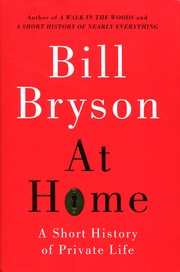
At Home: A Short History of Private Life
Bill Bryson tours his own Norfolk rectory room by room to explain how private life and the modern home got built.
2,334-word summary · 10 min read
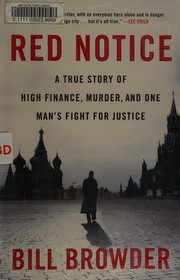
Red Notice
An American financier in Moscow exposes a $230 million tax fraud, watches his lawyer die in prison, and turns the case into an international human rights law.
2,008-word summary · 9 min read
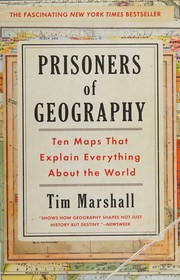
Prisoners of Geography: Ten Maps That Tell You Everything You Need to Know About Global Politics
Tim Marshall explains how mountains, rivers, coasts, and resources shape the choices of nations, from Russia's flat borders to the chokepoints of the South…
2,328-word summary · 10 min read
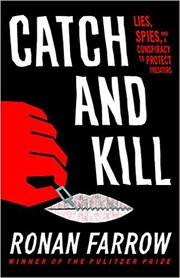
Catch and Kill: Lies, Spies, and a Conspiracy to Protect Predators
Ronan Farrow recounts how NBC killed his Harvey Weinstein reporting, then how The New Yorker published it and helped ignite #MeToo.
2,057-word summary · 9 min read
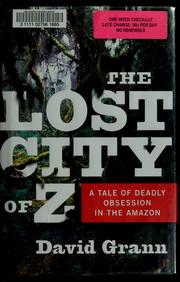
The Lost City of Z: A Tale of Deadly Obsession in the Amazon
David Grann retraces Percy Fawcett's 1925 disappearance in the Amazon and finds that the lost city he sought was not entirely a fantasy.
2,493-word summary · 11 min read
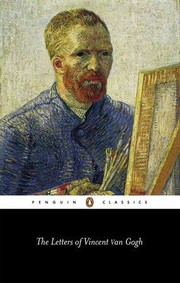
The Letters of Vincent van Gogh
Vincent van Gogh's letters to his brother Theo, in a Penguin Classics selection edited by Ronald de Leeuw, trace a decade of work, faith, and obsession.
2,611-word summary · 12 min read
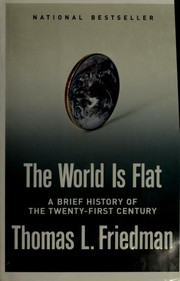
The World Is Flat: A Brief History of the Twenty-first Century
Thomas L. Friedman's 2005 bestseller argues that technology, trade, and open borders leveled the global playing field, and it names the ten forces that did it.
2,369-word summary · 11 min read
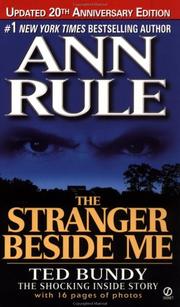
The Stranger Beside Me
Ann Rule's classic memoir of her friendship with Ted Bundy, written by the true-crime author who knew him long before the world learned what he had done.
2,481-word summary · 11 min read
Catherine the Great: Portrait of a Woman
A German princess survives a miserable marriage and a coup to rule Russia for thirty-four years, torn between Enlightenment ideas and absolute power.
2,065-word summary · 9 min read
The Warmth of Other Suns
Three migrants ride north out of Jim Crow toward Chicago and LA.
2,561-word summary · 11 min read