
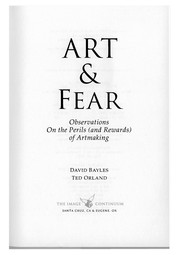
Art & Fear: Observations on the Perils (and Rewards) of Artmaking
1,994-word summary 9 min read 122 pages in the book
- First published
- 1993
- Publisher
- Image Continuum Press
- Pages
- 122
- ISBN
- 9780961454739
Reading options
What's inside (9 sections)
Every working artist seems to own a copy of Art & Fear, and the copy looks the way this one should look, soft-spined, thumbed, passages underlined by someone who was in trouble when they underlined them. The book is short, 122 pages, first published in 1993 by a small press run out of a photographer's studio, and it has outlasted most of the ambitious manifestos published around it. I came to it the way most people do, which was after encountering one of its lines quoted by somebody who made things for a living and was clearly using it as medicine, and I finished it in an afternoon and then went back and read it again slowly, because the argument it makes is simple enough to hear in one pass and difficult enough to argue with for years.
Its subject is exactly what the title says. Not technique, not aesthetics, not the history of anything. The book is about the fear that sits between a person and their own work, where it is, what it does, and why so many people stop in response to it. Two American photographers, David Bayles and Ted Orland, wrote it as a sustained conversation between practitioners, and its authority comes entirely from that: neither man is theorizing about the studio from outside it.
Two photographers, one conversation
Bayles is a photographer and conservationist who has spent his career making pictures of the American West, and Orland is a photographer, teacher, and writer who worked as an assistant to Ansel Adams before striking out on his own. Both taught, for decades, alongside their own practices, and the book is built from what they noticed when they watched students and themselves circle the same three or four stalls in the road.
That biographical fact matters more than author bios usually do. The book is addressed from inside a life of making things, which is why its examples lean toward studio and gallery work, darkrooms, clay, the physical disciplines where the output can be held up and judged. Writers and musicians quote it constantly anyway, because the machinery it describes, the avoidance, the perfectionism, the stalled project, travels across every discipline intact. The specific terrors are local. The general one is portable.
The structure follows a conversation's logic rather than an argument's. The early chapters name the problem: the nature of the problem, art and fear, fear of oneself and fear of others. The middle turns practical, finding your work in the face of everything competing for your attention. The later chapters widen to the world outside the studio, the art market, the academy, the conceptual fashions, and the stubborn question of the human voice in work that is increasingly trained to have none. There is no plot, but there is a movement, from the internal to the external and back, and the returning line is always the same: the work is what matters, and the work is what people abandon.
The actual problem
The book's foundational claim is that artists rarely stop because they have run out of talent or ideas. They stop because continuing has become frightening, and because stopping can be disguised as discernment. The project in the drawer is not a failure if it is unfinished. The unmade work cannot be judged. Fear, in other words, arrives wearing the costume of standards, and the costume is convincing because the maker is often genuinely rigorous and would genuinely like the work to be good.
Bayles and Orland separate two fears that usually get confused, and the distinction is the single most quoted idea in the book: fears about yourself prevent you from doing your best work, while fears about your reception by others prevent you from doing your own work. Read that again and it rearranges a lot of familiar pain. The first fear, stage fright about your own ability, narrows your ambition and makes the work timid. The second fear, the audience, makes the work into someone else's project, a thing shaped toward an imagined response rather than toward what the material is asking for.
The prescription that follows is old in the telling and hard in the doing. Make the work. Make more of it than is comfortable. Accept the fraction that fails as the cost of the fraction that does not, and stop waiting for confidence to arrive before beginning, since in practice confidence is what shows up after the work, not before it. The book has no system for this, no five-step recovery, and the absence is deliberate. Systems are another form of waiting.
The ceramics story
The most famous passage in Art & Fear is the ceramics class, and it deserves to be told properly because people paraphrase it badly.
A teacher divides a class in two. One group is graded entirely on the quantity of pots produced over the term, the final grade resting on the sheer weight of clay thrown. The other group is graded on a single pot, submitted at the end of the term, judged as the finest piece of the semester. When the grades come in, something the teacher did not plan happens. The best work in the class belongs not to the single-pot group but to the quantity group, and it turns out that the students who spent the term making pot after pot had been learning from every batch, throwing, seeing the result, adjusting, throwing again, while the students chasing the one perfect vessel had spent their term theorizing, planning, and producing nothing until the deadline forced a single nervous attempt.
The anecdote circulates independently of the book now, and Orland has spoken about where the example came from, which is part of its charm: it is a story a teacher told that turned out to be a perfect compression of a whole philosophy. Quantity leads to quality, not as a slogan about volume but as a description of how skill actually enters the hand, through contact with failure at high frequency. Perfectionism, the story shows, is not high standards. It is a strategy for producing fewer data points, which is to say, a way of learning more slowly while feeling extremely serious.
For anyone with a stalled project, the ceramics story functions as an argument against the draft you have been polishing for a year. The pot on the shelf teaches nothing. The fifty pots you threw to get it taught you everything, and the fifty are not available to you until you are willing to make the first ten badly.
Why artists quit
The book's coldest line is also its most famous, and readers pass it around the way you pass a warning: What separates artists from ex-artists is that those who challenge their fears continue; those who don't, quit.
What makes the observation sting is its definition of quitting, which has nothing to do with public declarations. Nobody announces it. The artist simply becomes a person who used to make things, who still owns the equipment, still has opinions about the field, still intends to get back to it. The stoppage is invisible from outside because it looks exactly like busyness. Bayles and Orland have watched a great many people arrive at that condition and gently refuse to let the reader pretend it is something else.
The book is equally attentive to the smaller version of quitting that working artists do every week, the abandoned series, the exhibition not submitted to, the piece rewritten past its life because showing it would mean being seen. If the larger failure is becoming an ex-artist, the daily failure is letting fear edit the work into something safer than what you set out to make. Both are the same muscle refusing the cold water.
The academy and the outside world
The later chapters take on the institutional pressures, and this is where the book is most interesting and most dated. The chapter on the academic world argues that teaching art and making art are not the same activity and that the only justification for the first is that the teacher keeps doing the second. A teacher who has abandoned their own practice offers students a model of capitulation no lecture can undo; a teacher still in the arena offers, without saying anything, proof that the life is survivable.
Around the institution sits the outside art world, and the book treats it with a shrug rather than a rage. Markets reward legibility. Fashion rewards novelty. Conceptual movements can become ways of avoiding the discipline of craft altogether, a reason the object never has to be finished. None of this is presented as conspiracy. It is presented as weather, conditions the maker can complain about or work under, and the book's consistent position is that the weather will not be reformed in your lifetime, so you had better get on with the work.
Some readers find this the book's conservative streak, a quietism that lets structural problems off the hook, and the criticism is not empty. Bayles and Orland are most persuasive about the individual in the studio and least interested in the systems that decide which studios get funded. The book is a set of observations about staying alive as a maker, not a program for who gets to be one. That narrower scope is a real limitation, and also the reason the book has stayed usable while broader manifestos have dated.
The form, and its limits
Its brevity is the design. Art & Fear is built to be read in the bad hour, not studied, and its chapters work as standalone doses, which is why you find it quoted a paragraph at a time. The rhythm is two practitioners thinking aloud, one observation following another, examples from the darkroom or the classroom doing the heavy lifting where an essay would reach for theory.
Its weaknesses follow from that same freedom. The prose is aphoristic enough that a cynical reader will feel managed by page forty, and the book returns to its central couple of ideas more often than a tighter editor might allow. Its examples are of their time and place, American studio art in the late twentieth century, and a reader outside that world occasionally wants the frame widened. And there is a limit to how far exhortation can go. The book can tell you that the pot on the shelf teaches nothing. It cannot make you throw the pot. Nobody has ever solved that last distance in print.
Who it is for
It is for anyone who makes something and has noticed that the making has stopped or slowed or turned anxious, which is a larger group than the one that buys books about craft. It is for art students, whose teachers will assign it anyway, and for people fifty years into a practice who report finding something new in it on every reread, which is the compliment the book gets most often. Writers, musicians, designers, and anyone whose work is judged by other people will recognize themselves in it immediately despite the photographs and clay.
It is not for readers who want the history of an idea, or a theory of aesthetics, or a plan for fixing the culture. It says almost nothing about any of those and would be embarrassed by the attempt.
I finished it and went straight back to work, which is the only review that counts for a book like this. The underlined copy on somebody else's shelf and the underlined copy on mine are doing the same job, holding open the page where somebody needed permission to stop deliberating. The permission, it turns out, was always the same sentence: make the next thing, and then the one after that, and let the fear ride along in the passenger seat where it can watch the road without steering.
FAQ
Who are David Bayles and Ted Orland?
Both are American photographers. Ted Orland worked as an assistant to Ansel Adams before turning to his own work, and both have taught, which is where much of the book's practical wisdom comes from.
What is the main argument of Art & Fear?
That the obstacles to making art are emotional rather than technical. The work itself teaches the maker; the hard part is continuing to show up in the presence of self-doubt and an audience.
Is Art & Fear only for visual artists?
No. It is written about artmaking in general, and writers, musicians, and craftspeople quote it constantly, though its examples lean toward studio and gallery work.
Similar books
Creativity, Inc.: Overcoming the Unseen Forces That Stand in the Way of True Inspiration
Pixar's president on why the studio that made Toy Story nearly broke itself, and the daily habits that kept the creativity coming.
2,179-word summary · 10 min read
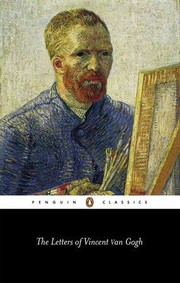
The Letters of Vincent van Gogh
Vincent van Gogh's letters to his brother Theo, in a Penguin Classics selection edited by Ronald de Leeuw, trace a decade of work, faith, and obsession.
2,611-word summary · 12 min read
Letters to a Young Poet
Rilke's ten letters to a young officer cadet refuse easy criticism and ask whether he must write, offering patience and solitude as a way of life.
2,530-word summary · 11 min read
Drawing on the Right Side of the Brain
Edwards teaches seeing edges spaces to draw via right brain exercises.
2,229-word summary · 10 min read
Bird by Bird
Anne Lamott's 1994 book on writing and life: shitty first drafts, the one-inch picture frame, and quieting the inner critic so you can take it bird by bird.
2,592-word summary · 12 min read
The War of Art
Pressfield names Resistance and urges daily professional work.
2,565-word summary · 11 min read
The Artist's Way: A Spiritual Path to Higher Creativity
A twelve week course with morning pages and artist dates to recover creativity.
2,345-word summary · 10 min read
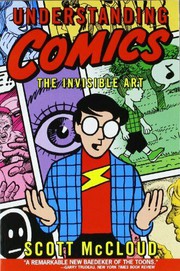
Understanding Comics
McCloud explains comics in comics form, from icons to closure between panels.
2,091-word summary · 9 min read

PostSecret
Warren curates anonymous postcard secrets into art about love and shame.
2,001-word summary · 9 min read
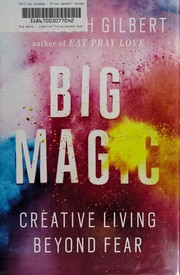
Big Magic
Gilbert on creative living past fear: ideas that visit, permission without credentials, daily work, finished over perfect, and trust in curiosity.
2,984-word summary · 13 min read
Steal Like an Artist
Kleon's 2012 illustrated guide gives ten principles for creative work, from borrowing openly and starting early to sharing, staying kind, and cutting the…
2,999-word summary · 13 min read
Ways of Seeing
Seven short essays on how pictures, ads, and nudes teach us to look.
4,357-word summary · 19 min read
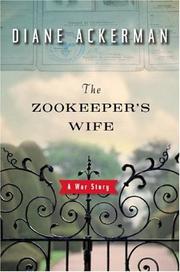
The Zookeeper's Wife: A War Story
The directors of the Warsaw Zoo hid roughly three hundred Jews in empty cages and outbuildings after the German invasion, while Jan worked for the resistance.
2,065-word summary · 9 min read
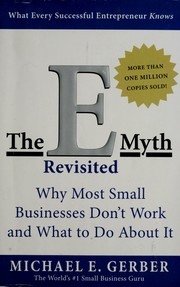
The E-Myth Revisited
Gerber argues that most small businesses are run by technicians who own a job rather than a business, and that the fix is a system that runs without them.
2,169-word summary · 10 min read
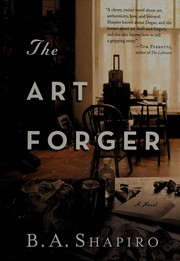
The Art Forger
A disgraced Boston painter agrees to copy a Degas stolen from the Gardner Museum, then begins to suspect the original she is copying is itself a forgery.
2,117-word summary · 9 min read
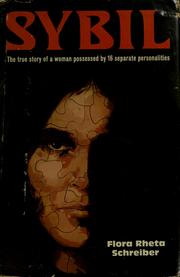
Sybil
A 1973 case study of a woman treated for multiple personalities, and the book that made dissociative identity disorder a household phrase.
2,054-word summary · 9 min read
Nudge: Improving Decisions About Health, Wealth, and Happiness
Thaler and Sunstein show how defaults, framing, and social cues steer choices, and argue for choice architecture with an opt-out.
3,146-word summary · 14 min read

Long Walk to Freedom
Mandela's account of a Thembu childhood, a law practice, a banned movement, twenty-seven years in prison, and the negotiation that ended apartheid.
2,454-word summary · 11 min read

1491: New Revelations of the Americas Before Columbus
Charles C. Mann gathers archaeology, ecology, and demography to argue that the Americas before Columbus were older, fuller, and more deliberately shaped than…
2,712-word summary · 12 min read
What Happened to You?
Oprah Winfrey and psychiatrist Bruce Perry explain how early experience shapes the brain, and why asking what happened to someone works better than asking what…
2,238-word summary · 10 min read
The DaVinci Code: A Quest for Answers
A short 2006 dialogue in which three friends test Dan Brown's claims about Jesus, Mary Magdalene, Nicaea, and the canon.
2,088-word summary · 9 min read
The Courage to Be Disliked: The Japanese Phenomenon That Shows You How to Change Your Life and Achieve Real Happiness
A philosopher and an angry young man argue over five nights about Adlerian psychology, trauma, approval, and the freedom to be disliked.
2,054-word summary · 9 min read
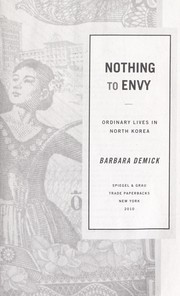
Nothing to Envy
Barbara Demick follows six defectors from Chongjin through the North Korean famine, showing how ordinary people lived, believed, and finally left.
2,068-word summary · 9 min read

In Order to Live: A North Korean Girl's Journey to Freedom
A young North Korean girl crosses the Yalu, survives trafficking in China, and rebuilds her life in Seoul in this unsparing memoir.
2,027-word summary · 9 min read
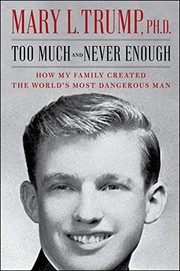
Too Much and Never Enough: How My Family Created the World's Most Dangerous Man
Mary L. Trump's 2020 memoir traces how a cold, zero-sum Queens household shaped her uncle, and uses family tax documents to challenge his self-made story.
2,059-word summary · 9 min read
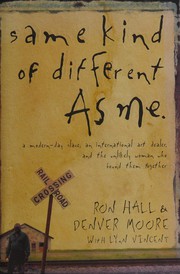
Same Kind of Different as Me
An art dealer and a formerly homeless sharecropper tell the story of the friendship that began at a Fort Worth mission and the woman who insisted on it.
2,023-word summary · 9 min read
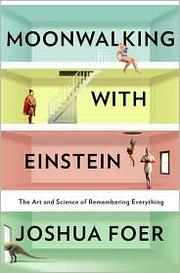
Moonwalking with Einstein: The Art and Science of Remembering Everything
A journalist spends a year training for the U.S. Memory Championship and discovers that extraordinary memory is mostly technique, attention, and a lot of…
2,027-word summary · 9 min read

Infidel
Ayaan Hirsi Ali's memoir of a Somali childhood, a forced marriage, a Dutch asylum claim, and the political fight that followed the murder of Theo van Gogh.
2,041-word summary · 9 min read
The Total Money Makeover: A Proven Plan for Financial Fitness
Dave Ramsey lays out seven Baby Steps, from a $1,000 starter fund to a paid-off house, with the debt snowball at the center.
2,663-word summary · 12 min read
The Agony and the Ecstasy
Irving Stone turns Michelangelo's seventy years of carving, painting, and arguing with popes into a novel about the cost of making something that outlives you.
2,260-word summary · 10 min read